GORE-TEX WINDSTOPPER

Colt Canada C20 Patrol Marksman in .308 Win

July 18th, 2024

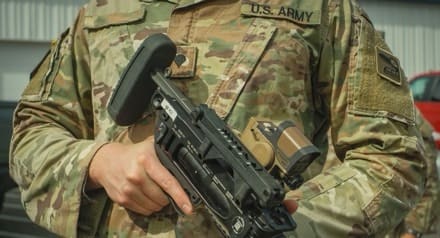
Colt Canada has debuted the .308 Win Patrol Marksman in rifle and carbine length variants of the operationally proven C20 platform at the North American Wildlife Enforcement Officers Association conference in Penticton, BC Canada. 

Based on Colt Canada’s best-in-class C20 Semi-Automatic Sniper Weapon System platform, the .308 Win Patrol Marksman allows end-users to exercise SAAMI spec commercial-off-the-shelf ammunition versatility and availability with Colt Canada’s legendary reliability and performance.

www.coltcanada.com

Galvion Receives Follow-On 8,400 Batlskin Caiman Helmet Order for the Canadian Dismounted Infantry Capability Enhancement (DICE) Programme

July 18th, 2024

Galvion, a world leader in innovative head protection systems and power and data management solutions, has received a follow-on order from the Department of National Defence (DND) Canada for its flagship Batlskin Caiman® ballistic helmet systems. The Canadian Dismounted Infantry Capability Enhancement (DICE) programme contract was awarded in February 2023 for 2,100 helmets and 4,200 helmet covers, all successfully delivered. Now in year two of a five-year framework contract, the DND has exercised an option to order an additional 8,400 helmets and 16,800 helmet covers taking the total Canadian DICE order to 10,500 helmets and 21,000 covers, to date.

Developed over a number of years with extensive SOF community collaboration and feedback, Galvion’s Caiman® helmet system has been tried and tested on operations and is in service across multiple countries, delivering unmatched levels of weight and comfort, and is expressly designed to incorporate electronics, communications headsets, and other critical equipment needs, now and into the future. The helmet is equipped with Galvion’s premiere APEX lining system, an intuitively adjustable design that enables a customized fit for users.

The helmet systems assessed for DICE were trialled by members of the Canadian Light Infantry at the end of 2022. Conducted under operational conditions, the trials included the integration of equipment such as night vision goggles, gas masks, hearing protection, and cold-weather gear. The Caiman helmet received the highest rating by a significant margin and was selected after a phased bid process.

Todd Stirtzinger, CEO at Galvion said: “We are incredibly proud to receive this significant order from the Canadian DND. The feedback that we are receiving is incredibly positive, and we look forward to outfitting more Canadian soldiers with our best-in-class Caiman head system under their wider equipment modernization initiative. Follow-on orders like this demonstrate partner confidence and end-user satisfaction, both of which are core drivers for everything that we do at Galvion.” He added: “In conjunction with the substantial Caiman orders that we continue to receive from NATO countries through our NATO Support and Procurement Agency (NSPA) framework contract, this recent Canadian order demonstrates that our flagship Caiman is fast becoming the global helmet of choice. In our unwavering pursuit to enhance the agility, lethality and survivability of the world’s most demanding military teams, this is certainly a rewarding achievement for our team.”

Marines Seek Dismounted Counter small Unmanned Aircraft System (CsUAS) for Squads and Platoons

July 18th, 2024

Under a request for information from industry entitled, “Dismounted Counter small Unmanned Aircraft System (CsUAS)” Marine Corps Systems Command’s Program Manager (PM) Ground Based Air Defense (GBAD) Dismounted Counter small Unmanned Aircraft System (CsUAS) has announced its on the lookout for systems to support “every” Marines’ ability to conduct self-defense against threat Groups 1 and 2 small UAS (sUAS).

Photo: LCpl Christian J Robertson/Marine Corps

Specifically, capabilities for the Squad and Platoon organizations across the MAGTF that are capable of detecting, tracking, identifying and defeating Group 1 and Group 2 UAS.

The Squad-level solutions need to be carried by dismounted Marines with little to no impact on their primary mission.  The Platoon-level solutions may be transported in light tactical vehicles, assembled without the use of material handling equipment and operate on battery power.

They explain the reasoning behind the requirement below:

With the proliferation of UAS as a threat on the modern battlefield, Marines require the ability to maintain awareness of friendly UAS and conduct self-defense against threat UAS.  Every unit down to the individual Marine, regardless of geographic location on the battlefield, is vulnerable to reconnaissance and, more dangerously, attack from threat sUAS.  To facilitate freedom of movement, Marines require the ability to conduct self-defense against the threat.  This has been proven through multiple Department of Defense (DoD) experiments, training exercises, and has been proven during real-world operations.  

Each phase of the kill-chain requires a different component making dismounted CsUAS more difficult in terms of Size, Weight and Power (SWaP).  The dismounted CsUAS capability will be employed and support all elements of the Marine Air Ground Task Force (MAGTF), not just professional air defenders.  The dismounted CsUAS solution will need to be easy-to-use, easy-to-train, light-weight and use systems currently organic to the Marine Corps to the maximum extent possible.

The Joint CsUAS Office (JCO) has identified dismounted CsUAS capabilities as a vulnerability to the Joint force.  The Marine Corps Warfighting Lab (MCWL) identified the need for dismounted CsUAS throughout multiple experiments.  Additionally, Tactical Training and Exercise Control Group (TTECG), Infantry Officer Course (IOC), both Schools of Infantry (SOI), and other units continue to fly threat UAS against Marine units during field exercises and training events.  Each experiment and training exercise shows Marines are vulnerable to threat UAS and require the ability to defend themselves from the threat. 

Without a CsUAS capability to employ at lower echelons in an integrated and layered defense, every unit and every Marine will be vulnerable to reconnaissance and attack from threat UAS, risking mission success and loss of life. 

The solutions may include capabilities described below:

Detect / Track / Identify

• Squad level.  Passive detection system that can detect UAS using acoustic or radio frequency (RF) detection.  Sensor should be body worn with limited impact on primary mission equipment.  Components may include a Handheld tablet, bracelet, earpiece, and/or glasses that receives alerts, warnings, notifications from an external sensor(s) (i.e. radars and/or passive detection systems).

• Platoon level.  Passive detection system that can detect UAS using acoustic or radio frequency detection.  Sensor can be vehicle, mast or tripod mounted.  Components may also include a handheld tablet, bracelet, earpiece, and/or glasses that receives alerts, warnings, notifications from an external sensor(s) (i.e. radars and/or passive detection systems).

Defeat:

• Squad level.  Non-kinetic – Directional RF and/or Global Positioning System (GPS) jammer, ideally able to mount on organic rifle.  Kinetic – A rifle / rifle optic capable of tracking and defeating small UAS.  Enhanced ammunition for existing firearms (buckshot-like 5.56, 7.62, .50, .40mm).

• Platoon level.  Non-kinetic – Omni-directional RF/GPS jammer and/or spoofer.  Kinetic – A rifle / rifle optic capable of tracking and defeating small UAS.  Enhanced ammunition for existing firearms (buckshot-like 5.56, 7.62, .50, .40mm).

If you’ve got a solution, the Marines want to hear from you. Responses shall be submitted no later than 1700 Eastern Time on 2 August 2024.  Telephone replies will not be accepted.

The RFI specifies how submissions must be formatted and where to send them, so be sure to check it out.

BG Joseph G Lock Takes Command of Special Operations Command Europe

July 18th, 2024

STUTTGART, Germany – U.S. Air Force Maj. Gen. Steven G. Edwards, the outgoing Special Operations Command Europe (SOCEUR) commanding general, transferred command to U.S. Army Brig. Gen. Joseph G. Lock during a change of command ceremony at Patch Barracks on July 15.

U.S. Army Gen. Christopher Cavoli, commander of U.S. European Command and Supreme Allied Commander Europe, presided over the ceremony and spoke of the mission entrusted to Lock: “You’re inheriting a command that is located at the forefront of our nation’s mission. There just couldn’t be a more important time. The events of the past two years have jolted us awake. The war in Ukraine has served as a terrible reminder of the large-scale wars throughout history and a reminder that they can occur again today.”

Lock most recently served as Military Deputy Director of Program Analysis and Evaluation at Department of the Army Headquarters (HQDA), G-8, and was responsible for the independent assessment, integration, and synchronization of the Army Program and Army’s Program Objective Memorandum (POM). Brig. Gen. Lock’s previous General Officer assignments include: Commanding General, Special Operations Joint Task Force Central; Commanding General, Over the Horizon Counterterrorism Command; and Assistant Commanding General, Joint Special Operations Command (JSOC).

“Under the dedicated and reliable leadership of Brigadier General Lock, SOCEUR will continue to prosper,” said Edwards. “With over 25 years spent in the special operations community, his expertise, ethics, and leadership is key for the future success of SOCEUR’s efforts in supporting higher headquarters’ priorities. I have no doubt that he will excel in his new role as SOCEUR commander.”

Edwards took command of SOCEUR in 2022. Prior to this assignment he worked as the Chief of Staff, Headquarters United States Air Forces in Europe and Air Forces Africa, Ramstein Air Base, Germany. Edwards, who began his career as an Army Warrant Officer, is retiring after 33 years of service.

“I want to personally thank Major General Edwards for his leadership during the past two years here at SOCEUR,” Lock said. “His dedicated service to all allies and partners and the unique cultures they bring to our theater has fostered an inclusive operational footprint. I am honored to be a part of this dynamic command that continues to work throughout the theater, preserving security during this critical time.”

Courtesy Story
U.S. Special Operations Command Europe
Photos by SFC Tim Beery

IP Video Technology: The Changes and Challenges Within Critical ISR Workflows

July 17th, 2024

The intelligence, surveillance and reconnaissance (ISR) community faces new challenges as an exponential increase of information—including real-time data and video streams—is shared with a growing community of stakeholders.

A new approach to system architecture is needed to deliver critical information to a more diverse set of collaborators, whether they are located in the last tactical mile or they are coalition partners sitting in headquarters.

For ISR missions that depend on video, the challenges are many, including securing communication, overcoming bandwidth limitations, and implementing end-to-end encryption when transmitting across multiple networks.

Here, Mark Rushton, a defence and security specialist and Business Development Director at VITEC: a global technology leader in the IPTV space, shares his insights on what is at stake.

How have critical ISR workflows evolved in recent years?

One significant change is the increased amount of information being processed and shared. With what seems like a universal need for real-time data and video streams, the dissemination imperative has expanded beyond traditional platforms and operational command centers. ISR intelligence must now reach a much wider range of collaborators.

This expansion has made the system architecture more complex. Leaders in dynamic and unpredictable environments must ensure secure communication and overcome bandwidth challenges while maintaining encryption. Additionally, the broad mix of radio networks used by drones — and other vehicles that carry ISR payloads — introduces variations in quality that must be managed to deliver high-fidelity images to end-users.

The types of devices receiving and processing video data have also become more complex. ISR equipment is no longer limited to control rooms and large screens in operation centers. Video intelligence must also be delivered to portable devices in remote locations where users—who may need this information the most—often have limited access to bandwidth.

How is the use of IP Video in ISR evolving?

In a word, quickly. This is due to technological advances, higher demands for real-time data, and the need for better interoperability and security.

For instance, IP Video technology allows for the seamless sharing of real-time video feeds across various platforms and devices. This is crucial for ISR operations, enabling timely decision-making and coordination among military units, intelligence agencies, and coalition partners.


Advancements in video compression algorithms like H.264, H.265, and VVC have improved video quality while reducing bandwidth needs. This means high-resolution video can be sent over various networks, even those with limited bandwidth capacity, without losing quality.

On a different vector altogether, it is important to observe that ISR has not been immune to the forces driving the adoption of artificial intelligence. Integrating IP Video with AI and machine learning enhances ISR capabilities because it can analyze video feeds in real-time to detect anomalies, identify objects or individuals, and provide actionable insights, reducing the workload on human analysts.

As IP Video use expands, there is a greater focus on security. Advanced encryption and secure transmission protocols protect sensitive video data from being intercepted or accessed without authorization, ensuring the integrity and confidentiality of ISR operations.

How is the community managing this growing complexity?

Standards are essential for supporting the ISR mission. It is the only way that everyone—including system architects, platform vendors, signal integrators, ISR commanders and third-party collaborators—can ensure that systems are compatible and can work together.

A standards-based approach to interoperability also prevents the ISR community from being locked into proprietary technologies that can limit future options.

While a standards-based approach to interoperability prevents the ISR community from being locked into proprietary technologies that limit future options, it must also be coupled with utilizing commercial off-the-shelf (COTS) products that offer access to the latest and greatest technology without the need to develop something from scratch.

This ensures everyone can leverage commonly used technology, facilitating compatibility and interoperability.

It is important for decision-makers to choose options with an upgradable path that can be utilized in the future. By allowing for flexibility as the ISR environment evolves, standards-based COTS solutions offer the best way to optimize operational effectiveness while maximizing return on investment.

How is quality control managed across different categories of networks?

Managing video quality in ISR workflows across different networks involves several key measures. One revolves around ensuring that image and video quality stays high throughout transmission. This is critical because clear visuals are essential for accurate decision-making in ISR missions. Depending on the mission’s needs, different networks, such as satellite links, radio mesh networks, or 4G LTE towers, are chosen based on factors like bandwidth, reliability, and latency.

The advanced compression technologies help maintain high video quality while minimizing bandwidth use. The best codecs allow for efficient compression, ensuring quality visuals even in low-bandwidth situations.

Compatibility with various devices, including portable ones with limited bandwidth, is vital. Ensuring the video format and resolution match the capabilities of the receiving devices helps maintain quality across different endpoints.

Finally, data security is also critical in ISR workflows. Implementing encryption protocols and rigorous security measures that protect video data’s integrity and confidentiality during transmission is the key to preventing unauthorized access or interception.

Author Mark Rushton a defence and security specialist and Business Development Director at VITEC.

VITEC is a global technology leader in the IPTV space, working within the Intelligence, Surveillance, Target Acquisition and Reconnaissance (ISTAR) arena for over 20 years.

Premier Body Armor to Attend 2024 RISE Back to School Safety Summit

July 17th, 2024

GASTONIA, N.C., July 15, 2024 –Premier Body Armor is proud to announce its participation in the 2024 RISE Back to School Safety Summit, taking place from July 29 to August 2 at Cape Fear Community College in Wilmington, North Carolina. This event serves as a crucial platform for addressing and enhancing the safety and well-being of students across the state and beyond.

Premier Body Armor has a deep-seated commitment to school safety, driven by a passion shared by many of its team members who are former educators. “Premier Body Armor is dedicated to safer schools throughout the nation, but as a North Carolina based company, we are especially excited for the opportunity to support schools within our own community in safeguarding its students,” said Alex Stewart, President of Premier Body Armor. “We chose to sponsor the RISE conference again this year to ensure that administrators at NC schools are aware of and have access to our unique protective products. Our First Aid Shields, Active Response Bleed Control Kits, and more will be on display for discerning administrators to gain more information and experience the practicality of these school safety solutions. Come meet some of our team members, get a copy of our white paper showing real life results of implementing the First Aid Shield, and leave with confidence that you have a well-rounded in-classroom protection plan.”

The RISE training offers comprehensive sessions covering essential topics related to school safety and preventive measures. This training aims to build resilience, provide vital information, and offer support and empowerment to those working with young people in schools and communities.

Premier Body Armor’s participation in last year’s RISE conference led to a significant development: the integration of their First Aid Shields in the classrooms of a local school. Monica, the Executive Director of the school, shared her experience: “Last summer, I attended the RISE Conference in Gastonia. There, we were introduced to Premier Body Armor promoting school safety initiatives and strategies. One of the things that truly caught our attention was the First Aid shield, which is usable by all teachers regardless of size, height, or weight. It provides a way to protect students in a lockdown situation and potentially prevent mass casualties. Working with Premier Body Armor, we had lengthy conversations to ensure we knew what to do with the product. Premier has been with us 100% to provide training and answer questions, making sure we are prepared.”



A teacher from the same school, Maria, also expressed her gratitude for the initiative: “It’s a big deal. It shows they are willing to give us the tools we need to keep children safe. Doing what’s right and best for children doesn’t always mean a book or a tutor; it means giving them an environment where they feel safe and comfortable enough to learn.”

Premier Body Armor’s dedication to creating protective solutions for schools underscores their mission to safeguard every member of the family. By attending and supporting the RISE conference, they continue to lead the charge in promoting safer learning environments for students and educators alike.

For more information about Premier Body Armor and their products, visit Premier Body Armor’s website.

Haley Strategic Partners – Pocket Flag and Keeper

July 17th, 2024

The Pocket Flag Keeper was specifically designed for carriage of the 8″x12″ United States pocket flag. The flag keeper is constructed from reversible and ambidextrous VELCRO Brand ONE-WRAP to adhere to any hook or loop surface while also offering a compact and protective way of carrying the flag.

Available in Black or Coyote.

haleystrategic.com/pocket-flag-keeper

OKSI’s Seeker Technology for Guided Munitions & CUAS

July 17th, 2024

Lately we’ve been talking about Artificial Intelligence and ways it can make a difference in warfighting. To illustrate our points, we’ve discussed the capabilities of the OMNISCIENCE AI/ML portfolio from OKSI. But that’s not all OKSI does; they also put a lot of effort in enhancing existing warfighting systems with new capabilities.

In addition to the OMNISCIENCE AI/ML portfolio we’ve already mentioned, OKSI also provides seeker technology for guided munitions and unmanned aerial systems defeat. Once again, the technology isn’t taking over, but rather enhances existing capabilities to make them faster, more accurate, and more capable, even in electromagnetically contested environments.


OKSI Booth at AUVSI 2024 (left: ARMGDN Seeker right: 81mm Mortar with PGK)

OKSI has many Passive Seeker Technologies, some examples are their 81mm Precision Guidance Kit, a screw-on EO/IR guidance system for the 81mm Mortar and the ARMGDN, a bolt-on intelligent EO/IR seeker for Advanced Precision Kill Weapon System (APKWS). These systems provide the ability to accurately employ precision munitions and effects even in the absence of GPS or laser guidance.

OKSI’s seeker technologies provides multi-role capability (air to ground, air to air, ground to air, and ground to ground) and adds passive EO/IR guidance to existing munitions that previously only had GPS or laser guidance. They can also be used to provide detection, tracking, and terminal intercept.

The screw-on 81mm PGK allows warfighters to precisely guide mortars onto the desired impact point or predesignated target via OKSI ATAK targeting plug-in. The mortar’s guidance system is able to find, fix, and lock onto target then uses control surfaces to steer the mortar down onto the tracked target. It transforms an inaccurate area weapon into a precision munitions with first round effects.


81mm PGK Test Launch

ARMGDN is a capability enhancement to BAE Systems’ APKWS laser-guidance kit, providing passive target acquisition and tracking for precision engagements. APKWS is a guidance kit for the 2.75 inch Hydra-70 rocket. This fire-and-forget capability is also effective, via proximity fuzing, for hard kill of UAS threats.


BAE Systems’ APKWS® laser-guidance kit integrated with OKSI’s ARMGDN launch during a test demonstration.


Photo courtesy of NAVAIR

These mature technologies have been around for the past couple of years and are ready to employ today with capabilities validated via recent contracts with USSOCOM and USAF.

For more information, visit OKSI.ai.
Follow them on LinkedIn.