SIG SAUER - Never Settle

US Army Strengthens Gray Eagle With New ELINT Upgrade

April 17th, 2026

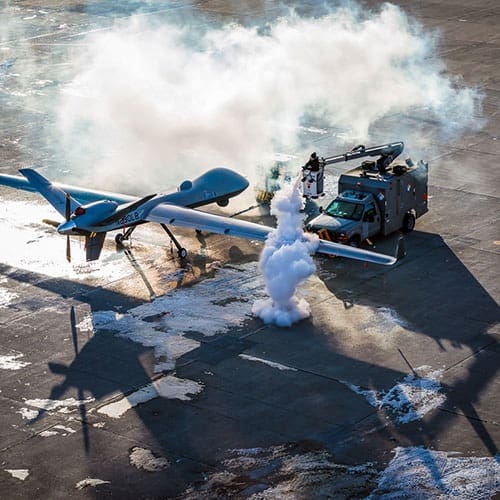
SAN DIEGO – 15 April 2026 – The U.S. Army is upgrading its MQ-1C Gray Eagle® Extended Range (ER) with enhanced electronic intelligence capabilities via a contract awarded to General Atomics Aeronautical Systems, Inc. (GA-ASI). ELINT supports long-range sensing for the Integrated Air Defense System (IADS), providing critical information to ground commanders. This capability allows Gray Eagles to operate outside threat ranges while looking deeply into the battlespace and enables advanced manned-unmanned teaming to increase survivability for crewed Army aircraft.

“Combining long-range detection with the range and persistence of the Gray Eagle platforms ensures that commanders always know when an adversary IADS is operating,” said GA-ASI President David R. Alexander. “Gray Eagle’s open systems architecture makes this a simple but impactful upgrade.”

The ELINT sensor identifies and geo-locates critical threats vital to Joint Force Operations. To further enhance the Gray Eagle ERs electronic support capabilities, GA-ASI, along with Capability Program Executive Intelligence and Spectrum Warfare, will partner with SNC to integrate advanced radar detection and signal collection technology.

In addition to ELINT, the Gray Eagle ER has also been configured with modernized Communications Intelligence (COMINT), Synthetic Aperture Radar/Moving Target Indicator (SAR/MTI), and Mobile Ad Hoc Network (MANET) radios in multiple Army demonstrations, highlighting the platform’s C5ISR Modular Open Suite of Standards (CMOSS) architecture. The aircraft also supports the integration of best-of-breed sensors, payloads, and weapons to rapidly adapt to threats or specific missions.

Gray Eagle ER was featured in the U.S. Army’s Project Convergence Capstone-5 (PCC-5) last year. The multi-mission, multi-sensor Gray Eagle ER performed persistent Detect, Identify, Locate, and Report (DILR) missions in an electronically contested environment, simultaneously providing mesh network aerial tier support to maneuver units and connecting the soldiers and launched effects that might otherwise be obstructed by terrain or be out of range.

PCC-5 demonstrated Gray Eagle ER’s ability to transform contact, fight, and survive capabilities, automating operator input with easy-to-use human-machine interfaces. Resilient to jamming while integrating and cross-cuing ELINT, COMINT, SAR, and Aerial Tier Network Expansion (ATNE), Gray Eagle ER enhanced the survivability of the maneuver forces while supporting the Combined Joint Task Force (CJTF).

NRAAM 26 – Tippmann Ordnance Pirate Pistol

April 17th, 2026

Affectionately known as the Pirate Pistole, the new GSTR 380 is serious departure from the company known for their .22 and 9mm Gatling Guns.

Chambered in .380, it features a 7-round tubular magazine below the barrel. The pump action can be slam fired. Finally, the barrel is threaded to accept a suppressor.

tippmannordnance.com/380-pirate-pistol

NRAAM 26 – FLUX Defense

April 17th, 2026

FLUX Defense has introduced a new holster for their Raider 365 chassis which turns your SIG P365 into a PDW.

In addition to the adjustable height options, they’ve now added adjustable retention to the Gen 2 holster.

Get yours at fluxdefense.com/shop/gen2-holster-raider-365-ultralight.

NRAAM 26 – UNITY Tactical Expands FAST Line With FAST FTC Holosun

April 17th, 2026

Newest FTC Mount Provides Purpose-Built Solution for Maximum Clarity with Holosun Magnifiers
BROUSSARD, LA. (April 17, 2026) – UNITY Tactical, a designer of components that integrate tactical systems and optimize the human factor, announced today the launch of its fourth FTC (flip-to-center) mount, the FAST FTC Holosun, at NRAAM 2026.

The FAST FTC Holosun is a purpose-built mount designed to bring the unique footprint of Holosun magnifiers into the FAST ecosystem. Specifically engineered for the HM3X and HM3XT magnifiers, it provides optimal alignment for a cleaner sight picture when paired with a red dot mounted at the established FAST height of 2.26” to the optical centerline.

While these Holosun magnifiers are also compatible with UNITY’s FAST FTC OMNI, the FAST FTC Holosun offers a specialized solution that expands the ecosystem of compatible optics. When pairing the HM3X or HM3XT with certain red dots—such as the Holosun 403 or 503 series on a FAST Micro—the OMNI’s versatile design can lead to a slight occlusion of the lower sight picture. The FAST FTC Holosun is purpose-built to eliminate this overlap, ensuring a true, unobstructed sight picture across these specific configurations.

The mount incorporates UNITY’s patented Flip-to-Center (FTC) technology to stow the magnifier securely below the sight plane and within the footprint of the weapon’s receiver, eliminating the snag hazards associated with traditional legacy flip-to-side designs. A force-to-overcome mechanism allows for rapid transition, moving the magnifier out of the way when not in use.

The FAST FTC Holosun also features UNITY’s integrated, low-profile FAST QD Lever for quick attachment and removal without compromising stability. Machined from 7075-T6 aluminum with a Type III hard coat anodized finish, the mount is available in both Black and Flat Dark Earth (FDE) and includes a lifetime warranty.

The FAST FTC Holosun retails for $293 and is available for purchase now through authorized UNITY dealers and on unitytactical.com. The FAST FTC Holosum is on display for the first time at the UNITY Tactical booth #1025 at NRAAM in Houston April 17-19.

2026 NRA Annual Meeting

April 17th, 2026

Please join us as we attend the 2026 National Rifle Association Annual Meeting & Exposition in Houston, Texas.

US Army Selects Vector AI for Brigade Combat Teams

April 17th, 2026

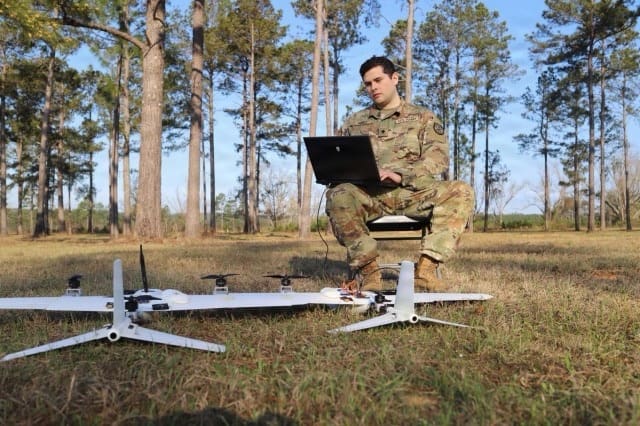
Quantum Systems’ Vector AI will support U.S. Army modernization and future Medium Range Reconnaissance (MRR) capabilities for Brigade Combat Teams

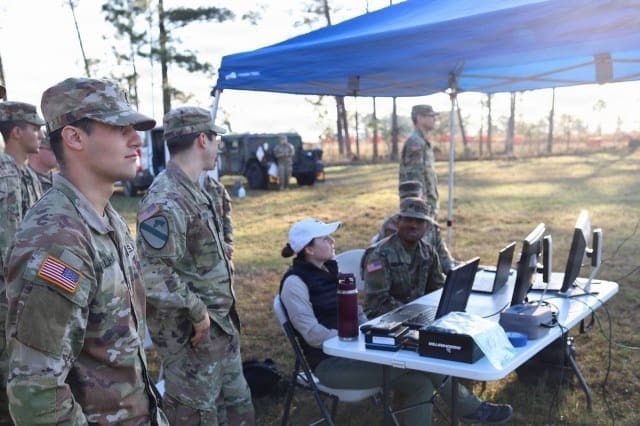
Moorpark, California (USA), April 15, 2026 – Quantum Systems Inc., the US entity of Quantum Systems, today announced that Vector AI  has been selected for the U.S. Army’s Company-Level sUAS Directed Requirement (DR) 2 initiative under a contract valued at $15.3 million. Vector AI will accelerate the delivery of advanced aerial intelligence capabilities to Brigade Combat Teams of the U.S. Army.

The effort is a key component of the Army’s modernization strategy to rapidly field commercially available unmanned systems to Soldiers while informing the development of its future Medium Range Reconnaissance (MRR) program, which will define the next generation of tactical unmanned aircraft systems for maneuver units.

Vector AI was selected following a competitive evaluation process that assessed aircraft performance, payload integration, and interoperability with emerging Army software architectures. The program reflects the Army’s push to rapidly field operationally proven, commercially available systems that can evolve alongside future requirements while delivering immediate operational capability to forces at the tactical edge.

“Today’s battlefield demands unmanned systems that are adaptable, resilient, and proven in real-world operations,” said Dave Sharpin, CEO of Quantum-Systems Inc. “The Vector platform has logged more than 20,000 operational flight hours in Ukraine alone where operational use has helped refine its autonomy and mission adaptability in contested environments. Its modular architecture and open integration approach align directly with the Army’s push toward interoperable, rapidly evolving capabilities.” 

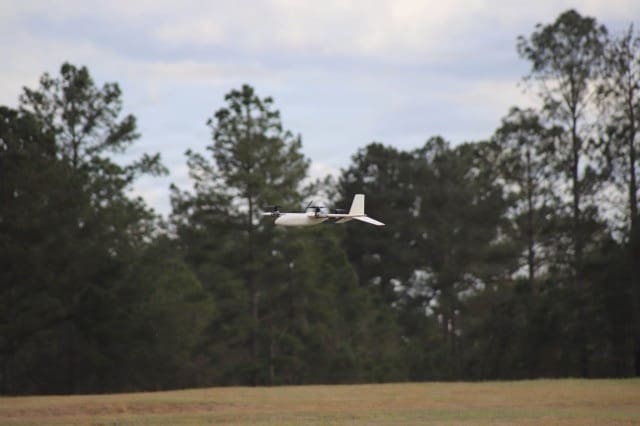
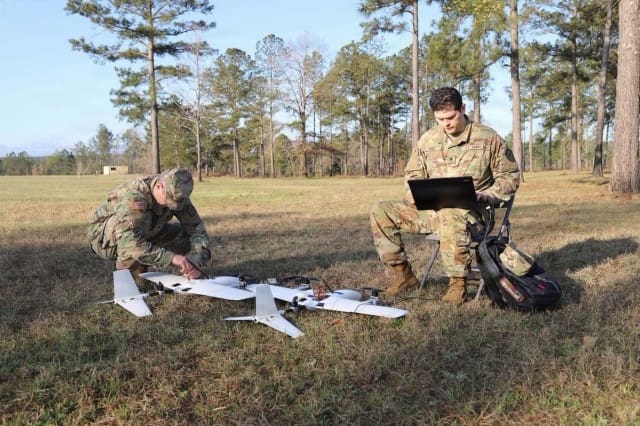
Vector AI delivers real-time tactical intelligence to maneuver forces through an electric vertical take-off and landing design that combines runway-independent launch and recovery with the endurance and efficiency of fixed-wing flight. Deployable by a single operator in under five minutes, the compact system supports reconnaissance, surveillance, and target acquisition through AI-enabled mission planning, advanced electro-optical sensing, and vision-based targeting.

Designed for contested environments, Vector AI incorporates anti-jamming features and a multi-layered GPS denied navigation stack to support visual navigation and precision targeting functionalities that work completely independently from GPS. Its modular, open architecture enables rapid payload integration and interoperability with external systems such as TAK and other battlefield management systems, enabling units to detect, track, and develop targets while maintaining situational awareness across the operational area.

FirstSpear Friday Focus: Tubes Rodeo T-Shirt

April 17th, 2026

The FirstSpear TUBES RODEO T-SHIRT is built for off-duty wear without dropping standards. It’s made from a soft 60/40 cotton blend that’s comfortable enough for long days, whether you’re at the range, in the gym, or just staying low profile.

Lightweight and breathable, it keeps things easy without feeling cheap or disposable. The side-seamed construction gives it a better fit than your average boxy tee.

Available in black, tan, and maroon, it keeps your look clean and simple while still standing out just enough. Sizes run from Small to 3XL, so you’re covered regardless of build.

Bottom line: it’s not tactical, but it’s not sloppy either. It’s the shirt you grab when the kit’s off, but the mindset’s still on.

To request an estimate click image above or visit First-Spear.com/Request-For-Estimate. FirstSpear is the premier source for cutting-edge tactical gear for military, law enforcement and those who train. For more information visit First-Spear.com.

Marines Participate in Advanced Radio Frequency Intelligence Operators Course

April 17th, 2026

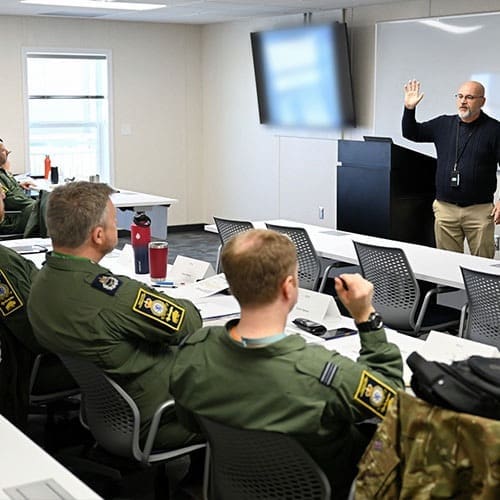
U.S. Marines participated in the Advanced Radio Frequency Intelligence Operators Course (ARFIOC) 26-1 at Camp Shelby Joint Forces Training Center, Mississippi, Feb. 26, 2026, led by U.S. Marine Corps Forces, Central Command (MARCENT) and sponsored by U.S. Central Command (CENTCOM). A program focused on advancing signals intelligence and electronic warfare capabilities in support of operational forces.



ARFIOC builds on foundational Signals Intelligence (SIGINT) training by providing intermediate to advanced instruction in electromagnetic spectrum awareness, radio frequency theory, signal identification, signal characterization, and advanced geolocation techniques. The course is designed to refine technical proficiency and prepare Marines to operate in complex and contested electromagnetic environments.




Originally developed during the 2015 Marine Corps SIGINT Strategy Working Group, ARFIOC addresses training gaps identified during pre-deployment cycles and has been hosted by MARCENT since Fiscal Year 2017. In Fiscal Year 2026, CENTCOM adopted ARFIOC as a training platform to support deploying SIGINT units.

The course progresses through foundational instruction, individual skills development, advanced operator training, and culminates in a complex, live radio frequency scenario known as the Culminating Exercise (CULEX). Throughout the evolution, Marines operate in a layered electromagnetic environment replicating pacing threat conditions and are challenged with tactical and operational problem sets.

Training events include multi-domain reconnaissance and surveillance, signal reconnaissance target development, static and mobile SIGINT operations, and contingency response scenarios such as Tactical Recovery of Aircraft and Personnel (TRAP) missions in contested environments. These exercises require distributed teams to detect, analyze, and geolocate signals while maneuvering and adapting to changing conditions.

“ARFIOC is about sharpening the skills that directly impact operational readiness,” said Master Gunnery Sgt. Rafael Alcala, ARFIOC course director. “Our Marines are learning to operate confidently in contested electromagnetic environments and provide commanders with timely, relevant intelligence. That level of technical competence and adaptability is critical to success in today’s operational landscape.”

ARFIOC incorporates both digital and analog signal sets, frequency-agile communications, high-frequency targeting, and advanced direction-finding techniques to mirror modern operational challenges. Written and practical evaluations measure student progression and provide feedback to continuously refine the program of instruction. In addition to strengthening tactical proficiency, ARFIOC serves as a venue to test emerging technologies and inform future SIGINT training requirements. By advancing individual expertise and reinforcing unit readiness, the course prepares Marines to support commanders in competition and conflict across the electromagnetic spectrum.

“This course has honestly been one of the best training opportunities I’ve had,” said Cpl. Coby Prociw, a student in ARFIOC 26-1. “It forces you to think and adapt in real time instead of just going through the motions. The scenarios feel real, and it’s definitely making me more confident and better prepared for when we have to do this outside of training.”

With ARFIOC 26-1 complete, course leadership continues refining the program of instruction based on student performance and operational feedback to ensure the curriculum remains aligned with evolving mission requirements. The next iteration of ARFIOC is tentatively planned for fall 2026, continuing the effort to advance Marine Corps signals intelligence readiness and prepare the joint force for future operational demands.

Story by Ruben Cordero 

31st Marine Expeditionary Unit

Photos by Sgt. Angela Wilcox 

U.S. Marine Corps Forces Central Command