SIG SAUER - Never Settle

American Rheinmetall Invests $31.7M in Michigan to Accelerate US Defense Modernization and Strengthen National Industrial Base

September 13th, 2025

American Rheinmetall announced today a $31.7 million investment in its Michigan facilities, reinforcing its commitment to advancing U.S. defense capabilities, strengthening domestic supply chains, and expanding the skilled U.S. manufacturing workforce. The investment includes a move to a state-of-the-art, 168,056 sq. ft. facility in Auburn Hills, MI that will consolidate existing operations in Troy and Sterling Heights, and the creation of 450 new jobs across the enterprise, further demonstrating the company’s commitment as a hub for next-generation defense innovation.

This strategic investment positions American Rheinmetall to provide enhanced support for critical U.S. Department of Defense (DoD) programs, including the U.S. Army’s XM30 combat vehicle program, where the company is one of two prime contractors competing to deliver the Army’s next-generation combat vehicle platform to replace the M2 Bradley.

“This expansion represents a major step forward in strengthening our ability to deliver critical defense technologies to the U.S. military,” said Matt Warnick, CEO of American Rheinmetall. “It’s a direct investment in American manufacturing capacity and the skilled workforce that powers it.”

While the primary focus of the investment and new facility is on advanced defense products, American Rheinmetall’s capabilities also extend to the broader manufacturing sector—including precision components used in agricultural and commercial machinery. These products support American farmers by improving equipment durability, efficiency, and sustainability.

“Our Michigan operations are central to our U.S. growth strategy—not only in defense but across a range of markets where performance and reliability matter,” added Warnick. “From the battlefield to the heartland, we’re proud to support the industries that underpin national security and economic strength.”

The expansion directly supports national defense priorities by accelerating the modernization of U.S. military capabilities. It also bolsters industrial resilience by expanding domestic production capacity, not only in defense but across critical manufacturing sectors. The investment contributes to workforce development by creating 450 new jobs with highly competitive starting wages and benefits that are above the regional median wage. This initiative enhances the security of U.S. supply chains and reinforces the vital connection between national defense, economic strength, and the domestic manufacturing industrial base.

The new Auburn Hills site was selected after a competitive process involving eight other states. The decision was supported by the State of Michigan, the Michigan Economic Development Corporation (MEDC), and local partners.

Michigan’s deep engineering talent and strong heritage in defense and heavy equipment manufacturing made it the ideal location to deepen the company’s roots.

This investment follows American Rheinmetall’s recent acquisition of Loc Performance Products, another Michigan-based defense supplier, further enhancing the company’s ability to deliver integrated, scalable solutions across its defense portfolio.

Thunder Dome: Looking Back, Powering Forward with AFSOC Innovation

September 13th, 2025

HURLBURT FIELD, Fla. —  

Air Force Special Operations Command continues to champion innovation with its third annual Thunder Dome Innovation Competition scheduled this fall. Beyond the competition, the program’s success is measured by the real-world impact of its funded projects.


Every year, the competition solicits project submissions from Airmen across the AFSOC enterprise that can positively benefit readiness. Once reviewed, senior leaders select the teams with the best proposals to present in front of a judging panel. The command awards the winners with funding to develop their concepts into tangible solutions.

As we prepare for the next Thunder Dome competition, here’s a look at the progress of past winners and their ongoing projects:

From Prototype to Production: The LaraCota Comm Cord Tester

Funded through the 2024 Thunder Dome competition, the LaraCota Comm Cord Tester introduced by a member of the 27th Special Operations Wing, progressed from prototype to mass production upon additional evaluation at Cannon Air Force Base, New Mexico.

K-RATH: A Collaborative Approach to Innovation

K-RATH, developed by the 492nd SOW, received an initial Thunder Dome award for prototype development. Further funding secured collaborations with Michigan Technological University students for engineering testing and product design by Nottingham Spirk, with support from the Office of the Assistant Secretary of the Air Force for Acquisition, Technology and Logistics. The next stage for the project is further prototype development.

Enhancing Training Capabilities: The Electrical Training Board and Specialized Fueling Trainer

The 2025 Thunder Dome competition funded two projects focused on training. The 353rd SOW at Yokota Air Base received an investment to develop an Electrical Training Board, coordinating with Air Education and Training Command; while the 492nd SOW was awarded funding for a Specialized Fueling Trainer, currently under further prototype development with SOFWERX.

These featured innovations offer just a glimpse into the outcomes of the Thunder Dome competition. By empowering Air Commandos with funding, resources, and a platform to share ideas, AFSOC fosters a culture of continuous improvement with its annual Thunder Dome program.

Voting for the 2026 Thunder Dome Innovation Competition is now open and runs through September 26th. Select the best game-changing ideas to solve our toughest challenges, your vote will help determine the finalists.

Use this link to set up your DoD-Registered account and cast your three votes for the most impactful ideas. Every Air Commando voice matters!

Air Force Special Operations Command Public Affairs

Royal Visit Celebrates Pincroft Role in Military Textiles

September 12th, 2025

Pincroft Dyeing and Printing, a global leader in military fabric printing, dyeing and finishing, welcomed Her Royal Highness The Princess Royal to its Adlington site in Lancashire on Tuesday 9 September 2025, to showcase a £1.5 million investment in advanced camouflage printing technology.

The Princess Royal, who serves as President of theUK Fashion and Textile Association, toured the upgraded production line, which includes a new rotary printer and laser engraving equipment. The visit highlighted how the company’s innovations support defence forces worldwide, with camouflage fabrics supplied to the UK Ministry of Defence, the Finnish Army, Estonian Defence Forces, Australian Defence, and others.

The visit was hosted by Group CEO John Vareldzis and Managing Director Mike Collins, with Her Royal Highness meeting technical managers, dyehouse and engraving specialists, as well as a select number of guests during the tour.

John Vareldzis said: “We are extremely privileged and honoured to have hosted Her Royal Highness The Princess Royal at our factory and to showcase our latest investment in printing camouflage fabrics. This moment also highlights the dedication of our people, whose expertise underpins more than 130 years of textile heritage.”

The event concluded with the unveiling of a commemorative plaque to mark the occasion, celebrating Pincroft’s commitment to British manufacturing and global military excellence.

For more information and to view the photo gallery of the event, please visit pincroft.co.uk

GA-ASI and AeroVironment Complete First-Ever Air Launch of Switchblade 600 From MQ-9A UAS

September 12th, 2025

Release of Smaller Loitering Munition Further Validates Large UAS as Motherships

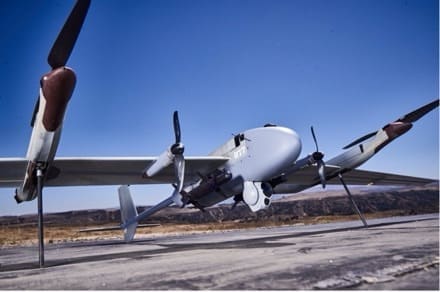
SAN DIEGO, September 10, 2025 (Newswire.com) – General Atomics Aeronautical Systems, Inc. (GA-ASI) and AeroVironment (“AV”) (NASDAQ:AVAV) collaborated on the air launch of a Switchblade 600 loitering munition (LM) from a GA-ASI Block 5 MQ-9A unmanned aircraft system (UAS). The flight testing took place from July 22-24 at the U.S. Army Yuma Proving Grounds Test Range. It marked the first time a Switchblade 600 has ever been launched from an unmanned aircraft.

“This cooperative effort showcased how combining different unmanned technologies could really provide value and effects to the warfighter,” said GA-ASI President David R. Alexander. “By using MQ-9A to carry the Switchblade, the MQ-9A is able to stand off farther from enemy weapons systems and increase the range of the SB600, which will provide greater access and options in contested airspace.”

After successfully integrating the SB600 with the MQ-9A, the team released two LMs: one with an inert warhead and the other with a high-explosive round. After launch, the team transferred control of the Switchblade from a user in the MQ-9A’s ground control station to a user on the ground nearer the operational area.

The test further validated GA-ASI’s ability to integrate and operate a variety of airborne launched effects on the battlefield – including both those built by GA-ASI and by partners such as AV – and how their use in conflict provides risk-tolerant options to commanders in contested operations.

TacJobs – Blockhouse Seeks Product Manager

September 12th, 2025

BLOCKHOUSE is seeking a Product Manager to drive the development and launch of hard goods across its tactical and law enforcement portfolio. The role will oversee supplier partnerships, material innovations, and go-to-market execution to ensure products meet the highest standards of performance and reliability.

BLOCKHOUSE owns LE equipment brands such as WARQ, a leader in force-on-force training equipment featuring their revolutionary anti-fog helmet, the Warq Pro, and DEFILADE Protection Systems, a manufacturer of new age protective equipment in the public order space.

Founded in 2022, BLOCKHOUSE has quickly established itself as a provider of equipment for military, Special Forces, and law enforcement end users. The company leverages experience, trusted partnerships, and innovation to build businesses that deliver sustainable growth and results and continues to expand its presence across the defense and law enforcement markets.

To apply visit: blockhousecorp.com/CAREERS

Aimpoint Celebrates 50 Years of Innovation and Excellence in Sighting Technology

September 12th, 2025

Manassas, Virginia – Aimpoint, the leading manufacturer and innovator of red dot sighting technology, celebrates a half a century of excellence in 2025. With the first prototype optic developed by a Swedish hunter in 1974, Aimpoint was formed in 1975 by family-owned Sandberg Development, and has garnered a reputation of extreme durability, reliability, and exclusivity. Celebrating the 50th anniversary, Aimpoint honors five decades of precision engineering and steadfast commitment to those who demand the very best. From the battlefield to backcountry, in competitions to everyday carry, Aimpoint® optics have remained the trusted choice for professionals and skilled enthusiasts who refuse to compromise.

THE ORIGINAL RED DOT SIGHT Beginning with a simple goal of improved accuracy and faster target acquisition, AIMPOINT sights have set the standard in red dot sighting technology and innovation. AIMPOINT products are subjected to brutal testing, including exposure to extreme heat, cold, physical abuse, and submersion under water. From arctic temperatures to desert sand, the ruggedness of AIMPOINT red dot sights stand up to any challenge. In 1997, Aimpoint rose to prominence in the United States when awarded a contract to supply the U.S. Army with 100,000 Aimpoint Comp® M sights, also known as the M68 Close Combat Optic (M68CCO). Since then, over 2 million red dot optics have been fielded by the U.S. Armed Forces. Today, AIMPOINT optics are also trusted by military forces, police agencies, and elite teams around the world. “This year marks a major milestone for all of Aimpoint and we are only getting started,” says Thane Smith, President, Aimpoint Inc. “As we celebrate throughout 2025, we are reminded of the legacy of innovation and commitment to the highest quality standards for providing optics to support every mission from personal protection to combat zones world-wide.”

FirstSpear Friday Focus: Perforated Rope Skull Hat

September 12th, 2025

The Perforated Rope Skull Hat is built for those who spend long hours on the range and need performance gear that holds up. Designed with a low-profile fit that slides comfortably under ear pro, this hat won’t get in the way when you’re sending rounds downrange.

Featuring a FirstSpear Icon Skull PVC patch front and center, it delivers both utility and presence. Built on the proven Richardson 355 rope cap platform, this piece combines classic styling with modern technical function.

Laser-perforated side and back panels provide superior airflow, keeping your head cool during extended range sessions or high-output training. The integrated Stay-Dri sweatband and moisture-wicking nylon/cotton blend help manage heat and sweat, ensuring comfort in warm or high-humidity environments. The Loden Green colorway keeps things subdued and blends in across multiple operational settings.

A snap-back closure allows for easy adjustment and reliable fit—one size truly fits most.

At 60% nylon and 40% cotton, the construction hits the right balance of durability and breathability. Whether you’re out on a movement, instructing, or just working in the heat, this hat holds its own without compromising comfort. Lightweight, quick-drying, and built with function in mind, the Perforated Rope Skull Hat is ready to earn its place in your kit.

To request an estimate click image above or visit First-Spear.com/Request-For-Estimate. FirstSpear is the premier source for cutting edge-tactical gear for military, law enforcement and those who train. For more information visit First-Spear.

Army Leaders, Stakeholders Discuss Future of UAS Transformation

September 12th, 2025

FORT RUCKER, Ala. – The Army conducted its largest unmanned aerial system flight demonstrations with industry and first UAS lethal live fire experimentation range for more than 400 stakeholders during the annual UAS and Launched Effects Summit.

“This was the single largest transformation venue solely focused on UAS across all of DOD,” said Col. Nicholas D. Ryan, director, capability manager for UAS, Fort Rucker.

Senior leaders, Soldiers and industry representatives discussed the future of UAS, policy changes, the deployment of drones, emerging capabilities and the challenges posed by adversaries who are developing and advancing their own unmanned systems.

Partnerships

UAS stakeholders who collaborated throughout the event included UAS operators from Army divisions, training installations and combatant commands; UAS experts from joint and interagency services including the Marines, Air Force, Navy, Special Forces, the Department of Homeland Security, police agencies and allied partners from Japan, South Korea, Australia, Britain, Germany and Israel; more than 275 industry partners; and policy makers from the joint staff at the Pentagon.

“They all synchronized all UAS transformation efforts, shared best practices and [tactics, techniques and procedures], and rapidly proliferated UAS capability across the Army,” said Ryan. He said they took lessons learned from current conflicts, where unmanned systems are being deployed and reshaping battlefield tactics, and discussed the future of the Army’s UAS program.

During the summit, system developers and industry partners exhibited both fielded and in-development UAS systems on Fort Rucker’s ranges. Soldiers and industry experts conducted a live demonstration of lethal UAS, showing drones armed with bomb and grenade dropping systems, 12-gauge shotguns, 40mm grenade launchers, and various explosive payloads. First-person-view drones were demonstrated destroying moving ground vehicles and intercepting other drones mid-flight.

“This was the opportunity to see the art of the possible… and the best of industry, and to take that across the street and put it in the hands of the Soldiers was great,” said Maj. Gen. Clair Gill, commanding general, Army Aviation Center of Excellence and Fort Rucker.

Transformation

Ryan said events like the summit allows the Army to achieve the goals of the Army Transformation Initiative, the White House’s Executive Order for unleashing American drone dominance and the Defense Secretary’s guidance for unleashing U.S. military drone dominance.

“The Army’s UAS mission is to rapidly integrate UAS technology and accelerate UAS transformation efforts across the Army,” said Ryan. “This summit is the largest Army venue solely focused on accelerating the Army’s UAS transformation efforts. The past two years of executing the Army UAS and LE summit have driven significant change across national, DOD and Army transformation and integration initiatives.”

Future

Looking ahead, commanders at brigade level and below will soon have access to a secure online storefront to purchase drones for experimentation, training, and operational use. The intent is to empower units to develop their own tactics and discover novel applications for unmanned systems in support of their missions.

“We want to give the commanders a lot of risk authority, let the commanders fly these systems in their area,” said Ryan.

Fort Rucker is conducting the first iteration of the Army’s new lethal operator course, which trains Soldiers in the use of armed small UAS.

“Almost every division and [Army National Guard and Special Operations Command] has folks here at our course, and they are going to leave here as lethal operators that can go back out and train their units,” said Gill.

The course is being developed with the objective of becoming like other Army specialty programs such as Air Assault School, with the goal of standardizing instruction and enabling expansion to other installations.

“The idea is that we can export it,” said Gill. “So now we’re running Air Assault School; we’ve got a standardized block of instruction, here’s what you need, here’s the equipment you have to buy, here’s the ranges, capabilities, and limitations you’re going to have, here’s the pre-requisites to bring people in, and what you’re going to train them on. So, you’ll see that lethal operator course probably at the Fires Center, the Maneuver Center, and probably anywhere else (the Army) thinks it’s appropriate.”

Ryan said Soldiers from every career field across the Army are innovating and adopting new UAS technology and TTP’s at every echelon down to the squad level to maintain a tactical advantage over any adversary.

As UAS technology advances, these Soldiers are learning to operate and integrate new UAS air vehicles and payloads faster than before,” said Ryan. “Taking lessons from Ukraine, these Soldiers are also innovating with 3D printing and additive manufacturing to develop, build, and fly their own Soldier-built UAS capabilities. The Army is quickly implementing new policies and training programs to accelerate and resource this front-line innovation and integration.”

Fort Rucker

Fort Rucker is uniquely positioned to support UAS advancement because it combines experienced personnel, available airspace and the necessary approvals to conduct complex and realistic training and evaluation, said Ryan.

He envisions the post as a location where industry can bring new capabilities to put directly in Soldiers’ hands for operational feedback.

“We have the experts here, we have (U.S. Army Combat Capabilities Development Command) here, and now we have the range and approvals to do it,” said Ryan. “So, our intent, working with industry, is: use us, come to (Fort Rucker) as a location and a site if you want to test out a new drone or a new capability, or something lethal. Come to us, we’ve got the airspace, we’ve got the range and we’ve got the people here.”

Col. Joshua Ruisanchez, director, Army aviation capabilities and integration directorate, urged continued collaboration between the Army and industry.

Over the next six months, the focus will be on three critical areas: artificial intelligence integration, the development of a universal drone controller, and the continued refinement of the drones themselves, said Ruisanchez.

“The Maneuver Center will ensure every Soldier touches the drone, and they get the training that’s needed to be able to operate them,” he said. “We see this almost like a basic training task like chemical gear. How do you protect yourself against a drone, and how do you employ the drone?”

Gill said AVCOE will serve as the Army’s central proponent for UAS, ensuring a unified approach to fielding, training, and operational integration.

“It needs to be centralized, one proponent to bring it all in and push it all out,’” he said.

Ryan said that though AVCOE and Rucker will be the central proponent for the Army’s UAS program, the Army’s close partnership with all its stakeholders is essential.

“Operational, joint and allied teammates, academia, capability managers, material developers, policy makers, industry partners, they all drive the acceleration and implementation of the Army’s transformation efforts,” said Ryan.

By Shannon Collins and and John Hamilton, Army News Service