TYR Tactical

Edgar Brothers Collects the Keys to Its New Headquarters and National Defence Manufacturing & Innovation Centre

September 7th, 2026

Macclesfield, Cheshire — 3 September 2026

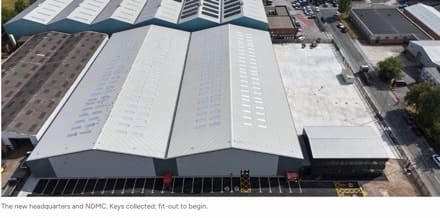
Edgar Brothers has collected the keys to its new headquarters and National Defence Manufacturing & Innovation Centre (NDMC). Fit-out of the building will now begin.

The purpose-built 70,000 sq ft facility is eight miles from the current Macclesfield site. Operations will continue there while the new building is fitted out, with the full move due to be completed in Q1 2027.

The NDMC supports the firm’s plans for continued growth in contracting and distribution, whilst allowing for moves in to manufacturing, testing, education and training. That means British jobs and a stronger UK industrial base as the company enters its 80th year.

“Proud day today as we picked up the keys to our new Edgar Brothers NDMC and Headquarters. There’s still plenty of work ahead to turn it into the finished product, but it feels fitting that as we move into our 80th year we now have a place that will be as impressive as our history. On a personal level, it feels real now. I couldn’t be prouder of every member of the team who has played a massive part in getting us here. Roll on 2027!”

IAN GORDON, MANAGING DIRECTOR, EDGAR BROTHERS

edgarbrothers.com

BFG Monday – Why MOLLE/PALS Compatibility Matters

September 7th, 2026

MOLLE/PALS compatibility allows users to mount pouches and accessories across plate carriers, chest rigs, battle belts, packs, and other load carriage platforms without being locked into a single brand or proprietary system.

That compatibility matters because most military units, law enforcement agencies, and individual users are not building complete loadouts from scratch. They are improving equipment that has already been purchased, fielded, configured, and trained with.

A new pouch may be lighter or more capable, but those improvements mean little if the pouch does not work with the equipment already in use. The best upgrades improve a proven system rather than forcing the user to replace it.

Blue Force Gear® has spent years developing lighter load carriage equipment while maintaining compatibility with the MOLLE/PALS standard. Technologies including Helium Whisper®, MOLLEminus®, and ULTRACOMP® reduce unnecessary material and weight without requiring users to abandon their existing platforms.

What Is the Difference Between MOLLE and PALS?

MOLLE stands for Modular Lightweight Load-carrying Equipment. It refers to the broader load carriage system used to carry and organize mission-essential equipment.

PALS stands for Pouch Attachment Ladder System. It is the grid of horizontal attachment points found on plate carriers, chest rigs, belts, packs, and other tactical equipment. MOLLE-compatible pouches attach to this grid by weaving their attachment straps through the pouch and the platform.

The terms MOLLE and PALS are often used interchangeably, but they do not mean exactly the same thing. PALS is the attachment grid. MOLLE is the larger load carriage system that uses it.

The distinction is less important than the practical result: a properly designed MOLLE-compatible pouch should attach securely to a correctly constructed PALS platform, even when the pouch and platform come from different manufacturers. This open compatibility is one of the primary reasons the system remains widely used across professional load carriage equipment.

Why Does MOLLE/PALS Compatibility Matter?

MOLLE/PALS compatibility gives users the ability to configure and improve their equipment without replacing the entire load carriage system.

A military unit may already have hundreds or thousands of issued plate carriers, belts, chest rigs, and packs in service. A law enforcement agency may have established equipment requirements, training procedures, and standardized pouch placement. An individual user may have spent years refining a loadout around a specific mission or job.

Moving to a proprietary attachment system can create additional costs, training requirements, logistical challenges, and equipment limitations. A compatible solution allows the organization or user to upgrade individual components while keeping the rest of the system in place.

That provides several practical advantages:

• Pouches can move between compatible carriers, belts, chest rigs, and packs.

• Users can upgrade individual components as requirements change.

• Organizations can modernize equipment in phases.

• Familiar pouch placement and established procedures can remain intact.

• Existing equipment investments do not have to be abandoned.

• Users can select equipment based on capability rather than ecosystem restrictions.

Compatibility does not prevent innovation. It makes useful innovation easier to adopt.

How Blue Force Gear® Improved the MOLLE/PALS Standard

Traditional MOLLE construction typically relies on multiple layers of fabric and sewn webbing. That approach provides a proven attachment surface, but the added layers, stitching, hardware, and individual components also create weight and bulk.

Blue Force Gear approached the problem differently. Instead of replacing MOLLE/PALS with a closed attachment system, BFG® developed materials and construction methods that reduce unnecessary weight while remaining compatible with existing equipment.

The foundation of that approach is ULTRACOMP, BFG’s high-performance laminate. ULTRACOMP combines structural stability, abrasion resistance, and strength in a lightweight material that resists stretching and water absorption. It allows BFG to replace heavier assemblies made from multiple layers of nylon, fabric, and webbing with a more efficient construction.

That material technology supports two complementary BFG systems: Helium Whisper and MOLLEminus.

What Is Helium Whisper®?
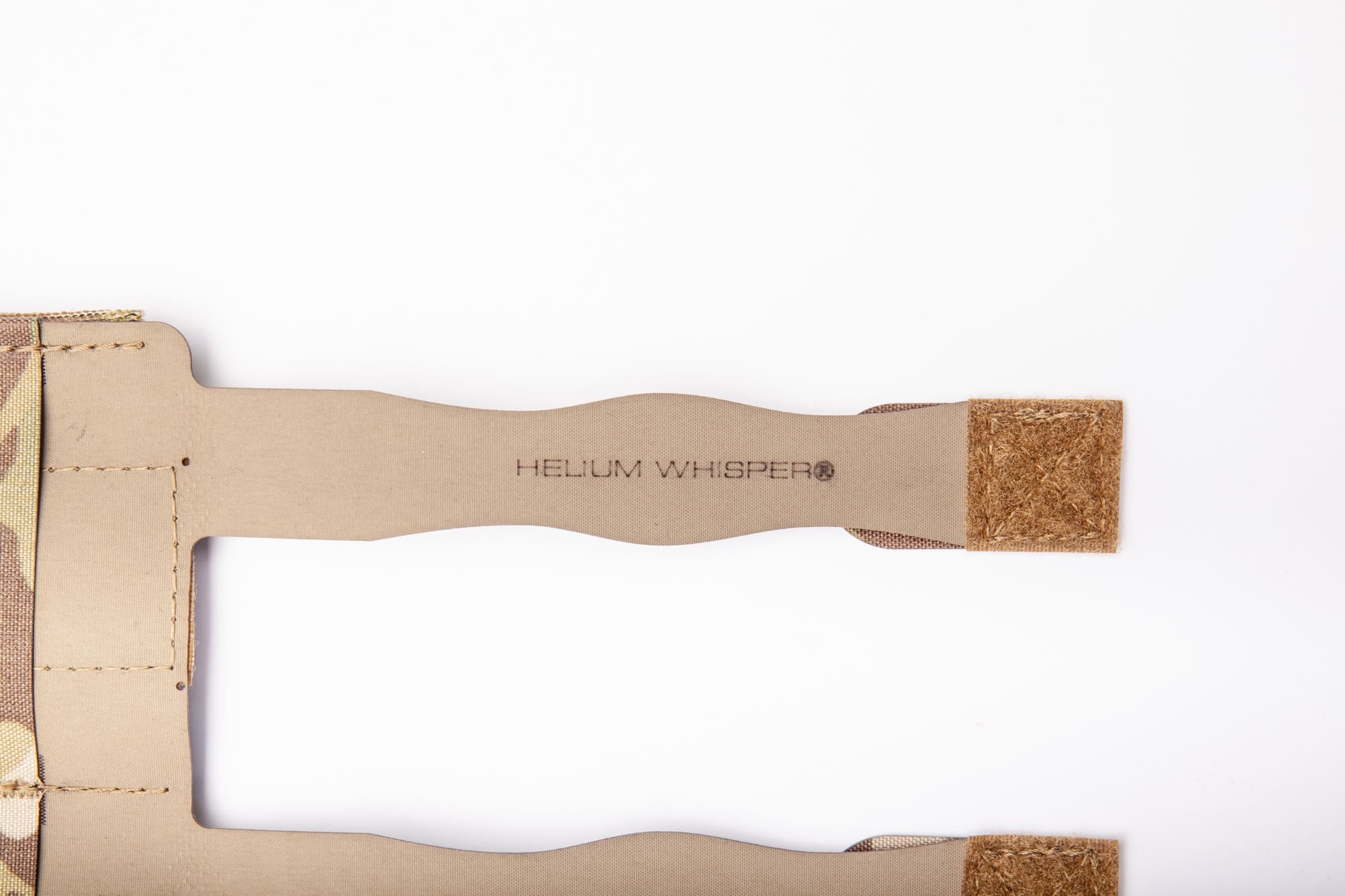
Helium Whisper is Blue Force Gear’s patented MOLLE pouch attachment system.

Traditional pouch backers can require numerous layers, straps, stiffeners, snaps, and pieces of sewn webbing. Helium Whisper replaces that construction with a laser-cut ULTRACOMP backer that uses fewer parts while remaining fully compatible with MOLLE/PALS platforms.

The Helium Whisper system reduced a legacy pouch back panel from 27 individual parts to six and reduced the listed back-panel weight from 83.3 grams to 44.2 grams. No additional proprietary platform is required to mount a Helium Whisper pouch to a compatible carrier, belt, vest, or pack.

For the user, the benefit is straightforward: the pouch mounts where a traditional MOLLE pouch would mount, but the attachment system carries less unnecessary material.

Helium Whisper can be found across BFG’s magazine pouches, medical pouches, utility pouches, and other load carriage products.

What Is MOLLEminus®?
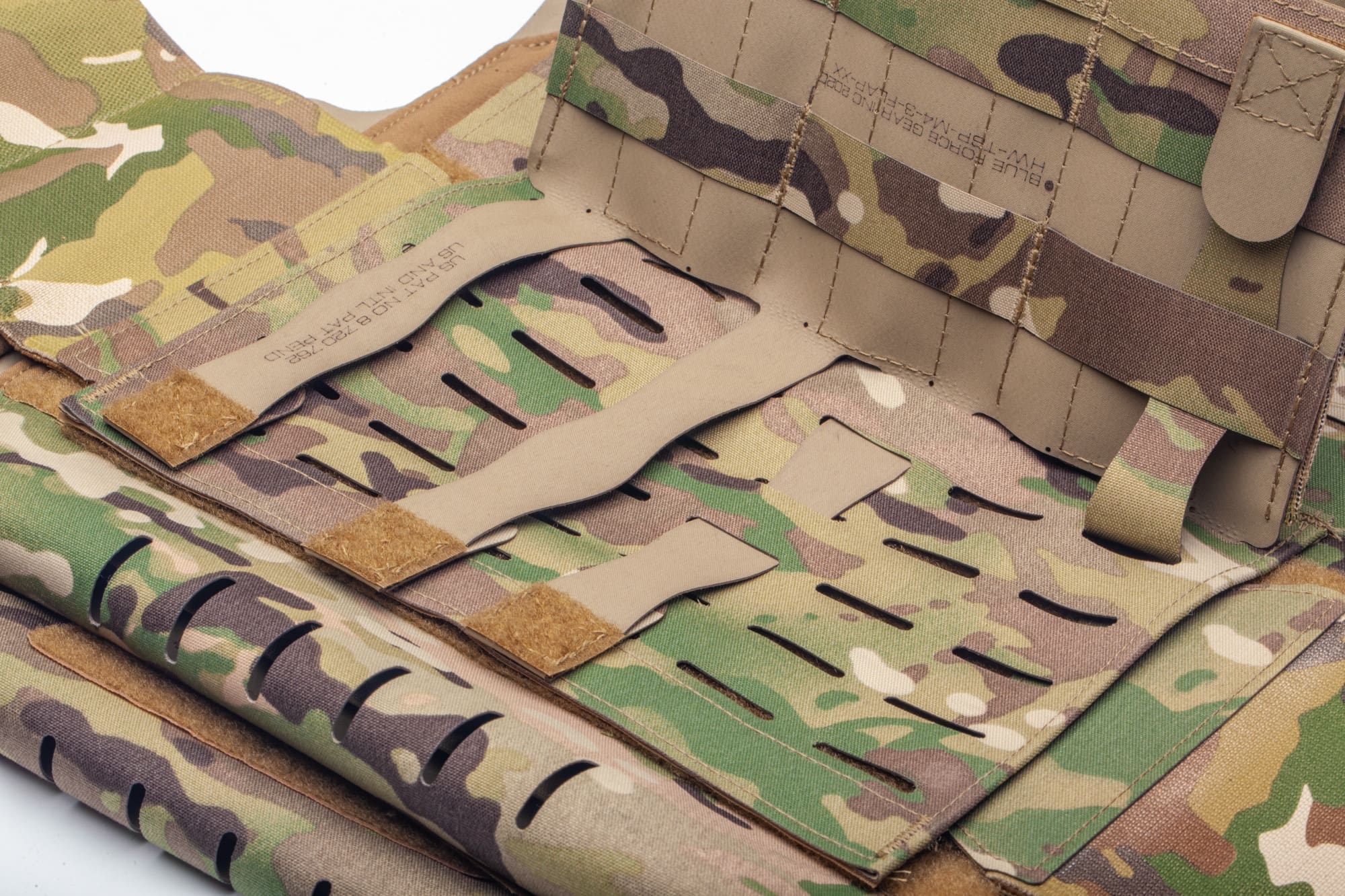
MOLLEminus applies the same weight-reduction philosophy to the platform itself.

Rather than sewing rows of webbing onto a fabric base, MOLLE attachment points are laser cut directly into a single layer of ULTRACOMP. This removes layers of material while maintaining compatibility with Helium Whisper and traditional MOLLE attachment systems.

MOLLEminus is used across BFG plate carriers, chest rigs, belts, and other load carriage platforms. It gives users a lightweight attachment surface without restricting them to MOLLEminus-specific pouches.

A MOLLEminus platform can accept Helium Whisper pouches, traditional MOLLE pouches, and other properly designed MOLLE-compatible equipment. The user gains the weight and bulk reduction of a modern platform without giving up access to the existing MOLLE/PALS ecosystem.

Can Helium Whisper® Pouches Fit Traditional MOLLE Platforms?

Yes. Helium Whisper pouches are designed to mount to standard MOLLE/PALS platforms, including compatible plate carriers, chest rigs, tactical belts, packs, and vests.

A user does not need a MOLLEminus platform to use a Helium Whisper pouch. The pouch can be added to existing equipment as an individual upgrade.

The reverse is also true. MOLLEminus platforms remain compatible with traditional MOLLE pouches. Users can keep current pouches, add new ones over time, or combine attachment types based on their requirements.

This interchangeability prevents the upgrade from becoming an all-or-nothing decision.

How Do You Know Whether a MOLLE Pouch Will Fit?

Before adding a pouch, verify that the platform has enough available rows and columns for the pouch’s attachment footprint. The pouch width, platform dimensions, and attachment method should all be considered.

A properly designed MOLLE-compatible pouch should attach to a compatible PALS platform when enough mounting space is available. Attachment straps should be woven through both the pouch and the platform to create a secure connection.

Users should also consider whether the pouch location interferes with other equipment, movement, accessibility, armor, vehicle seating, or mission requirements.

How Compatibility Supports Incremental Modernization

Replacing an entire load carriage system at once is not always practical. Equipment may be tied to existing contracts, fielding schedules, approved product lists, training requirements, or unit procedures.

MOLLE/PALS compatibility gives organizations a more realistic path forward. Heavier legacy components can be replaced as budgets, equipment life cycles, and mission requirements allow.

An organization could begin with frequently used components such as magazine pouches, medical kits, or general-purpose pouches. Those products can integrate with equipment already in service. Additional components can be upgraded later without making the original improvement obsolete.

Individual users gain the same flexibility. A lighter magazine pouch, medical kit, or general-purpose pouch can be added without rebuilding the entire loadout.

The user keeps the carrier, belt, or chest rig that already works while reducing weight where it makes the most sense.

Compatibility Preserves Equipment Placement

Compatibility also helps preserve consistent equipment placement.

Users develop familiarity with the location of magazines, medical equipment, communication tools, and other mission-essential items. Equipment placement is often reinforced through repetition, organizational requirements, and training.

Moving to a completely different attachment system can require more than replacing hardware. It may change how equipment is positioned, accessed, and managed.

A compatible pouch allows the user to reduce weight or improve capability while keeping critical equipment in a familiar location. The pouch changes. The established setup does not have to.

Lightweight Gear Should Work With What You Already Have

Modern equipment should reduce the burden on the user, not create a new one.

That is why MOLLE/PALS compatibility remains important. It gives military units, law enforcement agencies, and individual users the freedom to select better components without committing to a closed system or replacing equipment that continues to perform.

Blue Force Gear developed ULTRACOMP, Helium Whisper, and MOLLEminus to make proven load carriage systems lighter and more efficient while preserving the compatibility professional users depend on.

The goal is not to replace everything. It is to remove unnecessary weight from the equipment already trusted to do the job.

Frequently Asked Questions

What Does MOLLE Stand For?

MOLLE stands for Modular Lightweight Load-carrying Equipment. It is the broader modular load carriage system commonly used with PALS attachment grids.

What Does PALS Stand For?

PALS stands for Pouch Attachment Ladder System. It is the attachment grid used to mount compatible pouches and accessories to tactical platforms.

Are MOLLE and PALS the Same Thing?

No. PALS is the attachment grid, while MOLLE is the broader equipment system that uses it. The terms are often used interchangeably when discussing tactical pouches and platforms.

Will MOLLE Pouches Fit a MOLLE-Compatible Plate Carrier?

Yes, provided the carrier has a properly constructed PALS field with enough rows and columns for the pouch’s attachment footprint. Users should verify the available mounting space, pouch dimensions, and attachment method before purchasing.

Are Helium Whisper® Pouches MOLLE Compatible?

Yes. Helium Whisper pouches are designed to mount to compatible MOLLE/PALS carriers, belts, chest rigs, vests, and packs without requiring an additional proprietary platform.

Can Traditional MOLLE Pouches Attach to MOLLEminus®?

Yes. MOLLEminus is compatible with Helium Whisper and traditional MOLLE attachment systems.

Do I Need to Replace My Carrier to Use a Helium Whisper®Pouch?

No. A Helium Whisper pouch can be mounted to an existing compatible MOLLE/PALS platform, allowing individual pouches to be upgraded without replacing the carrier.


Three Components, One Army: LaNeve Stresses Guard’s Role in Army’s New Priorities

September 7th, 2026

INDIANAPOLIS — Army Gen. Christopher LaNeve, vice chief of staff of the Army and acting chief of staff, emphasized the Guard’s indispensable, multidomain contributions to the joint force at home and abroad during an annual National Guard conference in Indianapolis Aug. 29.

Referencing the Army’s newly released strategy document, the Army Azimuth, LaNeve stressed the Guard’s essential role across all three Army priorities: defending the homeland, warfighting and projecting power on and from the land.

“You carry a heavy load of defending the homeland, whether that manifests in Joint Task Force Southern Border, D.C. Safe and Beautiful, or response efforts aligned with national disasters,” LaNeve said.

LaNeve thanked the National Guard for its ongoing support of D.C. Safe and Beautiful — a mission that has brought nearly 10,000 Guardsmen from around the country to support local and federal law enforcement efforts aimed at restoring order in the nation’s capital. As a result, Guardsmen have removed more than 1,400 illegal firearms from local streets, conducted more than 860 medical assistance interventions, administered naloxone to more than 375 people experiencing suspected overdoses and reunited more than 44 minors with their families.

“When I think about the National Guard, I think of individuals who are truly part of their communities, faces that folks recognize and can directly associate with service,” LaNeve said. “That’s a powerful force for good in our nation.”

As a young brigade operations officer, LaNeve witnessed the Guard’s tenacity in the wake of Hurricane Katrina. His unit conducted a relief in place, or RIP, for the Louisiana National Guard’s 256th Infantry Brigade Combat Team in Iraq, whose Soldiers were serving their final weeks of deployment when one of the worst hurricanes in decades devastated their home state.

“The professionalism they displayed during that RIP will always, always stay with me,” LaNeve said. “In the face of absolute worry, they did not falter.”

That same professionalism and tenacity, LaNeve said, is rooted in Soldier fundamentals.

Returning to a “warrior mindset” across the force is critical for maintaining the Army’s position as the world’s most dominant land power. LaNeve outlined this as going back to the basics of rigorous physical training, knowing the mission-essential tasks associated with their military specialty and preparing their equipment.

“Each of us has a moral obligation to our nation and the Soldiers we serve to become the strongest, most lethal and most ready version of ourselves possible,” LaNeve said. “We must care about the basics today to keep our Soldiers alive on the battlefield tomorrow.”

With four Guard mobile brigades scheduled to conduct combat readiness exercises in fiscal year 2027 and Guardsmen currently serving in the U.S. Central Command area of operations, embracing a warrior mindset is more critical than ever, he said.

“You are in the fight.”

LaNeve praised the Virginia National Guard’s 116th Infantry Brigade Combat Team, or IBCT, as the first Army National Guard brigade to participate in a Joint Readiness Training Center rotation ahead of the Army’s plans to convert 25 Army National Guard IBCTs to the mobile BCT structure by the end of fiscal year 2028.

“You are a critical part of our ability to be postured to respond immediately to crises and contingencies both at home and abroad,” he said.

Operation Epic Fury demonstrated how the Army remains the foundation of the joint force, he said. While the operation may appear to center on air power and a blockade, the Army — including the Army National Guard — has continued to provide critical warfighting functions in theater.

He cited the New York-based 42nd Infantry Division, which led Task Force Spartan and provided tactical mission command for land forces from February to May, and the Kansas National Guard’s 130th Field Artillery Brigade, which transitioned from supporting Combined Joint Task Force-Operation Inherent Resolve to serving as the field artillery headquarters for U.S. Central Command forces and executed one of the longest deep field artillery strikes in Army history.

“You are a powerful part of our ability to project power on and from the land,” LaNeve said. “The National Guard generates combat-credible formations and helps strengthen the capacity of our allies and partners through the State Partnership Program.”

The Department of War’s National Guard Bureau State Partnership Program now encompasses 117 partnerships, connecting states, territories and Washington, D.C., with partner nations in every geographic combatant command.

LaNeve highlighted the Washington National Guard and Malaysia, which have partnered since 2017, for their recent weeklong working group focused on developing expeditionary amphibious capabilities and logistics planning.

“We must position ourselves favorably left of conflict, whether that be campaigning, building relationships or forward-basing,” he said. “Through the actions we take today, we are hardening lines of communication and reinforcing the forward areas of the future fight, and you are on the vanguard of this.”

LaNeve also described the Guard’s role in “endurance,” one of four elements of land power outlined in the Azimuth alongside convergence, strike and close battle. Together, they guarantee the Army’s ability to maneuver operationally on the battlefield and to deliver joint all-domain maneuver when integrated into the joint force.

“Endurance is about our ability as an Army to persist,” he said, “to ensure we can maintain posture, protection, projection of power across time, distance, and in the face of an unforgiving and persistent adversary. We use endurance to translate victory on the battlefield to victory in war.”

The Guard’s ability to mobilize helps project power over time and distance, making it essential to the endurance of the Army’s land power. State partnerships build the relationships needed for posture and power projection abroad, and the Guard’s daily contributions to endurance directly support the Army’s ability to conduct operational maneuver, LaNeve said.

“We may have three compos, but we are one Army,” LaNeve told the audience, using a shorthand term for the Army’s active-duty, National Guard and Reserve components. “That Army is the foundation of our joint force.”

By MSG Sarah McClanahan

USMC Issues Guidance on Wear of Class Rings in Uniform

September 6th, 2026

According to MARADMINS Number: 402/26 issued on 28 August, 2026, college or commissioning-source class rings are authorized to be worn in conjunction with wedding rings.

Specifically:

Inconspicuous rings are authorized for wear in uniform.

When worn, only one ring is authorized per hand, except for wedding rings worn with engagement rings or college/commissioning-source class rings (when worn on the same finger they will count as one ring), and will be worn on the base of the finger close to the palm.

Rings will not be worn on the thumbs.

That is all…

Service Khaki Slacks with Back Pockets Now Available to Female Sailors

September 6th, 2026

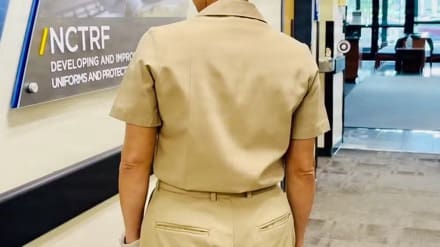
Based on Sailor feedback, female Sailors can now purchase newly designed Service Khaki slacks with back pockets and modern fit sizing.

Based on Sailor feedback, female Sailors can now purchase newly designed Service Khaki slacks with back pockets and modern fit sizing. Slacks will be available for purchase or try-on at NEX Norfolk, NEX Oceana and NEX Arlington, Virginia; NEX Great Lakes, Illinois; NEX Jacksonville and NEX Pensacola, Aviation Plaza, Florida; NEX San Diego; NEX Kitsap-Bangor, Washington; NEX Pearl Harbor, Hawaii; and NEX Bethesda, Maryland, as well as online at myNavyExchange.com.

“This is the first pair of slacks being introduced to the fleet using our new modernized sizing,” said Dr. Brianna Plummer, Group Leader at the Navy Exchange Service Command’s Navy Clothing & Textile Research Facility. “We’ve already introduced two optional items – the Summer and Dress White female overblouses in both short-sleeve and long-sleeve in the new modernized fit sizing, which are annotated as fit types ‘Alpha,’ ‘Bravo’ and ‘Delta.’ The legacy and modernized fit sizing do not correlate; so, it is best for a Sailor to use the available charts to capture accuracy with their ‘new’ fit types. Uniforms with modernized fit sizing will have the same consistent size across all tops and all bottoms. Sailors can get the right fit each time with the goal of needing fewer alterations.” 


The Service Khaki slacks are made of 75% polyester and 25% wool fabric and feature two back welt pockets. Sailors can find their proper size and fit by using the modernized sizing and fit charts available in NEX Uniform Shops and on myNavyExchange.com.

“It is our charge to ensure Sailors are fit for the fight, that means they are equipped with uniforms that fit correctly, are of a quality that performs, and represent professionalism in all tasks,” said Rear Adm. Jennifer Couture, former Director, Military Personnel Plans and Policy (N13). “Modernizing the Service Khaki slacks is a direct result of listening to our Sailors, it’s a tangible example of how we’re modernizing uniforms to fit the needs of Sailors today and strengthen readiness across the fleet.”

Currently, NCTRF is focusing on modernizing the size and fit of female uniforms. In the coming years, male uniform sizes will also be evaluated and updated.  

Story by US Navy

Photo by Josie Anderson NEXCOM PAO

A First in 60 years: JB Andrews Stands Up New Helicopter Squadron

September 6th, 2026

JOINT BASE ANDREWS, Md. (AFNS) —  

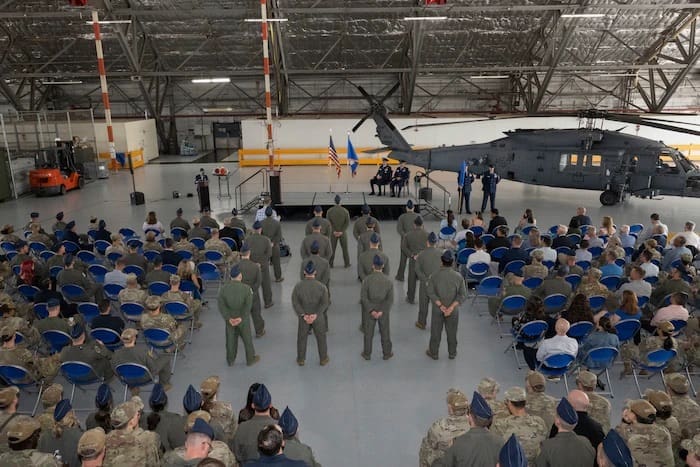
Joint Base Andrews activated the 5th Helicopter Squadron Aug. 27, marking the installation’s first U.S. Air Force helicopter squadron activation in 60 years.

The squadron stands up at a time when the base anticipates accepting the HH-60W Jolly Green II to execute Andrews’ 24/7 operations. The 5th HS will do so alongside the 1st Helicopter Squadron, which was the Air Force’s only rotary-wing unit in the National Capital Region for six decades until now.

“The vision is very straightforward,” said Lt. Col. Jonathan Bonilla, who assumed command as the first 5th HS commander. “We aim to rapidly and safely integrate the HH-60W into the missions here in the National Capital Region and establish a premier rotary-wing organization that supports our nation’s most critical missions, without any pause in operations.”

Transitioning to the HH-60W will modernize the fleet and ensure sustainable operations with a modern airframe that meets current and future requirements. The HH-60W’s increased speed, range and carrying capacity will better deliver safe operations for U.S. senior leaders, service members and the communities around the region.

In the next few years, the 5th HS will train aircrew and maintainers, establish operational and maintenance processes, and receive new aircraft as it prepares to execute the national security mission within the National Capital Region. Throughout the transition, the 1st HS will continue providing immediate-response capability and support daily operations with the UH-1N airframe.

“The Huey has been part of this mission and this community for generations,” said Col. Kevin Geoffroy, 316th Operations Group commander and an HH-60W pilot. “Today, we are standing up the 5th Helicopter Squadron — a unit that inherits a proud, storied legacy. We will honor that legacy by delivering excellence as we modernize our fleet at Joint Base Andrews for the future.”

The phased transition is designed to maintain the 1st HS’ immediate-response mission while Airmen establish the new squadron to train aircrew and maintainers and progressively bring HH-60Ws into service at JBA. The two squadrons will operate in parallel as the 5th HS progresses toward full operational capacity, which the Air Force anticipates will occur in 2030.

Once the 5th HS has transitioned fully to the new airframe and can safely and sustainably execute the missions, the 1st HS will then begin transitioning from the historic UH-1N to the HH-60W platform. Its replacement will bring a platform with greater capacity for the demanding conditions of the mission, including enhanced navigation, secure communications, weather capability and personnel recovery.

Since 1969, the 1st HS has supported its no-fail mission of immediate-response contingency operations in support of vital national security requirements while maintaining a rigorous training schedule to ensure readiness over the decades, and has flown the UH-1N since 1971, with three of the Hueys that flew in the Vietnam War still flying today.

As the nation approaches the 25th anniversary of the Sept. 11, 2001, terrorist attacks, the 1st HS’s response remains a notable part of its history. Following the attack, the Airmen immediately responded to provide support to U.S. senior leaders.

“Our 24/7 mission continues while we prepare the next generation of Airmen and aircraft to continue the legacy of excellence,” said Lt. Col. Zachary Minner, 1st HS commander. “The incredible professionals of the 1st Helicopter Squadron are ready to respond whenever the National Capital Region needs us.”

The HH-60W represents a significant modernization of capability, including updated communications, navigation, weather, sensor and survivability systems. The aircraft is suited to support civil search and rescue, medical evacuation, disaster response, humanitarian assistance and rescue command-and-control missions.

“Our priority is to maintain uninterrupted mission support and ensure the safety of our aircrew, senior leaders, and neighbors, while preparing the next generation of Airmen for future operations,” Bonilla said. “The Airmen here have carried out this mission for more than half a century. We stand on the shoulders of giants, and the 5th HS is the next evolution of Airmen who time and time again deliver exactly what our nation asks of the military in a crisis or contingency.”

In a time-honored tradition, the 5th HS gains its heraldry from the 5th Emergency Rescue Squadron, which was operational from 1944 to 1956. When Lt. Wilton Bowman, a YR-5 pilot assigned to the 5th ERS, flew the unusual machine past Andrews to a nearby air show in 1946, Airmen dubbed it a “whirling oddity.” Eighty years later, the 5th Helicopter Squadron is carrying that legacy into a new era of rotary-wing operations.

As the 5th HS activates, its Airmen will turn a historic “whirling oddity” into a modern chapter of rotary-wing readiness. The unit’s task extends beyond receiving a new helicopter: it will train Airmen, expand capability to meet future challenges, and lead the way in modernizing a legacy fleet to execute the Air Force’s vital national security mission.

Senior Airman Gabriel Jones

316th Wing Public Affairs

Conquering the Last Tactical Mile

September 5th, 2026

CHAMBERSBURG, Pa. – Imagine a car breaking down and having to be transported 7,000 miles for repairs. Now imagine that vehicle is a critical asset needed to keep families and neighbors alive.

For modern warfighters, this logistics bottleneck is not a hypothetical scenario. It is a harsh operational reality known as “the last tactical mile” – the high-stakes battlespace where a military capability is delivered and where its reliability and endurance matter most.

During Operation Iraqi Freedom, a tremendous amount of cargo space on military aircraft was dedicated to moving repair parts forward or retrograding damaged equipment. In a contested near-peer conflict, however, uncontested airlift is not guaranteed. To survive and win on the modern battlefield, units must possess the technical data, tools, and authority to ‘fix forward’ at the point of conflict.

The “Black Box” Vulnerability

Taking the car breakdown example, a step further highlights the inherent risks of “black boxes.” Imagine if instead of being able to replace spark plugs or belts when they fail, all you can do is replace an entire engine. This is reality for maintainers when it comes to proprietary sub-components that only the Original Equipment Manufacturer can test and repair.

Early acquisition decisions frequently trade technical data rights for rapid delivery speed or immediate functionality. While these choices result in short-term acquisition wins, they inevitably create long-term sustainment nightmares. Trapped within proprietary information and supply stovepipes, the system effectively surrenders organic repair capabilities to private defense contractors for the duration of their operational life.

Upon deployment, tactical maintainers encounter modified or non-standard system configurations that they can neither troubleshoot nor repair. This gridlock extends all the way up the sustainment chain. Geographically anchored by costly and numerous OEM test stands and starved of proprietary technical data, organic depots find themselves facing the exact same constraints.

Retaining Rights to Repair/Freedom to Fix

While defense contractors argue that private industry is best suited managing the physical and digital details of complex defense platforms, logistical experts, who have visibility across several weapon platforms, argue that this creates severe operational and financial vulnerabilities.

Without sustainable maintenance pipelines, high-tech weapon systems quickly become liabilities. This vulnerability is especially acute for low-density, high-variety fleets that lack strategic spare parts, face complex modernization efforts, and suffer from extended repair cycle times.

Because the military unit — not the defense contractor — is evaluated on operational readiness and system reliability, any gaps between acquisition and sustainment are ultimately paid for with a decrease in combat power and readiness.

LEAD’s Digital Engineering Solution

To bridge this gap, LEAD is establishing a comprehensive engineering services framework for its customers. LEAD’s configuration management team works with product offices to organize all available technical information and define the baseline configuration within Windchill, an organic Product Lifecycle Management system. This baseline serves as the foundation for all sourcing, tracking, modernization, and decommissioning decisions.

While depots are not configuration managers, utilizing LEAD as a centralized hub ensures sustainment experts are integrated into the decision-making loop alongside community subject matter experts. This baseline technical data includes:

  • Component attributes and engineering models
  • Repair and theory of operation data
  • System test documentation and effectivity records
  • Parent-child assembly relationships, parts lists, and sourcing alternates

During any maintenance cycle at the depot, artisans create a digital twin of each asset as it is being built. These digital twins organize vast amounts of technical data into an intuitive and interactive owner’s manual of what will be delivered. The twin doesn’t just show what the parts are, but how they are routed throughout the system and how they connect and interact with each other. These twins serve to better connect warfighters and depot SMEs through a common operating picture during forward deployed operations.

The final phase of this digital rollout will make these digital twins fully interactive. By incorporating cyber secure physical sensors into fielded equipment, the Army can capture real-time material failures and eliminate contrived durability or planned obsolescence. The government would now have all the information necessary to place strategic spares and plan field upgrades. This continuous feedback loop eliminates the “dirty ledger” data mismatch (where physical configurations don’t match the digital databases) that typically plagues physical systems and their digital records.

This government-owned digital thread provides a single, continuous and traceable data pipeline that starts with configuration lock and utilizes a change management process to connect acquisition and sustainment throughout the lifecycle. When all phases are deployed the Army’s priorities become the only consideration for acquiring, modernizing, modifying, and repairing warfighter equipment.

Sustaining on the Tactical Edge

LEAD engineers and technicians have 80+ years of demonstrated commitment to supporting the warfighter. Reimagining the space beyond the depot gates and between maintenance intervals is just another example of how LEAD remains relevant and innovative. By pushing technical expertise directly to the tactical edge, LEAD extends equipment operational life, minimizes down-time, and directly increases the combat readiness of forward-deployed forces.

Just as you wouldn’t ship a broken car 7,000 miles for repairs, LEAD’s comprehensive engineering framework equips our warfighters to complete the mission efficiently and effectively right where they are.

——————–

Kate Williams serves as Letterkenny Army Depot’s Director of Strategic Management.

VG-Standard Connectivity Solutions at DVD 2026

September 5th, 2026

~ WireMasters to highlight resilient supply chains and solutions for defence manufacturers ~

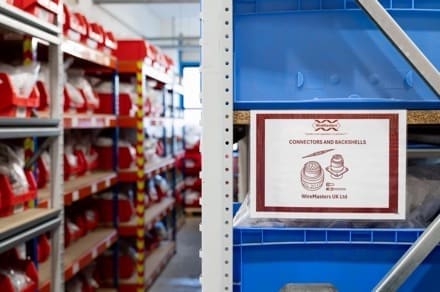
Military interconnect specialist WireMasters will showcase its portfolio of VG-standard wire, cable, connectors and harness components at DVD 2026, the UK’s flagship defence exhibition for land equipment on September 16-17, at UTAC Millbrook. The company will engage with defence manufacturers, systems integrators and procurement professionals to discuss the evolving connectivity requirements of modern military platforms.

As defence procurement programmes continue to evolve, manufacturers are under growing pressure to secure reliable supplies of mission-critical interconnect components throughout lengthy procurement cycles.

At DVD 2026, WireMasters will highlight its portfolio of VG-standard wire, cable, connectors, heat shrink tubing and other harness components. Developed to meet German military (VG) specifications, these products provide standardised and compatible, connectivity solutions for defence vehicle electrical systems, helping improve interoperability, reliability and long-term maintainability across military platforms.

Combined with its extensive inventory and established supplier network, WireMasters helps customers improve component availability and minimise supply chain disruption. By working with multiple approved market leading manufacturers, the company provides greater flexibility while helping safeguard programmes against shortages and fluctuating lead times.

“Customers are looking for suppliers that can offer dependable stock availability, stable pricing and confidence that the components they need will be there when they are needed most,” said Darren Scott, sales executive at WireMasters. “By maintaining stock and working with multiple approved manufacturers, we’re helping customers build greater resilience into their supply chains.”

WireMasters expects discussions at the exhibition to explore how the growing adoption of uncrewed systems is reshaping defence requirements and creating new opportunities for suppliers of specialist interconnect solutions. As these technologies evolve, resilient supply chains and trusted supplier relationships will remain essential to supporting future military capability.

Visitors to DVD 2026 can meet the WireMasters team at Stand C3-D06 to discuss current and future defence projects, explore its portfolio of VG-standard interconnect solutions and learn how the company’s supply chain expertise can help strengthen resilience across defence procurement programmes. To learn more about WireMasters’ defence capabilities, visit its website.