Aquaterro

Archive for June, 2020

Langdon Tactical Technology Partners with REVERED

Thursday, June 11th, 2020

PHOENIX, AZ (June 10, 2020) – Emerging brand providing custom-made guns and parts – Langdon Tactical Technology (LTT) is partnering with REVERED as its agency to disrupt the firearms industry.

Over 30 years of experience training military, law enforcement, and civilians have gone into the designs of Langdon Tactical Technology. LTT takes an uncompromised approach to firearms to create meticulously designed, optimized products. Langdon Tactical Technology designs pistols in partnership with Beretta, the world’s oldest firearm company. LTT takes great weapons and makes them extraordinary, while providing the training and instruction to perfect the performance of the shooter, as well.

LTT puts the art and skill of craftsmanship to work to better fit, finish, and optimize all the pieces and parts that mass production and assembly can never reproduce. The result is a firearm that provides shooters with unparalleled performance and the ultimate upper hand.

“REVERED has added value to our marketing efforts and has helped us better define our brand voice, identity and website. Their experience and creative ideas have made them a great partner, an extension of our team,” said Ernest Langdon, President of Langdon Tactical Technology.

REVERED will handle brand strategy and digital marketing directed towards the high-performance gun owners, concealed carry enthusiasts, tactical, military, and law enforcement markets. LTT attracts shooters who want the inherent safety of a DA/SA gun and first-time gun buyers. This includes a new website redesign, visual voice and tagline, and email marketing.

“As a longtime supporter of Langdon Tactical Technology, it’s been exciting to be part of the LTT family as a strategic partner, not just a loyal customer. I am excited for the future for both of our brands, as I see tremendous opportunity,” said Kevin Polonofsky, Principal and Creative Director of REVERED.

Special Tactics Wing, AFRL Develop Smartphone App to Mitigate COVID-19 Risk

Thursday, June 11th, 2020

HURLBURT FIELD, Fla. – The Air Force Special Tactics community is known for looking at complex problems and finding new ways to accomplish the mission; when COVID-19 became a global pandemic, it was no exception.

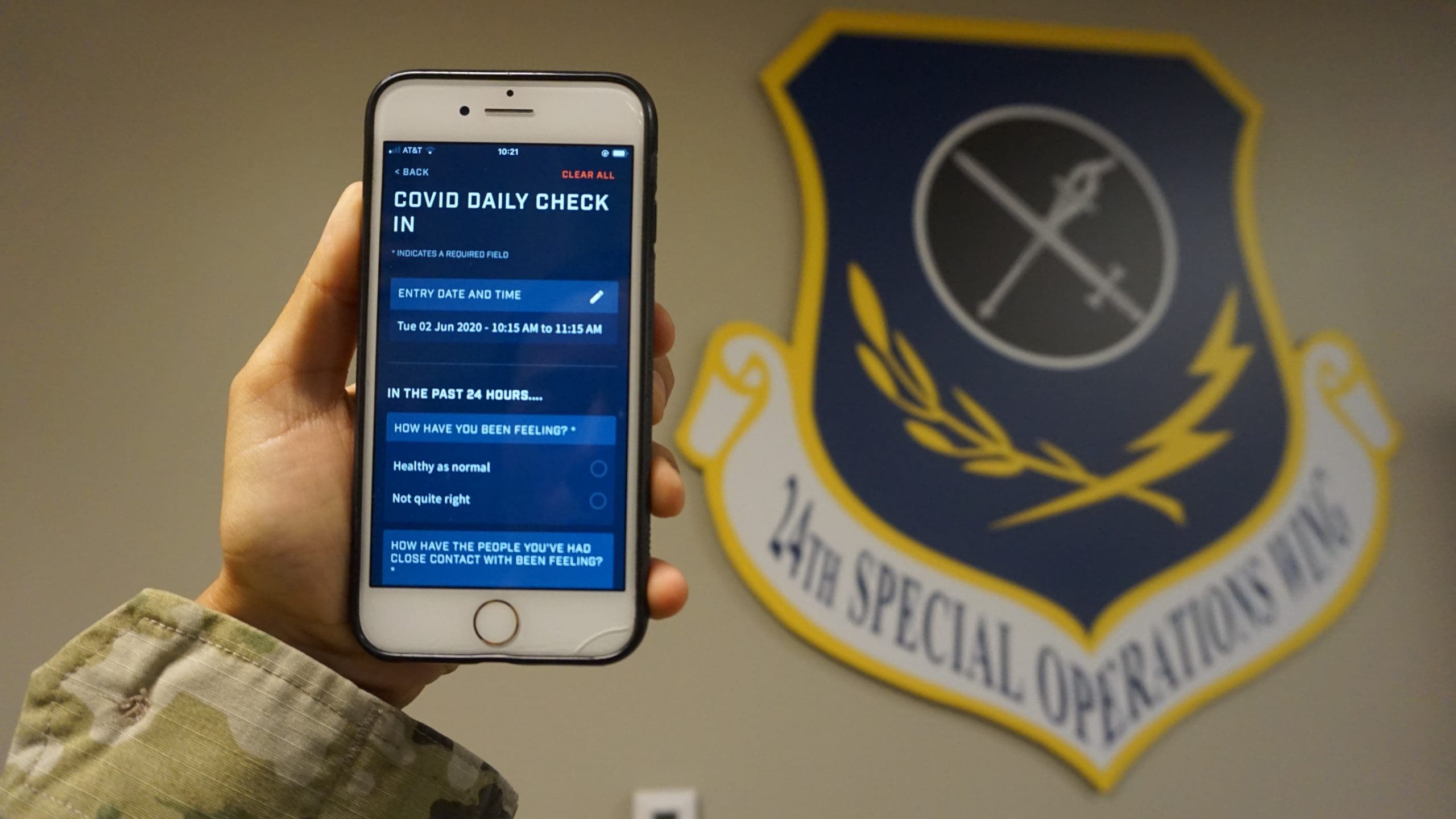
Medical and Preservation of the Force and Family (POTFF) team members of the 24th Special Operations Wing, headquartered at Hurlburt Field, Florida, teamed up with the Air Force Research Lab to develop a way to monitor ST operators’ health status during the pandemic straight from their smartphones.  

The team quickly responded by taking an existing human performance software known as, Smartabase, which identifies health risks to the force, and adding a “COVID-19 Check In” feature to monitor pre-and post-deployment health.

“We recognized the need for real-time monitoring of the force and readiness impact from COVID-19,” said Col. John Dorsch, 24th SOW surgeon general. “COVID-19 screening was a natural extension of our efforts since it is another risk to force like others for which we are monitoring, such as TBI, musculoskeletal injuries, and PTSD.”

The app feature is designed as a daily survey where users input daily temperature, possible symptoms, risk factors, exposure as well as mental health state. All the data from the ST operators is collected and alerts medical and command teams if there is anything out of the ordinary that needs to be addressed.

“This ensures commanders have important information related to their operators and allows them to make the best decisions about who goes where and does what,” said Craig Engelson, 24th SOW POTFF director. “In the past they have had to coordinate with multiple departments and multiple systems to get the same information.”

The idea stemmed from the wing’s long-standing efforts using technology and innovation to maintain operator readiness as well as ensure Special Tactics teams’ ability to perform optimally on the battlefield for years to come.

“[Special Operations Forces] can’t be mass produced,” said Dorsch “Special Tactics is a small, but incredibly important and highly specialized combat capability.  This system helps protect this capability for combat operations, and our partnership with AFRL has been invaluable.  We must continue to leverage technology to help us solve the nation’s hard problems.”

Dr. Adam Strang, a human performance research scientist and AFRL’s director of the Signature Tracking for Optimized Nutrition and Training (STRONG) team, has been leading the back-end development of the database as well as finding new opportunities for improvement.

“As a scientist I like to lean forward and stay on the cutting edge,” said Strang. “Often that requires taking big swings and being comfortable with risk. Special Tactics functions similarly, which makes a good pairing.  Together we push the edge of technological capability in ways that AFRL could not accomplish alone.”

The technology proved successful in monitoring returning deployers, safeguarding families from health risks, as well as helping outgoing deployers meet specific country clearance requirements. The 24th SOW team also helped integrate the technology at the 1st Special Operations Medical Group at Hurlburt Field and 27th Special Operations Medical Group at Cannon Air Force Base, New Mexico to monitor pre-deployment health for almost 250 Air Commandos.

“In truth I believe that we are only scratching the surface of its capabilities,” said Engelson “As our providers and commanders integrate with the system even more, there is no telling how much more useful this system could become.”

Special Tactics is the Air Force’s ground special operations force that leads global access, precision strike, personnel recovery and battlefield surgical operations. For more info on Air Force Special Tactics visit our website www.airforcespecialtactics.af.mil or follow us on social media: Twitter: @SpecialTactics_ Facebook/Instagram: @Airforcespecialtactics

24th Special Operations Wing Public Affairs Office

AeroVironment Receives $9.8 Million Raven and Puma 3 AE Awards from NATO Support and Procurement Agency under Multi-Year Contract with $80 million Potential Value

Wednesday, June 10th, 2020

• Three-year base contract includes option for an additional two years of logistical support, spares and repair services for existing fleet of Raven, Wasp and Puma tactical unmanned aircraft systems

• AeroVironment’s family of tactical UAS allows customers to use the same ground control station and software for multiple UAS for added simplicity and efficiency

• AeroVironment UAS enabling interoperability across several NATO forces

SIMI VALLEY, Calif., June 10, 2020 – AeroVironment, Inc. (NASDAQ: AVAV), a global leader in unmanned aircraft systems (UAS), today announced its receipt of two firm-fixed-price orders totaling $9,804,448 from the NATO Support and Procurement Agency (NSPA). The orders, received on March 5, 2020 and April 16, 2020, encompass the procurement of Raven® and Puma™3 AE tactical UAS and spares. Delivery for the first order is anticipated by August 2020 and the second order by October 2020.

The orders are part of a three-year base contract received from NSPA in January 2020.  The contract includes an option for two additional years of logistics support for Raven, Wasp® and Puma tactical UAS. The total potential value of the multi-year contract is $80 million, encompassing the procurement and sustainment of AeroVironment tactical unmanned aircraft systems employed by the defense forces of several NATO countries.

“AeroVironment’s tactical unmanned aircraft systems, such as Raven and Puma, have helped transform the way U.S. and allied forces plan, train, equip and operate,” said Rick Pedigo, vice president of sales and business development at AeroVironment. “Both systems benefit from continuous technology improvements and pack significant capabilities into portable, man-packable platforms that provide operators with rapid and effective force protection.”

AeroVironment’s Raven system is designed for rapid deployment and high mobility for operations requiring low-altitude intelligence, surveillance and reconnaissance. With a wingspan of 4.5 feet (1.4 meters) and weighing just 4.2 pounds (1.9 kilograms), the hand-launched Raven provides situational awareness, day or night, with an operational range of 6.2 miles (10 kilometers). The Raven’s Mantis i23 EO/IR gimbaled payload delivers real-time video or infrared imagery to ground control and remote viewing stations.

The AeroVironment Puma 3 AE is a fully man-portable unmanned aircraft system designed for land and maritime operations. The hand-launched Puma 3 AE has a wingspan of 9.2 feet (2.8 meters), weighs 15 pounds (6.8 kilograms) and can operate for up to 2.5 hours at a range of up to 12.4 miles (20 kilometers) with a standard antenna, and up to 37.2 miles (60 kilometers) with AeroVironment’s Long-Range Tracking Antenna (LRTA). Capable of landing in water or on land, the all-environment Puma, with its Mantis i45 EO/IR sensor suite, empowers the operator with extended flight time and a level of imaging capability never before available in the tactical UAS class.

AeroVironment’s family of tactical UAS use a common ground control station and software, allowing for improved interoperability and decreased training and logistics costs for NATO forces. To learn more, visit www.avinc.com.

OSS Suppressors Open New Online Store

Wednesday, June 10th, 2020

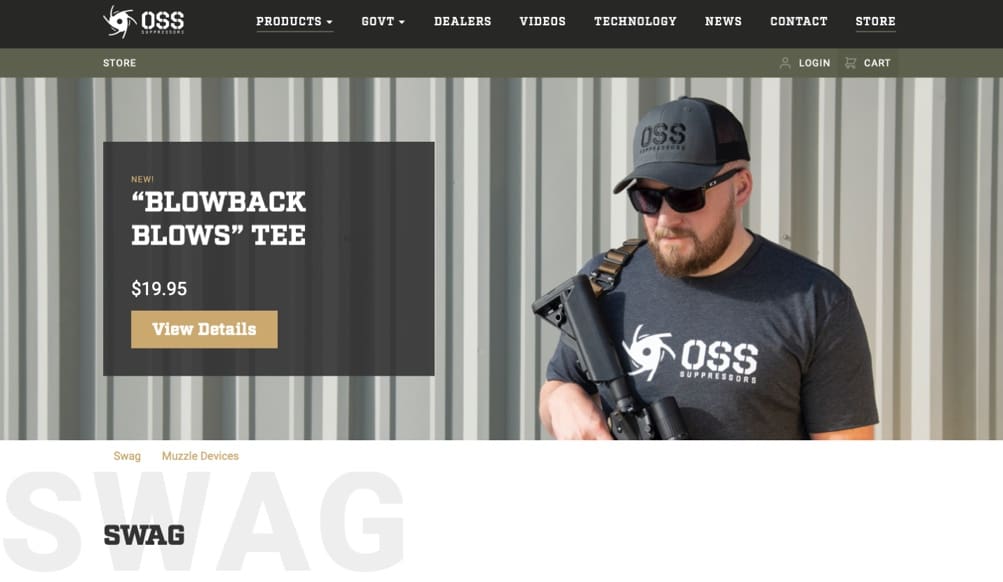
MILLCREEK UT June 9, 2020 — OSS Suppressors LLC has opened a new online store offering direct to consumers select non-NFA muzzle devices and OSS swag.

“Our new online store has been launched to provide additional convenience to our customers who wish to buy OSS’s patented Torque Lock® flash hiders and muzzle brakes in a range of calibers and thread patterns that may not be in stock at their local dealer,” said John Spurrier, CEO. “Online pricing for muzzle devices is the same as in-store.”

And now OSS customers and fans can get kitted out with a growing line of high-quality branded swag including Next Level™ t-shirts and Ouray™ hats.

The new store is stocked with a range of creative t-shirts designs, hats and patches. “Customers and fans have been asking for OSS swag, and we’re excited to finally be able to offer them the gear they’ve been looking for,” added Mr. Spurrier, “Some popular items may sell out quickly, so we’ve already re-ordered to meet the expected demand.”

For all orders under $100 shipping is a flat fee of $7.50, and free for all orders over $100.

Click here to start shopping now

MultiCam Arid Blasting Cap Now Available from RE Factor Tactical

Wednesday, June 10th, 2020

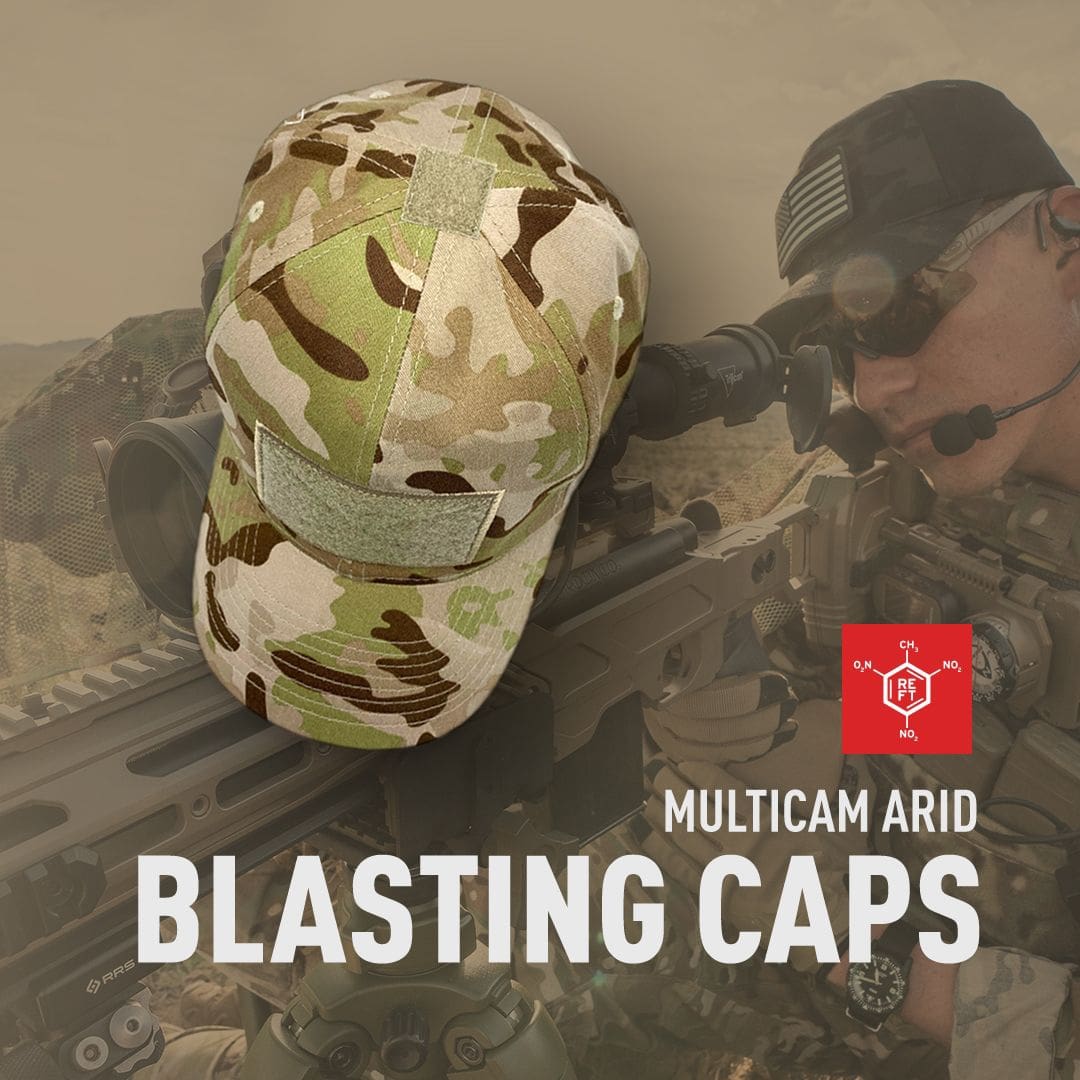
RE Factor Tactical’s Blasting Cap is a FlexFit design but dispenses with the top button which always ends up being a headache, at least when you bump into something or are wearing ear pro. Instead, there’s a small velcro square for IR patch placement and a secondary square on the inside for IR patch storage. The front and rear feature two large embroidered velcro panels for identifier patch placement. The interior of the cap includes a high-vis orange VS-17 panel for signaling and increased visibility when needed.

Blasting Cap isn’t just a vooo name. A special interior tape lists the standard RE Factors of select explosives for quick-reference for demolitions personnel.

Now, it’s available in MultiCam Arid which joins Black, Tan, Ranger Green, Woodland, Grey, Tigerstripe, MultiCam Black, Hunter Orange, MultiCam Tropic, and MultiCam.

Offered in two sizes, Small/Medium and Large/XLarge.

www.refactortactical.com/products/blasting-cap

TEA Catalog Vol 6

Wednesday, June 10th, 2020

teaheadsets.com/e-catalog

Samson Manufacturing Father’s Day Sale—20% Off Pistol Accessories, Quick Clip Wallets, and SXS Clearance Handguards!

Wednesday, June 10th, 2020

KEENE, NH — Now through Sunday, June 21 save 20% on Samson pistol accessories, including the  new +2+ Magazine Extension for the GLOCK® G43®, Shield™ Pocket Comp, Shield™ Compact Magwell, and Shield™ Carry Contour +1 Magazine Extension, as well as the M&P® Contour +3 Magazine Extension. Plus, we’ve added the Samson Quick Clip Wallet and several SXS Clearance Handguards.

For more information visit www.samson-mfg.com or contact esales@samson-mfg.com.

Cold Weather Sock Systems and Foot Care by John Huston, Polar Explorer

Wednesday, June 10th, 2020

This is the first article in a series written by accomplished arctic explorer John Huston and presented by Point6, out favorite sock maker.
H1: Cold Weather Sock Systems and Foot Care
H2: Expeditionary Foot Know How for the Long Haul
H3: Feet are the Expedition
It might seem odd to post an article on cold weather socks in June, but now is the time for units to place orders for equipment needed this winter.


John Huston off the coast of Ellesmere Island in high Arctic Canada, May 2013. © John Huston

In this post we’ll get into how I manage my feet in the cold. We’ll take a look at sock systems, moisture control via vapor barrier liner socks, and discuss foot care in the cold.

Twelve years ago I was having a beer with a Norwegian polar explorer colleague of mine, who came out of Norway’s Marinejegerkommandoen (MJK). We were discussing my upcoming unsupported expedition to the North Pole. “You know,” he said, “when it gets down to it: Preparation is the expedition.”

This kernel of advice quickly became one of my operational pillars. It goes deep into my expeditionary philosophy that reaches back to the golden age of polar exploration at the turn of the 20th century…and it opens up an endless well of related topics that we can dig into down the line.

Some of those historic polar explorers are heroes of mine. Explorers from that era, like Roald Amundsen and Ernest Shackleton, were the astronauts of their time. They filled in the blank spaces on the globe and pushed technology and knowledge forward. And sometimes they really suffered. And sometimes they put on frozen boots in the morning. And sometimes they marched on bloody feet or lost toes to frostbite.
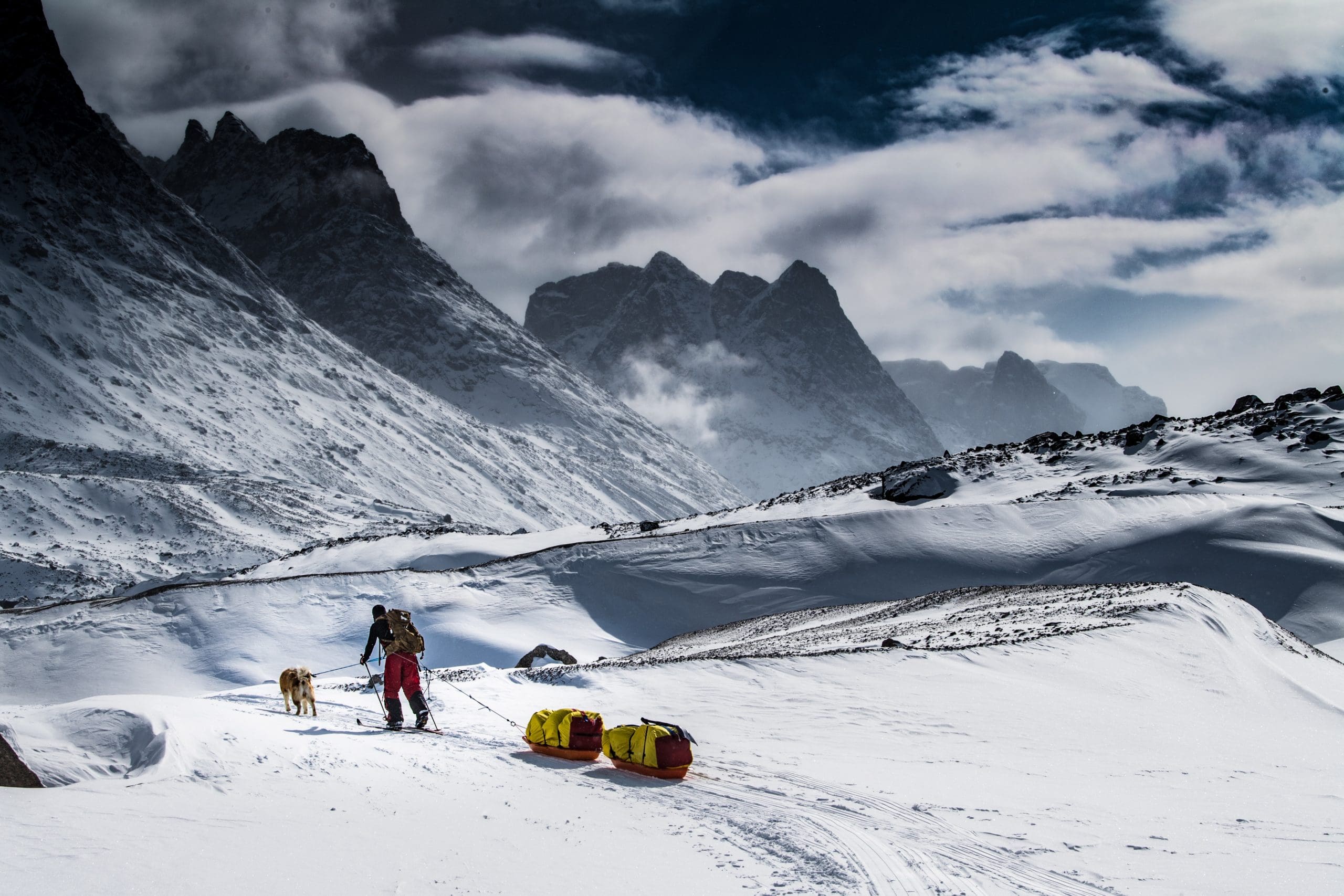

John Huston skijoring through Auyuittuq National Park, Baffin Island, Canada, April 2019. © Michael Martin

Early in my cold weather career, about 20 years ago, foot systems and foot care became an obsession. Happy feet = improved performance. Unhappy feet can land a person somewhere on the spectrum of reduced capacity from: effective but hating it to casualty.

So, ‘preparation is the expedition’ is prime and all encompassing, but ‘feet are the expedition’ isn’t far behind.  

For me, in the cold, feet need to be warm, comfortable, and healthy. When these three factors are in order a person doesn’t tend to think about their feet too much. When one of these factors is out of line the opposite is true.

The main ingredients to solving this equation are high quality merino wool socks, moisture management, and foot care routines.  

Merino wool socks provide all day comfort and excellent moisture management properties, and have the ability to perform for many days in a row. I’ve worn a lot of different socks for weeks at a time. Merino wool handles grime build up very well compared to synthetics which become odor bombs. My skin is happier in merino wool. When merino wool is wet, it maintains a good deal of it’s insulation value.

Fit and comfort are a big deal to me. The sock needs to feel good when I put it on and it needs to feel good after 12 hours of exertion and it needs be able to repeat that over and over. I love over the calf socks because they rarely slide down or bunch up. I almost frostbit my fingers trying to fix a bunched up sock in –40° and windy.

In most cases, depending on the temperature, duration of the activity, and humidity my foot layering system consists of the following from the inside out.

Foot/Skin

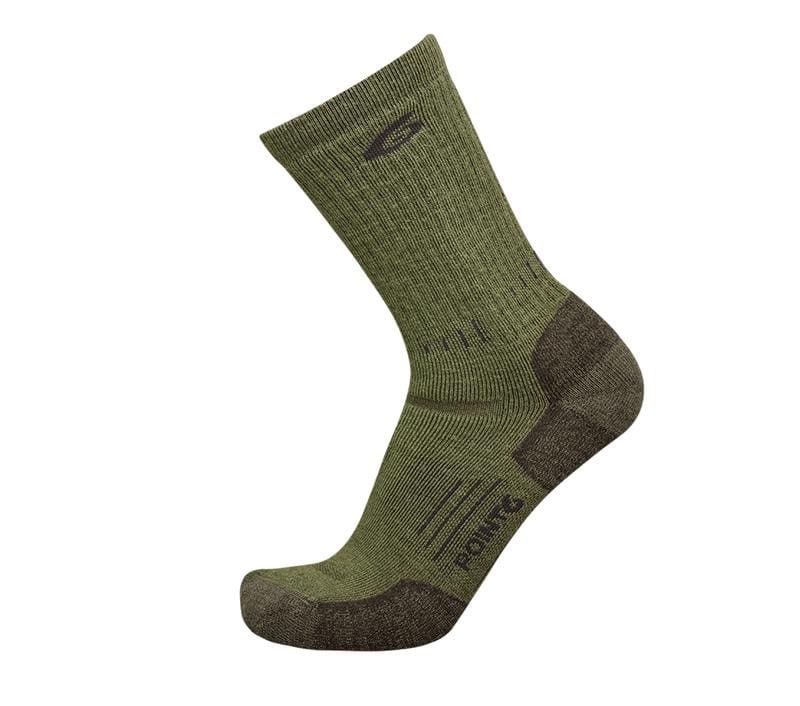
-Ultralight over the calf (OTC) merino wool sock. This is sometimes called a liner sock. Example: Point6 37.5 Ultra Light OTC.
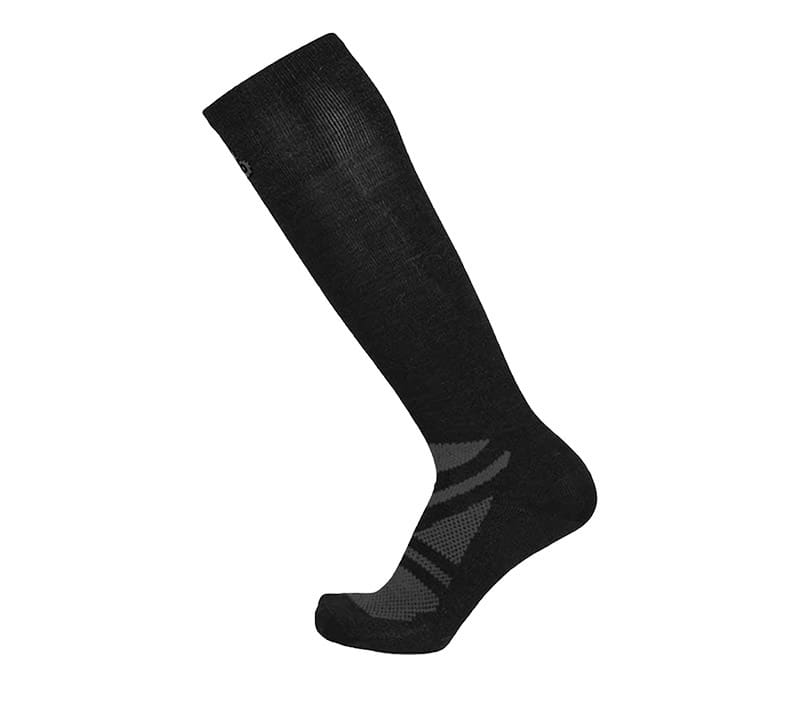
-Vapor liner sock (VBL). This is a thin waterproof sock that keeps all foot perspiration on the innermost layer, which prevents the insulating socks and boot liners from getting wet. I’ve used everything from plastic bags to neoprene to silicon coated nylon taped-seam socks. Point6 is currently prototyping a new vapor liner sock. Plastic bags can work, but lack durability and comfort. Some people like neoprene, but my feet feel like they want to blister when I wear neoprene socks.


-Medium or thick merino wool sock (OTC, mid-calf, or 3/4 calf). The thickness of this sock depends on temperatures and how the sock system fits with my boots. Examples: Point6 37.5 Tactical Operator Heavy Mid-Calf

-Winter expedition nordic ski boot. This is another topic, but I’m a big fan of nordic ski boots with removable liners and extra space to allow for sock layering options and flexibility which promotes circulation.

Moisture management has a lot to do with warmth, comfort, and foot health. Feet sweat more than any other part of the body. A pair of feet contain approximately 250,000 sweat glands which can generate 8 oz of sweat per day. That number seems extreme and likely varies person according to person, but it’s pretty easy to see why people can end up with frozen boots in the morning. Most of that sweat has ended up in the fabric and insulation of their boots. In freezing temperatures, especially below zero, the moisture doesn’t get fully pushed (or breathed) into the air because it is too cold – the freezing can be in the boots themselves. This concept applies to clothing and sleeping bags as well.


This is where the vapor liner sock comes in – moisture control. During the day vaper liner socks add warmth because your insulation layers (outer merino wool sock and boot liners/boots) stay dry. Without a VBL those insulation layers will collect perspiration. Insulation works because it traps tiny pockets of air that retain heat. Insulation that contains water or ice is much less efficient and effective. For example, it is possible to warm up cold fingers in damp gloves, but it takes a lot more energy and a lot more work than in dry gloves. Same for feet. VBLs are often worth it to me just for the added warmth, not to mention the reduction in nightly drying chores.

On overnight trips (or even back when staying indoors) a sock system with vapor liner socks is much easier to dry than a ystem without the VBLs. Simply dry the liner socks and the inside of the VBL and you are good to go for the next day. Without the VBL it can take hours to dry outer wool socks, boot liners, and boots.

When I’m guiding I require that my clients wear VBL socks. That way I know their foot insulation layers are going to be dry during the day. And I know that they’ll easily be able to manage drying their socks during the evening. This is no small thing after a long ski day when people want to get into their warm sleeping bags as soon as they can.

Foot care routines are essential to maintaining happy feet. We dry our socks and feet every single night. I designate a thick pair of merino wool socks as sleeping socks that I only wear when I’m sedentary in camp. Every night I’ll put high quality natural hand cream on my feet. I like Burt’s Bees Almond Milk Handcream or Nourish Organic Argan Butter and avoid cream with petroleum products. Every third day we wash our feet with soap and warm water, using an extra mug and a small scrap of a camp towel. With these routines, a high quality sock system, and the right boots – all tested thoroughly prior to a major trip of course – my feet have been a non-issue for several thousand miles of Arctic and Antarctic ski expeditions. Part way through 60-day expeditions I’ve had teammates state that their feet have never felt more healthy, not even at home.

There is also a lot to be said for a good solid specific motion training regime that lets your feet and body know what is coming and allows time for it to adapt. We can discuss training in another post.

Sock systems and foot care routines are very personal. So make it a priority and take the time to experiment and get it right. You’ll enjoy happier days no matter what your endeavor.

Take care of your dogs and they will take care of you.

by John Huston, Polar Explorer

Brought to you by Point6, Merino Mastered