TYR Tactical

Archive for July, 2026

Elistair and Exail Bring Persistent Aerial Surveillance to Unmanned Surface Vessels

Thursday, July 23rd, 2026

Persistent aerial surveillance delivered by a tethered drone launched from an unmanned surface vessel, for coastal security, port protection, and wide-area maritime monitoring.

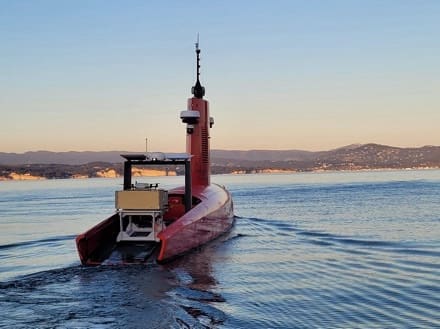
Elistair and Exail have partnered to integrate the Khronos automated tethered DroneBox on Exail’s DriX unmanned surface vessel (USV), giving maritime operators a persistent “eye in the sky” launched directly from the vessel. The combination extends surveillance well beyond the range of the platform’s surface sensors, while keeping personnel safe on shore.

Launched directly from the deck of the DriX, Khronos provides persistent, continuous aerial surveillance. Its autonomous deployment and “follow-me” capability keep the drone stationed above the vessel while under way. Powered through its tether, Khronos flies for up to 24 hours at a height of 60 m. It streams live, encrypted video over a secure data link, delivering real-time imagery even in contested, GNSS-denied environments.

By adding a tethered drone to a long-endurance autonomous vessel, the pairing pushes the surveillance horizon far beyond the reach of surface radar and cameras. Both the vessel and the drone can be operated remotely from shore. The configuration is suited to coastal surveillance, port and critical-infrastructure protection, counter-trafficking operations, and search and rescue.

“Integrating a tethered drone on an autonomous vessel marks a major step forward for maritime surveillance,” said Guilhem de Marliave, CEO of Elistair. “Surface sensors stop at the horizon; flown from the DriX, Khronos lifts that limit with a persistent, mobile view that stays airborne for hours. For operators, that means wider coverage and earlier detection, with no crew at sea.”

DriX was designed as an open platform, able to integrate new payloads as operational needs evolve,” said Stéphane Vannuffelen, Maritime Autonomy Solution Technical Director at Exail. “The integration of Khronos adds a persistent aerial perspective to the vessel’s existing surveillance capabilities, significantly extending the monitored area.

elistair.com

BlackPoint Tactical Introduces the New Concealed Duty Holster

Thursday, July 23rd, 2026

Active Retention Meets Everyday Concealment

ALPHARETTA, GA, July 23, 2026 – BlackPoint Tactical, a High SpeedGear Products Group brand, proudly announces the launch of the newConcealed Duty Holster (CDH), an innovative, new active-retention holster designed to bridge the gap between traditional duty holsters and everyday concealed carry. Available in both standard and weapon light-compatible configurations, the Concealed Duty Holster provides the security of an active retention system in a streamlined, highly concealable outside-the-waistband design. Whether carried by plainclothes officers, executive protection professionals, armed security personnel, or responsibly armed citizens seeking additional firearm retention, the CDH offers retention without the bulk typically associated with duty holsters. The CDH launches with compatibilityfor the Glock 17 and the 19/45 with TLR-7 and TLR-7 HLX but other models are soon to follow.

Unlike conventional duty holsters that prioritize weapon retention and durability over size, the Concealed Duty Holster was engineered from the ground up to provide a lower-profile footprint while maintaining the speed, confidence, and security expected from a retention holster. Based on the proven Master Grip Concept of BlackPoint’s Enhanced Duty Holster (EDH), the CDH uses the same intuitive release mechanics, allowing users already familiar with the EDH platform to transition seamlessly between overt duty carry and concealed carry.

“The Concealed Duty Holster represents an entirely new category for us,” said Tyler Johnson, Vice President of Finance and Sales. “Customers have been asking for a holster that provides active retention without compromising concealability. The CDH answers that request by combining secure retention, exceptional concealability, and the premium craftsmanship BlackPoint Tactical has become known for.”

Constructed from precision-formed KYDEX®, the Concealed Duty Holster series features:

• Level II active retention

• Intuitive thumb-release mechanism based on proven Master Grip conceptfrom the EDH

• Optic-ready design

• Low-profile pancake-style OWB configuration for enhanced concealment

• Designed and Manufactured in the USA

With the Concealed Duty Holster series, BlackPoint Tactical continues its commitment to designing innovative carry solutions that evolve alongside the needs of law enforcement professionals and responsibly armed citizens. The CDH ensures that individuals no longer have to trade-off active retention for concealability. The BlackPoint Tactical Concealed Duty Holster series is available now through authorized dealers, distributors, and directly from BlackPoint Tactical.

For more information, please visit:
Concealed Duty Holster (Standard):
blackpointtactical.com/shop/slick-duty-holster-2-levels-of-retention
Concealed Duty Holster – Light Mounted:
blackpointtactical.com/shop/concealed-duty-holster-light-mounted-concealable-2-levels-of-retention

Echodyne Announces ATAK Integration for MESA Radar Platform

Thursday, July 23rd, 2026

Integration enables Echodyne MESA radars to support ATAK-based operational workflows

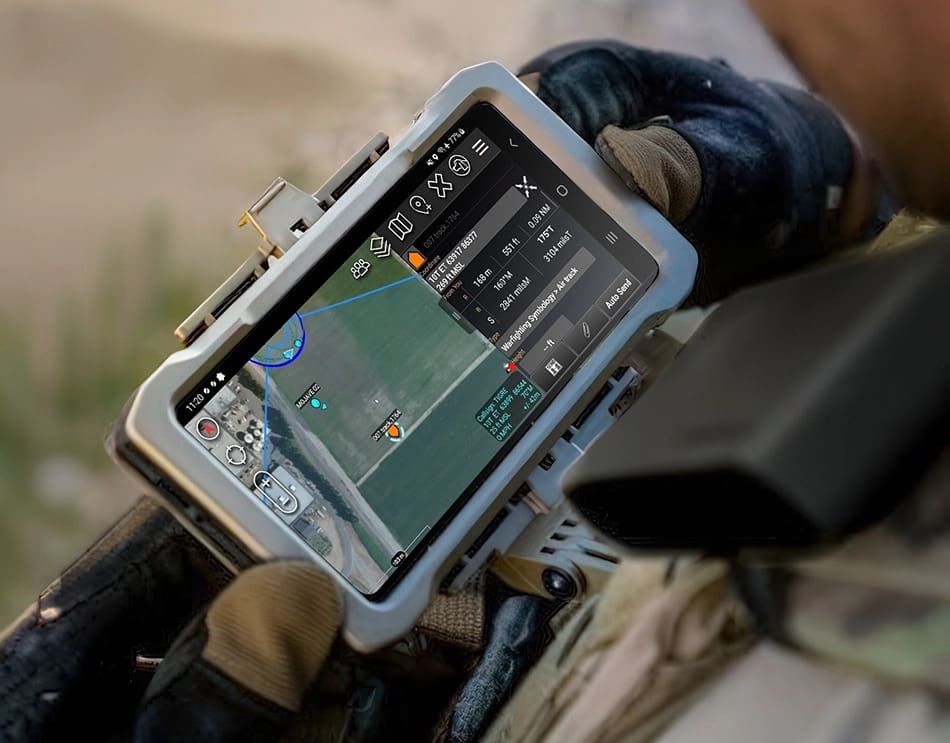
Echodyne, the radar platform company, today announced the availability of an Android Team Awareness Kit (ATAK) plugin for its MESA® radar platform. The integration enables users to configure, control, and visualize data from Echodyne radars within the ATAK environment, supporting military, public safety, and security operations that rely on TAK for shared situational awareness.

The plugin extends radar management and visualization capabilities to ATAK users, allowing high-fidelity radar data and system controls to be accessed through a familiar operational interface. By integrating radar data into existing TAK workflows, organizations can streamline deployment, reduce operator workload, and improve access to real-time situational awareness.

TAK is a government-developed geospatial platform used across U.S. military, federal, state, and local government organizations, as well as by U.S. partner nations. According to the U.S. Army TAK Product Center, the TAK ecosystem supports 15Department of Defense programs and more than 250,000 users across military and civilian communities.

Echodyne serves defense, public safety, border security, and critical infrastructure customers worldwide. Many of these organizations employ TAK as part of their operational command-and-control architecture. The new ATAK plugin provides a simplified approach to radar deployment and operation while enabling users to incorporate high-resolution radar data into their existing TAK-based common operating picture. When combined with reliable, high-performance MESA radar systems, organizations can confidently deploy individual sensors or distributed radar networks to create high-resolution situational awareness for all connected TAK users.

Eben Frankenberg, Chief Executive Officer of Echodyne, said:
?

“Many of our customers rely on TAK to support mission planning and operationaldecision-making. By integrating MESA radar capabilities into the TAK ecosystem,we are providing users with direct access to high-quality radar data within aninterface they already know and trust. This release reflects our continuedinvestment in interoperability and our commitment to supporting the operationalrequirements of defense and public safety customers.”

The Echodyne ATAK plugin is included as part of the company’s Software & Support package and is available immediately through the Echodyne Customer Portal at portal.echodyne.com.

Avon Technologies plc Appoints Vasilios Brachos as Team Wendy President

Thursday, July 23rd, 2026

Longtime ballistic helmet leader to guide next chapter of protection, innovation and growth

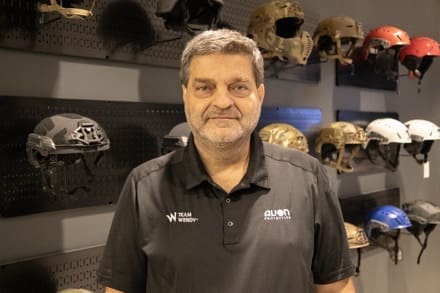
CLEVELAND, Ohio – July 22, 2026 – Team Wendy®, a leading provider of head protection systems for military, law enforcement, search and rescue, and adventure sports, announces the appointment of Vasilios Brachos as President of Team Wendy, effective immediately. Brachos will also join the Avon Technologies plc Group Executive Committee.

Brachos brings nearly 25 years of experience developing advanced head protection systems and a deep understanding of customer requirements in some of the world’s most demanding environments. This appointment strengthens Team Wendy’s focus on innovation, operational excellence and expanding its presence across military, commercial and international markets.

Team Wendy has built a reputation for innovation in helmet systems, impact protection and wearer performance, combining pioneering ballistic protection technologies with industry-leading traumatic brain injury (TBI) mitigation and comfort solutions. Supported by a highly skilled manufacturing workforce and ongoing investment in innovation, Team Wendy delivers advanced integrated head protection systems designed for demanding operational environments.

Throughout his career, Brachos has worked at the intersection of materials science, engineering and user-centered design. He has held senior technology and product development roles that have contributed to advancements in ballistic helmets, helmet pads, retention systems and soldier-system integration. His experience reflects the same commitment to technical excellence, innovation and customer understanding that has defined Team Wendy for decades.

As President, Brachos will lead the next phase of Team Wendy’s strategy, focused on strengthening its position in core military markets while accelerating growth in U.S. commercial and international markets through new products, operational excellence and outstanding customer service.

Vasilios Brachos, Team Wendy President said: “Team Wendy has a proud heritage of innovation and a strong reputation for protecting those who protect others. I am honored to lead the business at such an exciting time and look forward to working with our talented team to continue serving our customers, advancing new technologies and driving the next phase of growth.”

Jos Sclater, CEO of Avon Technologies plc commented: “We have strong ambitions for Team Wendy’s future. We see opportunities to grow by defending our leadership position in defense markets while increasing our share in U.S. commercial and international markets through innovative products, operational excellence and outstanding customer service. Vasilios is uniquely qualified to lead that next phase of growth. His combination of technical expertise, industry credibility and customer understanding will help us continue bringing new solutions to market and continue helping our customers perform at their best in the world’s most demanding environments.”

Learn more about the mission at teamwendy.com.

Introducing Thunder: Autonomous Attack Rotorcraft for the Near-Surface Fight

Thursday, July 23rd, 2026

The proliferation of drones in land warfare has brought maneuver to a stalemate, extracting a significant toll in terms of both man and machine. Attack helicopters and their crews, long the lifeblood of maneuver warfare, are increasingly held at risk by a combination of loitering munitions, cheap air defenses, and ubiquitous persistent ISR platforms that have rendered the near-surface domain one of the most lethal places on the battlefield.

In this robotic kill zone, maneuver warfare hinges on the ability to exploit an adversary’s weaknesses through principles like speed, agility, reach, and decisive mass. Any one of these attributes on their own is insufficient. Instead, it is the combination and orchestration of these elements that unlocks the decisive blows that enable friendly forces to maneuver to a position of advantage. All of these dynamics point to a new reality for maneuver warfare: one that must be driven by autonomous technology in attack aviation.

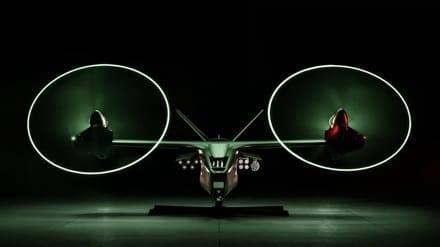
Today, Anduril is unveiling its answer to these changing conditions: Thunder, a Group 5 autonomous attack rotorcraft specifically designed to multiply the combat power and increase the survivability of current and next-generation crewed attack and assault aircraft. Thunder is equipped with the payload capacity and open architecture required to deliver overwhelming effects for any mission, engineered with the survivability, speed and range critical for the deep fight, and built on flight-proven autonomy that enables validated, high-performance teaming with crewed assets.

Reach Farther, Faster

Thunder is purpose-built for the new geometry of battlefield maneuver, wherein long-range fires, contested staging areas, and vast theaters all push attack aviation farther from the fight. Thunder’s tiltrotor configuration combines vertical takeoff and landing (VTOL) with efficient wingborne cruise, enabling runway-independent operations from austere locations without the range constraints of traditional rotorcraft.

Thunder is the defense-specific variant of a dual-use platform co-developed with Archer Aviation, bringing the commercial VTOL sector’s rapid innovation in electric propulsion and rotor design directly into defense. A series hybrid-electric powertrain enables Thunder to achieve significant range and endurance, while still maintaining the necessary precision to closely optimize power through the full range of flight conditions. Meanwhile, Optimum-Speed Tiltrotors (OSTR) vary rotor RPM to maintain efficiency across flight regimes, reducing power demand and fuel burn in cruise and minimizing acoustic signature to enhance survivability during low-altitude ingress.

The tiltrotor configuration, series hybrid-electric powertrain, and rotor technology provides Thunder with the range necessary to support global self-deployment. Alternatively, Thunder can be packed into a standard shipping container for transport by air, road, rail, or sea, offering the multi-modal transport logistics required to reach any fight.

Designed to Deliver Mass

Anduril has configured Thunder to bring affordable mass to the deepest, most heavily-defended parts of the battlefield. Whether the aircraft is needed as a missile carrier, air-launched effects mothership, maritime patrol aircraft, or contested logistics platform, Thunder offers the payload capacity and flexibility required to overwhelm sophisticated defenses and finish the mission.

Modular internal main and nose payload module bays enable Thunder to host lethal combinations of precision munitions, air-launched effects, rockets, electronic warfare payloads, counter-UAS force protection, and cargo, and is provisioned for rapid integration of future mission systems. For example, Thunder’s main payload module can be configured with ten air-to-ground missiles (e.g. Hellfire, JAGM, Barracuda-100M), sixteen launched effects (e.g. Altius-600), or seventy-six 70mm rockets, plus an additional twelve counter-UAS effectors in the nose payload module, providing a mix of effects to address a wide variety of threats during a single sortie.

Teaming multiplies the mass that Thunder brings to the fight. By pairing multiple Thunder aircraft with a single crewed platform, commanders can achieve a step-change in combat mass that enables formations to defeat more targets, sustain operations longer, and keep crews farther from the most lethal threats. By teaming three Thunder aircraft with each Apache, for example, a Combat Aviation Brigade will achieve a 3x increase in available munitions without placing additional pilots in harm’s way, all at a fraction of the cost of a similarly-sized formation of exclusively crewed aircraft.

Mass is only achievable if the platform delivering it is producible and affordable. The common dual-use baseline behind Thunder drives the economies of scale, expanded demand, and broad supply chains critical to drive down costs and de-risk the pathway to large-scale production.

Formation-Based Autonomy

The advantages that Thunder brings to the battlefield extend beyond its hardware – they are also defined by the centrality of software and autonomy to its performance. Anduril’s core Lattice for Mission Autonomy software delivers the trusted, flight-proven formation behaviors, separation management, and flight logic necessary for Thunder to remain useful, predictable, and safe around crewed aircraft. By translating operator intent into trusted machine-speed route, timing, tasking, and deconfliction decisions, Lattice eliminates the need for pilots to manage Thunder with a stick and rudder, enabling them to focus instead on the most important decisions at hand.

This feature is especially important as the future of attack aviation emerges. Terrain, obstacles, threats, and degraded visual environments make the kind of high-speed, low-altitude operations flown by attack helicopters uniquely complex — whether for a manned platform or an autonomous one. Anduril, however, has specifically designed Thunder from the start to meet this task. With sophisticated onboard machine perception, vehicle autonomy, and flight-proven collaborative mission autonomy software, Thunder can maneuver with the formation, share data in real time, coordinate effects, and act on pilot intent, delivering a trusted autonomous wingman that can keep up with, defend, and empower the pilots flying the most congested airspace on the battlefield.

Being able to see and decide at machine speed is what enables Thunder to fly near-surface missions at pace. Thunder’s multi-modal machine perception stack and sensor suite combines passive and selective active sensors with onboard computer vision, map data, and edge compute, enabling Thunder to continuously detect, classify, and track terrain, obstacles, and threats. That sensor data provides the inputs necessary to facilitate the visual navigation, inertial positioning, and terrain feature mapping that enable Thunder to remain on course when GPS, visibility, and communications are degraded or denied.

Lattice multiplies the situational awareness of every platform on the battlefield, fusing sensor, threat, and mission data from each platform to generate a common, formation-wide tactical operating picture. Software ensures not only that Thunder is able to perform its own mission, but that it actually enhances the effectiveness of every platform around it.

A New Era of Attack Aviation

Thunder is urgently needed today. Anduril, Archer, and a team of industry partners are already hard at work developing this capability, leveraging proven technologies to accelerate development and de-risk performance. Anduril has already completed multiple test flights with full-scale surrogate aircraft. Thunder’s first flight is planned for 2027.

The near-surface fight has become one of the most lethal parts of the battlefield. By combining the range and speed necessary to penetrate contested airspace, the autonomy required to maneuver and team with crewed aircraft, and the payload capacity to overwhelm sophisticated defenses, Thunder brings the combination of capabilities necessary to achieve maneuver dominance on the modern battlefield.

By Anduril Industries

Sneak Peek – Tactical T-Shirt SS from Tomahawk Performance

Thursday, July 23rd, 2026

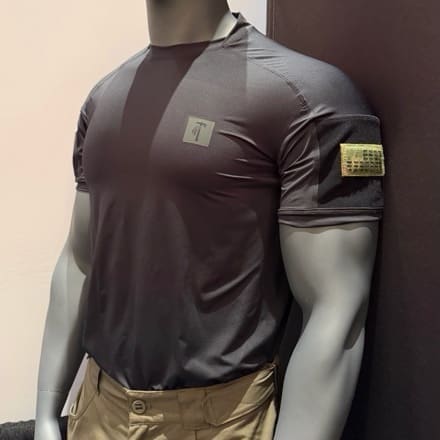
We got a look at this new short sleeve T-Shirt during SOF Select. Details coming very soon from Tomahawk Performance.

Combat Power Solutions – Primary, Alternate, Contingency and Emergency Power Generation Device

Thursday, July 23rd, 2026

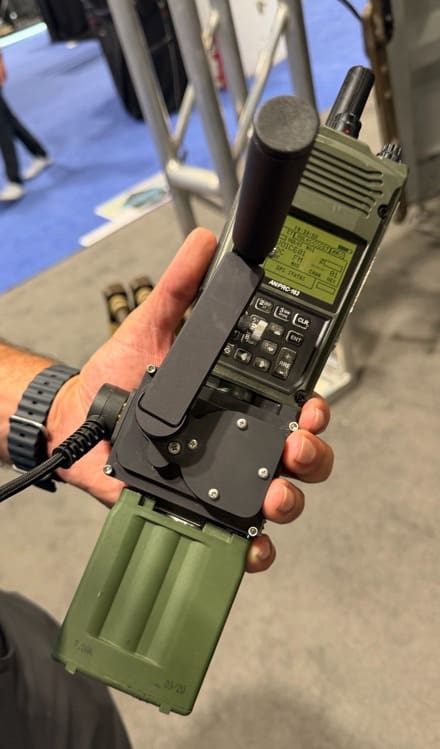
At every trade show I visit I run across a product that I take one look at and get it. During SOF Week it was the Primary, Alternate, Contingency and Emergency Power Generation Device from Combat Power Solutions.

Many of the lessons learned from the war in Ukraine are contested logistics focused, including the need to scavenge power.

Hand-cranked generators for radios were common from World War Two up until the 90s but our battlefield dominance over the last 25 years has allowed us to become complacent regarding power access; we’ve always been able to supply batteries. Those days are over.

Aptly named, PACE fits between the radio and battery on PRC-163, 148, 152, 161, TR-E, SIR, SC-4200, MPU-4, and MPU-5 systems, allowing you to top the battery off with a little muscle power when needed. The design also allows for hot swapping of batteries without disrupting the radio’s load or comms.

This 12V charger weighs 1.09 lbs, is IP67 (waterproof at >10m for 3 hours) and will also accept AC (110–240V), 12VDC vehicle/cigarette adapter, BA-2390/2590/5590, M-PACE Dual Twist Lock, 9–32VDC battery scavenge, and solar power inputs.

combatpowersolutions.com

Fort Indiantown Gap Expands UAS, Counter-UAS Training

Thursday, July 23rd, 2026

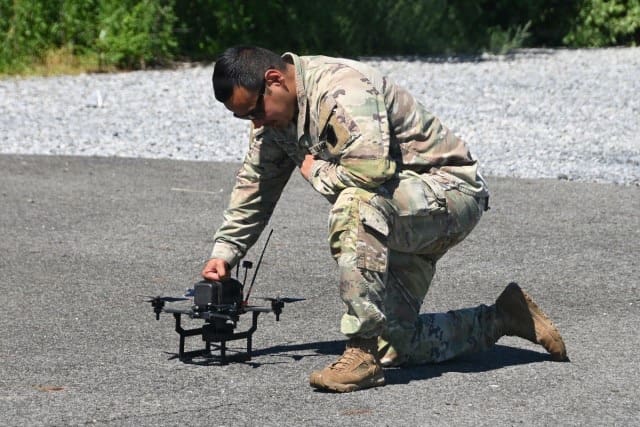
FORT INDIANTOWN GAP, Pa. — As the battlefield continually shifts toward unmanned aircraft systems, Fort Indiantown Gap is expanding its UAS and counter-UAS training opportunities.

Several ranges at the installation have been altered in recent months to allow for UAS and counter-UAS training so service members are prepared when they are deployed to hostile environments, said Kurt Spieles, the Gap’s range program coordinator.

“Small, unmanned aircraft systems have become a defining and complex component of the modern battlefield,” Spieles said. “Soldiers and units training at Fort Indiantown Gap need realistic, hands-on experience operating UAS for their own missions and, just as critically, detecting, tracking and defeating hostile drones before they can inflict harm upon them.


“Counter-UAS proficiency is no longer a niche skill set, but a core survivability requirement for any unit with the potential to deploy,” Spieles added.

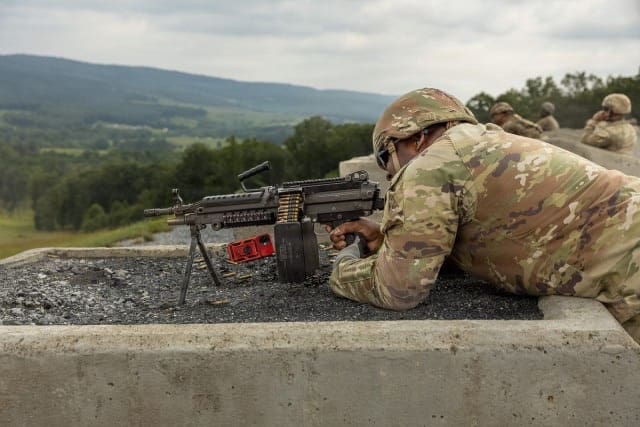
Range 35, which is located in the training corridor between Blue and Second mountains, now includes a quadcopter and fixed-wing live-fire concept that allows users to engage drones with M249 or M240B machine guns.

The concept includes the capability to engage fixed-wing drones referred to as “wings,” fixed-wing gliders deployed by payload-capable quadcopters, and “attritable” first-person-view, or FPV, quadcopter drones.

Range 20, which is located along Range Road, has been modified to incorporate a counter-UAS team into a fire and maneuver squad. A team can bound forward on the range and engage ground targets with 5.56mm rounds and sporting clays with shotguns.

A large trench was also added that allows users to take up a defensive posture and engage clays with shotguns or ground targets with rifles. Clay throwers can be placed in various locations on the range and are thrown toward users to replicate high-speed one-way attack drones.

Together with the UAS Training and Innovation Facility, the range program is developing an inert FPV gunnery range on Range 6A, which is directly across Range Road from the UASTIF.

This range will allow pilots to fly FPV one-way attack drones directly into targets using a soft impact target backstop, constructed of large wooden frames with netting similar to that found in a batting cage. This allows multiple impacts with little to no damage to the drones.

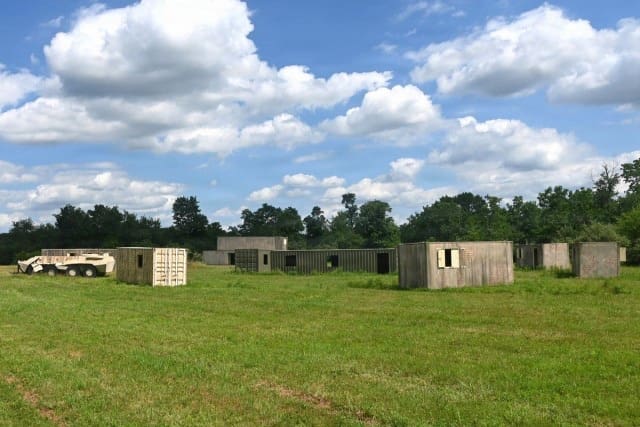
Additionally, the range program facilitated the transport and assembly of an FPV drone maneuver training facility on the UASTIF grounds. Pilots can fly around and through shipping containers that have been modified and arranged to resemble a small village.

Fort Indiantown Gap continuously updates its ranges and training areas to mirror real-world threat evolution rather than static, outdated concepts, Spieles said.

“This includes integrating small UAS operations and counter-UAS response into range and maneuver training and developing in-house sUAS capability, including 3D-printed airframes to keep pace with rapidly changing commercial and military drone technology at a fraction of traditional timelines and costs,” Spieles said. “This adaptive approach ensures soldiers train against realistic, current threat profiles rather than legacy assumptions.”

In addition to the changes at these ranges, numerous upgrades are currently underway at the UASTIF, which was selected recently to host two significant UAS training programs. Upgrades at the UASTIF include two classrooms, a simulator room, a locker room and office space.

Col. Kevin Potts, Fort Indiantown Gap’s garrison commander, said that as the threat environment on the modern battlefield continues to evolve, the integration of UAS and counter-UAS training is crucial.

“At Fort Indiantown Gap, our goal is to ensure that our service members have access to modern, realistic training through innovation and outside-the-box thinking,” Potts said. “Through this we are providing ranges for UAS and counter-UAS training in order to equip our warfighters with the critical skills they need to win on a multi-domain battlefield.”

By Brad Rhen