Colt

Author Archive

US Army Soldier Seeking Second Paralympic Berth

Saturday, March 2nd, 2024

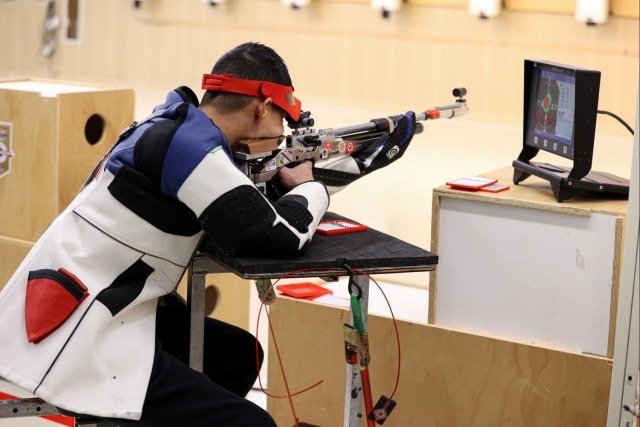
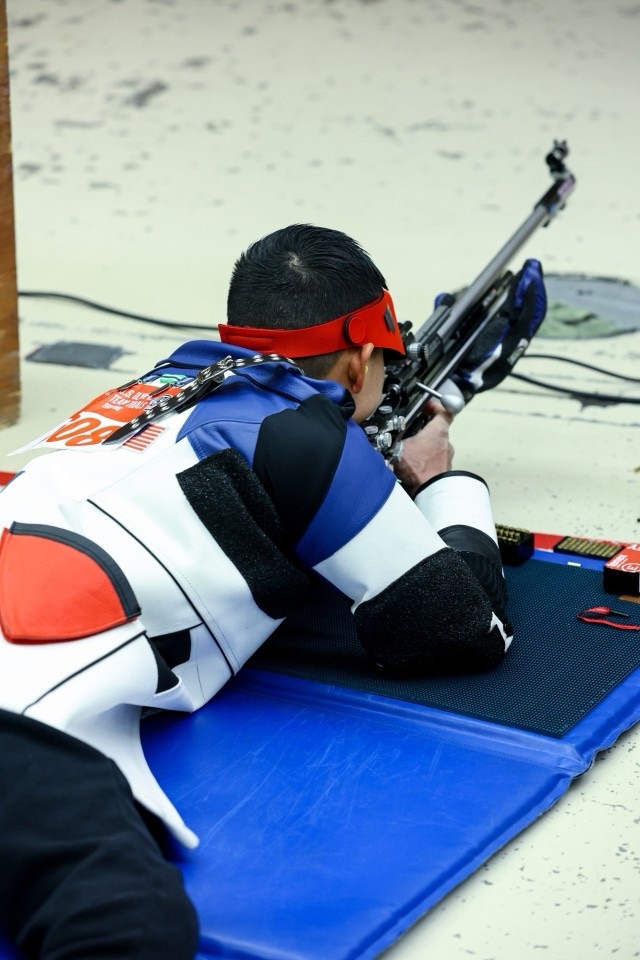
FORT MOORE, Ga. — U.S. Army Staff Sgt. Kevin Nguyen won the gold medal in both 10m Prone Air Rifle (R3) and 50m Prone Smallbore (R6) at USA Shooting’s Paralympic Trials – Part 2 in Colorado Springs, Colorado, February 2-10, 2024.

The recent wins in both disciplines puts the Purple Heart recipient in good standing over other top U.S. marksmen vying for a spot on Team USA’s Paralympic Rifle Team. In air rifle, Nguyen currently has a solid lead of two points while in smallbore his lead is an impressive seven points. To those not familiar with Paralympic shooting sports disciplines, a two or seven point spread may not seem like a lot. However, medals at the Olympic and Paralympic levels in the shooting sports are often determined by tenths or hundredths of points in scoring.

The Fort Moore Soldier said he is definitely happy with his strong performance, but the lead does not guarantee him a position on Team USA.

“It definitely takes a good bit of weight off my shoulders knowing that I have a comfortable lead over my fellow teammates and competitors, but that doesn’t mean I can become complacent,” said Nguyen who is a member of the U.S. Army World Class Athlete Program and attached to the U.S. Army Marksmanship Unit. “I will still go into Trials – Part 3 with the determination to compete at my highest and win.”

Like in the Olympics, each country is allowed a maximum of two athletes in each Paralympic event, if the country first wins the quota spots. Currently, the United States has only earned one quota spot for the 50m Smallbore (R6) event and has none in 10m Air Rifle (R3). However, the Para Shooting World Cup – India is coming up March 6-15, 2024, and USA Shooting is hoping to claim the remaining quota spot in smallbore and the outstanding two in 10m air rifle. That would open up four possible seats in those two shooting events.

The Paralympic Trials is not a new process to the Westminster, California native. He competed in the 2020 Paralympic Trials in Tokyo, where the Soldier said he gained some valuable experience that is helping him refocus his training.

“The biggest thing I want to focus on is match intensity. I know from my training and from the last few matches, that I can shoot the world class scores in matches. Now, it’s having to maintain composure and not get overly anxious like I did in Tokyo,” explained Nguyen.

“Tokyo, by far, was the most nerve-racking match I have ever competed in. I’m hoping, in France, I’m a little more composed and focused on my fundamentals.”
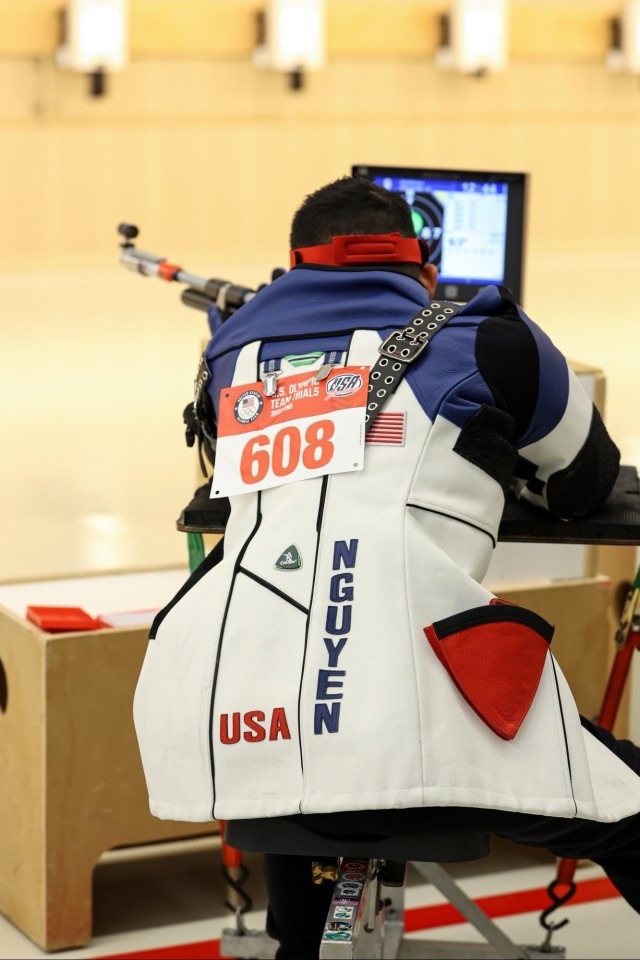
The significant performance at Paralympic Trials – Part 2 confirmed that Nguyen’s training plan is working. So as he prepares for the upcoming Para World Cup and Paralympic Trials – Part 3, the Soldier said he will continue working with his training plan that is showing results.

“I felt really good going into the match [Paralympic Trials – Part 2]. I’ve been working on my record days, focusing on shooting world class match scores on the spot. It felt really good to see that my training is mirroring my competition days.”

Training is not the only thing Nguyen has been working on though. He just became a new father, and he said he’s embracing every moment of this new experience.

“Being a father is such an awesome feeling, and I am enjoying every moment of it — even on days when I am not getting a whole lot of sleep. That’ just par for being a parent now, everybody goes through it.”
Becoming a father has not changed his perspective on his Paralympic goal, he just feels like he has added support now.

“I think having my family there with me at the Games will not only be a cool and fun experience, but it’s also a blessing. It’s like have your own cheerleading squad in the stands.”

As he aims to secure a position on Team USA’s Paralympic Rifle Team, for the second time, he said he has the same goal he had in Tokyo.

“I want to do better in France than I did in Tokyo; I’ve learn so much since then, and I am still fighting and wanting to bring home that Gold Medal for Team USA.”

By LTC Michelle Lunato
Rheinmetall Awarded Fifth Order for Germany’s Modular Medical Facilities Total System

Friday, March 1st, 2024

Germany’s Federal Agency for Bundeswehr Equipment, Information Technology and In-Service Support (BAAINBw) has contracted with Rheinmetall to modernize additional parts of the Bundeswehr’s Modular Medical Facilities total system (MSE). For Rheinmetall, the aggregate value of the contract is in the mid-single-digit million-euro range.



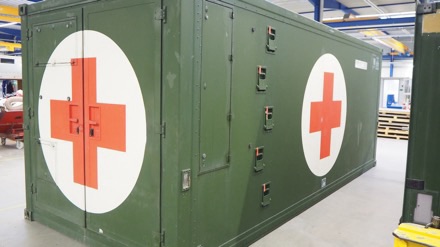
The order encompasses X-ray containers that enable X-ray imaging of the entire human body sitting, lying or standing, as well as internal organs in the radiology realm. The X-ray equipment now in service no longer reflects the latest state of the art and must therefore be replaced or regenerated. The regenerated and/or newly fabricated containers will house new Siemens X-ray equipment (scanner and diagnostic station), including accessories for subsequent operation in the container. Following integration, reliable patient care in accordance with current German standards will be assured without limitation in a field hospital consisting of multiple MSE containers. 

The Modular Medical Facilities total system comprises military treatment facilities, trauma centres and combat support hospitals utilized in Bundeswehr areas of operation. Here, individual systems take care of special tasks – in this case, X-ray imaging. Care provided inside the container must correspond to current German hospital standards. Like all MSE components, the X-ray container is classified in accordance with the International Convention for Safe Containers. Moreover, because it is stackable, it can be transported by container ship. The systems and equipment they contain are adaptable in terms of scope and functionality depending on customer specifications. 

“We’re delighted to have been awarded a fifth contract for the MSE total system and expect to see continued growth in this area in future”, declares Dr Deniz Akitürk, CEO of Rheinmetall Project Solutions GmbH. Since 2019, Rheinmetall Project Solutions GmbH has bundled the Group’s resources and capabilities in the operational support domain and is thus responsible for mobile deployed operations solutions. By supplying special services, it seeks to provide customers with long-term operational support. Rheinmetall AG created the company specifically to handle services and projects relating to support of deployed operations. 

DroneShield Commences Development of Software Defined Radios for Next-Gen C-UAS Technologies

Friday, March 1st, 2024

DroneShield Ltd (ASX:DRO) (“DroneShield” or the “Company”) is pleased to announce it has commenced development of custom higher performance multi-channel software defined radios (“SDRs”) to be used in new evolution capabilities of future generations of its products.

The Company is a global leader in the C-UAS market, including the handheld C-UAS solutions. Part of the challenge is reducing the hardware to an ultra-small Size, Weight and Power (“SWaP”) parameters to dimensions that can be tactically deployed in the field by end users, while ensuring sufficient computing ability to run complex AI-algorithms on the devices, without referencing cloud or other systems (also known as computing on the edge). 

DroneShield presently have approximately 90 engineers in its Sydney facility. It is expected that more than 50% of the engineering team will be involved in this initiative, including Radio Frequency, Electronic Engineering, Firmware, Embedded Software, Data Science, Data, Mechanical, System and Quality Engineering.

Angus Bean, DroneShield Chief Technology Officer, commented, “As the drone threat space continues to rapidly evolve, DroneShield continues with a significant investment into next generation technologies, including moving into fully custom software defined radios in-house.”

GA-ASI Makes First Flight of XQ-67A OBSS

Friday, March 1st, 2024

SAN DIEGO – 29 February 2024 – General Atomics Aeronautical Systems, Inc. (GA-ASI) flew the XQ-67A Off-Board Sensing Station (OBSS) for the first time on Feb. 28, 2024. OBSS is an Air Force Research Laboratory (AFRL) program and GA-ASI was selected in 2021 to design, build and fly the new aircraft.

With flight of the AFRL-funded XQ-67A, GA-ASI has validated the “genus/species” concept first developed with AFRL as part of the Low-Cost Attritable Aircraft Platform Sharing (LCAAPS) program focused on building several aircraft variants from a common core chassis.

Under LCAAPS, AFRL and GA-ASI explored development of a chassis, termed a “genus”, as the foundational core architecture from which several “species” of aircraft can be built.

“This provides an alternative acquisition approach for military aircraft that enables faster development, lower costs and more opportunities for frequent technology refresh,” said Trenton White, OBSS Program Manager and aerospace engineer in AFRL’s Aerospace Systems Directorate. “XQ-67A is the first “species” to be designed and built from this shared platform. Flight demonstration of this system is a major first step toward showing the ability to produce affordable combat mass.”

“OBSS is the first aircraft type built and flown using a common core chassis developed by GA-ASI that promotes commonality across multiple vehicle types,” said GA-ASI Vice President of Advanced Programs Michael Atwood.

Spectra Group awarded global distribution rights for Comtech’s Troposcatter Family of Systems

Friday, March 1st, 2024

Spectra Group, a specialist provider of secure voice, data and satellite communications systems, has been awarded the global distribution rights for Comtech’s Troposcatter Family of Systems (FoS) which includes the 500-Watt Mobile Transportable Transmission System (MTTS), the more mobile 10-Watt Compact Over-the-Horizon Mobile Expeditionary Terminal (COMET), and other new next generation troposcatter systems. The 5-year agreement appoints Spectra Group in all areas globally, except for the USA, Canada and Mexico which is retained by Comtech. Spectra Group was first appointed by Comtech as UK and NATO Special Operations Forces (SOF) agents in September 2019. Since then, Spectra Group has announced multiple orders for Comtech’s Troposcatter FoS including UK Navy (Royal Marines) in March 2022, HQ ARRC in March 2023, 3 (UK) Division in September 2023 and an overseas customer. In October 2023, Spectra Group placed a USD$20M plus order with Comtech to service multiple orders already received, and several expected follow-on orders from undisclosed customers in the NATO and European regions.

The Troposcatter FoS, developed by Comtech, provide high capacity, low-latency data links for over-the-horizon communications utilizing Comtech’s state-of-the-art CS67PLUS troposcatter radio/modem, without the need to rely on satellites or multiple line-of-sight repeaters. The Troposcatter COMET system, in particular, is ideal for providing a secure big data network for deployed headquarters from divisional down to company level because it is small and lightweight.

Due to its low power and directional nature, it is also difficult to detect and deny. It uses a maximum transmit power of 10-watts and only needs a 1-meter dish, but still has low latency (typically 9-20mS) and large bandwidth (5-60Mbps) while optimized for data links up to 60 km and beyond. In practice, data transfer speeds can be much greater (the CS67PLUS operates up to 105 Mbps single stream and 210 Mbps dual stream operation) and data links can be effective up to 100kms+ on the COMET, depending on the environment. The system is simple, intuitive, and easy to set up (15 minutes). Critically, it is also satellite independent and can work in a GPS/GNSS denied environment (including polar regions) making it ideal for use during Peer-on-Peer conflict and when Multi Domain Integration is required.

Since March 2022, Comtech’s Troposcatter COMET has been available on the NATO Catalogue via the NATO Support Procurement Agency (NSPA), so any NATO country can purchase directly without having to endure a long tender process. For the rest of the world, the Troposcatter FoS can be purchased directly from Spectra Group or via Comtech for North America.

Simon Davies, CEO of Spectra Group said: “Spectra is delighted to have expanded our distribution region for this excellent product that perfectly complements our own SlingShot satellite communication system. We have been working closely with Comtech for the last 4 years and our recent sales successes are testament to the value of that partnership. With increasing state-level global threats to communications and the potential for denied or degraded satellite services, we need to maintain focus on innovation and diversification. The fresh development of robust, reliable and effective Troposcatter technologies opens up the opportunity to offer multiple long-range, secure communications solutions that don’t rely exclusively on satellite systems and we are very happy to be at the forefront of these developing technologies.”

Ken Peterman, Comtech’s President and CEO said, “With the most deployed Troposcatter systems in the world, our FoS are uniquely designed to provide U.S. and coalition forces with an information advantage across all domains. We are thrilled to partner with Spectra Group to expand access to Comtech’s FoS and deliver our marketing leading beyond-line-of-sight (BLOS) troposcatter technologies to coalition forces operating across the globe. It was an easy decision to partner with Spectra Group given the company’s trust in the industry and deep understanding of how command, control, computers, communications, cyber, intelligence, surveillance, and reconnaissance (C5ISR) will evolve tnce, surveillance, and reconnaissance (C5ISR) will evolve to meet needs of today and in the future.”

US Air Force Updates DAFI 36-2903, Dress and Personal Appearance of Department of the Air Force Personnel

Friday, March 1st, 2024

AFI 36-2903 rewrite just dropped which, incorporates policy changes from the 102nd Air Force Uniform Board, incorporates all other guidance memorandums and features updated graphics for visual clarity.

The updated policy outlines:

• Religious Accommodation Process
• No-hat, No-salute areas
• Specialized nametag wear for DAF and Joint Chiefs support staff
• Two-piece flight duty uniform
• Bags, to include gym bag, backpack, handbags
• Flight duty uniform policy
• Female wear of mess dress trousers or slacks
• Wear of caps for baldness or hair loss due to medical conditions
• Permanent wear of EPME badge
• Security Forces shield on the OCP uniform
• Beverage consumption while walking in uniform
• Wear of cold weather headbands
• Authorized wear of commercial maternity cold weather outerwear
• Wing commander delegation to approve religious regalia
• Organizational emblems on the back of morale shirt
• Heritage morale patches on the flight duty uniform

It also highlights authorized and unauthorized examples of grooming standards for:

• Tattoo/brands/body markings
• Mustache wear
• Male and female hair standards
• Female nail polish colors and other cosmetics

It also clarifies duty badge guidance, explaining the wear and placement of up to three duty badges on male and female service, semi-formal, formal and mess dress uniforms. Lastly, it clarifies sister service/joint unit patch wear, and provides graduate patch criteria.

The updated DAFI 36-2903 can be found here.

FirstSpear Friday Focus: FS Attends Enforce Tac & SICUR

Friday, March 1st, 2024

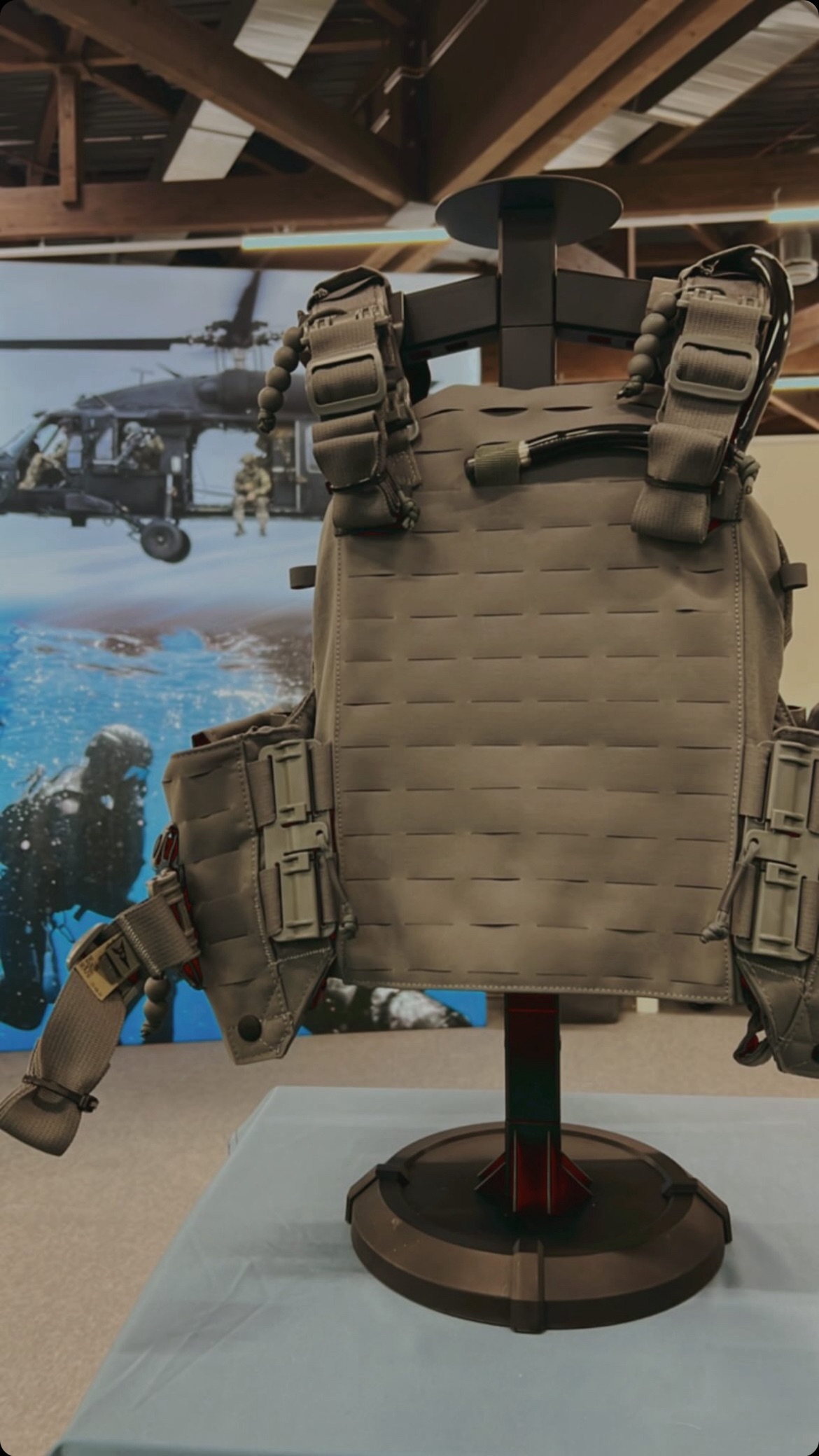
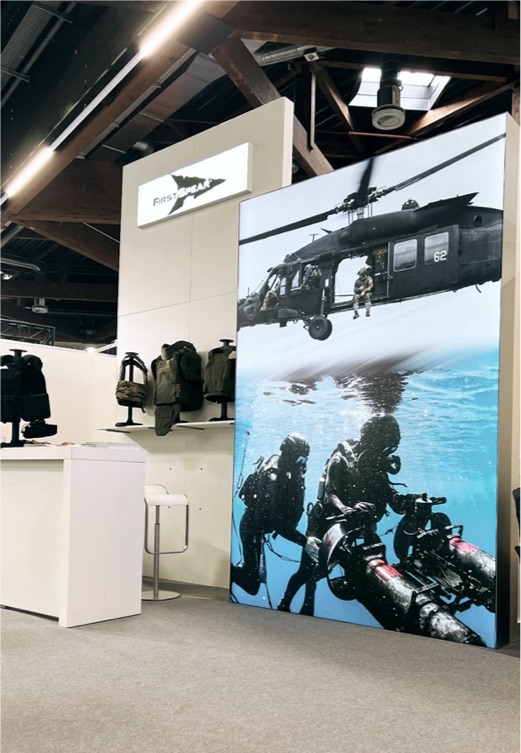
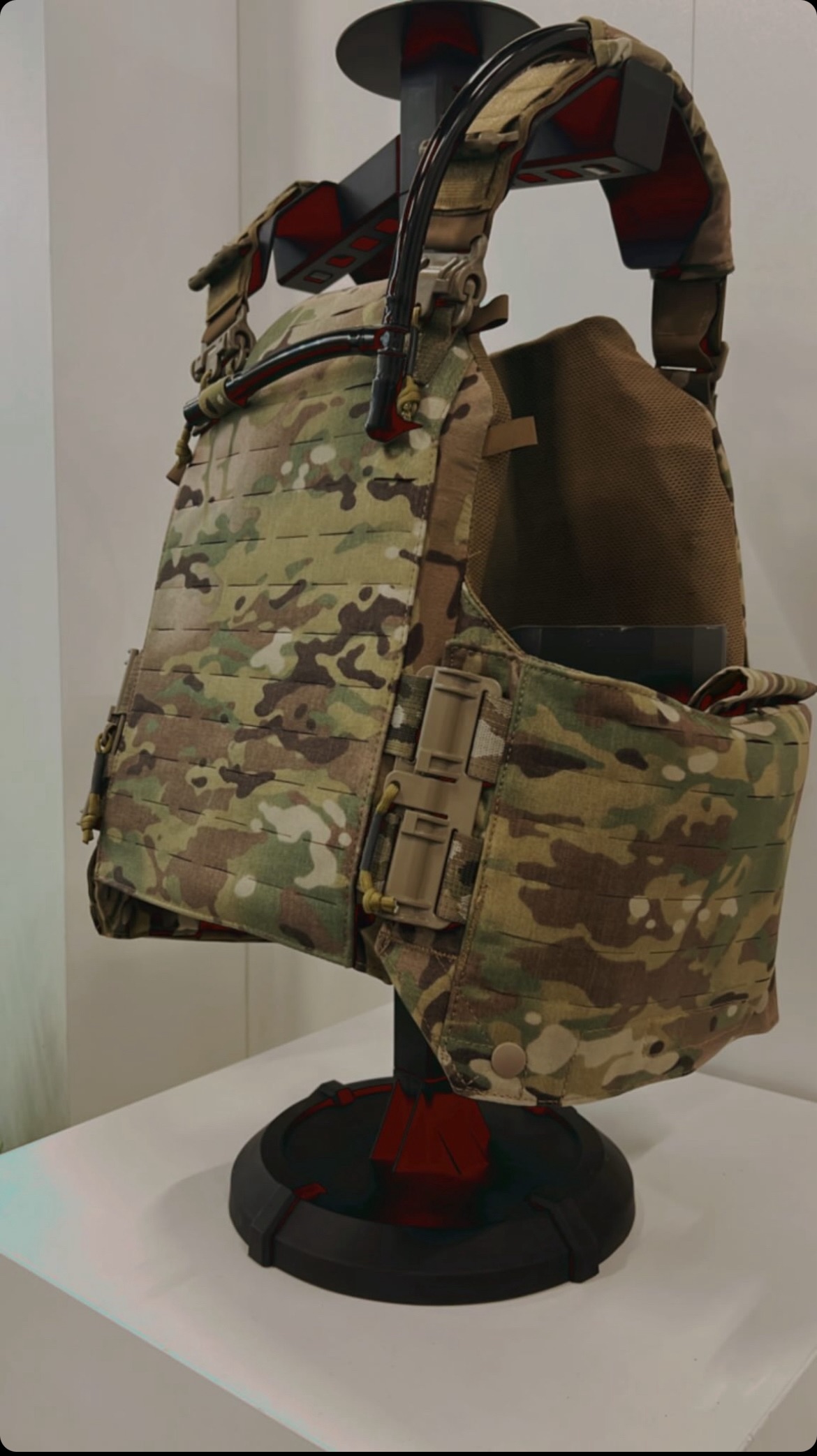
The FirstSpear team spent the week showcasing new technology & gear to end users at Enforce Tac in Nuremberg, Germany and SICUR in Madrid, Spain.

Continuing its attendance at Enforce Tac in its 11th year, FirstSpear continues to innovate and answer the call of those at the tip of the spear domestically and globally. With over 80 countries in attendance, this year also marked the 11th year of our attendance since the very beginning of the show.

The team also spent time in Madrid, Spain at SICUR leading international security event, that brings together public and private security companies. Continuing to support war fighters throughout the world.

For more information about FirstSpear, please visit www.first-spear.com.

Future Conflicts Demand Flexible and Mobile Command Posts

Friday, March 1st, 2024

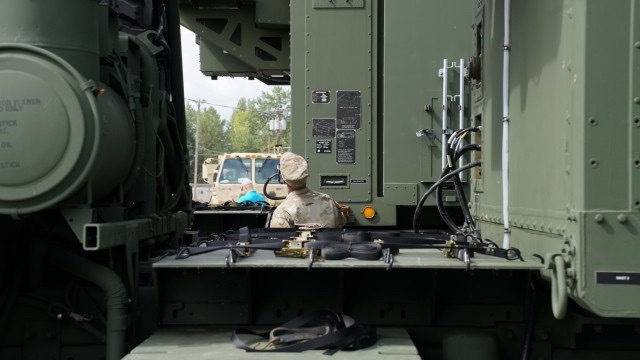
SAVANNAH, Ga. — Army leaders understand that preparing for large scale combat operations will require commanders to lead on the move with the ability to disperse at a moment’s notice.

Leaders also understand that one size will not fit all for command posts under this new paradigm.

At the Army’s Network Technical Exchange Meeting (TEM) in December 2023 in Savannah, Georgia, a panel discussion on command post modernization unveiled plans for CPI2 Next, which is the latest in a series of efforts to modernize existing vehicle-based Command Post Integrated Infrastructure (CPI2) units and provide on-the-move command and control in anticipation of future combat scenarios.

The CPI2 program is integrating network and communications technologies into a variety of vehicle platforms, then fielding them incrementally to units for experimentation and feedback, which will inform future iterations.

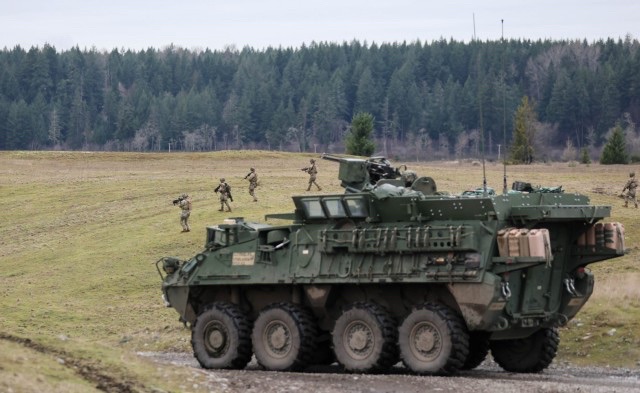
While current iterations of integrated command post platforms have proved useful in the field during unit experimentation, a Limited User Test (LUT) with the 1st Stryker Brigade Combat Team, 2nd Infantry Division (1-2) at Joint Base Lewis McChord, Washington, conducted this past summer indicated a need for a more adaptable, configurable command post with greater disbursement capability. From this feedback, project managers identified two primary concerns regarding the use of existing Command Post Support Vehicles: a lack of integrated power and insufficient wireless network configuration.

“We have to be able to disperse in a moment’s notice, and anything requiring cables or wires that connect to immobile objects will put Soldiers in harm’s way,” said Lt. Col. Herb Gamble, product manager for CPI2.

To address these concerns, panelists discussed solutions currently identified and solutions they will be seeking from industry partners to meet the Army’s goal for a modular, scalable and survivable command post to support Army of 2030.

Beginning in March, CPI2 program integration teams will begin installing generators onto 1-2 SBCT CPI2-equipped vehicle platforms. These power sources will replace the micro grid initially tested as part of the LUT, which still required the vehicles to be tethered to a power source.

“These generators will open up the option for more rapid displacement and emplacement of mobile command posts each time the tactical operations center jumps to another location within the operational environment,” Gamble said.

Sometime this summer, these power-integrated platforms will accompany the unit to their National Training Center rotation, prior to deploying.

“This will be the first time on-the-move command post capabilities will be part of a combined training center rotation,” Gamble said.

To address the wireless capabilities needed for on-the-move missions, the Army will generate a Request for Information to industry to enhance or replace the current onboard WiFi, which works well in line-of-sight situations but will require more robust capabilities to meet Army command post directive to rapidly move and halt in just minutes.

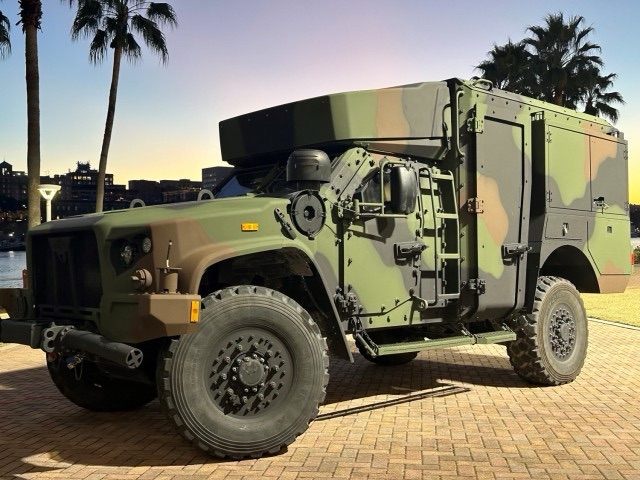
At the same time, the program continues to innovate, and is currently conducting a pilot that integrates command post capabilities into a Joint Light Tactical Vehicle — this time including the Advanced Field Artillery Tactical Data System to enhance fire support missions on the move.

“We conducted an exercise with the Army’s Test Command this past fall to determine the ability of forward observers to initiate a call for fires missions to the command post headquarters,” said Lt. Col. Jonathan Judy, product manager for Network Integration and Modernization. “In the lab we validated we can do digital calls for fire on a Secure But Unclassified – Encrypted network, then verified those results in the field using real Soldiers and equipment.”

As the program shifts to its next iteration, called CPI2 Next, it will focus on including more flexible integrated command post capabilities.

“Commanders want to be able to have the modularity and the ability to change and adapt based on their mission set,” Gamble said. “No command post will conduct operations the same way, because based on your mission set and where you’re located, you’re going to want customized command post capabilities.”

Providing units with modular A-kits for their vehicles and mission-tailored B-kits for the Soldiers themselves will allow for optimal functionality without sacrificing ability to disperse. These kits contain communications devices that will be swapped out according to mission objectives, making them ideal for widespread dispersal.

“All mobile command post development should incorporate both new and existing technologies, including improved on-the move and voice command capabilities, which allows project managers to update existing units without fully sunsetting their equipment, making it a favorable both practically and fiscally,” Judy said.

The Army will continue to seek innovative solutions to address these and other mobile and flexible command post requirements via requests for information this fiscal year, including the potential for interoperability with Mission Partner Environment services in anticipation of combat operations with allies and partners.

“Make sure you give us your biggest and brightest ideas,” Gamble said to industry TEM 11 attendees. “We owe it to our Soldiers in arms.”

By Mollie Ryan, PEO C3T Public Affairs