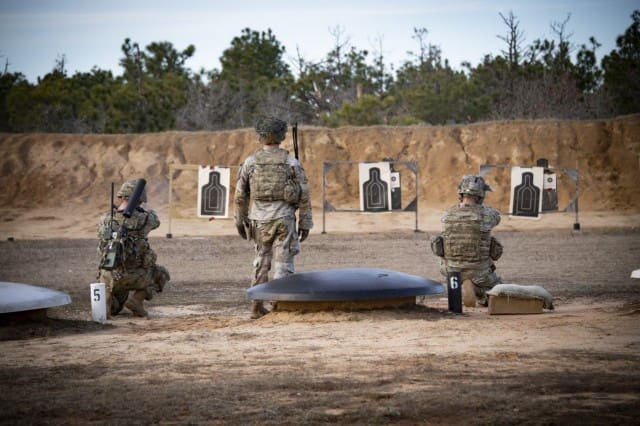
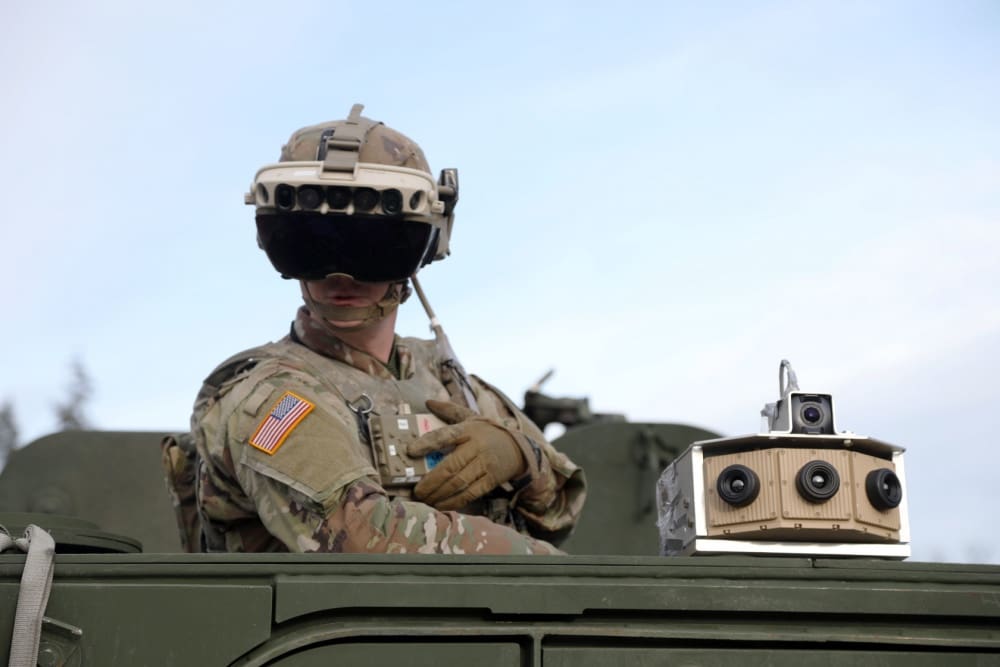
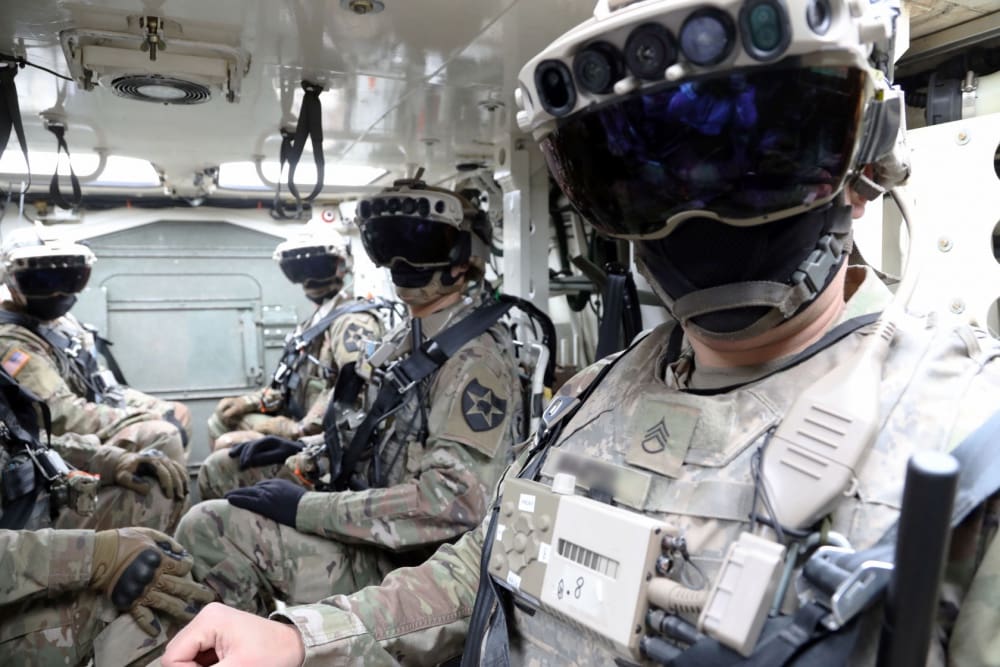
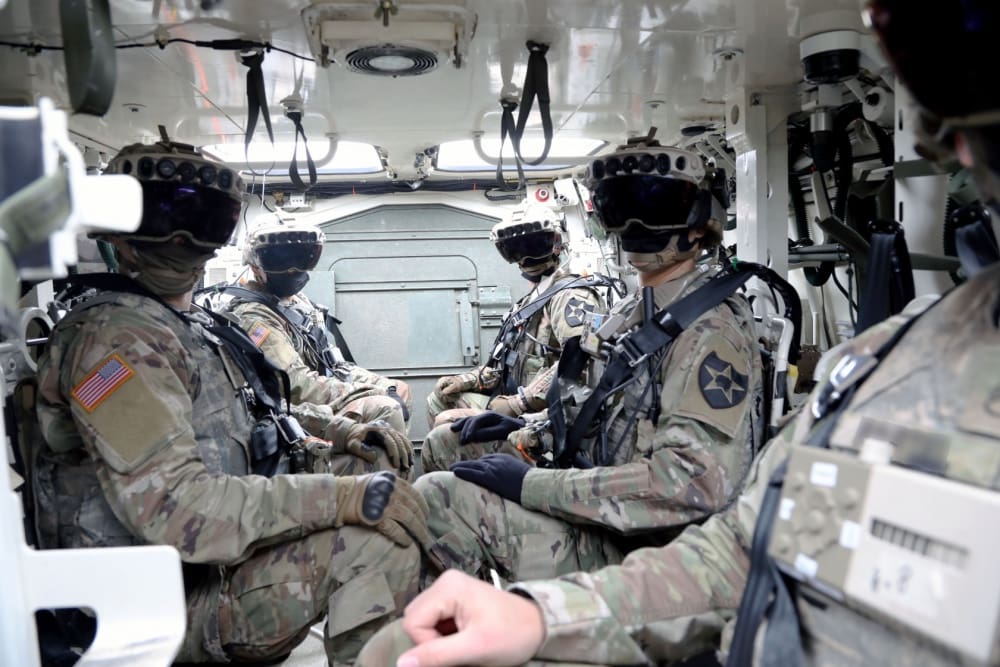
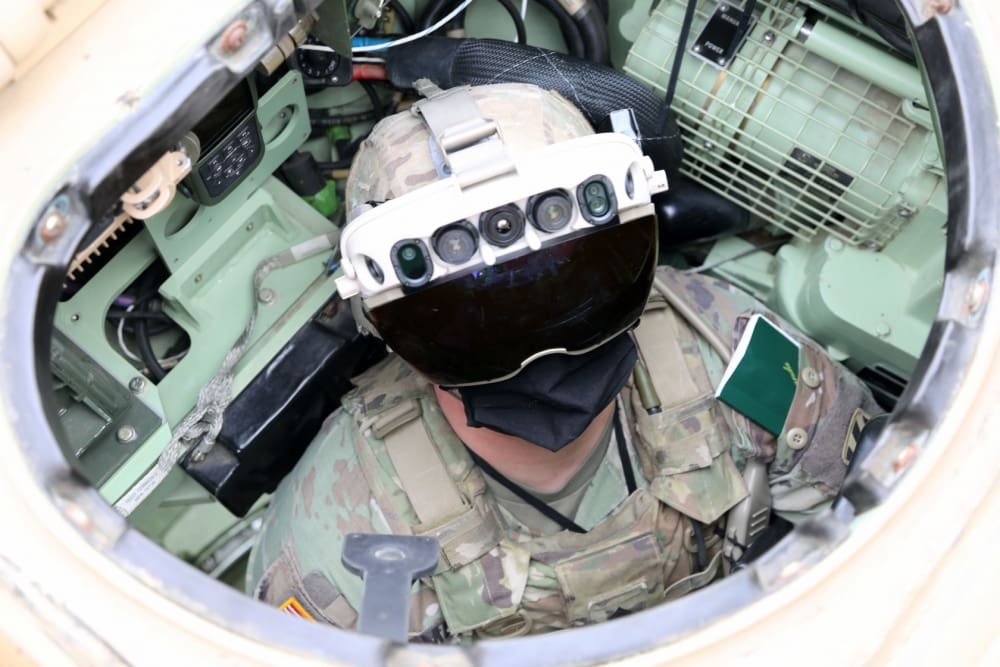
BOSS-Xe from Wilcox Industries

Archive for the ‘Army’ Category

Army Researchers Acquire Two New Supercomputers

Friday, January 1st, 2021

ADELPHI, Md. — Army researchers are upgrading their computing capabilities with the acquisition of two new supercomputers.

The U.S. Army Combat Capabilities Development Command, now known as DEVCOM, Army Research Laboratory is home to the Department of Defense Supercomputing Resource Center, where computer scientists are welcoming the bi-annual technology refresh as part of the DOD High Performance Computing Modernization Program.


The two supercomputers, named Jean and Kay, recognize the remarkable achievements and enduring legacies of Jean Jennings Bartik and Kathleen “Kay” McNulty Mauchly, key contributors and computing pioneers as part of the original team of programmers of the Electronic Numerical Integrator and Computer, or ENIAC, the world’s first general purpose computer.

These systems will join the Betty system in the center’s production high-performance computing infrastructure. The Betty system is named in honor of Frances Elizabeth “Betty” (Snyder) Holberton, another key member of the original ENIAC programmer’s team.

The two systems are both Liqid Computing platforms containing 48 core Intel XEON (Cascade Lake Advanced Performance) processors integrated with the largest solid state file systems the DOD has deployed to date.

The systems are expected to enter production service in the mid-fiscal 2021 timeframe, and will join the center’s Centennial and Hellfire systems towards establishing a cumulative computational capability of 23.3petaflops.

“Jean and Kay will allow ARL to support many of DOD’s most significant modernization challenges to include digital engineering and other emerging workloads,” said ARL DSRC Director Matt Goss. “By adding specialized technology to augment traditional high performance computing with data analytics, these machines will serve as a spring board on which DOD scientists can make game changing discoveries.”

According to ARL computer scientist Bob Sheroke, these systems significantly enhance the program’s ability to support the DOD’s most demanding data-intensive computational challenges, and include emerging technologies and tools for artificial intelligence, data analytics and machine learning.

The systems include embedded capabilities to support persistent services in additional to traditional batch-oriented processing.

“The DOD High Performance Computing Modernization Program, established in 1992, has invested over $1.2 billion at the ARL DSRC, which has maintained the center’s posture as one of the program’s primary HPC centers and one of the top supercomputer sites in the national supercomputing infrastructure,” Sheroke said.

Visit www.arl.hpc.mil to learn more about center’s computational capabilities and support services.

By U.S. Army DEVCOM Army Research Laboratory Public Affairs

Future Warfare Writing Program at Army University Press

Tuesday, December 29th, 2020

Generally, works of fiction about the future are considered science fiction and allow us to look at current issues by placing our minds in a “what-if?” environment. In some cases, science fiction is also used as a wargaming tool to consider what might be.

Army University Press sponsors a Future Warfare Writing Program – program which is worth checking out.

They offer both Fiction and Nonfiction versions of the program where would-be futurists take a look at trends in Warfighting.

Complex [environment] is defined as an environment that is not only unknown, but unknowable and constantly changing. The Army cannot predict who it will fight, where it will fight, and with what coalition it will fight.

TRADOC Pamphlet 525-3-1; The U.S. Army Operating Concept: Win in a Complex World 2020-2040, 31 October 2014

Although it’s a few years old, the U.S. Army TRADOC Mad Scientist Initiative is my favorite.

Everything is available at www.armyupress.army.mil/Special-Topics/Future-Warfare-Writing-Program.

New Medical Device May Change the Face of Battlefield Treatment

Tuesday, December 29th, 2020

The U.S. Army Medical Materiel Development Activity has teamed with one of its commercial partners in the development of a novel medical device that may prove to be a “game-changer” in the frontline treatment of wounded Warfighters. Created by TDA Research, Inc., and funded through the Defense Health Agency’s Small Business Innovation Research program, the Lactated Ringer’s Solution Generator is a lightweight, portable unit that can produce sterile LR solution in austere locations from locally available freshwater sources. The device utilizes proprietary technology to produce one liter-size intravenous bags from a concentrated LR salt solution.

Composed of sodium, chloride, potassium, calcium and lactate, LR solution is used primarily to treat dehydration, deliver medication and restore fluid balance following bodily injury. It is also used to treat moderate hemorrhagic shock, as it has been shown to increase initial survival rates among patients and decrease the chances of organ damage.

Austin Langdon serves as assistant product manager for the LR Solution Generator program within USAMMDA’s Warfighter Deployed Medical Systems Project Management Office. He believes the device will help to save lives on the battlefield, and recently he demonstrated the unit for Army Brig. Gen. Michael J. Talley, Commanding General of the U.S. Army Medical Research and Development Command and Fort Detrick.

“Without question, this small device will dramatically reduce the Army’s logistical footprint of having to ship and store lactated Ringer’s solution, which is the fluid of choice for resuscitation if blood is not available on the battlefield,” said Langdon. “This unit can make LR solution from practically any water source, including ditch water.”

“I truly believe in this device and its application for military use in the near future, although it will probably find its way into civilian medicine as well,” he continued. “For the Army, the LR Solution Generator will increase our life-saving capabilities by helping to reduce our logistical supply chain demands — our ability to make LR solution in the field will also help ensure we’re able to use these critical bags before they expire.”

As a former Army flight medic, Langdon praised the unique qualities of the device, highlighting its size, weight and portability. The unit weighs less than 11 pounds and is stored in a hard-shell case that is approximately 10 inches wide by 18 inches long, and only 6 inches deep. The purification device runs on a rechargeable lithium-ion cell that can produce more than 30 bags of LR solution per single charge.

“Army leadership is continually seeking ways to reduce the logistical strain of getting much-needed resources to the frontline and far forward in Multi-Domain Operations,” said Langdon. “Products such as the LR Solution Generator are far-forward-leaning solutions that can help us think outside of our normal parameters of operation. This device, and others like it, will bring forth new innovation that will change our standard of operation and secure our valuable resources.”

By Jeffrey Soares, USAMMDA public affairs

5th SFAB, ‘Ghost Brigade,’ Complete First-of-Its Kind-Rotation

Monday, December 28th, 2020

FORT POLK, La. – The 5th Security Force Assistance Brigade completed a first-of-its kind-rotation at the Joint Readiness Training Center’s 21-2 Rotation partnering an SFAB with a real-world unit, the Joint Base Lewis-McChord-based 1-2 Stryker Brigade Combat Team, “The Ghost Brigade,” in a decisive action validation exercise, Nov. 13-26, 2020.

“JRTC 21-02 was the culmination of 5th SFAB’s mission since its inception in June 2019 to man, equip, and train the Army’s newest combat brigade,” Brigade Operations Officer, Maj. Liam Walsh, said. “The training served as a proof of principle as the first SFAB Decisive Action CTC rotation.”

The Ghost Brigade closely integrated with SFAB Soldiers from the Brigade down to the Platoon level throughout the exercise.

“Our units worked alongside 5th SFAB, replicating the role of a professional, near-peer Allied army, which the SFAB was tasked to support as they would for a real-world partner force in the Indo-Pacific Command Area of Responsibility,” 1-2 SBCT Commander Col. Jared Bordwell said. “From the brigade to the individual levels, this rotation was all about supporting one another to make our team unbeatable.”

The SFAB is completely comprised of volunteers who were carefully vetted for service in the organization.

“This rotation has demonstrated that specially trained SFAB Soldiers, selected for their tactical expertise and professionalism, organized into small cohesive teams, and equipped with advanced communications systems can provide a decisive advantage to a threatened but capable foreign partner,” 5th SFAB Commanding General Brig. Gen. Curtis Taylor said.

Altogether, seven units participated in the rotation including the 593rd Expeditionary Sustainment Command, 404th Army Field Support Brigade, 16th Combat Aviation Brigade, 2-2 Stryker Brigade Combat Team, and the U.S. Marine Corps’ 6th Air Naval Gunfire Liaison Company.

Aviation support proved extremely critical during the rotation.

“The 16th CAB’s assets here allowed 5th SFAB to support 1-2 SBCT with a unique aviation capability of Apache and Blackhawk helicopters,” Brigade Aviation Officer, Maj. Ryan Hampton said. “Integrating recon, attack and lift assets for 1-2 SBCT’s scheme of maneuver allowed them to seamlessly expand their lethal reach across the battlefield.”

Hampton’s hard work in this regard earned him the title of, “Hero of the Battlefield” from JRTC Operations Group. Another Soldier recognized was 3rd Squadron Operations Advisor, Staff Sgt. Erica Myers.

“After training out here for two weeks, I really saw how diversity within our teams is a must,” Myers said. No one knows everything needed to successfully train alongside our partners, every Soldier is a crucial piece of the big picture.”

Myers’ also got the opportunity to advise several junior Soldiers from Ghost Brigade on the Raven Small Unmanned Aircraft System.

“They were certified but lacked confidence and understanding of their equipment,” Myers said. “The more time I had with them, the more confidence they gained. By the end of the rotation, I was able to get one of them their first solo flight and night flight.”

Myer’s Squadron Commander, Lt. Col. Timothy Ferguson shared a similar sentiment following the exercise.

“Our experience during JRTC 21-02 was a tremendous learning opportunity as it enabled us to visualize our role in the organization,” Ferguson said. “We gained invaluable experience through live repetition with our partnered force while forcing us to adapt and develop strategies across the competition, crisis, and conflict phases.

The 5th SFAB is expected to continue sending Teams into the Indo-Pacific region alongside U.S. partners there.

“As we look across the world today, there are many potential crisis scenarios where this kind of capability is absolutely vital to deterring aggression against US Allies and Partners,” Brig. Gen. Taylor said.

The 5th SFAB officially activated in May 2020 and has since sent Soldiers on missions to Thailand and Indonesia. With JRTC complete, the 5th SFAB has been validated for worldwide deployment in support of U.S. Combatant Commanders’ priorities.

By Maj William Leasure, 5th Security Force Assistance Brigade Public Affairs

Army-funded Smart Fabric Collects Space Dust on International Space Station

Tuesday, December 22nd, 2020

RESEARCH TRIANGLE PARK, N.C. –– An Army-funded smart fiber being tested on the International Space Station could be used to develop space dust telescopes and allow astronauts to feel through their pressurized suits.

Researchers at the Army’s Institute for Soldier Nanotechnologies at the Massachusetts Institute of Technology developed an acoustic fabric so sensitive to vibrations that it can detect impacts from microscopic high velocity space particles. A more earthly application of these fabrics could be for blast detection and in the future act as sensitive microphones for directional gunshot detection.

The fabric system contains thermally drawn vibration-sensitive fibers that are capable of converting mechanical vibration energy into electric energy. When micrometeoroids or space debris hit the fabric, the fabric vibrates, and the acoustic fiber generates an electrical signal.

“This is an exquisite example of harnessing nanoscience for technology development that bridges the physical and digital domains,” said James Burgess, ISN program manager for the Army Research Office, an element of the U.S. Army Combat Capabilities Development Command, now known as DEVCOM, Army Research Laboratory. “Delivering revolutionary methodologies that result from foundational science is always one of our main priorities, and the opportunity to collect data from space dust using a fiber sensor as a key building block of the system is truly exciting.”

The U.S. Army established the ISN in 2002 as an interdisciplinary research center devoted to dramatically improving the protection, survivability, and mission capabilities of the Soldier and Soldier-supporting platforms and systems.

The acoustic fiber was developed through ISN projects aimed at building next-generation fibers and fabrics for Soldier uniforms and battle gear that could detect a variety of physiological parameters such as heart rate and respiration as well as external sounds like gunshots and explosions.

“Traditional telescopes use light to learn about distant objects; this fabric uses space dust analysis to learn about space,” said Dr. Yoel Fink, professor of Materials Science and Electrical Engineering at MIT. “This is a great example of how ISN projects allow us to be highly responsive to opportunities and meet challenges far beyond what we initially imagined.”

MIT graduate student Juliana Cherston, the project’s leader, applied another piece of ISN technology—the Laser-induced Particle Impact Test array, which uses lasers to accelerate tiny particles to supersonic or even hypersonic speeds, and allows researchers to image and analyze their impact on target materials—to demonstrate that the fabric system could accurately measure the impulse of small particles travelling at hundreds of meters per second.

Scientists are now using ISN facilities to test the sensitivity of the acoustic fabric for impacts from micro-particles with similar kinematics as certain types of high velocity space dust. Simultaneously, researchers are baselining the fiber sensor’s resiliency to the harsh environment of Low Earth Orbit on the International Space Station.

For this initial launch, the research team worked with the Japan Aerospace Exploration Agency and Japanese company Space BD to send a 10 cm by 10 cm sample of the high-tech fabric to the International Space Station, where it was installed on an exterior wall, exposed to the rigors of space. The fabric sample, unpowered for now, will remain on the orbiting laboratory for one year, in order to determine how well these materials survive the harsh environment of low Earth orbit.

The team is also scheduled for an electrically powered deployment of the fabric through sponsorship of the International Space Station U.S. National Laboratory in late 2021 or early 2022. The International Space Station U.S. National Laboratory works in cooperative agreement with NASA to fully utilize the orbiting platform to bring value to our nation through space-based research and enable a low Earth orbit economy.

 “Thermally drawn multi-material fibers have been developed by our research group at MIT for more than 20 years,” said Dr. Wei Yan, postdoc in MIT’s Research Laboratory of Electronics and the Department of Materials Science and Engineering. “What makes these acoustic fibers special is their exquisite sensitivity to mechanical vibrations. The fabric has been shown in ground facilities to detect and measure impact regardless of where the space dust impacted the surface of the fabric.”

The white surface of the International Space Station is actually a protective fabric material called Beta cloth, a Teflon-impregnated fiberglass designed to shield spacecraft and spacesuits from the severity of the elements more than 250 miles above the Earth’s surface.

The research team believes the acoustic fabric could lead to large-area fabrics that accurately measure the impulse on spacecraft of micrometeoroids and space debris travelling at kilometers per second. The smart fabrics may also help provide astronauts with a sense of touch through their pressurized suits by providing sensory data from the exterior of the suit and then mapping that data to haptic actuators on the wearer’s skin.

In one year, these samples will return to Earth for post-flight analysis. The researchers will measure any erosion from atomic oxygen, discoloration from ultraviolet radiation, and changes to fiber sensor performance after one year of thermal cycling.

“It’s easy to assume that since we’re already sending these materials to space, the technology must be very mature,” Cherston said. “In reality, we are leveraging the space environment to complement our important ground-testing efforts. Our focus is on baselining their resiliency to the space environment.”

By US Army DEVCOM Army Research Laboratory Public Affairs

505th Command and Control Wing Supports Largest US Army Warfighter Exercise on Record

Saturday, December 19th, 2020

The 505th Command and Control Wing supported the U.S. Army’s Mission Command Training Program during its execution of Warfighter Exercise 21-1, the largest WFX ever conducted.

The exercise directly trained over 5,300 joint warfighters and accomplished training objectives for 12 training audiences using more than two dozen different systems connecting seven sites across the country.

WFX 21-1 was not initially planned for 12 TAs, but when WFX 20-4 and 20-5 canceled due to the COVID-19 pandemic; their TAs moved to WFX 21-1. To ensure U.S. Army warfighters were adequately trained for current and emerging mission sets, WFX 21-1 increased its training audience by over 2,300 personnel.  

The 505th CCW, Detachment 1, Fort Leavenworth, Kansas, served as the U.S. Air Force’s liaison during WFX 21-1 and replicated doctrinally correct air component capabilities to the U.S. Army warfighters. 

“The purpose of the WFX is to train U.S. Army two & three-star division and corps commanding generals and their staffs on LSCO [large-scale combat operations]; an Army Chief of Staff directive to ready Soldiers for great power competition after 19-years of counterinsurgency,” said U.S. Air Force Col. Michael Goodman, 505th CCW, Det 1 commander.  

WFX 21-1 trained three U.S. Army primary training audiences. The XVIII Airborne Corps, 82nd Airborne Division, and the 1st Cavalry Division, and their respective subordinate units were trained to meet National Defense Strategy requirements. 

WFX events are geared toward the tactical level of war during LSCO using a hybrid near-peer adversary. While the adversary’s name doesn’t match any known country, the terrain, equipment, and tactics used are based on real-world places, assets, and capabilities. WFX 21-1 was designed to train, rehearse, team build, and contribute to the Army’s overall combat preparation.

“Approximately 200 Airmen participated in WFX 21-1 from five locations throughout the CONUS,” said Goodman. “Perhaps most importantly, was the support of the 505th Combat Training Squadron, and 505th Communications Squadron, who provide the Air Operations Center RC [response cell] and communication infrastructure.”

Goodman continued, “an RC is a small team that has the capability to replicate a much larger entity, often by a factor of ten or even 100; e.g., a 60-member AOC RC replicates a 1000-member AOC to include some of the fighters and multi-place aircraft.”

Additionally, U.S. Army partners from the Army Joint Support Team and XVIII ABC leveraged the 505th CS’s Joint Targeting Toolbox to create a joint targeting database for future WFXs. Using this targeting database, the training audience could conduct legitimate target development in the pre-STARTEX phase of a WFX using the appropriate Army Battle Command System and doctrinal processes.

“During execution, training audiences will be able to use those same doctrinally correct ABCS and processes to nominate targets, both dynamic and planned, to the joint force for execution,” said Goodman. “This capability enables Army warfighters to practice how they fight. WFX 21-1 was the first WFX to leverage and test this new targeting database.”

Based on WFX 21-1’s training objectives and audience locations, the 505th CS designed and connected a realistic cyberspace environment that could seamlessly exchange mission and model systems data between U.S. Air Force and U.S. Army warfighters across seven training locations. This data exchange is critical to any desired interactions and overall exercise fidelity.

Additionally, with three major training audiences, there was a requirement to apportion airpower in line with the Joint Force Commander vision, which required the TAs to communicate more with one another and request capabilities instead of specific assets, enabling more efficient use of limited airpower.

“Ultimately, this [environment] allowed USAF participants to provide air injects and role player responses to U.S. Army warfighters undergoing critical operational-level command and control exercise execution,” said U.S. Air Force Lt. Col. Veronica Williams, 505th CS commander, Hurlburt Field, Florida. “The 505th CS’s C4I [command, control, communications, computers, and intelligence] and modeling and simulation systems created a common operating picture which allowed the U.S. Army training audience to view and train in a realistic cyberspace environment as close to what they would be viewing during real-world operations while interacting with an Air Operations Center.”

While this was the ‘largest Warfighter exercise on record,’ the TA’s increase presented few challenges to the 505th CTS. 

“They proved up to the challenge with our professional control force, and pilot role players, handling several aircraft and integrations simultaneously. This is why while they are not the only option available for capability sourcing, they are always the training audiences’ first choice,” said U.S. Air Force Lt. Col. Patrick Applegate, 505th CTS director of operations, Hurlburt Field, Florida.

The Model and Simulation team takes over the Air Tasking Order in execution and includes model controllers and Professional Control Force and Pilot Role Players. Model Controllers oversee the virtual battlespace and all the entities it contains and the physical system connections that allow it to be seen by the TAs. The Professional Control Force and Pilot Role players provided the fidelity and physical representation of tactical units and systems that enable realism and human interactions across the full spectrum of military operations, including high fidelity and responsive command and control, deliberate or dynamic strike, Close Air Support, intelligence collections, and reporting, Air Mobility, Personnel Recovery, and Combat Search and Rescue. 

Applegate continued, “Air Doctrine, which relates directly to AOC Replication, focuses on large force conflict and COCOM [combatant command] to global span of command and control. For this reason, our involvement and participation largely remained unchanged as the AOC processes and outcome in the Air Tasking Order are the same whether planning small scale regional engagement or large force action. The Part Task Trainer air simulation system was designed to handle this level of detail and is in the baseline for the AOCs attached to the geographic combatant commands.”

WFX 21-1 met all training objectives for the U.S. Army major combat units involved and senior leaders from both services.

Debbie Henley, 505th Command and Control Wing (ACC) Public Affairs

Elbit Systems of America’s Mobile Howitzer Selected by US Army for Shoot-off Evaluation

Friday, December 18th, 2020

FORT WORTH, TEXAS DEC. 17, 2020 – Elbit Systems of America’s Autonomous Truck Mounted Ordnance System (ATMOS) Iron Sabre is a mobile howitzer selected to participate in the United States Army’s 155mm Mobile Howitzer Shoot-Off Evaluation. The event, which will occur during the first quarter of 2021, provides the Army an opportunity to review various solutions from industry and then select a production-ready system that demonstrates increases in range, rate of fire, and mobility over current artillery systems available to Stryker Brigade Combat Teams (SBCTs).

Elbit Systems of America is a market leader in providing artillery solutions and is confident its system will perform well at the shoot-off, being evaluated as “ready now.” ATMOS Iron Sabre is a proven, fielded system from a family of howitzers that have supported international customers for more than 30 years. Compatible with all existing US projectiles and propellant charges, it fulfils the Army’s mobile howitzer needs immediately, delivering on the modernization and capability improvements defined by Army Futures Command Long Range Precision Fires objective.

“US Army Fires needs solutions that can keep up with the SBCT, can shoot faster and farther, and most importantly are low risk and ready now. Elbit Systems of America’s ATMOS Iron Sabre addresses all of these needs,” said Ridge Sower, Vice President of Ground Combat & Precision Targeting at the company. “We are pleased to be selected for this evaluation and stand ready for rapid delivery from our hot production line if selected for production and fielding.”

MORE INFO: ElbitAmerica.com

The Army’s Official Face Mask to be Issued to New Soldiers in 2021

Thursday, December 17th, 2020

The official Army-designed, -tested, and -refined face mask – the Combat Cloth Face Covering (CCFC) – will be provided to new Soldiers during the second quarter of FY2021. This was one of the updates provided to the Army Uniform Board (AUB) during its 152nd meeting, which occurred on Nov. 18.

In response to the current pandemic, the Army has largely provided disposable or reusable, solid color masks to Soldiers who have also been permitted to use neck gaiters and other cloth items, such as bandanas and scarves, as face coverings. This past summer, the Army Uniform Board recommended and General James C. McConville, the U.S. Army Chief of Staff, approved issuing CCFCs to Soldiers at Initial Entry Training (IET) as part of their clothing bag. At the 152nd AUB, Army officials said that the Defense Logistics Agency (DLA) will begin issuing two CCFCs to each new Soldier during the second quarter of FY2021. The CCFCs will likely be available for purchase at the Army & Air Force Exchange Service (AAFES) uniform stores later in FY2021. (Note: Existing guidance on face coverings for current Soldiers remains unchanged and can be found at the end of this article.)

The CCFC was designed, developed, and produced along an expedited timeline. It normally takes 18–24 months for DLA to have the item available for order once the technical description, design, and components are approved and submitted. The CCFC, from inception to issuance, is slated to take less than one year.

The AUB also received updates on the implementation status of four other uniform changes from the 151st AUB, which took place in June 2020. A summary of these follow:

Improved Hot Weather Combat Uniform-Female (IHWCU-F): Expected to be added to the clothing bag in the fourth quarter of FY2021 and available for purchase in the second quarter of FY2022.

Hot Weather Army Combat Boot-Improved (HW ACB-I): Expected to transition to DLA Troop Support for new contracting action in the second quarter of FY2021 and be available for purchase by FY2024.

Black Athletic Socks: DLA estimates the sock will be available in the clothing bag in second quarter of FY2022.

Army Physical Fitness Uniform-Maternity (APFU-M): Prototypes are in development. The Army is working with the Air Force and Marines on their past maternity uniform efforts in order to expedite pattern development. Form, fit, and function evaluations are expected to occur in the third quarter of FY2021.

The AUB also discussed additional clothing articles, including items for new and expecting mothers. More information will be provided about these discussions in 2021 after Senior Leader decisions are made.

*************************

EXISTING FACE COVERING GUIDANCE:

SOLDIERS ARE AUTHORIZED TO WEAR THE NECK GAITER AND OTHER CLOTH ITEMS, SUCH AS BANDANAS AND SCARVES, AS FACE MASKS. TO PROTECT THE FACIAL AREA, THE CLOTH ITEM MUST COVER THE MOUTH AND NOSE AND EXTEND TO THE CHIN OR BELOW AS WELL AS TO THE SIDES OF THE FACE. THE ITEM MUST ALSO BE SECURED OR FASTENED TO THE FACE IN A MANNER THAT ALLOWS THE SOLDIER TO BREATHE WHILE ALSO PREVENTING DISEASE EXPOSURE OR CONTAMINATION.

SOLDIERS WILL NOT WEAR MASKS THAT HAVE PRINTED WORDING, PROFANITY, RACIST, DEMEANING OR DEROGATORY LOGOS, SCRIPT OR IMAGERY. SOLDIERS MUST NOT ATTEMPT TO CUT UP CLOTHING MATERIALS SUCH AS ARMY COMBAT UNIFORMS TO USE FOR FACE MASKS AS THESE MAY HAVE BEEN TREATED WITH CHEMICALS. IF AVAILABLE, CLOTH COLORS SHOULD BE SUBDUED AND CONFORM TO THE UNIFORM. LEADERS SHOULD APPROACH THIS AS A FORCE PROTECTION ISSUE; THEY ARE ASKED TO USE THEIR BEST JUDGMENT REGARDING THE CLOTH COLOR AND DESIGN OF FACE MASKS AND MUST ALSO CHECK FOR THE SERVICEABILITY OF FACE-SHIELDING MATERIALS. SOLDIERS SHOULD REPLACE ITEMS THAT BECOME SOILED, DAMAGED, OR DIFFICULT TO BREATHE THROUGH.

By Kinsey Kiriakos