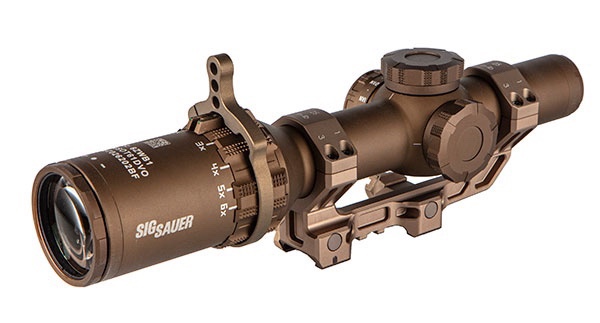
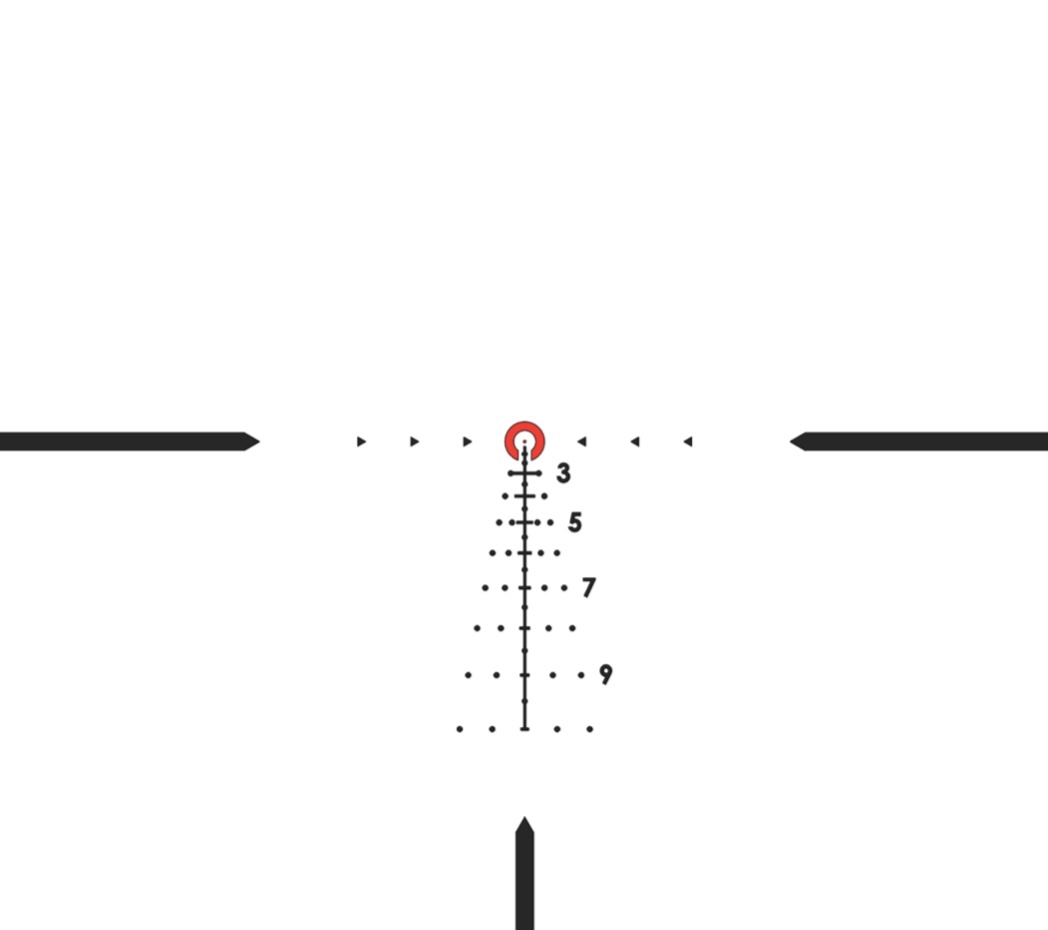
Wilcox Ind RAID Xe

Archive for the ‘Contracts’ Category

Defense Logistics Agency Awards 10-Year, $33 Billion Special Operations Equipment Tailored Logistics Support Contract to 6 Firms

Wednesday, January 6th, 2021

The Defense Logistics Agency announced yesterday the following contract award:

Atlantic Diving Supply Inc.,* doing business as ADS, Virginia Beach, Virginia (SPE8EJ-21-D-0020); Federal Resources Supply Co.,* Stevensville, Maryland (SPE8EJ-21-D-0021); Noble Supply Co., Inc.,* Rockland, Massachusetts (SPE8EJ-21-D-0022); SupplyCore Inc.,* Rockford, Illinois (SPE8EJ-21-D-0023); Tactical Survival Specialties Inc.,* Harrisonburg, Virginia (SPE8EJ-21-D-0024); and W.S. Darley & Co.,* Itasca, Illinois (SPE8EJ-21-D-0025), are sharing a maximum $33,000,000,000 firm-fixed-price, indefinite-delivery/indefinite-quantity contract under solicitation SPE8EJ-18-R-0001 for the fifth generation Special Operations Equipment (SOE) Tailored Logistics Support (TLS) program. The scope of work under the SOE TLS program includes the total logistics support for the special operational equipment requirements of Defense Logistics Agency (DLA) customers to include military installations, federal agencies, and other authorized DLA customers located worldwide. This was a competitive acquisition with 29 offers received. These are two-year base contracts with four two-year option periods. Locations of performance are Virginia, Maryland, Massachusetts, and Illinois, with a Jan. 4, 2023, ordering period end date. Using customers are Army, Navy, Air Force, Marine Corps and Coast Guard. Type of appropriation is fiscal 2021 through 2022 defense working capital funds. The contracting activity is the Defense Logistics Agency Troop Support, Philadelphia, Pennsylvania.

Saab Receives Follow-on Contract for GlobalEye

Monday, January 4th, 2021

Saab has today received a follow on contract with the United Arab Emirates regarding the sale of two GlobalEye systems, Saab’s advanced airborne surveillance system. The order value is USD 1.018 billion and the contract period is 2020-2025.

The original contract with the United Arab Emirates for GlobalEye was signed in 2015. This contract is an amendment to that signed in 2015.

“We are proud that the United Arab Emirates continues to show great trust in Saab and our solutions. It shows that Saab remains on the cutting edge regarding advanced technology. The GlobalEye program is running according to plan and we have an efficient cooperation with the customer”, says Saab’s President and CEO, Micael Johansson.

The work will be carried out in Gothenburg, Linköping, Arboga, Järfälla and Luleå in Sweden and in Centurion, South Africa.

The contract was signed by the customer on the 30th of December 2020, hence the order was booked during the fourth quarter 2020.

GlobalEye provides simultaneous air, maritime and ground surveillance. It combines sophisticated radar technology with the ultra-long range Global 6000 aircraft from Bombardier.

www.saab.com

Marine Corps Begins Widespread Fielding of Suppressors

Wednesday, December 30th, 2020

MARINE CORPS BASE QUANTICO, Va. —

Marines risk their lives to protect others.

Many are trained to locate, close with and destroy the enemy by fire and maneuver, or repel the enemy’s assault by fire and close combat. They engage adversaries in any clime and place, no matter how arduous the conditions.

Marine Corps Systems Command is tasked not only with enhancing the lethality of warfighters. The command also strives to protect them.

MCSC has taken another step toward increasing lethality and protection for Marines. In December, the command began the process of fielding thousands of suppressors to infantry, reconnaissance and special operation units for employment on the M27, M4 and M4A1 rifles.

Small arms suppressors are designed to reduce a weapon’s noise, flash and recoil. They are also time-efficient, as attachment and detachment only takes a few seconds. The mass fielding of the suppressors, and their myriad benefits, represents a monumental moment for the Marine Corps.

“We’ve never fielded suppressors at this scale,” said Maj. Mike Brisker, weapons product manager in MCSC’s Program Manager for Infantry Weapons. “This fielding is a big moment for the Marine Corps.”

MCSC works with CD&I, PP&O

In recent years, the Marine Corps had already begun suppressing its M38 and M4A1 rifles. However, an increased number of commanders felt suppressing additional weapons would increase the overall lethality of the infantry.

The impetus for equipping additional weapons with suppressors came from a series of experimentations at a 2016 “Sea Dragon” event, which enables the Marine Corps to experiment with current and emerging technologies and operational concepts.

At the event, a battalion employed the suppressors as part of a Marine Corps Warfighting Lab experimentation.

“The positive feedback from that experiment was the primary driving force behind procuring suppressors,” said Brisker. “We’ve had a few limited user experiments with various units since that time, and all of those events generated positive reviews of the capability.”

Before acquiring the suppressors, MCSC worked with the Marine Corps’ Combat Development and Integration; Plans, Policies and Operations; and the Fleet Marine Force to determine the optimal concept of distribution to support the close combat Marine.

“Our intent was to leverage commercially available technology to support the near-term modernization required for our close combat Marines,” said Billy Epperson, the Infantry Weapon Capabilities Integration Officer at CD&I.

Epperson added that the Marine Corps conducted Limited User Evaluations in 2019 with commercial suppressors provided by vendors showcasing the latest and greatest in technology to characterize requirements in support of an acquisition effort that began in fiscal year 2020.

In 2020, PM IW procured about 6,700 small arms suppressors through Defense Logistics Agency’s Tailored Logistic Program, and acquired more than 7,000 additional units on the first delivery order upon the contract award. Brisker said the goal is to field approximately 30,000 suppressors by fiscal year 2023.

How suppressors save lives

CWO4 David Tomlinson, MCSC’s infantry weapons officer, emphasized the importance of suppressors in exchanging information during battle. He said gun fights create a chaotic environment with intense noise levels, producing communication problems that can increase confusion.

“I would say the most important thing the suppressor does is allow for better inter-squad, inter-platoon communication,” said Tomlinson. “It allows the operators to communicate laterally up and down the line during a fire fight.”

Tomlinson said suppressors can save lives, as Marines engaged in battle can expose themselves from their firing position. The suppressor reduces their audible and visual signature, making it more difficult for the enemy to ascertain their location.

In addition to tactical advantages on the battlefield, the reduced noise of the suppressors also benefits a Marine’s long-term health, said Brisker. According to the U.S. Department of Veterans Affairs, hearing problems are by far the most prevalent service-connected disability among American veterans.

“In the big picture, the VA pays out a lot in hearing loss claims,” said Brisker. “We’d like Marines to be able to continue to hear for many years even after they leave the service. These suppressors have that benefit as well.”

Tomlinson mentioned how the news of the fielding of additional suppressors has created a groundswell of excitement among the units receiving them. He believes the myriad advantages suppressors provide will benefit the Marine Corps for years to come.

“As I travel and brief units, this capability has generated the most interest—from lance corporals to colonels,” said Tomlinson. “There has been an overwhelming excitement to receiving the suppressors, which we anticipate will serve as an effective capability for the warfighter.”

Story by Matt Gonzales, MCSC Office of Public Affairs and Communication, Marine Corps Systems Command

US Marine Corps photo by Sarah N. Petrock, 2d MARDIV Combat Camera

Bundeswehr Orders a Further 48 Heavy Tractor Trailers from Rheinmetall – Contract Worth €41 million

Thursday, December 24th, 2020

The German Bundeswehr has contracted with Rheinmetall to supply it with additional heavy tractor trailers with a 70-tonne payload. Delivery of a further 24 unprotected heavy tractor trailers – dubbed the SaZgM 70t mil in German military parlance – is to take place in 2021, with a further 24 to follow in 2022. In total, the order is worth €41 million. The tractor trailers are primarily used for transporting heavy armoured vehicles such as the Leopard 2 main battle tank. 

In 2018 the Bundeswehr concluded a framework contract with Rheinmetall for the delivery of 137 SaZgM 70t mil trucks. This contract runs for seven years, with a potential total value of €122 million with valued added tax. A total of 32 vehicles were delivered in 2019 and 2020.

The Rheinmetall HX81 SaZgM is powered by an eight-cylinder, 680 hp diesel engine. This enables the high-mobility all-wheel drive truck to attain a top speed of 89 km/h, and to handle inclines of 60 percent. Its permissible gross train weight comes to around 130 tonnes. The HX81 SaZgM features the same driver’s cab as the Rheinmetall UTF, the Bundeswehr’s family of unprotected trucks. If required, the cab can be exchanged for a protected version. The vehicle also comes with a two-winch system made by the Rotzler company, in which each winch has a tractive force of twenty tonnes.



The HX81 expands the German military’s family of heavy transport vehicles. Thus, the unprotected HX81 complements the protected heavy-duty Mammut (‘Mammoth’), which was also supplied by RMMV. Given Germany’s obligation to provide the rapid reaction NATO Very High Readiness Joint Task Force in 2023 (VJTF 2023), being able to transport heavy combat vehicles is a key capability. 

Constellis Company Triple Canopy Wins Position on $15 Billion State Department WPS III IDIQ Contract

Monday, December 21st, 2020

The U.S. Department of State has awarded Constellis company Triple Canopy a position on their Worldwide Protective Services III (WPS III) IDIQ contract beginning February 2021.

Herndon, VA. (December 17, 2020) — Constellis, a leading provider of essential risk management and mission support services to government and commercial clients worldwide, announced today that the Department of State (DOS) awarded the company a 10-year, indefinite-delivery, indefinite-quantity (IDIQ) WPS III contract, with a $15 billion IDIQ ordering ceiling, scheduled to start in February 2021.

Under this multiple-award contract, Constellis will provide armed personal protective, static guard, and team-based emergency response security services for the DOS worldwide, focusing primarily on DOS requirements in high-threat overseas locations.

As the premier global provider of high-end security solutions, Constellis company Triple Canopy has been supporting the State Department for over 15 years.

“We are truly honored to be selected by the Department of State to help secure their vital missions overseas for the next decade,” said Tim Reardon, CEO of Constellis. “The State Department performs critically important work in high-threat regions, and we’re extraordinarily proud to be a part of their trusted team.”

www.constellis.com

NFM Supplied Armored Vests to Lithuanian Army

Friday, December 18th, 2020

NFM is pleased to announce that an agreement has been signed with the Defence Materiel Agency under the Ministry of National Defence of Lithuania to supply the Armed Forces with armored vests.

“We are delighted that, once again, the Lithuanian government has chosen to partner with NFM to supply their army. We are committed to provide the highest quality in products and services, and are honored by their continued faith in us” said NFM’s CEO, Walter Overland.

nfm.no

Elbit Systems of America’s Mobile Howitzer Selected by US Army for Shoot-off Evaluation

Friday, December 18th, 2020

FORT WORTH, TEXAS DEC. 17, 2020 – Elbit Systems of America’s Autonomous Truck Mounted Ordnance System (ATMOS) Iron Sabre is a mobile howitzer selected to participate in the United States Army’s 155mm Mobile Howitzer Shoot-Off Evaluation. The event, which will occur during the first quarter of 2021, provides the Army an opportunity to review various solutions from industry and then select a production-ready system that demonstrates increases in range, rate of fire, and mobility over current artillery systems available to Stryker Brigade Combat Teams (SBCTs).

Elbit Systems of America is a market leader in providing artillery solutions and is confident its system will perform well at the shoot-off, being evaluated as “ready now.” ATMOS Iron Sabre is a proven, fielded system from a family of howitzers that have supported international customers for more than 30 years. Compatible with all existing US projectiles and propellant charges, it fulfils the Army’s mobile howitzer needs immediately, delivering on the modernization and capability improvements defined by Army Futures Command Long Range Precision Fires objective.

“US Army Fires needs solutions that can keep up with the SBCT, can shoot faster and farther, and most importantly are low risk and ready now. Elbit Systems of America’s ATMOS Iron Sabre addresses all of these needs,” said Ridge Sower, Vice President of Ground Combat & Precision Targeting at the company. “We are pleased to be selected for this evaluation and stand ready for rapid delivery from our hot production line if selected for production and fielding.”

MORE INFO: ElbitAmerica.com

Four Additional Schiebel Camcopter

Friday, December 18th, 2020

Vienna, 14 December 2020 – Naval Group, on behalf of the French Navy, has accepted for operational use two further CAMCOPTER® S-100 Unmanned Aerial Systems (UAS) with a total of four Unmanned Air Vehicles (UAVs). They will be deployed on the Mistral-class amphibious helicopter carriers (Porte- Hélicoptères Amphibie – PHA) Tonnerre and Mistral.

The acquisition comes after the successful integration of the CAMCOPTER® S-100 on the French Navy Mistral-class vessel Dixmude, which was finalised in 2019. This was the first time in Europe, that a rotary wing UAS had been connected to the combat system of an amphibious helicopter carrier.

The acceptance tests of the two systems took place in the last week of October with representatives of Naval Group and the French Navy in attendance.

Over the next few months the newly acquired CAMCOPTER® S-100 UAS will be integrated on the French Navy’s vessels Tonnerre and Mistral, significantly enhancing the helicopter carrier’s Intelligence, Surveillance and Reconnaissance (ISR) capabilities.

The CAMCOPTER® S-100 VTOL UAS operates day and night and can carry multiple payloads up to a combined weight of 50 kg. Due to its minimal footprint, reliability and airworthiness pedigree, it is ideally suited for maritime operations around the globe.

Hans Georg Schiebel, Chairman of the Schiebel Group, said: “After the successful integration on the Dixmude, we are very proud of the confidence the French Navy has in the proven and reliable CAMCOPTER® S-100 and we are looking forward to the integration on the Tonnerre and Mistral and their operational deployment.”

LCDR Serge D., UAS program officer, French Navy: “The S-100 on Mistral-class will be the first operational tactical UAS for the French Navy and this is a major step towards the Mercator plan.”

Porte Hélicoptère Amphibie Maintenance Architect at Naval Group, Philippe V., said: “We participated in the successful factory acceptance test, which was an important milestone for this acquisition, prior to the global integration onboard conducted by Naval Group.”