TYR Tactical

Archive for the ‘Guest Post’ Category

III MIG Conducts Exercise Vanguard

Sunday, July 2nd, 2023

CAMP HANSEN, OKINAWA, JAPAN —

U.S. Marines with III Marine Expeditionary Force Information Group, recently conducted exercise Vanguard to enhance and refine the III MIG’s information warfare capabilities in Okinawa, Japan, from June 9-16, 2023.
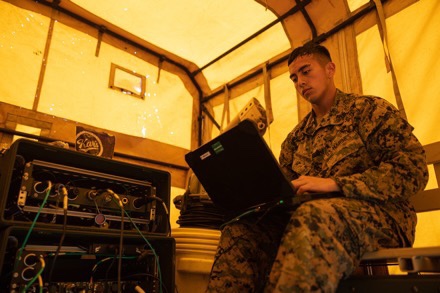
The exercise, provided an opportunity for Marines from diverse functional areas, including intelligence, communications, and cyber warfare, to come together and demonstrate their synchronized efforts within a simulated mission environment.

“Exercise Vanguard is the MEF Information Group’s demonstration of the ability to take our [information] capability forward into austere locations while maintaining command and control and the ability to exercise the MEF’s information warfare capability,” said U.S. Marine Corps Maj. Joshua Cox, the III MIG Information Warfare Coordinator.

Operations throughout the exercise included establishing an expeditionary control node, a small information processing unit that provides leaders with battle space awareness in expeditionary advance base operations. The EABO concept relies on leveraging various assets and the usage of expeditionary infrastructure to maintain a presence in austere locations.

Through the lens of EABOs, leaders receive timely and accurate information about the operational environment, including intelligence, surveillance, and enemy movements. Allowing Marine Corps forces to shorten the decision cycle, extend operational reach, and maintain a presence in vital areas.

“For this exercise, it represents a remarkable opportunity for our Marines to advance their proficiency in delivering expeditionary communications”

1st Lt Elijah Jeong, a communications officer with III MIG

To gather information, the Marines used various sensing and communication equipment designed to provide a wide range of capabilities, including seismic and acoustic sensors, free space optics, traditional military satellite communications, and commercial solutions like Starlink programs.

“The sensors provide the III MEF commanding general with battle space awareness through being activated in different areas. The sensors were placed to cover the enemies’ most likely courses of action and what equipment they are using,” explained U.S. Marine Corps Lance Cpl. Johnathan Alderman, an infantry Marine with the Ground Sensor Platoon, 3rd Intelligence Battalion, III MIG.
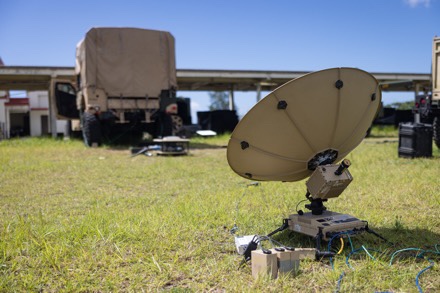
WIDEBAND SYSTEM-EXPEDITIONARY TERMINAL

Photo by LCpl Joseph E. DeMarcus

The exercise allowed Marines to demonstrate the stand-in forces concept, specifically in the context of EABO. SIF units are small, low-signature forces capable of sustaining operations within austere and challenging environments.

The employment of SIF units improves situational awareness for leaders, maintains U.S. security interests, deters potential adversaries, and ensures comprehensive coverage of contested maritime terrain. Exercises like Vanguard play a crucial role in showcasing stand-in forces within III MIG, highlighting III MIG’s dedication to evolving and adapting to meet the challenges of the future.

III MIG functions as the vanguard of III MEF, operating in the Indo-Pacific region’s information environment, and supports Marine Air Ground Task Force operations with communications, intelligence, and supporting arms liaison capabilities.

By Sgt Andrew King, The Official United States Marine Corps Public Website
Air Force Transitions to A-Staff Structure for Air Expeditionary Wings

Saturday, July 1st, 2023

ARLINGTON, Va. (AFNS) —  

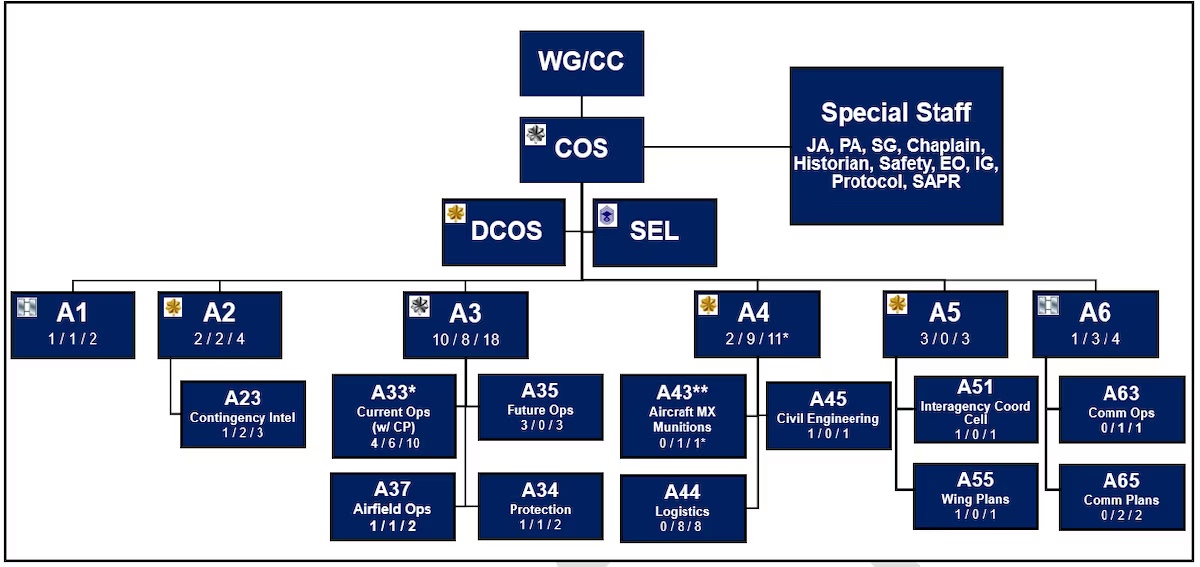
The U.S. Air Force is implementing standardized A-Staffs for air expeditionary wings to support commanders, maximize responsiveness in crisis and ease integration with joint force elements.

As part of the new Air Force Force Generation, or AFFORGEN, deployment model, presenting forces via the AEW A-Staff structure will increase a wing’s capacity to plan, coordinate and communicate vertically and horizontally to meet commander’s intent.

The AEW A-Staff is a standardized organizational structure, representing the following Air Force functions: A1 Manpower, Personnel, and Services; A2, Intelligence; A3, Operations; A4, Logistics and Engineering; A5, Plans and Integration; and A6, Communications.

“A successful A-Staff will make a commander’s job easier and take the burden of staffing responsibilities off our units,” said Lt. Gen. James Slife, deputy chief of staff for operations, Headquarters U.S. Air Force. “This means our units can better focus on mission execution instead of staff work.”

An AEW A-Staff is responsible for informing and implementing the wing commander’s decisions while communicating with higher and lateral headquarters, including joint partners who already use similarly organized headquarters while promoting the professional development of assigned staff.

Some personnel and staff functions at the squadron level will be realigned to the AEW A-Staff to support commanders with cross-functional capabilities intended to further enable the Air Force for high-end readiness against a competitive pacing challenge.

Airmen assigned to AEW A-staff roles will not dual-hat responsibilities from the squadron level, and commanders will not be utilized to fill staff roles.

“This is a necessary developmental opportunity for our young officers and senior NCOs,” Slife said. “Being a part of an A-staff will prepare Airmen earlier in their careers for their strategic role in informing the decisions of our Air Force leaders.”

While the AEW A-Staff implementation will inform the enterprise-wide expansion, the complexity of the task necessitates a methodical approach and remains a longer-term effort. Once AEW A-staff implementation is complete, Headquarters Air Force will focus on designing and implementing A-Staffs across all U.S. Air Force wings.

Secretary of the Air Force Public Affairs

Sneak Peek – ACHRO Pack Line from Mission First Tactical

Friday, June 30th, 2023

EXCLUSIVE FIRST LOOK

Only MFT newsletter subscriber and SSD readers are getting the FIRST LOOK at the new ACHRO™ Concealed Carry Systems. And as a thank you they are including a FREE GIFT with purchase! (Drinkware gift will be automatically added to your cart upon checkout)

ACHRO™ – THE ART OF BLENDING IN

ACHRO™ derived from “Achromatic” is defined as “without color”… The Gray Man. Achro™ Bags embrace the art of blending in with a low-vis, everyday-carry bag featuring a dedicated, discrete firearm storage system. Inspired to keep this functional as a great everyday commuter bag, daily essentials are organized and secure while on the go, offering a vast array of organizational options in a very comfortable platform.

“The trick to not being discovered until it is too late is to become part of the expected surroundings. Stealth is more the art of blending in with the background than sneaking through dark shadows.”

? Raymond E. Feist

CONCEALED FIREARM COMPARTMENT

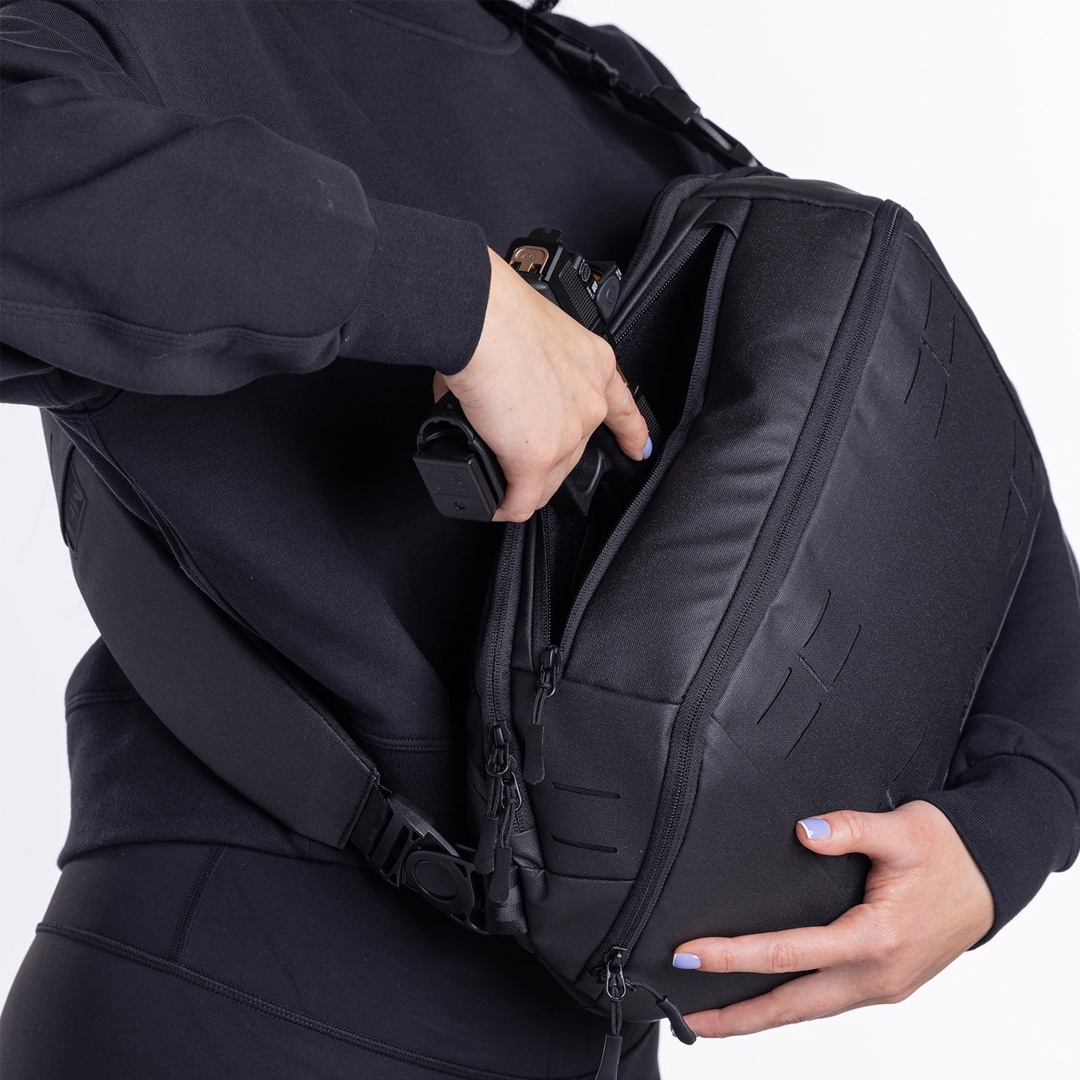
All ACHRO™ bags feature a dedicated, discrete concealed firearm compartment is ambidextrous with quick access.  An MFT Multi-Mount Platform is included, offering the ability to mount a holstered firearm or other 1.5” belt clip accessories, with custom orientation, utilizing a hook & loop system.

SMART STORAGE

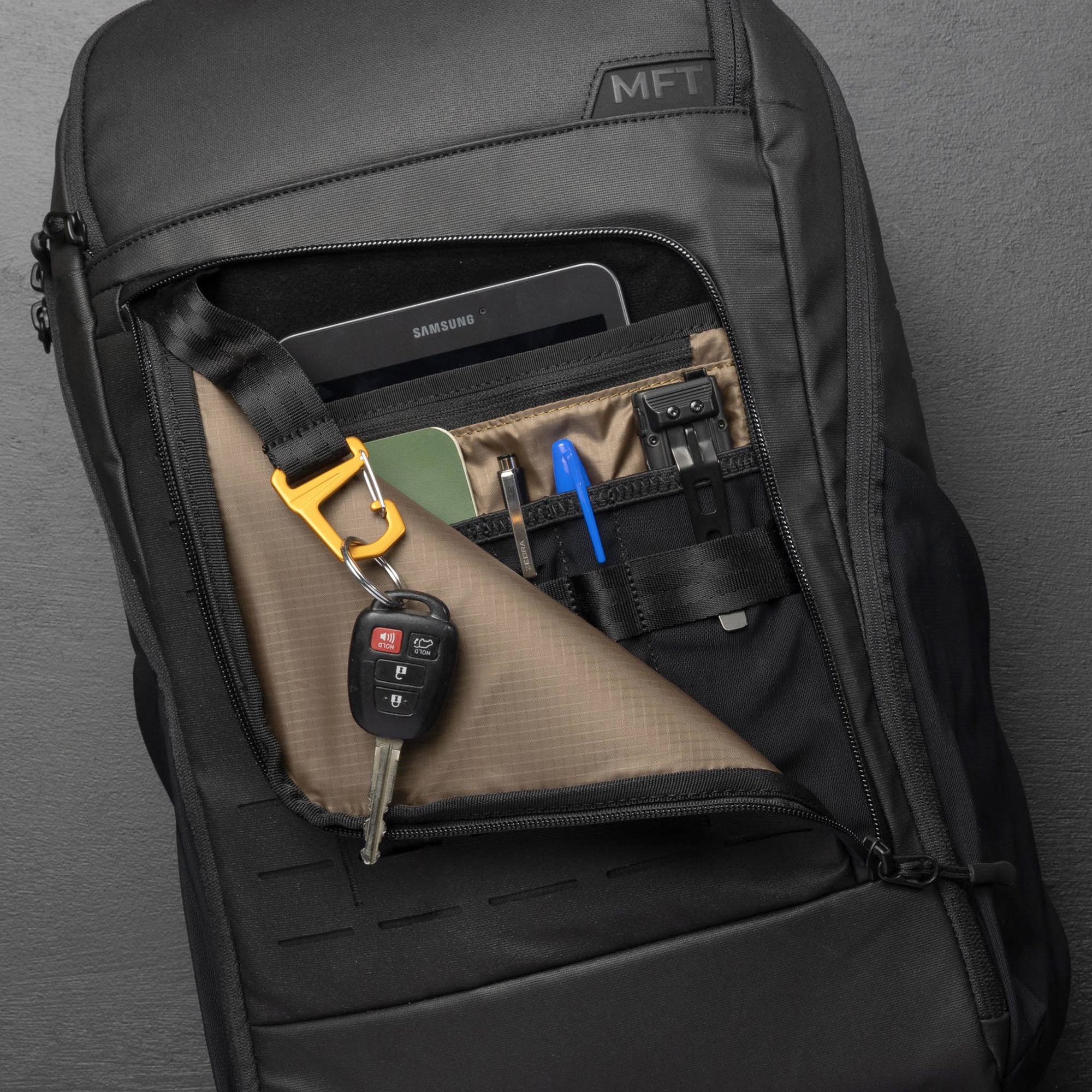
Storage for vast array of EDC organizational options. Quick access to all your important items, cables and chargers with internal admin panel for small accessories. Quickly locate your keys with the hi-vis aluminum clip. Padded laptop*/tablet compartment features scratch proof sleeve allowing secure carry of delicate electronics.

*EDC Backpacks only

1000D NYLON KODRA CARBONATE

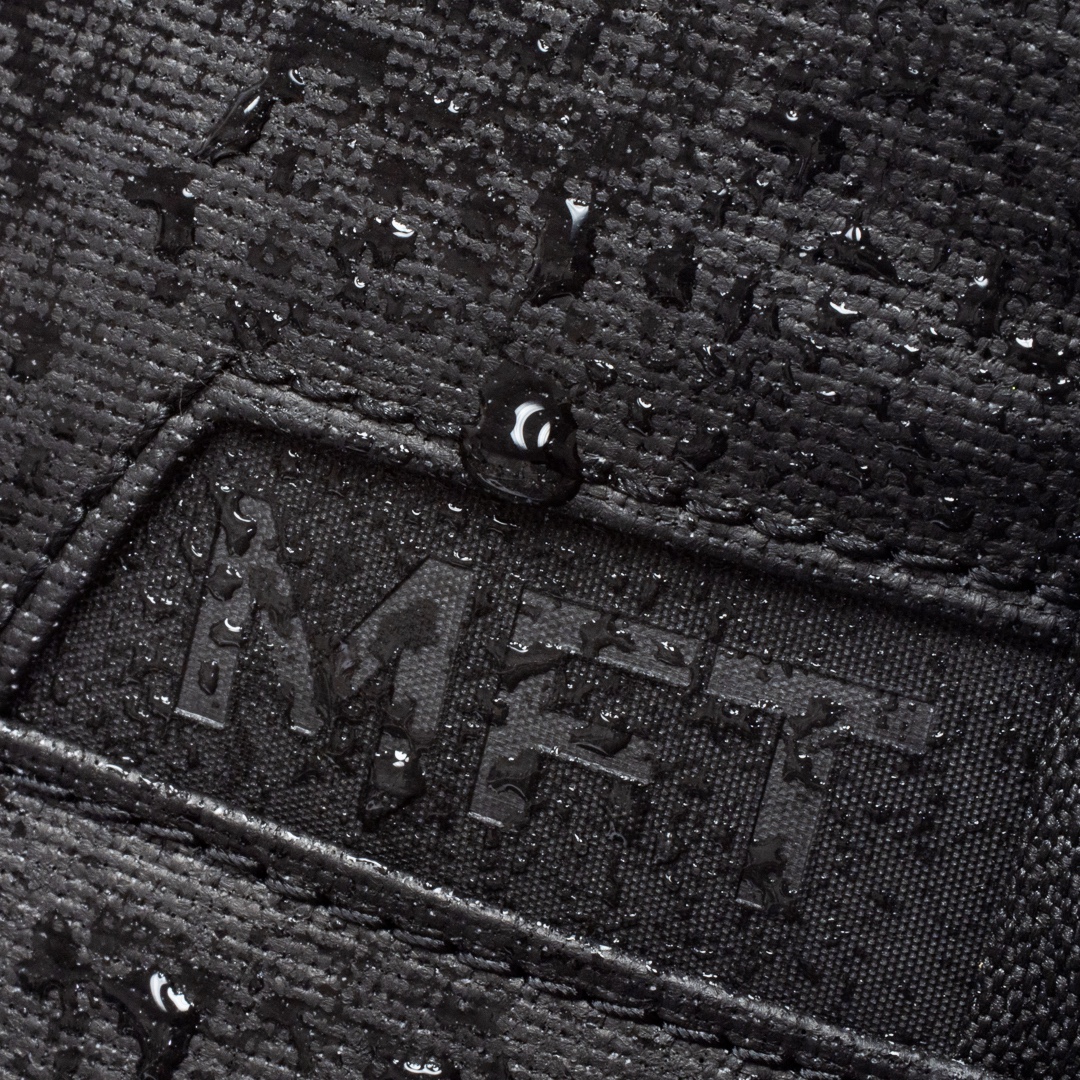
Weather & abrasion-resistant construction from durable materials that are designed to withstand the elements and rugged environments.

PREMIUM QUILTED BACK PADDING

Durability and comfort are key components of any pack. Cooling, durable & quilted the ACHRO back padding increases comfort user comfort for effortless use.

ACHRO™ SLING BAG

ACHRO™ 22L BACKPACK

ACHRO™ 30L BACKPACK

Get yours via the links below:

ACHRO™ SLING BAG

ACHRO™ 22L BACKPACK

ACHRO™ 30L BACKPACK

FirstSpear Friday Focus – Patriotic Summit Bags

Friday, June 30th, 2023

Introducing the Patriotic Summit Bag Bundle – exclusively American-made for an extra dose of ‘Merica all summer long. Whether you’ve served or an everyday patriot, show your support wherever you go with these multi-purpose bags!

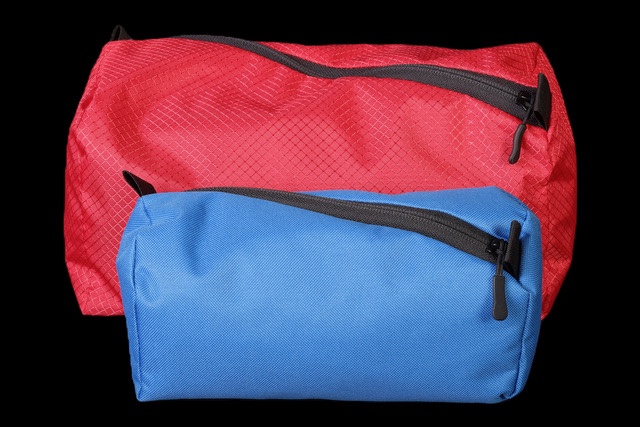
The Large Patriotic Summit Bag comes in a sleek, reflective red ripstop material for a bright and stylish bling; so much bling, you’ll need a safety briefing from a 2 star. Never worry about rummaging around for items at the bottom of your pack or trunk this summer; these bags can handle all your needs and more, with plenty of room for all the essentials. Plus, with a patriotic red style, you’ll be sure to get noticed on that 3-day weekend.

The Medium Patriotic Summit Bag is made of a sturdy blue packcloth material, hardwearing and as tough as you are. With sturdy zippers and tie-off handles, keeping everything you need organized and secure is too easy.

We know you’ll love these unique, limited edition patriotic-colored summit bags, but hurry while you still can; when they’re gone, they’re gone! Get yours today and show your patriotism wherever you go!

Visit FirstSpear to find American Made kit and accessories, Built For The X.

MQ-9 Reaper Completes First Mission Using Dirt Landing Zone

Friday, June 30th, 2023

SANDERSON, Texas (AFNS) —  

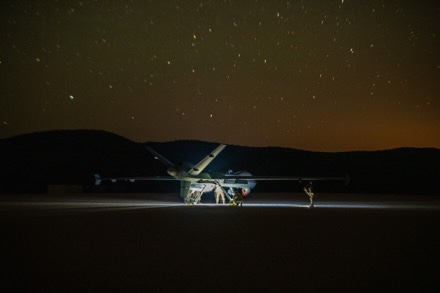
Just south of Fort Stockton is one of the largest private armed forces training centers in the country, the Nine Mile Training Center — an expansive terrain offering privacy from prying eyes and the perfect opportunity to unleash the MQ-9 Reaper remotely piloted aircraft.

At this remote dirt strip in West Texas, members from the 2nd Special Operations Squadron, 727th Special Operations Aircraft Maintenance Squadron and 311th Special Operations Intelligence Squadron teamed up with Airmen from the 26th Special Tactics Squadron out of Cannon Air Force Base, New Mexico, June 15, to carve their next milestone into Air Force Special Operations Command history.

Working together, the air commandos conducted the first MQ-9 landing on a dirt landing zone.

“This is a significant achievement for Air Force Reserve Command, AFSOC, the MQ-9 community and the joint force as a whole,” said Lt. Col. Brian Flanigan, 2nd SOS director of operations. “This team of aircrew, maintainers and special tactics Airmen have proven the Reaper can operate anywhere in the world and is no longer beholden to the ‘leash’ of perfectly paved runways or line-of-sight antennas traditionally used to takeoff and land the aircraft.”

Historically, the MQ-9 has taken off and landed via line-of-sight of antennas, with aircrew members manually flying the aircraft. Now, the MQ-9 can literally takeoff and land from anywhere in the world.

Flanigan was quick to point out how this new concept meets the AFRC’s priorities of ‘Ready Now’ and ‘transforming for the future.’

“This capability will be critical in ‘tomorrow’s fight’ and nests perfectly with the Air Force’s Agile Combat Employment concept that focuses on smaller footprints, distributed operations and increased survivability while generating combat power,” Flanigan said. “We are demonstrating what is possible when you leverage citizen air commandos and our diverse backgrounds to take an existing capability like [satellite launch and recovery] and apply it to the future fight.”

The 12th Aircraft Maintenance Unit from the 727th Special Operations Aircraft Maintenance Squadron supported the effort with a very small footprint to the austere location using ACE techniques, tactics and procedures developed by the 12th AMU.

“This initiative was significant in terms of refining maintenance ACE capabilities because it provided insight into how the aircraft handles landing in an austere environment,” said Maj. Doniell Mojazza, 727th SOAMXS director of operations. “This scenario both challenged and empowered 12th AMU maintainers to assess risk utilizing their expertise and innovation to ensure aircraft air worthiness and mission success.”

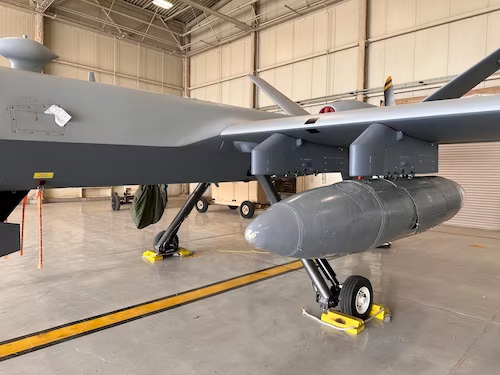
The team is not only using the MQ-9 SLR capability to access short, narrow and unprepared places, but also using it in creative ways to offer ‘off the menu’ options not traditionally provided by RPAs. This was demonstrated by their use of a travel pod attached to the aircraft to execute a critical resupply of the 26th STS on the dirt landing zone.

“We call it ‘Reaper Express,’ which is essentially just using a travel pod to develop an operational concept of delivering critical items to austere locations using the MQ-9,” Flanigan said. “It may not be able to carry much, but what it can hold, might be the difference between getting that critical aircraft part to an isolated airfield or bringing in a blood supply for casualties sustained during a base attack.”

While the MQ-9 has no demand shortage with its traditional role in intelligence, surveillance and reconnaissance or its ability to quickly land and execute an engine running offload could be a secondary or tertiary mission.

“This provides options compared to waiting multiple weeks until intra-theater airlift can support,” Flanigan said. “What we’re also finding through the series of exercises we’ve executed, is that the ‘fight tomorrow’ capabilities we’ve been demonstrating is rapidly becoming a ‘fight tonight’ capability the joint force is wanting now.”

The collective contributions of active duty and Reserve members working together provided a glimpse of what is possible as transformation continues throughout the RPA enterprise.

“We are continuing to expand MQ-9 Reaper capabilities,” said Maj. Dan Carlson, 2nd SOS MQ-9 chief pilot. “The unique ability to maneuver the MQ-9 to operate anytime, anyplace is a relatively new capability and one that is transforming how we prepare for tomorrow’s fight as well as today’s.”

The certification exercise also provided a venue for intelligence analysts to contribute and further enhance the STS mission regardless of where they operate.

“We are innovating ways to provide geospatial intelligence to downrange forces,” said Capt. Courtney Cook, 311th Special Operations Intelligence Squadron assistant director of operations. “The opportunity to support this was huge for our organization.”

919th Special Operations Wing Public Affairs

New Mechanized Infantry Combat Vehicle Prototype Contract Awarded to Two Vendors

Thursday, June 29th, 2023

WASHINGTON — The Army’s Optionally Manned Fighting Vehicle program, now redesignated as the XM30 Mechanized Infantry Combat Vehicle, announced June 26 that a contract for prototypes will be awarded to two vendors: General Dynamics Land Systems Inc. and American Rheinmetall Vehicles LLC.

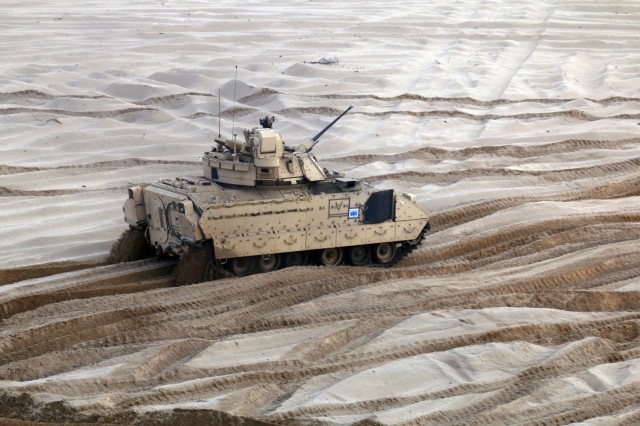
The two vendors will prepare prototypes of a vehicle to replace the M-2 Bradley Infantry Fighting Vehicle, which is a tracked vehicle designed for reconnaissance and provides protection, transportation and small-arms firepower for squad elements. The total award value for both contracts is approximately $1.6 billion.

“The XM30 will replace the Bradley fighting vehicle, bringing new transformational capabilities to the fight; these will include improvements to lethality, Soldier-vehicle survivability, and upgrade ability beyond the physical and economic limits of the Bradley,” said Honorable Douglas R. Bush, assistant secretary of the Army, Acquisition, Logistics and Technology. “The modular open system architecture that the XM30 will allow new building technology to be added to the vehicle as that technology matures, ensuring an overwhelming advantage in any potential adversary competition.”

The OMFV program is part of the Army’s modernization strategy. The Next Generation Combat Vehicle program aims at updating several vehicles and weapons platforms used in the Army today.

Part of advancing and modernizing the Army is seeking out the best designs through competitive contracts.

“Competition remain a vital aspect of the XM30,” Bush said “The program opened the door for industry partners that are not traditional U.S. combat vehicle prime contractors, which allows for increased competition and innovation. This reduced the Army’s risk and increased our likelihood of success while balancing investments across the entire Army modernization enterprise.”

The Bradley first started being used in 1981 and is an infantry fighting vehicle used to transport infantry on the battlefield as well as provide support to dismounted troops. It has been updated over the years but has reached its technological limits.

“In recent years, peer and near-peer competitors of the United States have significantly increased their combat vehicle capabilities. The character of warfare has changed, and our potential adversaries are bringing increased value to the battlefield,” said Brig. Gen. Geoffrey Norman, director of the next generation combat vehicles.

Concerns over the impact to the effectiveness of an outdated vehicle during full-spectrum military operations was what gave rise to the decision to modernize the Bradley.

“The best way to respond is to ensure that our formations are equipped with infantry fighting vehicles, which can bring greater survivability, powerful lethality at standoff range and improved maneuver capabilities to the battlefield,” Norman said.

Even though the XM30 hasn’t yet been designed, several key features have been outlined for the vendors to include in their prototype: two Soldiers to operate and carry capacity for six more, a 50mm cannon and a remote turret, as well as anti-tank guided missiles. Weapons systems on the XM30 will be designed to use the latest in sensor and fire control systems.

The XM30 will also be designed with sustainability and mobility in mind as it will feature a hybrid electric powertrain, which will reduce power consumption, Norman said.

“The occupants will benefit from innovative force protection systems that include integrated active protection systems, kitted armor and innovative signature management capabilities from the very beginning,” Norman said. “All of these advances are being designed with modern digital engineering in a modular, open systems approach that will allow for rapid integration of the latest hardware and software in the future.”

“The XM30 meets the Army’s requirements for a transformational increase in warfighting capability, not simply another incremental improvement over the Bradley fighting vehicle,” Norman said.

A modernization effort is planned to replace the M-113 Armored Personnel Carrier and M-1 Abrams Tank, as well as development of a light tank for infantry brigade combat teams. There are also plans for three versions of robotic combat vehicles.

By SFC Michael Reinsch, Army News Service

Colorado Springs to host DEL 15, two Intelligence, Surveillance, and Reconnaissance Squadrons

Wednesday, June 28th, 2023

ARLINGTON, Va. (AFNS) —  

The U.S. Space Force’s Space Delta 15, activated in March 2023, is expected to be permanently based at Schriever Space Force Base, Colorado, along with the new 75th Intelligence, Surveillance, and Reconnaissance Squadron. Additionally, the service expects the 74th ISR Squadron, activated in November 2022, to be based at Peterson Space Force Base, Colorado.

DEL 15, a command-and-control organization within Space Operations Command, provides mission-ready forces in support of the National Space Defense Center’s protect and defend space mission. The unit currently operates at Schriever Space Force Base and is expected to remain there permanently.

The two ISR squadrons will provide additional capabilities within Space Delta 7, which has embedded detachments in each of the command’s other deltas to provide real-time ISR support to their respective missions.

The 74th ISR Squadron provides tailored threat analysis and intelligence production for tactical space operations. The squadron’s intelligence gathering is used to empower space operations to combat current, emerging, and future adversaries.

The new 75th ISR Squadron will be responsible for the federated targeting mission through orbital targeting sections focusing on integrating kinetic and non-kinetic targeting for the Joint Force across several orbital regimes.

The Department of the Air Force’s decision to host DEL 15 and the two ISR squadrons came after conducting thorough site surveys which assessed the location’s ability to facilitate the missions and infrastructure capacity while accounting for community support, environmental factors, and cost.

The Department of the Air Force will now conduct environmental impact analyses at each base, which are expected to be completed later this year before final decisions are made.

Secretary of the Air Force Public Affairs

USMC Requires Intelligent Robotics and Autonomous Systems

Tuesday, June 27th, 2023

QUANTICO, Va. —

“The Marine Corps requires unmanned air, surface, and ground systems to fully exploit our inherent expeditionary nature and capabilities. When operating forward, in small groups, under austere conditions, the ability to maximize unmanned systems to create outsized effects for our allies and against our adversaries is a key element of our future success.”

– Gen Berger, Commandant of the Marine Corps

The United States has long enjoyed a technological advantage as our robust industrial base and strong economy have provided our military with exquisite combat systems.  As a result, the U.S. has had been the preeminent global power since the end of the Cold War. However, the decreasing cost of technology combined with commercial availability of equipment that provide an asymmetric effect means the U.S. military must find new and innovative ways to leverage this growth in technology.  To do so, the U.S. military must be prepared to incorporate new warfighting techniques to meet the growing threat of an increasingly technologically advanced adversary.



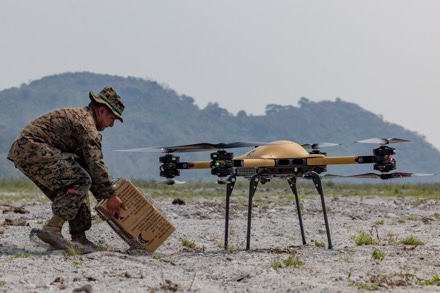
Today, the Marine Corps is leading the services in development and integration of these emerging technologies. Paired with the sound combined arms doctrine that defines our Marine Corps, Intelligent Robotics and Autonomous Systems (IRAS) provides vastly increased situational awareness across all echelons of warfare. All-domain sensors that detect the enemy throughout the electromagnetic spectrum and pass real time targeting data over vast distances makes the battlefield increasingly transparent for the individual Marine and up through the chain of command, enabling sensors, weapons, and decision makers to rapidly close kill webs and destroy the enemy.

The ability to exploit the vast amount of information being received in the combat environment presents a cognitive challenge, as the commander’s decision-making becomes increasingly overloaded.  Conversely, the vast amount of information also creates opportunity.  Those forces that can most rapidly and effectively process information have a distinct advantage. 

Software developments in artificial intelligence and machine learning lighten the mental burden by rapidly organizing data in a logical and prioritized manner.  Through rapid prioritization, Marines can “make sense” and act before the enemy.  By establishing this competitive advantage, the adversary targeting, and decision cycle is disrupted, increasing survivability and expediting movement and maneuver. Ultimately, the combination of Marine decision makers with IRAS creates tempo that cannot be matched by the enemy.

As the operating environment becomes increasingly contested through the adversary’s use of anti-access/area denial systems, the ability to sustain our operating forces inside the enemy weapons engagement zone presents a significant logistical challenge. The physical burden on Marines to carry more supplies and ammunition inhibits their ability to rapidly displace and maneuver, creating exposure to the enemy and risk to the force. IRAS will lighten the Marines’ physical load, expedite staging and transfer supplies across vast distances in the maritime environment. Using a range of air, land, and surface logistical connector vehicles will enable ship-to-shore sustainment of maneuvering units, while reducing the risk to legacy manned resupply aircraft.

To maximize the benefits of IRAS, these systems must operate through networked, collaborative, autonomy. By fusing data from distributed platforms and operating from common mission controllers, individual warfighters will be able to control multiple platforms and payloads to accomplish their mission. Working with leading industry partners and research agencies, the Marine Corps is developing vehicles that will be able to conduct swarming maneuvers and attacks.   These swarming vehicles leverage numerous systems to sense each other across the network, process information at machine speeds, and enable kinetic effects with maximum efficiency. This technology will decrease the number of munitions required to create strategic effects, rapidly closing kill webs and further decreasing the logistics burden.


The category of warfighting tools historically referred to as “unmanned” provides an incomplete description of these capabilities. While this was a commonly accepted term, the human element in warfighting should not be discounted.  Most important to successful employment of IRAS is human oversight and interaction for successful employment.  Additionally, as IRAS are interoperable, modular, and secure allowing for streamlined training and proficiency, reducing cost, time to train, and manpower requirements.

As the threat and operating environment continue to change over time, the future remains clouded in ambiguity. If technology growth continues its current, exponential path, Marines in the future may find themselves equipped with physical augmentations, and hybrid virtual reality optics. Furthermore, teaming between legacy manned and IRAS fighter jets will also enable our cutting-edge aircraft.  Manned aircraft will become more survivable, and their signature optimized.  Weaponized IRAS aircraft will execute the will of the pilots and conduct dogfighting by predictive modeling to defeat enemy formations before they can even maneuver.

While ambitious and imaginative, the Marine Corps is exploring technologies that can someday make this vision a reality. The exponential growth of IRAS converging with new warfighting concepts will enable Marines to operate in distributed environments, with low cost, persistent, signature managed systems. Future Marines must be prepared to fight in new ways to confront the evolving threat, and commanders must build trust in IRAS to ensure their formations maintain the tactical advantage with maximum lethality.  Leaders at all echelons must also develop feedback mechanisms to allow the service to understand the evolving needs of the warfighter and equip them with the latest IRAS that allow them to locate, close with, and destroy the enemy.

Story by Maj Keenan Chirhart, Marine Corps Combat Development Command

Photo by Cpl Tyler Andrews