TYR Tactical

Archive for the ‘Guest Post’ Category

Looking to Outsource Your Social Media Presence During SHOT Show?

Monday, January 3rd, 2022

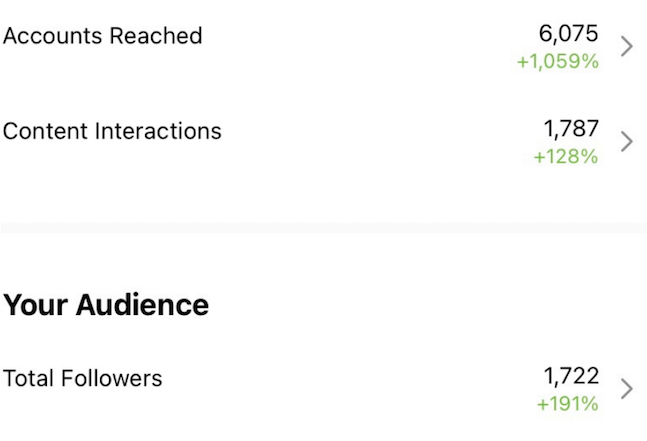
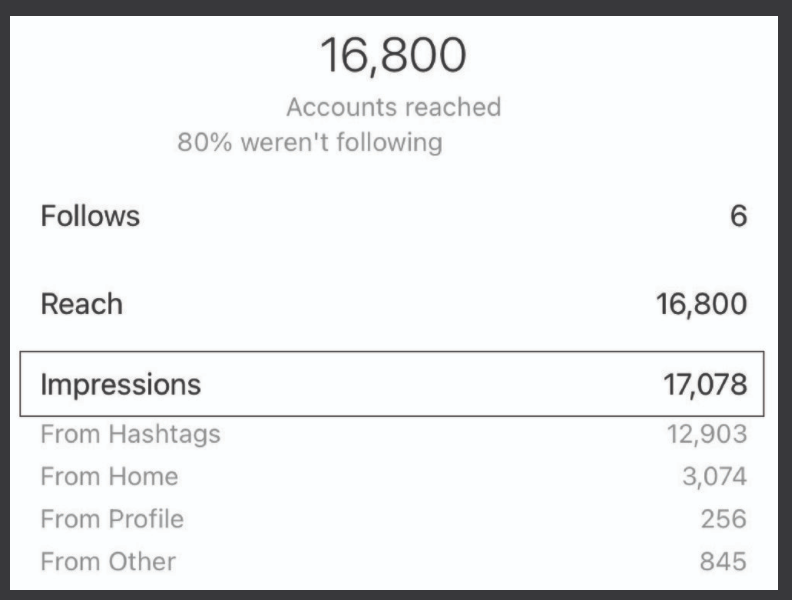
MCT Marketing is a full-service social media management + growth company and we will be at SHOT Show this year.

This is a perfect opportunity for you to showcase your products/services on your social media platforms. MCT will be able to post + create content for you throughout SHOT Show. There is so much going on during SHOT Show, this will keep your clients up to date with any special releases and current offers that are available! We will also be able to help you reach a new audience on your platform and target people that are attending the show with social media strategies and hashtags. This is a great option if your social media manager will not be traveling to SHOT Show and you need someone to document your experience without paying for all the overhead expenses. MCT Marketing will only be taking a limited number of clients so if this is something you are interested in, please let us know as soon as possible to ensure your spot.

NEED help with social media after SHOT Show? Mona Tolleson, founder of MCT Marketing will be available to meet during the show. Before starting MCT Marketing, she was in the defense contracting industry for 7 years. She is a social media expert (with over 35K followers), she strives to help businesses take their social media presence to the next level.

To learn more about our SHOT show packages or to schedule a meeting with Mona, please call 757-300-3627 or email mctmarketingllc@gmail.com.

Website: www.mctmarketing.com

US, Ukrainian Infantry Soldiers Connect at Combined Resolve XVI in Germany

Monday, January 3rd, 2022

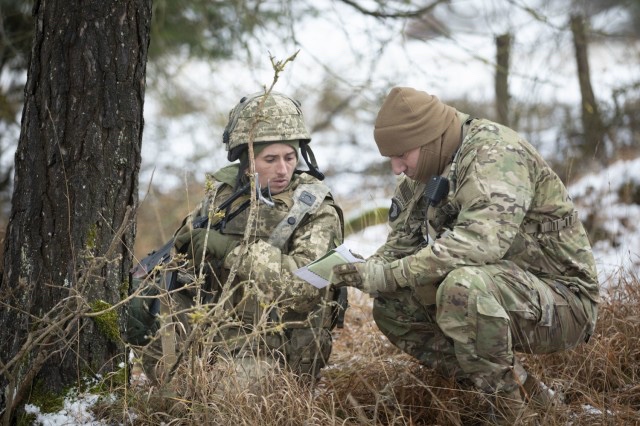
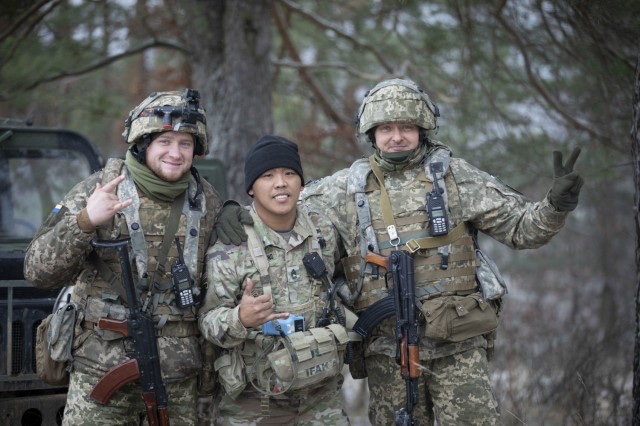
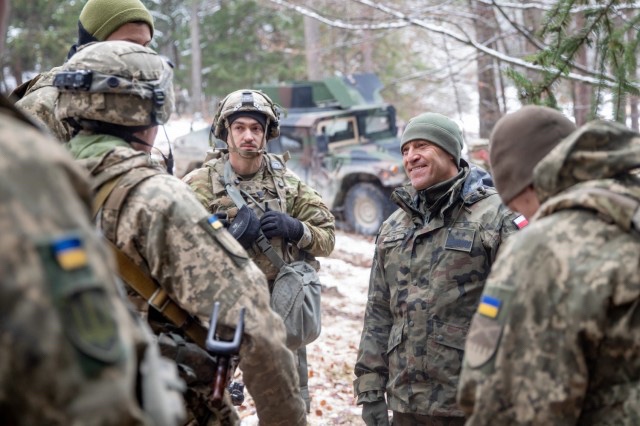
HOHENFELS, Germany — On the snow-covered hills of the Joint Multinational Readiness Center in Hohenfels, Germany, U.S. and Ukrainian soldiers solidified their partnership through more ways than just combat training.

Combined Resolve XVI was an exercise to evaluate the U.S. Army’s 1st Armored Brigade Combat Team, 1st Infantry Division’s ability to conduct operations in a complex, multi-domain simulated battlespace.

Combined Resolve included approximately 4,600 soldiers from Bulgaria, Georgia, Greece, Italy, Lithuania, Poland, Serbia, Slovakia, Slovenia, Ukraine, United Kingdom and the United States.

Integrated battalions conducted operations with multinational units operating under a unified command and control element, allowing the U.S. and its allies and partners to experience invaluable training alongside each other.

“It’s very different and new for our company to participate in this kind of training,” said 1st Lt. Andrii Tretiak, commander of the Ukrainian Mechanized Company, 92nd Mechanized Brigade. “I think that our company gained new experiences during this training exercise.”

While the overall goal of Combined Resolve was for the 1st Armored Brigade Combat Team to get a better feel of its battle rhythm, it creates an environment for multinational soldiers to come together and fight and win as one.

“We’re all out here living together,” said Pfc. Dawson Anderson, a forward observer with 1st Battalion, 16th Infantry Regiment, 1st Armored Brigade Combat Team, 1st Infantry Division. “When it’s too cold, we’re all huddled around little camp stoves trying to make some hot coffee. That’s when you start to realize that people across the globe aren’t so much different than you.”

Finding common ground among multiple militaries creates ties that are harder to break than seeing each other in passing. When the smoke clears and everyone makes their way home again, soldiers get to leave with a sense of having developed life-long friendships.

“CBR XVI allows us to build mutual trust, competency and interoperability with our NATO allies and partners,” said Polish Maj. Gen. Adam Joks, Deputy Commander of Interoperability, V Corps. “By conducting combined operations with our allies, our soldiers learn how to work together effectively and efficiently to achieve tactical objectives.”

During the field exercises, every soldier in every uniform played a key role in mission success, coming together and facing a common goal builds team confidence on another level.

“It’s not always about the training and shooting and maneuvering,” Dawson said. “It’s also about seeing different kinds of people and understanding different walks of life.”

Through snow storms and bitter cold, soldiers found ways to coincide. Going through these exercises together on a daily basis builds cohesion that may look different or speak another language but assures continuity if ever faced with opposition.

Story by SGT Tommie Berry

Photos by photo by Ukrainian Army Col Sergii Teliatytskii and US Army SSG George Davis

SCUBAPRO SUNDAY – Snorkels

Sunday, January 2nd, 2022

As far back as 3000 B.C.E (5000 years), people were going after natural sponges off the coast of Crete and breathing through the world’s first snorkel tube that they made from hollow reeds. Aristotle, the Greek philosopher, recalled instances of divers breathing through a device similar to the trunk of an elephant.

In later years, the Assyrians developed an alternative snorkel device. They filled animal skins with air to breathe from under water. Aristotle wrote about divers who used a tube that led from the surface to the divers below. The consummate Renaissance Man, Leonardo Da Vinci, had many designs that he called diving or underwater apparatuses. He designed a self-contained dive suit and even sketched diving gloves with webbed fingers. Technically, they could be considered the first fins.

The development of the diving bell, which contained air bubbles for divers to inhale while underwater, was overseen by Alexander the Great.

• 900 B.C.E- Assyrian divers used animal skins filled with air to lengthen the time they could spend below the water’s surface.

• 333 B.C.E Alexander the Great encourages divers to develop and use the first diving bell — a large bell-shaped object that trapped air in the top of the bell (and a person) to submerge and maintain the ability to breathe.

• 1538- Greeks in Spain (Toledo) submerge themselves in a large diving bell-like gadget to the bottom of the Tagus River, only to emerge later with dry clothes and a still-burning candle.

The same concept allows modern-day snorkelers to breathe air from the surface with their face submerged. Modern rubber and plastics make equipment durable and comfortable while offering maximum safety. Snorkels have significantly improved their function and use with the advances in rubber and plastic composite materials. The most popular snorkel is the J-shaped plastic tubes connected to the diver’s mask by a flexible strap or clip assembly.

Snorkels for diving

The snorkel makes it possible to breathe safely on the surface without using the air in your tanks. When choosing a snorkel, think first about what you want to use it for and how it will most. The diameter is critical because it minimizes your effort while using it. Most snorkels are brightly colored, so dive boats can easily spot them and you, more importantly.

Free-diving Snorkels

Free-diving snorkels are often the simplest models. They are made without a complex purging system and valves to limit breathing noise; snorkels are also shorter to quickly expel water from the tube and easily tuck away. They usually have a slightly larger diameter to ventilate between two dive immersions properly. They are one of the best for Combat swimmers to use, as they are small and can be packed away quickly and come in dark colors.

Types of Snorkels

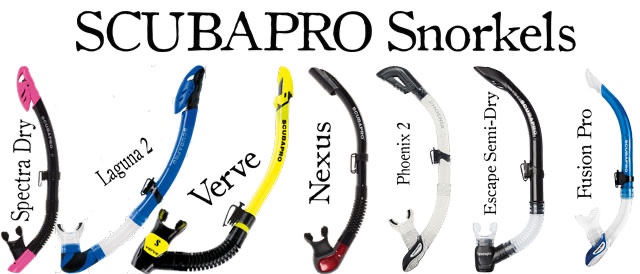
There are four common types of snorkels, and each has its advantages and disadvantages.

Classic

The classic snorkel, also called a J-style snorkel, is a plastic tube with a mouthpiece attached. This snorkel is usually slightly bent, but it can also be made to fit a more specific shape. The SCUBAPRO Apnea snorkel can be rolled up and easily stored in a pocket or attached to the sides or bottom of a Rebreather. This is the one best suited for combat swimmer operations.

Flexible Snorkel

The flexible snorkel has a purge valve. This snorkel has a flexible portion and a rigid portion, as well as a one-way valve located at the bottom that makes it easier to expel any water that may get into the snorkel. The added flexibility allows divers to fit the snorkel better around their masks and faces. The purge valve at the bottom of the mouthpiece helps ensure uninterrupted breathing as it flushes water out every time you exhale.

Simi Dry

The semi-dry snorkel is a mix of a classic and dry snorkel. The top features a splashguard, and sometimes even a flexible tube and a purge valve. The splashguard at the top helps prevent splashes or sprays of water quickly entering the tube. It doesn’t stop all the water from entering, especially if you fully submerge yourself underwater or if water covers the top like in a high wave.

Dry

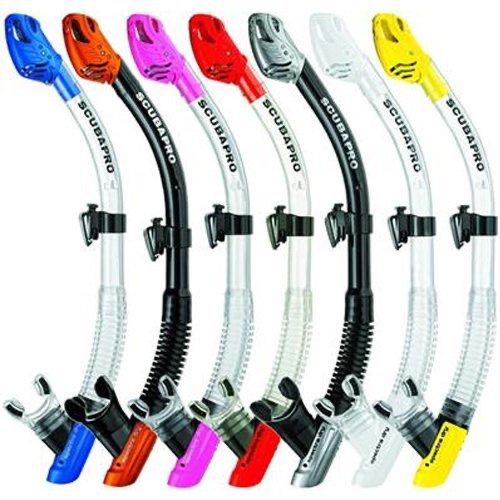
The dry snorkel has a valve at the top of the snorkel. The valve blocks water and air when the snorkel is submerged—and a purge valve at the bottom. They are great for snorkeling on the surface and occasionally diving without worrying about constantly clearing water out of the tube. When used for diving, the advantage is that divers don’t have to clear them of water when they reach the surface.

As with semi-dry snorkels, the one-way purge valve at the bottom allows the user to flush water out with a few quick exhalations easily. While the dry snorkel is more convenient and efficient, it can also have its drawbacks. The valve at the top of the snorkel can sometimes become blocked. The dry snorkel may also be more buoyant underwater.

www.SCUBAPRO.com

Army Software Factory’s Second Cohort Gears Up for Phase 2 of Program

Sunday, January 2nd, 2022

AUSTIN, Texas — The Army Software Factory, the Army’s newly launched effort to train a select cadre of Soldiers and Army Civilians in modern software development, is frequently recognized for its innovation, tech collaboration and future-oriented approach, but is equally defined by the enthusiasm of its rising coders.

Participants in the Austin-based program, who are selected through a competitive application process, arrive from all over the country to learn the essentials of coding, app development, platform management and user design – all in a concerted effort to build a stronger, more agile Army.

Many of the current participants were drawn to apply to the Software Factory in part because of its unique model, which offers the ability to transform an individual with no previous experience in software development to an advanced software developer within the span of three years.

The program — which welcomed an initial, 25-person cohort in January and a second, 30-person cohort in July — begins with immersive classroom learning but quickly transitions to peer mentor-paired training. During this second, hands-on phase, participants learn the ins and outs of software development from experienced tech industry partners while working in small teams to tackle real-life projects for Army clients.

While the initial cohorts have yet to reach later stages of the program, the plan is for students to gradually attain a level of knowledge that allows them to assist in training new Software Factory members, creating a learning and growth framework that embraces the program’s motto of “By Soldiers. For Soldiers.”

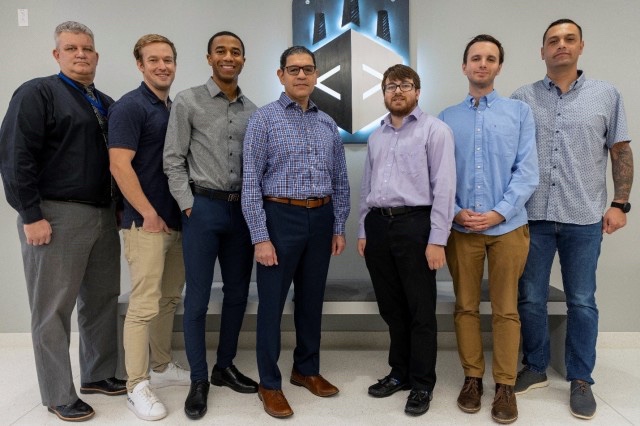
With the Software Factory already preparing to welcome its third cohort in early 2022, we sat down with some of its second cohort members earlier this month to learn more about their motivations for joining the groundbreaking program, as well as to hear about their experiences thus far.

Below are some of the insights they shared, which highlight not only how the Software Factory is molding Army leaders, but how current software development efforts are helping to shape future tech readiness at the tactical edge.
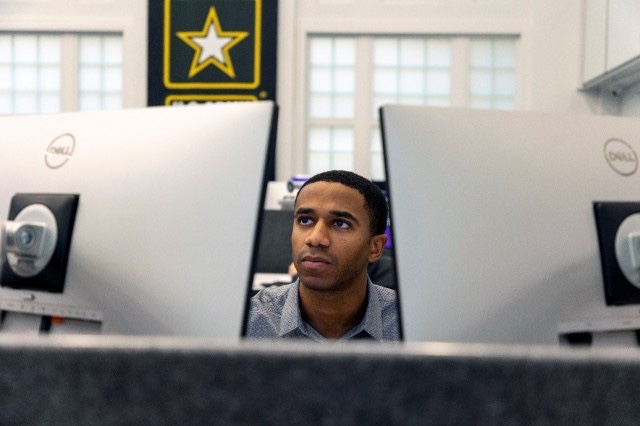
Cpt. Keyshawn Lee, 26, joined the Software Factory because he “wanted to be a part of something trailblazing, something that can really drive change,” he said.

He was working as a human resources officer at Fort Carson, Colorado, when he found out about the chance to join the program’s second cohort.

Lee, who grew up in a military family, was motivated to apply because he saw how advancing software resources could improve Army systems as a whole, with potentially life-saving implications.

“The faster we can iterate, the faster we can pivot, the faster we can deploy software, that’s equated to seconds on the battlefield, time on the battlefield and lives on the battlefield, which is most important,” Lee said.

In terms of the immersive classroom learning phase of the program, “it was everything I expected,” Lee said. “It was fun, I learned a lot and it was very applicable being able to learn it and then implement it right then and there.”

Lee particularly appreciates the teamwork emphasis of the program and the support of his colleagues at the Software Factory; “they motivate me to do better,” he said.

He looks forward to applying skills he has learned thus far in the program with his own background knowledge — including project management insights gained through his master of business administration degree — when delving into projects for Army clients.

“I really want to continue to step outside my comfort zone and just really learn to make great products to help our Soldiers,” Lee said.
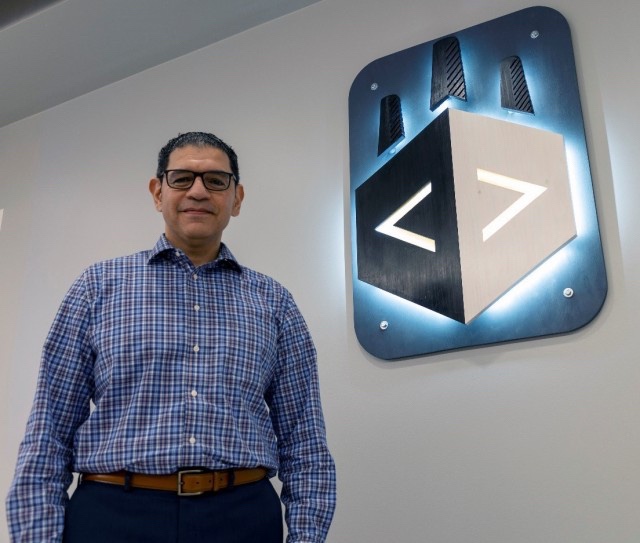
Cpt. Ammar Masoud, 47, is not new to the world of coding, having previously worked for a software development company in the private sector, but he is nevertheless thrilled to be learning new software skills as a member of the Software Factory.

“Right now, I’m living the best of both worlds,” Masoud said. “I love coding, I love technology and I love IT, but I love serving at the same time.”

“I’m still a military officer, but I’m an Army coder,” Masoud reflected. “That’s unheard of before.”

Masoud has been in the Army for 16 years, serving in both Reserve and active-duty roles. His previous experiences as a Soldier include working as a cryptologic voice interceptor, a civil–military relations and a civil affairs officer, as well as completing deployments to Iraq and Afghanistan. He is the first civil affairs officer to have been selected from the Army Special Operations Forces community to join the Software Factory.

Now that he has finished the classroom portion of the program, Masoud looks forward to “working on very complex projects that will bring value to Soldiers, to the Army, to DoD and our country.”

“I want to be part of creating software tools that will save lives, will add value, will save time for Soldiers and just make their work better over time,” he said.
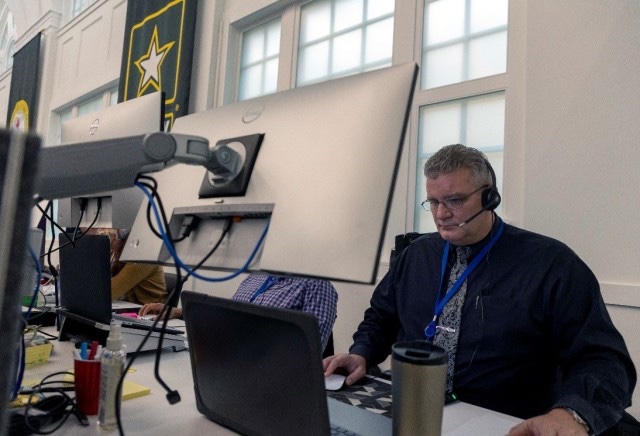
As a former Soldier and current Department of the Army civilian, Lawrence Eckles, 56, is familiar with the opportunities and constraints presented by legacy Army IT systems.

During his early deployments, “the intelligence we got was usually about four days old,” he said. Thankfully, “the digital systems the Army uses now are much more responsive,” providing information within minutes instead of days.

Eckles, who is from Cleveland, Ohio, and joined the Army at 17, left active duty in 2002 due to medical reasons but still felt the urge to serve. “I wasn’t finished yet,” he said.

He went on to serve as a contractor for the Army, eventually joining the DA in 2017 as an IT specialist.

He is now one of the first five DA civilians to have joined the Army Software Factory.

“What they’re trying to do here — getting applications in the hands of Soldiers within a matter of months — is amazing, and it’s never been done before,” Eckles said.

He added that he has “felt very welcomed” to the team, which has helped “set the standard for what we are going to do next.”

“I’m just really, really grateful to have this opportunity, and grateful to everyone who has laid the groundwork for this,” Eckles said.
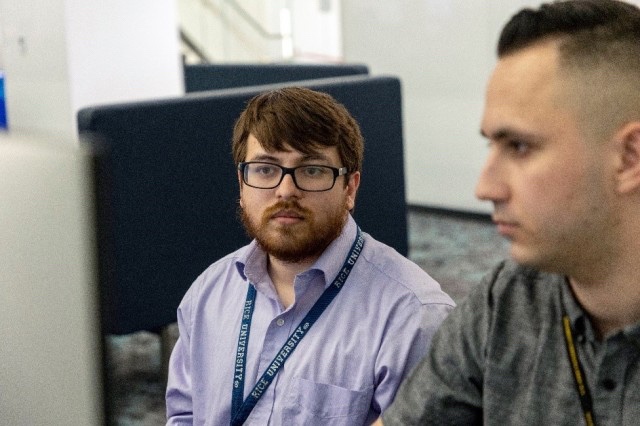
Andrew Graham, 26, is a DA civilian who worked as a computer engineer for the Army for four-and-a-half years before joining the Software Factory.

He was based out of Aberdeen Proving Ground, Maryland, when he saw the announcement for the program and jumped at the opportunity to learn additional software skills while experiencing life in Austin.

Graham, who grew up in the suburbs of Oklahoma City and received an electrical engineering degree from Rice University, has enjoyed the mix of learning and contributing to learning that he has been able to partake in at the Software Factory.

As a former League of Legends amateur tournament organizer, a job that involved “a lot of people asking the same question over and over again,” he also understands the importance of clear guidance. He has been able to apply that understanding to his role at the Software Factory, where having helpful software development instructions is essential for learning, conveying and preserving information.

During his time at the Software Factory, Graham has observed the benefits of having both Soldiers and DA Civilians present. “You need to make sure you’re not making echo chambers or silos and are bringing in other perspectives,” he explained.

Graham looks forward to the hands-on aspects of Phase 2 and hopes to play an integral role in further Army initiatives, including by continually exploring the question of “What’s the best thing we can do for bettering the whole Army?”
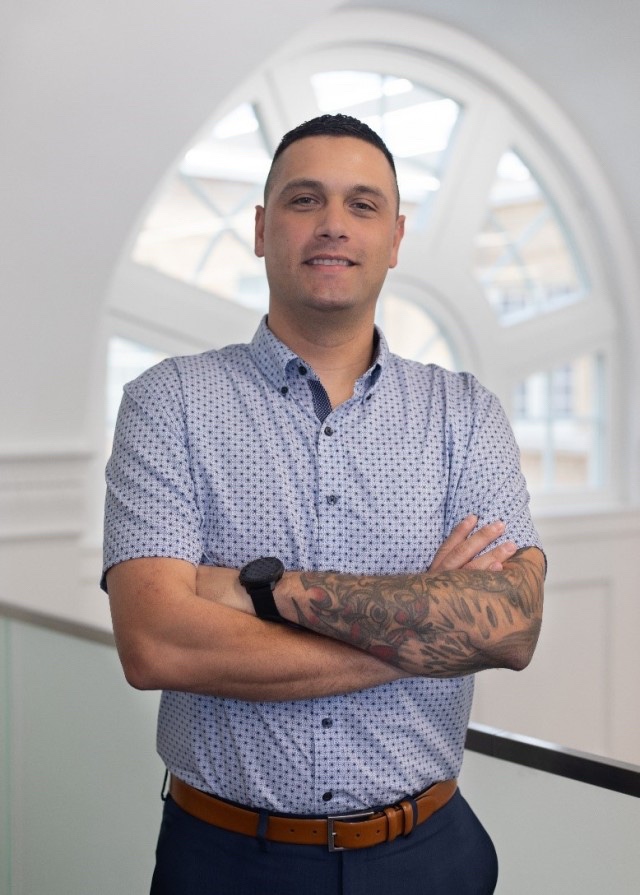
Staff Sgt. Aaron Lawson, 34, joined the Software Factory after working as a unit logistics specialist for the Army.

A native of San Antonio, Lawson lived in Texas and Georgia with his grandfather, a command sergeant major, before joining the Army at 17.

He served on active duty for a number of years before transitioning to a Reserve role and working as a software developer and integrator for a private company. However, he soon found that he “really missed being with Soldiers and wearing the uniform every day,” so decided to rejoin the Army as an active-duty Soldier.

Lawson sees the Software Factory as offering a compelling blend of his interests as a Soldier and as a software developer. He also has firsthand experience with some of the Army’s existing software systems and is eager to learn the tools to help improve them.

Thus far, he has been very pleased with the journey toward that aim.

“I’m incredibly impressed and extremely proud to work with everyone here at the Software Factory,” Lawson said.

He has found the Software Factory’s culture to be “very inviting,” and describes its efforts as highly impactful and rewarding.

“I love being a Soldier and doing things for Soldiers,” Lawson said.
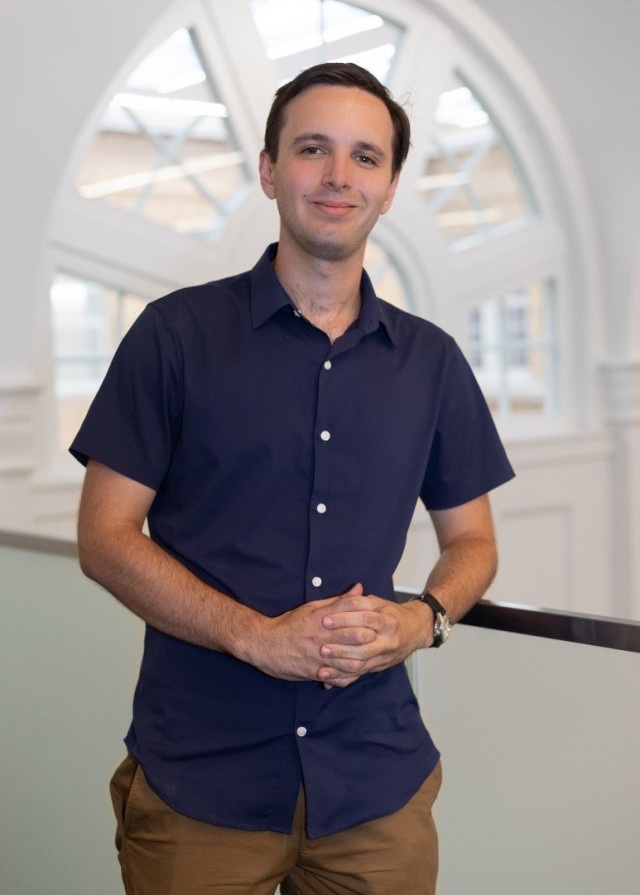
DA Civilian Stephen Scott, 25, had never lived outside of New Jersey before moving to Austin earlier this year to join the Software Factory.

He learned about the chance to get more involved in furthering Army software development while working as a weapons systems software engineer at Picatinny Arsenal, New Jersey.

“I was always interested in technology in general,” Scott said, sharing that he was a member of his high school’s robotics team before studying computer science in college.

He was inspired to apply to the Software Factory after reading a description of the program in an email and remembers thinking “that would be a cool experience; that’d be a good way to learn, a good way to build my skillset and have an immediate impact.”

“It’s a very different type of programming,” Scott said of the app-focused programming he is learning. He added that “everyone has completely different backgrounds and different skillsets coming in, which I think is a good thing.”

“I have learned a lot, and I definitely feel like my overall knowledge of skills has drastically improved over the past few months,” Scott shared.
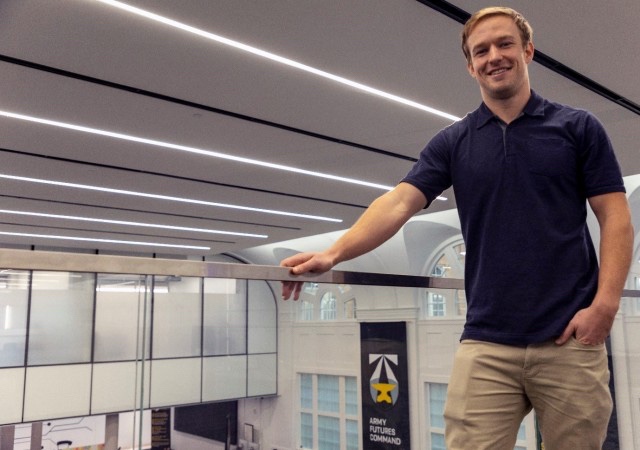
Josh Farrington, 29, is a DA Civilian who comes to the Army Software Factory from Redstone Arsenal, Alabama, where he worked as a software developer for the Aviation Mission Planning System.

Born and raised in Huntsville, Alabama, Farrington was familiar with the defense community growing up. He joined the DA after graduating from college with a degree in industrial and systems engineering.

Farrington views the Software Factory as providing a valuable opportunity to expand his software programming experience while also working more closely alongside Soldiers and experiencing life in Austin.

“I’m excited to write code that’s actually going to get used to start solving problems,” Farrington said.

He added that he was “really drawn by the ability to work directly with Soldiers,” explaining that the Soldiers he works with frequently provide helpful insights into the ways in which certain technologies would be useful in the field.

“It has made it more real, the impact I’m having as a DA civilian,” Farrington said.

The Army Software Factory acknowledged the achievements of Lee, Masoud, Eckles, Graham, Lawson, Scott, Farrington and the remaining members of Cohort 2 during a Dec. 17 recognition ceremony in Austin, which marked the transition from the cohort’s classroom learning phase to a hands-on training stage.

By Maureena Thompson, Army Futures Command

Counting Elephants – The Hark-1 Radio

Saturday, January 1st, 2022

As Vietnam heated up, the Agency’s need for eyes on the Laotian panhandle increased beyond the support that could be provided by Thai PARU and RTSF advisors. As a result, the CIA was forced to look for other solutions to communicate with its illiterate Lao Theung road watching teams targeting the Ho Chi Minh Trail.

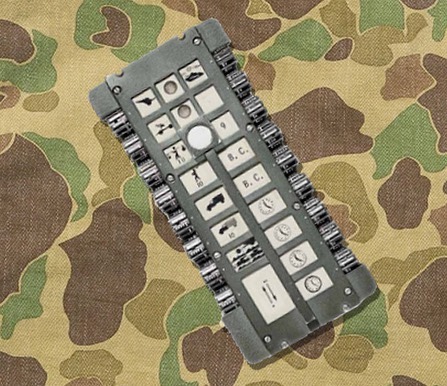
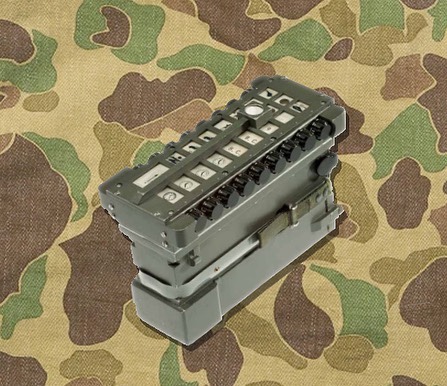
To tackle this problem, the Agency came up with a radio that used pictograms to communicate what a team saw. Crafted from a modified USAF survival unit, the Hark-1 or Hark Box was released early in 1967.

Note the depictions of armor, artillery, AAA, trucks, porters, soldiers, time of day, and direction of travel. The circular button at the center was used to transmit the tally of what was seen moving north and southbound on the trail to an airborne relay station. While the radio doesn’t appear to have a pictogram for elephants, it was given the affection moniker “the Elephant Counter” by Paramilitary Officers involved in the project. To avoid detection, the Hark road watching teams – sometimes numbering up to twenty-four road watchers on a target like the Mu Gia Pass – would be inserted via unmarked “Pony Express” CH-3s very far from their objective.

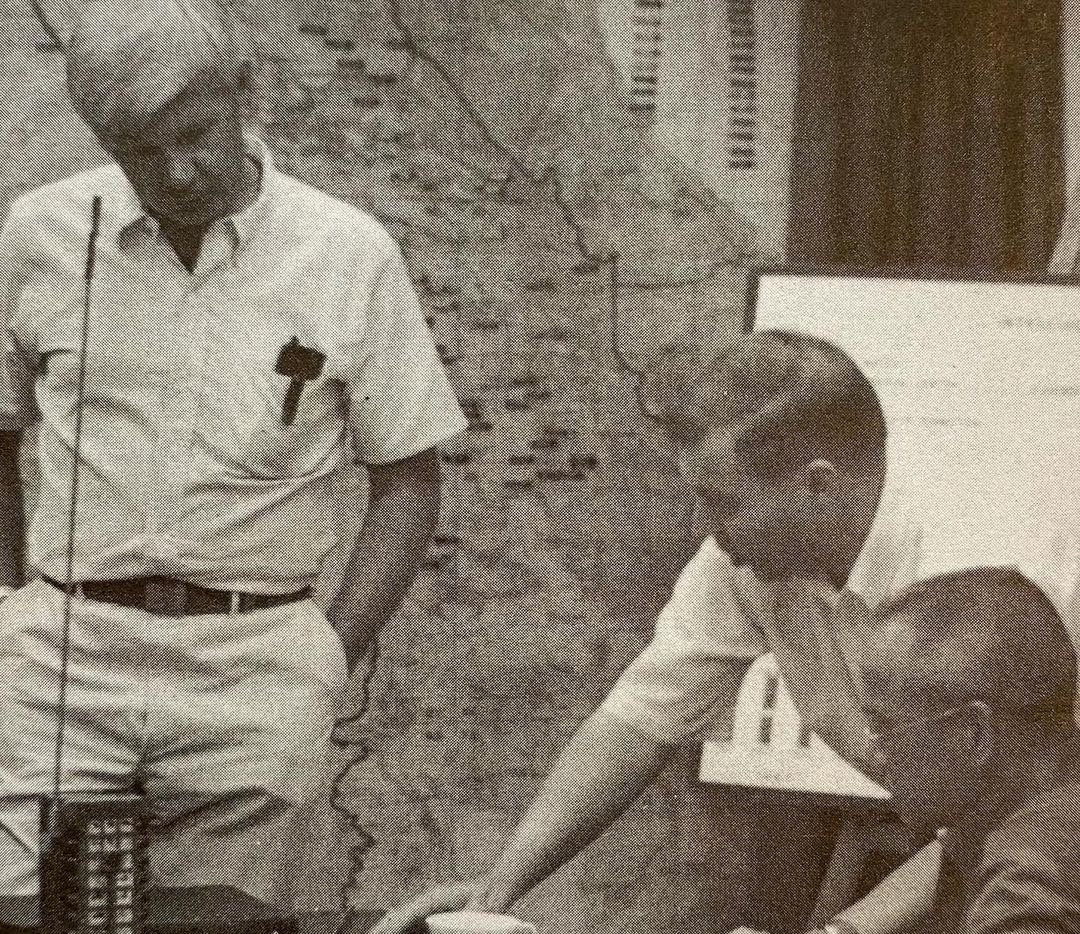
On the third slide you can see the Hark-1 with antenna deployed in front of Case Officer, Gene Norwinski during a briefing in Savannakhet. The project was wrapped up in 1969 having been overshadowed by a variety of Pentagon projects and new sensors and night vision capabilities like those present on the AC-130.

Written by @Immurement

FirstSpear Friday Focus: Happy New Year & Wind Cheater

Friday, December 31st, 2021

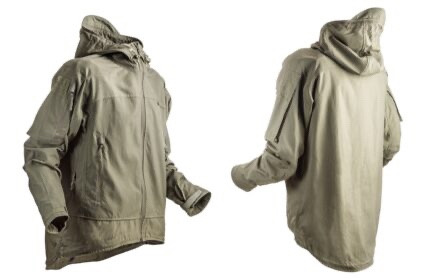
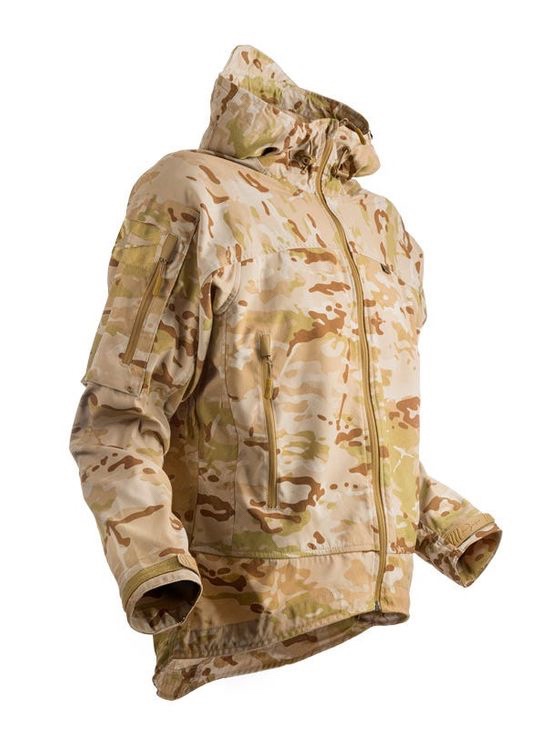
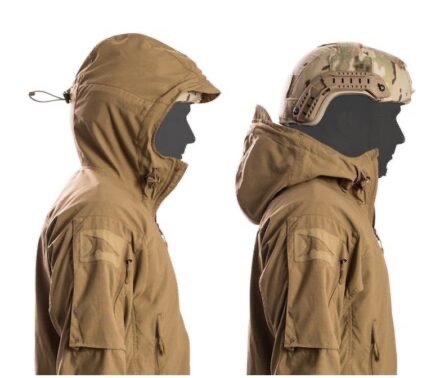
Happy New Year from our FirstSpear family to yours! Don’t get caught out in the elements without the proper layers and gear. Filling the mid-weight niche of the FS technical apparel line, the Wind Cheater has a Durable Water Repellant (DWR) Finish and excellent wind shedding characteristics. It is also quiet and flexible. The Wind Cheater features a large hood which fits over helmets without a problem and is cut generously to aid in movement. Low profile hook and loop attachment points are provided to attach FirstSpear Cell Tags and IFF.

• Ultralight breathable shell
• Durable Water Repellant (DWR) Finish
• Extra-large hood fits over helmets
• Made in USA

The Wind Cheater utilizes a Duro Ambush coating that has been brushed on which allows it to breathe like a T-Shirt. The Wind Cheater has also been designed to dry quickly. A standard cuff tab and an extra-large bicep pocket are found on each sleeve and zippers under each arm (pit zips) allow for massive airflow when desired. Finally, the Wind Cheater features bungee/barrel lock adjustments for the hood, collar, and tail.

It’s currently available in ranger green, multicam arid, coyote, multicam, manatee grey and black.

For more information, check out: www.first-spear.com/wind-cheater

Air Force Announces Spark Tank 2022 Semifinalists

Friday, December 31st, 2021

ARLINGTON, Va. (AFNS) —  

A panel of nearly 30 subject matter experts from across the Department of the Air Force met Nov. 16, 2021 at the Basic Research Innovation and Collaboration Center in Arlington and via a virtual teleconferencing platform to conduct the Spark Tank 2022 quarterfinals.

“Spark Tank is the department’s take on the television show “Shark Tank” and is designed to recognize the great work our Airmen and Guardians put into overcoming performance obstacles and making our services more capable,” said William Gautier, Spark Tank director. “The goal of the quarterfinals round was to narrow the 184 ideas submitted for ST22 down to the top 15 ideas that will advance to the semifinals,” he said.

Only the top 8% percent of ideas were selected to compete in the semifinals scheduled for Jan. 6, 2022.

On the final day of the quarterfinal round, the panel evaluated 29 ideas nominated by U.S. Air Force major commands and U.S. Space Force field commands, plus four at-large “wildcard” submissions. The wildcards were selected by Guardians and Airmen who cast nearly 17,000 ballots in pairwise voting conducted over the last two weeks of October through the Guardians and Airmen Innovation Network platform.

Using a similar voting system, the panel reviewed and scored all 29 ideas using criteria designed to assess each idea from multiple perspectives: friendly disruption, adversary disruption, inspiration/cultural disruption, and the level of senior leadership needed to execute the idea. The scoring criteria logic takes into account atmospheric perspectives that traditional voting methods don’t consider. Many impressive ideas were submitted that touched on all aspects the criteria addressed.

“The new questions required a different perspective for our panel and prompted fresh dialogue for the ST22 vetting process. We think the results represent incredibly innovative solutions that the department’s senior leadership should hear,” said Maj. Alisha Temples, Spark Tank’s deputy director.

The selection process looked at the need for specific capabilities as well as concerns of safety, policy, department-wide implementation, technical feasibility, and scalability.

The quarterfinalists are listed below. (An asterisk (*) denotes semi-finalists.)

Blood Delivery by Unmanned Aerial Vehicle, Air Combat Command *
Mobile Alternative for Canopy Trailer, Air Combat Command
Developing Airmen with Games, Air Education and Training Command *
PME outLOUD! Audio-Enabled PME, Air Education and Training Command
Agile Spectrum Assignment System, Air Force District of Washington
Go-Comm Kit, Air Force Global Strike Command *
Sustaining the B-52 Ejection System, Air Force Global Strike Command *
Air Force Live Integrated Test Environment, Air Force Materiel Command *
F-22 Project Fighter Optimization Experiment, Air Force Materiel Command *
C-130 Engine Oil Pan Hoist, Air Force Reserve Command
Digital Dent Mapping, Air Force Reserve Command *
Digital Crew Book, Air Force Special Operations Command
Mid-Air Collisions & Electronic Flight Bags, Air Force Special Operations Command
KC-135 Fuel Systems Virtual Tour, Air Mobility Command
“Spotty” Bar – Safer Process, Faster Solution, Air Mobility Command
Any Airmen Can Build Their Own Secure App!, Pacific Air Forces *
Preparing the Warfighter for the Pacing Threat, Pacific Air Forces *
Reliable & Resilient Thule Power, Space Operations Command *
Space Control Interactive Procedures Interface, Space Operations Command
Every Second Counts When Saving Someone’s Life, Space Systems Command
TaskMaster, Space Systems Command
Aerial Tow Rehookup – Novel Range Extension, United States Air Force Academy *
Custom Facemasks for Fighter Pilots and Beyond, United States Air Force Academy *
Oil Cart Trailer, United States Air Forces in Europe – Air Forces Africa
Project Arcwater – Water and Power from Thin Air, United States Air Forces in Europe – Air Forces Africa *
Project Hermes – Air Force Digital Recall Roster, Air Education Training Command, Wild Card *
Modern Logistics System for Air Force, Pacific Air Forces, Wild Card *

The United States Army Futures Command also hosts an innovation competition named “Dragon’s Lair” and is conducted in Shark Tank-like episodes. Together, these innovation showcases provide platforms for Department of Defense Total Force military and civilian personnel to show off their creativity and ideas to better prepare for ‘tomorrow’s fight.’
To date, Spark Tank, started in 2018, has produced about 70 ideas that DAF transformation teams investigate and evaluate for implementation and sustainment going forward. While not all ideas are implemented, about a dozen have been and Spark Tank continues to empower Airmen and Guardians to turn on the creativity switch to effect change. Spark Tank 2022 will be hosted on March 4, 2022 by the Air Force Association at the 2022 Air Warfare Symposium in Orlando, Florida. Registration is planned to open in December.

First Army National Guard Soldier Graduates Air Force Multi-Domain Warfare Officer Course

Thursday, December 30th, 2021

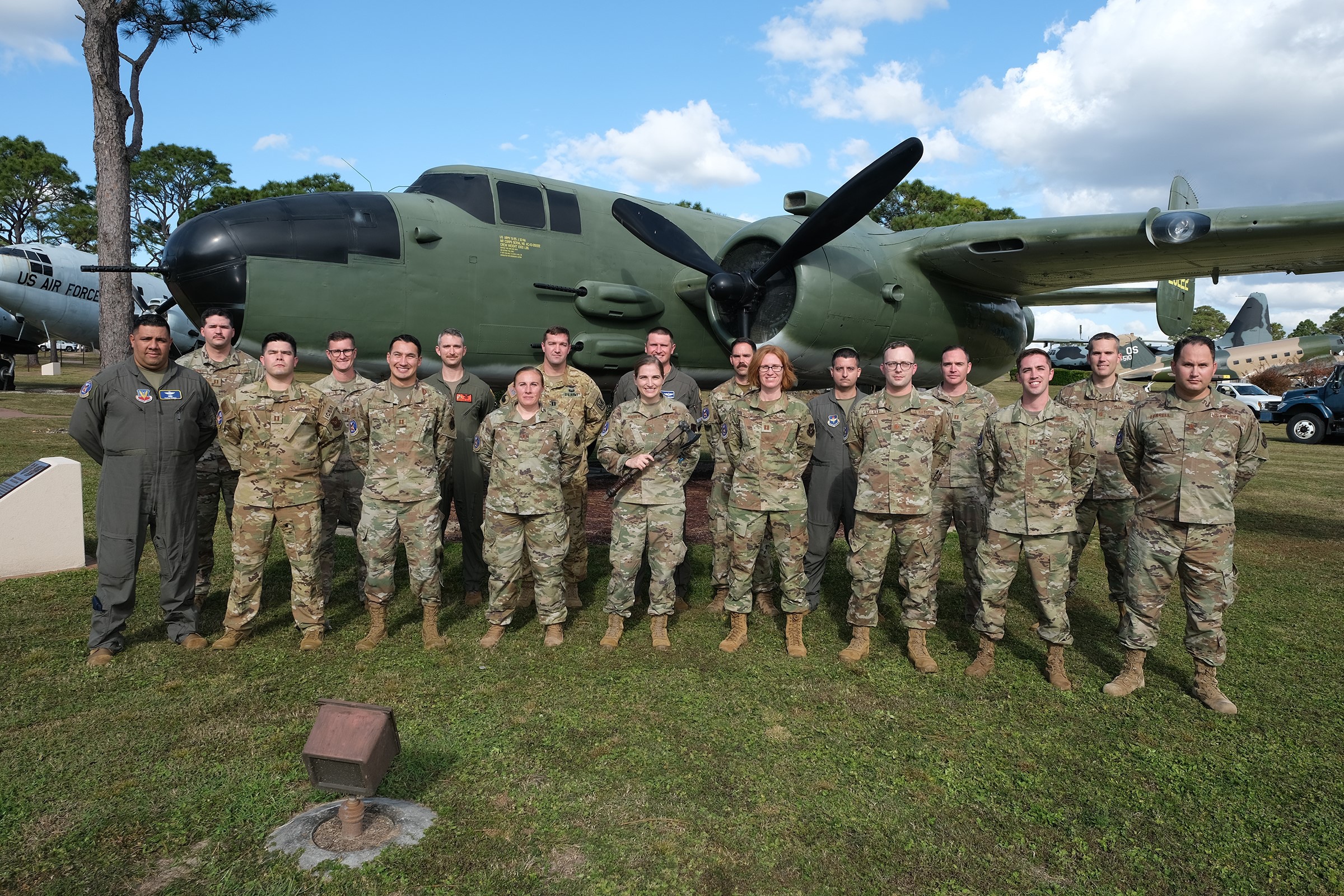
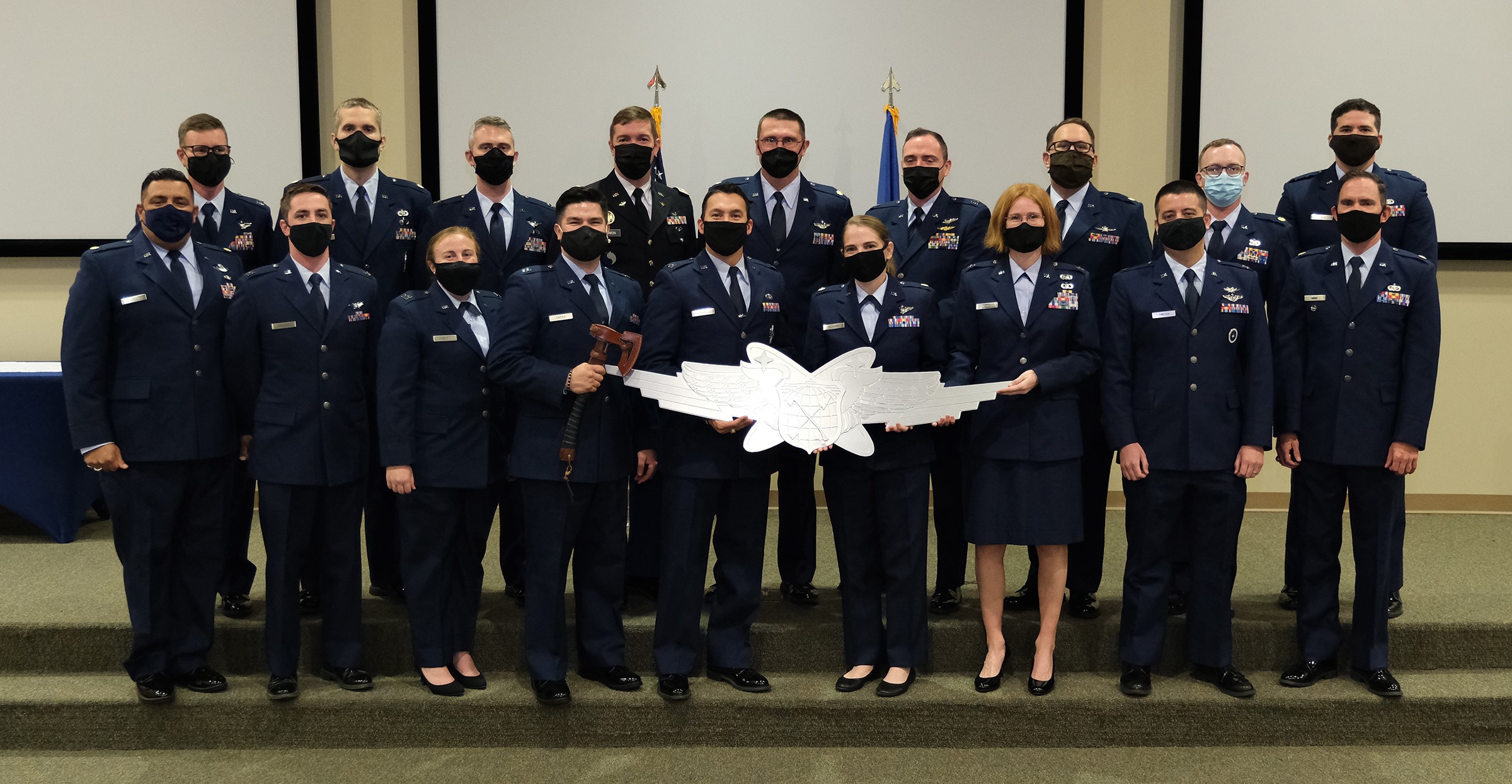
Successfully operating in a multi-domain warfighting environment will require all of our nation’s services and components to train and fight together. It may be a challenge, but that challenge is one U.S. Army Capt. Craig Simmon of the Michigan National Guard took head-on. Simmon spent 20 weeks and countless hours on academics and training to become the first joint member and only Army Soldier to graduate from the Air Force’s Multi-Domain Warfare Officers course, Hurlburt Field, Florida.


“The course was a very good experience,” said Simmon, officer-in-charge of supply, 3rd Battalion, 238th General Support Aviation Regiment, Michigan Army National Guard. “The student body at the course was awesome. The Air Force is grabbing Airmen from all the different career fields to create the new Thirteen Oscar career field.”
 
The 18 graduates were the fifth class to complete the course run by the 505th Command and Control Wing at Hurlburt Field, Florida.

 
“The training encompassed operational level air component planning,” said Simmon. “It tied in almost the entirety of an air component campaign with an emphasis on space and cyber. The end goal was to have graduates who could go to joint staffs, air staffs or different planning groups and come up with solutions to challenges.”


According to the 505th CCW public affairs office, the main course focus areas include the Air Operations Center; Air Force Forces staff; joint planning process for air, joint air targeting cycle; Agile Combat Employment; Integrated Air and Missile Defense; information operations; non-kinetic operations; and seminars with each joint and functional component.
 
Simmon applied to attend the course in part due to joint courses he has attended in the past and his additional role in the Michigan National Guard’s largest all-domain exercise as Northern Strike’s lead rotary-wing planner. Northern Strike is held annually at the National All-Domain Warfighting Center in Northern Michigan.
 
“There was a lot of value added for me. It gave me a much better understanding of how the air component works, plans, and operates,” said Simmon. “I had never really been exposed to anything in the space and cyber domains before, so having insight on those capabilities means I know whom to talk to in order to get the desired effects.”
 
Simmon’s experience in large-scale, joint exercise planning and Army rotary-wing aviation meant his attendance was beneficial to the course as well.
 
“The expertise and partnerships with joint forces are critical to mission success when providing holistic approaches to operational planning for air component commanders,” said U.S. Air Force Maj. Mark Scott, 705th Training Squadron Thirteen Oscar course director. “The attendance of the first joint student was invaluable in providing our air component planners a different perspective to ensure operational-level planning is not only synchronized, but integrated across all components”
 
While Simmon can’t don the title of a Thirteen Oscar, he is one of three Michigan guardsmen who have successfully completed the course. His drive to improve set an example for any MIARNG soldiers thinking about attending in the future.
 
“It was a good experience, and I am glad I had the opportunity to go,” said Simmon. “I look forward to using the information I learned in the future.”

The next Multi-Domain Warfare Officer Initial Skills Training class begins in January 2022 with class 22A and aims to continue improving upon operational C2 in order to deliver solutions for air component commands.

To learn more about the Multi-Domain Warfare Officer career field or training visit the following websites: intelshare.intelink.gov/sites/C2/13O and www.milsuite.mil/book/groups/13O.

The 705th TRS reports to the 505th Test and Training Group and 505th Command and Control Wing, both are headquartered at Hurlburt Field, Florida. 

By Deb Henley
505th Command and Control Wing


Public Affairs