Lowa Zephyr Mk 2 GTX

Archive for the ‘Guest Post’ Category

MOSA Expedites Army Modernization Efforts at Aviation, Missile Center

Saturday, January 15th, 2022

REDSTONE ARSENAL, Ala. — It’s more than just a buzzword — it’s the way of the future for Army aviation.

MOSA — modular open systems architecture (or approach) — has become a popular term in recent years in the defense community, but it’s something the U.S. Army Combat Capabilities Development Command Aviation & Missile Center’s Joint Technology Center/System Integration Laboratory has worked on for years. That expertise and baseline is helping the DEVCOM Aviation & Missile Center adapt technologies quickly, efficiently and at a lower cost to support Army modernization efforts.

“While it’s a new term today, for us it’s business as usual,” said Joe Reis, Multiple Unified Simulation Environment lead for the JSIL. “We’ve been striving for the last 10 years to try to break our software down into components so it can be reused. Wherever possible, we started adopting all these different standard protocols with the vision of being able to reuse those components and being able to integrate with more than just ourselves. With that we’re able to stretch into areas we never have before.”

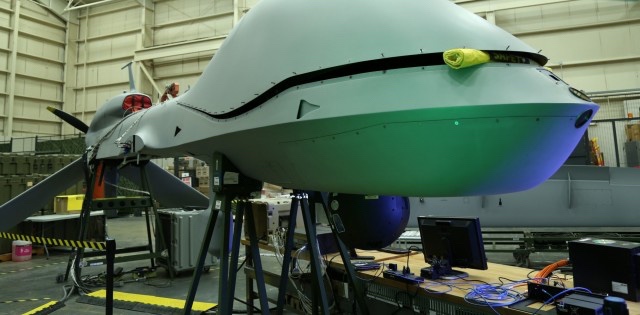
At DEVCOM AvMC, the MOSA success story starts with MUSE — the Multiple Unified Simulation Environment — a command and staff trainer. Originally created to provide Intelligence, Surveillance and Reconnaissance simulation capabilities, today the government-developed and sustained MUSE software baseline is being used in a variety of systems, including advanced teaming, part of AvMC’s support to the Future Vertical Lift Cross-Functional Team. The JSIL works primarily with unmanned aircraft systems, to include Shadow, Gray Eagle, Reaper and Global Hawk.

“The MUSE baseline was the foundational software that we began with for the Advanced Teaming effort,” said JSIL Software Lead James Bowman III. “We’ve been modifying and enhancing the MUSE baseline for over 20 years, by incorporating customer capability requests, keeping pace with industry standards and maintaining an accreditation (Authority to Operate — ATO). It would not have been possible for the Army to constitute the capabilities inherent in MUSE in time to meet the needs of Army Futures Command.”

“We’ve leaped into this research and development field instead of just being a trainer, because of being able to break these components down,” Reis added.

For the AvMC team, that is the whole point of MOSA — delivering solutions expeditiously to the Army and the Warfighter.

“MOSA is taking a modular approach, and for us, that’s just not theoretical,” Bowman said. “Software modularity allows the teams to share components across our enterprise, thereby negating duplicative efforts. It is paramount that the government continue to address intelligent software design, since it is our responsibility to provide quality solutions to and for the Warfighter that are concurrently cost-optimal for the government.

“We work to ensure that there is an intentionality to identifying common capabilities, already resident in MUSE, in order to exploit for utilization in our UAS Trainer solutions. Obviously, if not properly implemented, there can be challenges with code synchronization. JSIL addresses this by adhering to industry standard software processes and by utilizing Azure DevOps to ensure solution integrity. Consequently, stove-pipe solutions are a thing of the past. Once a bug is fixed in a component, all software that utilizes that component inherits the benefits of the fix.”

Another MOSA success story is the JSIL’s support to the Synthetic Training Environment Cross-Functional Team. The Reconfigurable Virtual Collective Trainer-Air uses the MUSE baseline foundationally, merged with work the JSIL did for the Air Force, to create a UAS software baseline for the RVCT-A.

“We would not have been able to support the high op-tempo of the RVCT-A effort had we not leveraged and utilized this MOSA construct,” Bowman said. “We continue to be energized about the possibilities of utilizing the MUSE and collective decades of UAS modeling and simulation domain knowledge to address current and emerging requirements.”

What’s next for MOSA at AvMC? The JSIL team will support swarming unmanned aircraft systems, part of the work being done with Advanced Teaming and Air Launched Effects. That effort includes incorporating an Army Game Studio Image Generator, which will reduce the money spent for commercial off the shelf rendering engine licenses and maintenance fees, a price tag that runs over $1 million alone for one UAS variant.

“If we can take that million-dollar expenditure and invest it in an existing GOTS image generator, that cost just goes away,” Bowman said. “MOSA is not just some buzzword, in our view, the implementation thereof provides tangible evidence of how we save the Army money, and how we get solutions to the soldier expeditiously, because we’re constantly building on a pre-existing, well-vetted, foundation.”

AvMC supports a variety of partners with MOSA, to include Program Executive Office Aviation; PEO Simulation, Training and Instrumentation; the Air Force Agency for Modeling and Simulation; PEO Intelligence Electronic Warfare & Sensors; and the FVL and Synthetic Training Environment CFTs.

“All of this work that we have done and are very proud of also has a global impact,” Bowman said. “We work with coalition partners, and because we adhere to these standards, when we show up to an exercise, not only are we operating our simulation, our coalition partners ask us at times to help them and we do that proudly. We’re U.S. citizens working with our coalition partners that are going to go to battle with us in the event that hostilities break out. We’re very proud to work with these standards to support not just the U.S., but its partners.”

By Amy Tolson, DEVCOM Aviation & Missile Center Public Affairs
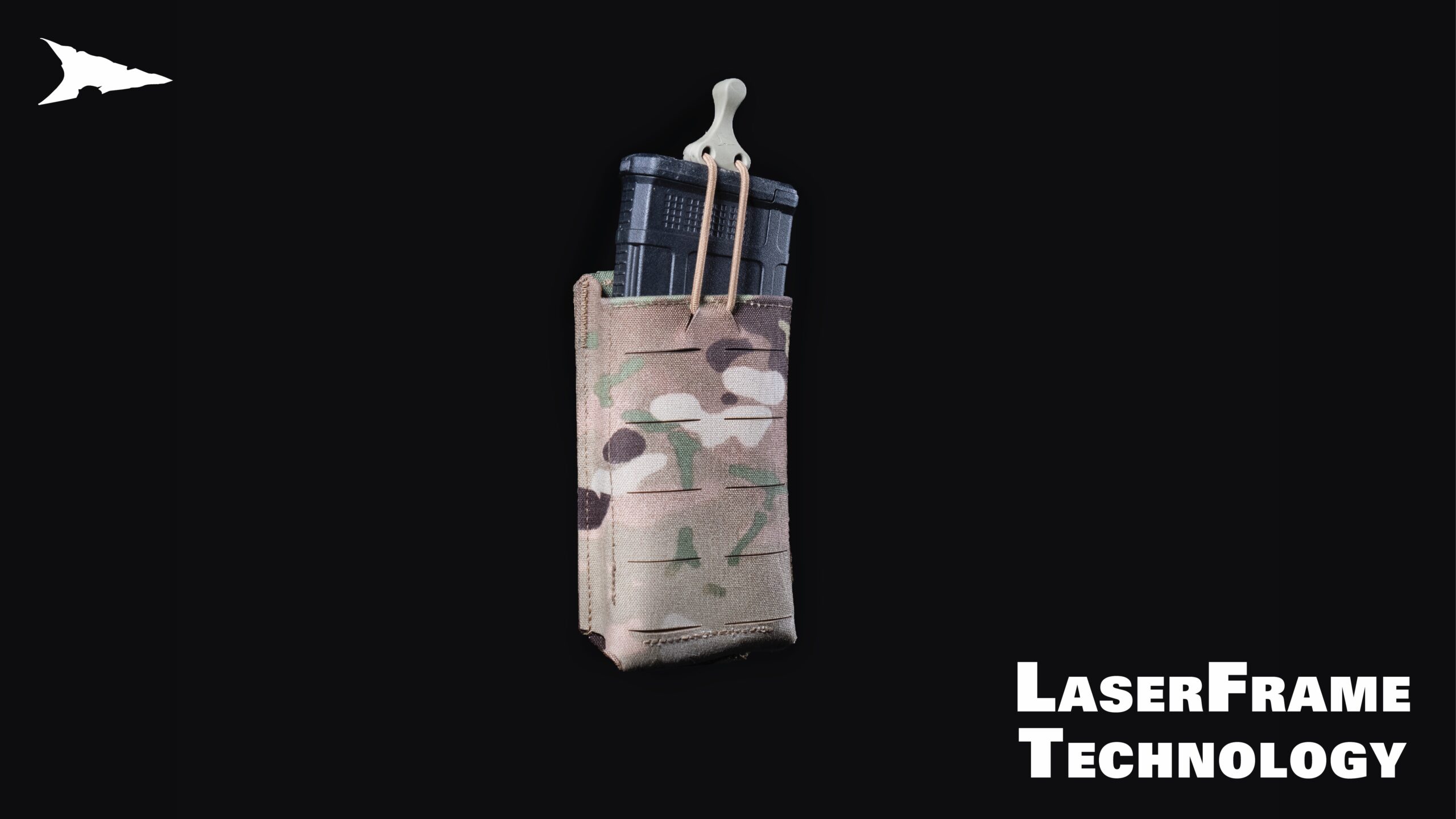
FirstSpear Friday Focus: NEW Patented LaserFrame Technology

Friday, January 14th, 2022

New patented LaserFrameTM technology, FirstSpear continues to innovate and develop cutting edge technologies to give war fighters and first responders the utmost edge. LaserFrame technology comes in a full suite of pockets. LaserFrame is a hemless design and construction that dramatically reduces weight, decreases the pocket’s footprint and retains its shape when empty, all of which combine to allow for a sleeker overall platform.


The LaserFrame line will come with our 6/9 attachment system that is compatible with our laser fusion 6/12 platforms as well as legacy MOLLE platforms. Expect to see variations of rifle pockets, pistol magazine pockets and accessories like the popular Fight Strap as we’ll be adding more pocket variations throughout 2022.

For more information about FirstSpear, check out First-Spear.com or First-Spear.tech.

Terrain 365 Invictus-ATB

Friday, January 14th, 2022

Upscale Variant of the Rustproof Invictus Featuring Integrated Bolster Construction

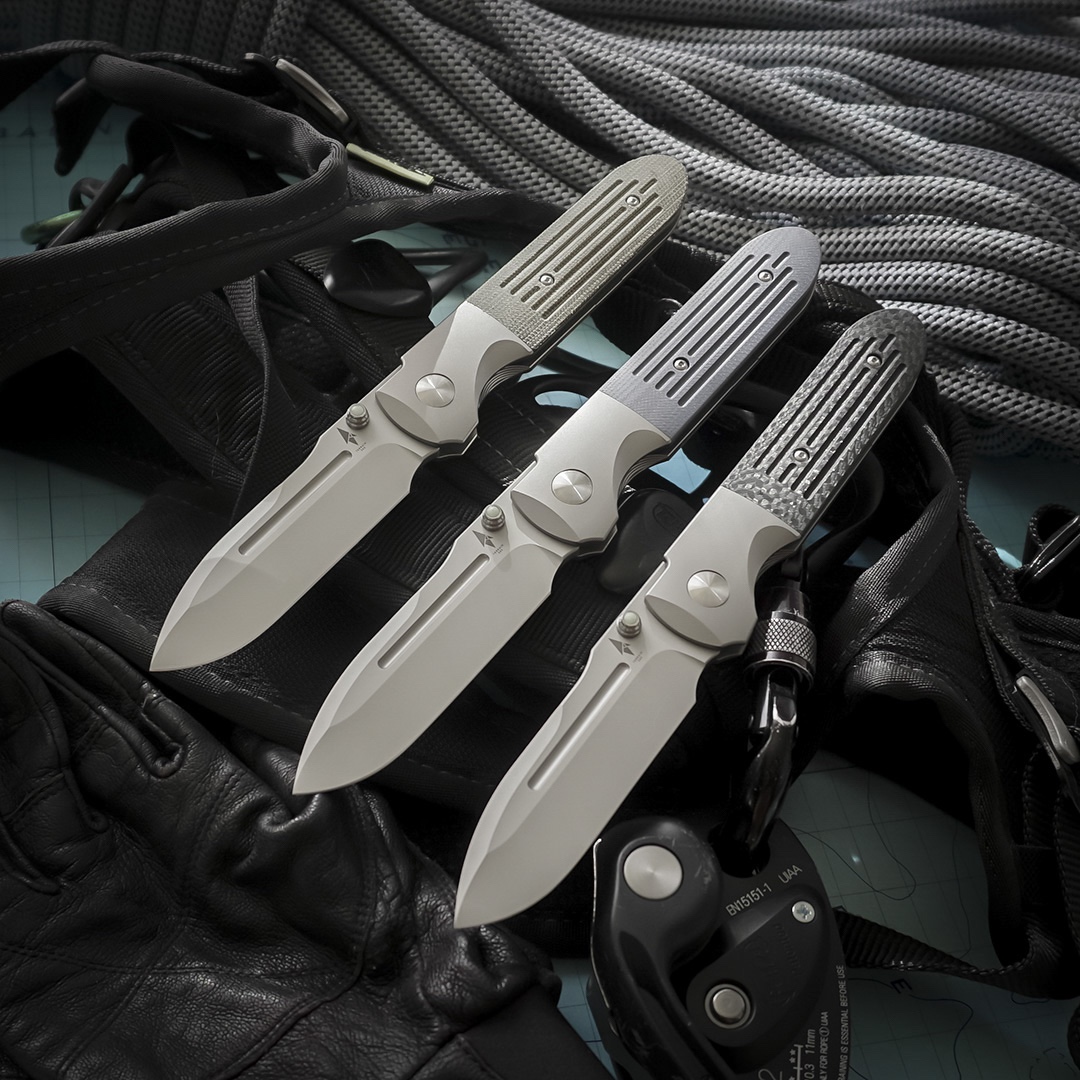
New for January 2022, Terrain 365™ releases their Invictus-ATB. An upscale variant of the popular, rustproof Invictus collab series with Prometheus Design Werx, featuring their proprietary, corrosion-proof, edge holding, Terravantium™ blade alloy. This precision made framelock features an integrated bolster construction with hand fitted carbon fiber, G10 or canvas micarta scales. Signature design details include handle and blade fullers, dive watch-grade glow in the dark cabochons in the dual thumbstuds, fine jimping throughout, and a purpose driven industrial aesthetic. As with all of their “AT” designated knives, these are 100% non-ferrous, non-magnetic, and a completely rustproof build for all terrains.

The Invictus-ATB is available with Terravantium™ blades and integrated titanium bolsters with carbon fiber, G10 or canvas micarta scales.


Creative Director and Co-Founder Patrick Ma of Terrain 365 states,

“The Invictus-ATB is an upscale version of this design series. While still very purpose driven in its intent, the integrated bolster construction gives this variant a slightly more dressed up feel. As with all our AT designated knives, this folder is expertly constructed out of 100% non-ferrous and non-magnetic materials, including our proprietary, edge holding Terravantium™ blade alloy, for performance in any environment and terrain in the world.”

The Invictus-ATB is available for $380-$385 on their website.

High Speed Gear & Comp-Tac WILL attend SHOT Show 2022

Friday, January 14th, 2022

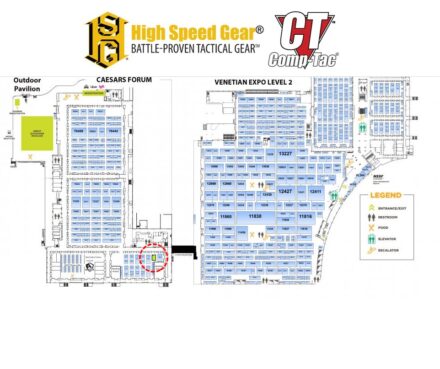
SWANSBORO, N.C. – January 12, 2022 – As long as there is a Shooting, Hunting and Outdoor Tradeshow (SHOT) High Speed Gear® and Comp-Tac® will be attending, displaying, entertaining and meeting in booth 75707.

High Speed Gear® and Comp-Tac® best known for the TACO® and extremely durable and reliable Kydex® Holsters, will attend SHOT Show 2022 in Las Vegas, Nevada, January 18th through the 22nd. SHOT Show is an annual event where industry leaders in the tactical gear, gun and first responder industry can present innovative products to consumers, trade ideas as well as exchange information with professionals who can benefit from the equipment.

At SHOT Show 2022, High Speed Gear® and Comp-Tac® will be in booth number 75707 along with new and exciting products The booth will be fully kitted with Gear, CT3 Holster Drawing Station, meeting space, our staff, and several events.

New products for the show include:

• CT3™ Level III Holster: The CT3 is the first level three holster that Comp-Tac has offered. Three levels of retention, combined with Comp-Tac’s well known holster body fit, and the ability to fit Red-Dot optics help to fill the demands of the law enforcement market.
• Core™ Plate Carrier: High Speed Gear has gone back to the drawing board and released a ruggedly-designed, low profile plate carrier.
• APEX™ Sling combines new technology in webbing, hardware and fabric to bring a water resistant, two-speed, two point sling to the market.
• APEX™ Slick Sling is an additional sling option with the ultimate low profile design for the smoothest slickest option on the market.
• Core Cummerbund is the perfect accessory to expand a basic plate carrier into a more robust and fully accessorized option.
• Sport-Tac Holster with an innovative flexible foam backing is a new cool and comfortable answer to inside the waistband carry.
• Dual Concealment Holster – DCH – A unique holster that offers both inside the waistband and outside the waistband carry in one package.
• Polymer TACO V2 – Brand new, sneak peek, ruggedly designed TACO for holding multiple pieces of gear.

“Attending the SHOT Show is a big part of our year. This is one of the opportunities we have to meet our customers face to face, show off new products, get feedback and learn more about the industry and future opportunities,” commented Bill Babboni chief operations officer for High Speed Gear. “We will be taking precautions with wiping down surfaces and products, fist bumping and wearing masks. We will also be excited to focus on our business partners and helping each other be more successful in 2022.”

High Speed Gear® and Comp-Tac® would like to extend a welcoming invitation to come by for several events happening at the booth:

• Ambassador Will Petty will be putting on a Tourniquet Application Demonstraton: Tuesday, January 18, 2022 at 3pm
• Gas Mask / Business Card Grab – We will be drawing business cards out of a gas mask for free gear: Wednesday 19th, 2022 at 2pm
• Ambassador Alex Alderman will be on hand for questions and Arm Wrestling: Thursday, January 20, 2022 at1:30pm
• TACO / Business Card Grab – We will be drawing business cards out of a TACO for free gear: Friday January 21st, 2022 at 2pm

A video show reel of High Speed Gear® products can be viewed on the following link Mission Essential Tactical Gear – YouTube

See Tactical Distributors at SHOT Show

Thursday, January 13th, 2022

Tactical Distributors is excited to announce we will have a booth at Shot Show 2022 located in the New Ceasars Forums Expo Level 2, booth number 80722. We will have several of our upcoming colabs to show, Spring Summer ’22 TD Apparel, MTHD and Battle Briefs. We also, have a ton of giveaways for people who come say hi. 

Free Socks to First 100 Military Visitors to Farm To Feet Booth at SHOT Show

Thursday, January 13th, 2022

Farm To Feet® would like to thank all our Service Members and Veterans for their service!  Please stop by Nester Hosiery booth #60201 to learn more about our Made in USA, Berry Compliant Tactical US Merino Wool socks.  The first 100 attendees with Military I.D. will receive a free pair of socks!

PCSL Practical 2-Gun

Thursday, January 13th, 2022

SureFire presents this video explaining PCSL Practical 2-Gun.

US Army’s New IVAS Allows Maximum Mission Awareness In-Transit

Wednesday, January 12th, 2022

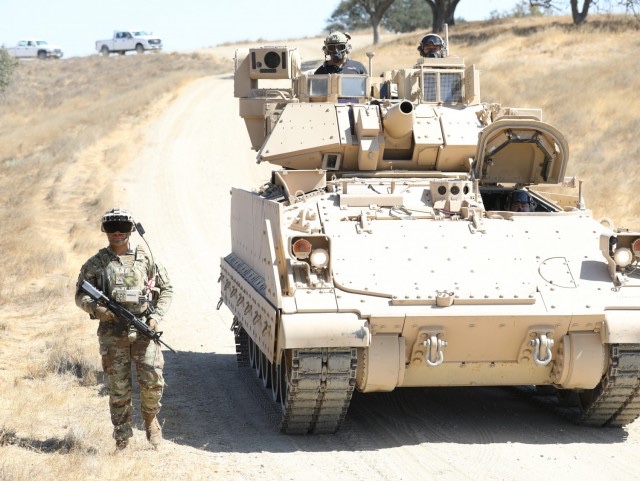
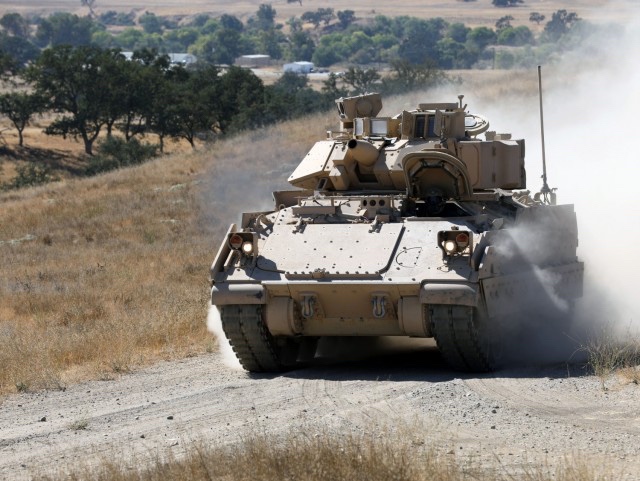
CAMP ROBERTS, Calif. — Mounted armored vehicles such as the Bradley have long been used as heavy weapons platforms with long range sensors to hunt targets and provide armored transportation to dismounted Soldiers. However, once onboard the vehicle, Soldiers lose visibility of what is happening around them, leaving them ill-prepared to anticipate the changing battlespace upon dismount.

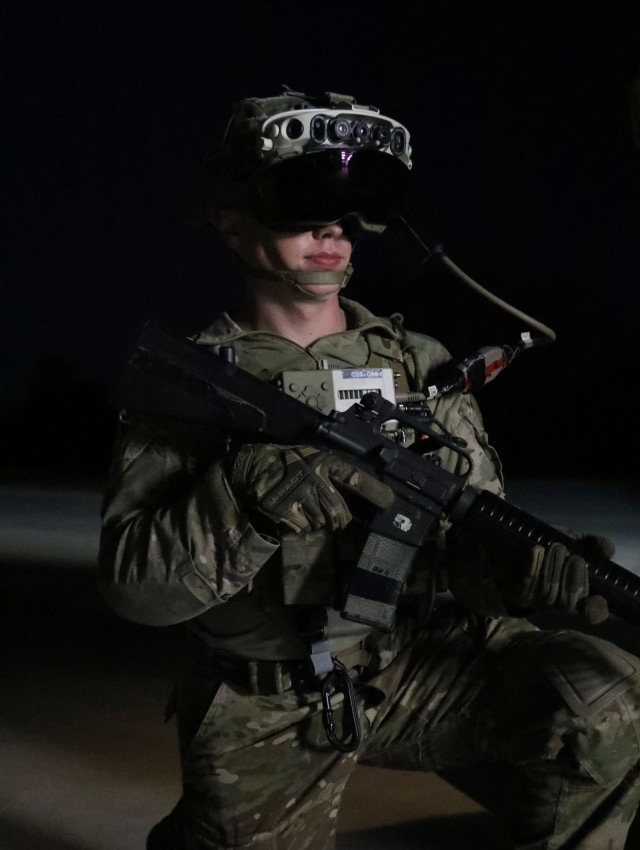
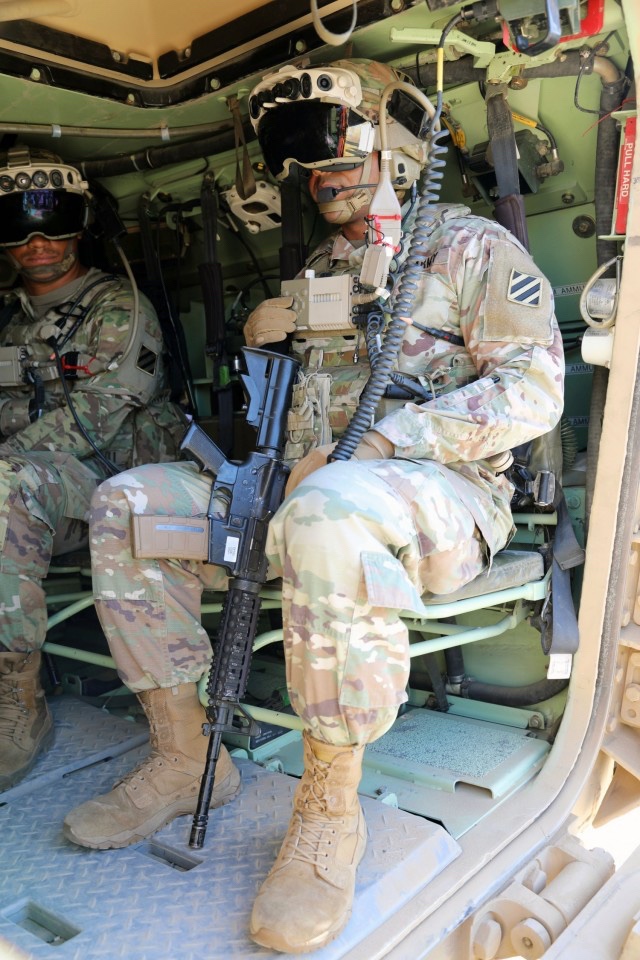
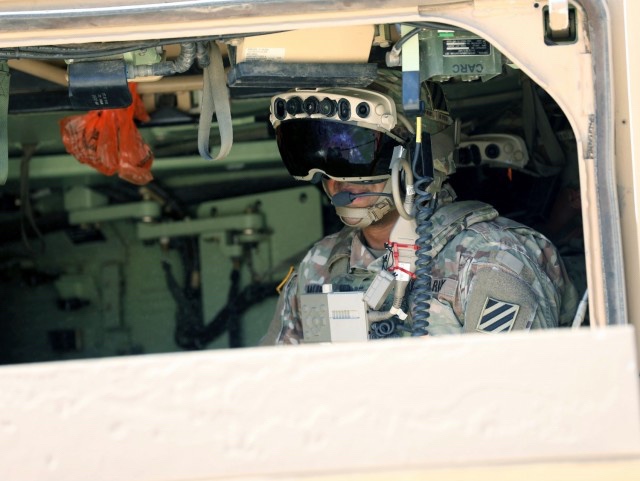
In effort to provide situational awareness while Soldiers are in transport, a cross-enterprise Army team is working to incorporate Integrated Visual Augmentation System (IVAS) technology and sensors into vehicle platforms for optimal battlefield visibility at every stage of the mission. The goggle-based IVAS display integrates digital low-light, thermal night vision and high-resolution waveguide technology to create a mixed reality interface for the dismounted Soldier. Therefore, optimizing the system for Soldiers at every stage of a mission — including transport — is critical to ensuring success in future multi-domain operations.

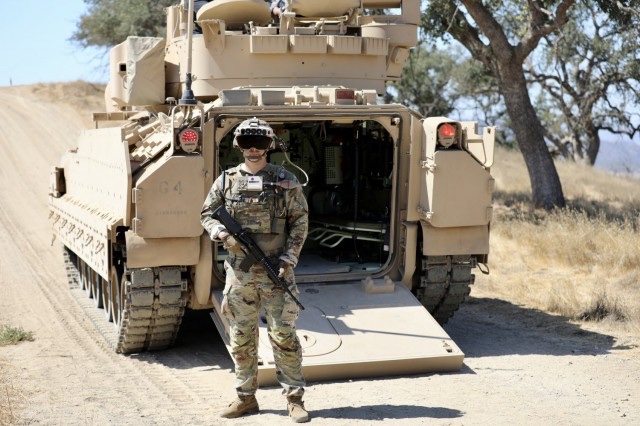
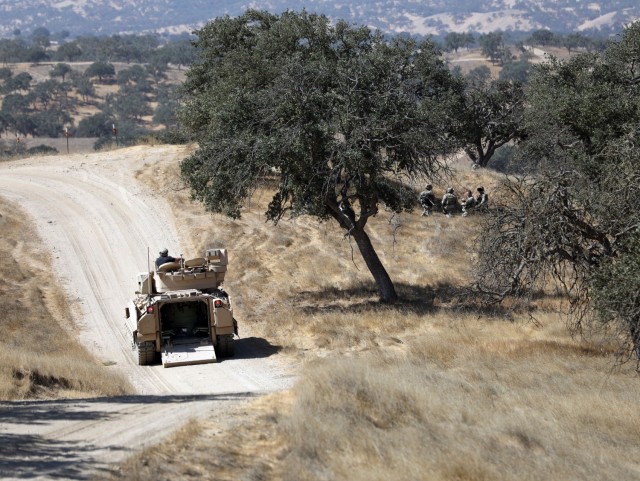
To maximize the integration of IVAS to the Bradley platform specifically, the Army Platform Integration team, comprised of Program Executive Office (PEO) Soldier, PEO Ground Combat Systems and Combat Capabilities Development Command (DEVCOM), executed a third Vehicle Excursion (VE3) test event at Camp Roberts, California in September 2021.

“The goal of platform integration, like the one demonstrated here on the Bradley Infantry Fighting Vehicle, is to not only ensure that Soldiers equipped with IVAS don’t lose their enhanced situational awareness while mounted, but to also take advantage of the on-board platform sensors that enable them to see what the combat vehicle sees,” said Maj. Shawn Jones, Platform Integration lead under PEO Soldier Project Manager IVAS.

Soldiers from 1st Armored Brigade Combat Team, 2-7 Infantry Battalion, 3rd Infantry Division out of Fort Stewart, Georgia, came to test the capability and noticed that feeds from the current sensors were more accessible to each Soldier on the platform as they executed Improvised Explosive Device (IED) searches, reconnaissance and complex attack missions.

“The IVAS augmented reality system integrates communications, thermals and night vision to enhance our situational awareness and lethality from within the Bradley,” Pfc. Benjamin Franke said. “It allows everyone to see what the driver, commander and gunner are seeing outside, which gets more eyes-on and increases situational awareness immediately for when we dismount.”

While Soldiers can receive mission updates such as emerging intelligence, terrain and target locations while in transport, they also hope to use the physical advantages of the vehicle platform to maximize their effectiveness upon dismount.

“An individual Solider on ground sometimes has limited visibly of the enemy due to an obstructed line of sight,” said Sgt. 1st Class Darrell Borgic. “But the Bradley is taller and has better optic capability, so dismounts are able to leverage that to see targets while on the ground and make an informed tactical decision.”

“The system lets us get more eyes on our objective so we don’t miss anything, which keeps us all safer,” added Franke. “Some of the exercises required us to scan for IEDs, so having our dismounts onboard also be able to look for those has actually shown to make a difference in our mission success.”

The development of the integrated technology required teammates to reach across lanes of expertise and facilitate the integration of the new modern IVAS with the Bradley. Don Aldea, PM Mounted Armored Vehicles Mechanical and Systems Engineer and Lead Engineer for IVAS Integration, ensured Bradley and IVAS requirements were communicated and developed across the diverse teams.

“It all started when leadership came and asked, ‘When an IVAS-equipped Soldier hops onto a vehicle platform or a Bradley for transport, how do we maintain the connectivity and situational awareness they had on the ground so that combat advantage doesn’t stop just because they are now mounted and moving?’” Aldea said.

It was a complex problem set with requirements and kit that was not easily compatible, he said, but the team’s VE3 user study event was proof of concept that the capability is feasible and operationally delivers increased lethality and survivability. Aldea highlighted some of the main technical features of the system.

“When a Soldier walks into a Bradley wearing IVAS, they can do three main things: SEE, World View and power up,” he said. “We put in interfaces to power and charge their batteries, for SEE we cloned the feeds from the three existing sensors – front DVE [Drivers Vision Enhancer], driver’s CIV [Commander’s Independent Viewer] and gunner’s IBAS [Improved Bradley Acquisition Subsystem] – so the Soldiers can passively view what the Bradley sees through their IVAS HUD [heads up display]. We also integrated radios so we can use all the features of IVAS for a connected mission execution.”

Though Aldea is a systems engineer, he is passionate about the operational capability gap that IVAS mounted on a Bradley will address.

“When Soldiers come up to a position where they are getting ready to deploy outside of the vehicle — as of today they are going in mostly dark and blind,” Aldea explained. “With this integrated technology, they can get map, mission and intel updates enroute. They can see what is around them to strategically position the Bradley and then drop the ramp where they are not in direct fire and execute immediately.

“In World View, they can also know where their brother and sister platforms are, so they can work together, cover more ground and make informed decisions and ad hoc changes on the move all while buttoned up in the Bradley,” Aldea added.

1 / 3

SHOW CAPTION +

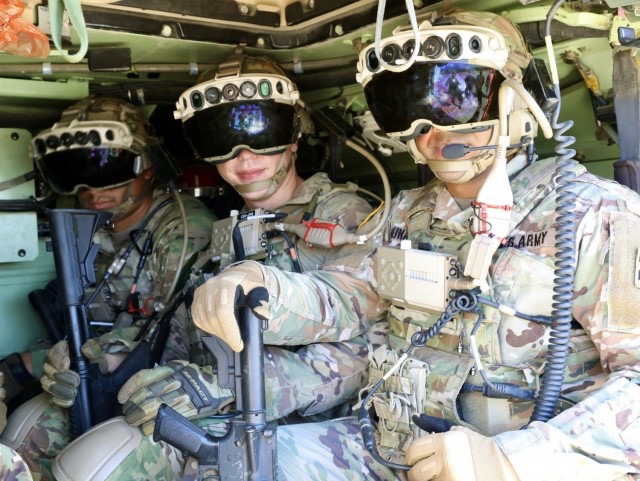
3rd Infantry Division Soldiers participate in Bradley Vehicle Excursion 3 test event with the Integrated Visual Augmentation System (IVAS) prototype Capability Set 4 at Camp Roberts, Calif. in September 2021. (Photo Credit: Courtney Bacon)

VIEW ORIGINAL

2 / 3

SHOW CAPTION +

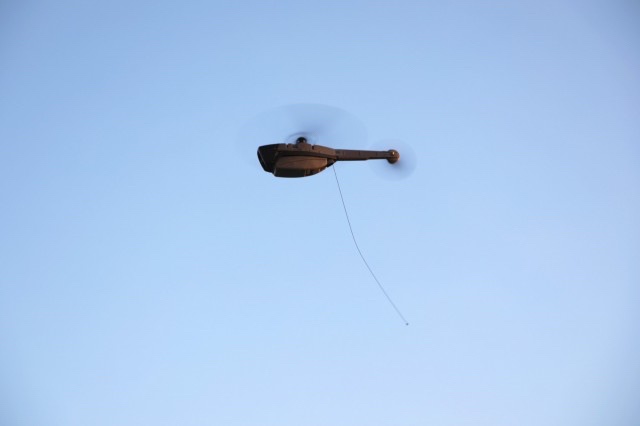
3rd Infantry Division Soldiers use the Blackhornet Soldier Borne Sensor (SBS) during the Bradley Vehicle Excursion 3 test event with the Integrated Visual Augmentation System (IVAS) prototype Capability Set 4 at Camp Roberts, Calif. in September 2021. (Photo Credit: Courtney Bacon)

VIEW ORIGINAL

3 / 3

SHOW CAPTION +

3rd Infantry Division Soldiers participate in Bradley Vehicle Excursion 3 test event with the Integrated Visual Augmentation System (IVAS) prototype Capability Set 4 at Camp Roberts, Calif. in September 2021. (Photo Credit: Courtney Bacon)

VIEW ORIGINAL

The DEVCOM night vision lab was also a critical part of the integrated team’s work. Dr. Navin Mathur, IVAS Platform Integration Lead Engineer, explained how the increase in networked and visual accessibility delivers an enhanced solution to the problem set.

“Having a networked End-User Device (EUD), like IVAS on a Soldier in the back of a platform like a Bradley or Stryker becomes invaluable, but it is only part of the solution,” said Mathur. “Not only does the SEE feature allow entire crews to clear a large area within the safety of the vehicle instead of dismounting and being physically exposed, but the physical limitations of the Soldier and platform are significantly minimized through the additional integration of the Army Black Hornet UAS [unmanned aerial system]. The drone feeds into the IVAS HUD which allows visibility on areas that the platform and the dismount can’t physically cover.”

Another notable aspect is the delivery and integration of Soldier power into the vehicle platforms.

“The UBC [universal battery charger] integrated on the platform will reduce the need for Soldiers to carry extra CWBs [conformal wearable batteries] while dismounted on the objective and allow for easy resupply of fresh batteries while mounted,” Mathur said. “Even if the mission is extended, our Soldiers are still powered to execute.”

IVAS is being developed to efficiently deliver relevant mission information and operationally relevant tools to Soldiers at every stage of mission execution. The integration of the technology with platforms and drones extends the combat advantage of a single dismount beyond physical limitations.

“Together it gives the entire force better situational awareness and allows Soldiers to make more informed decisions before dismounting,” said Mathur. “There are no longer gaps in information between mounting, transit and dismounting, which will increase the survivability and lethality for both the platform and the Soldiers.”

The cross-enterprise Platform Integration team plans to conduct a user study with further IVAS integration to Stryker platforms in August 2022.

“This product has the potential to be a force multiplier,” said Franke. “It’ll help bring more vehicles, crews and dismounts home alive and I hope to be able to use it as it continues to develop in the future.”

By Courtney Bacon