GORE-TEX Professional

Archive for the ‘Guest Post’ Category

Breakthrough Lays Groundwork for Future Quantum Networks

Wednesday, March 17th, 2021

RESEARCH TRIANGLE PARK, N.C. — New Army-funded research could help lay the groundwork for future quantum communication networks and large-scale quantum computers.

Researchers sent entangled qubit states through a communication cable linking one quantum network node to a second node.

Scientists at the Pritzker School of Molecular Engineering at the University of Chicago, funded and managed by the U.S. Army Combat Capability Development, known as DEVCOM, Army Research Laboratory’s Center for Distributed Quantum Information, also amplified an entangled state via the same cable first by using the cable to entangle two qubits in each of two nodes, then entangling these qubits further with other qubits in the nodes. The peer-reviewed journal, Nature, published the research in its Feb. 24, 2021, issue.

“The entanglement distribution results the team achieved brought together years of their research related to approaches for transferring quantum states and related to advanced fabrication procedures to realize the experiments,” said Dr. Sara Gamble, program manager at the Army Research Office, an element of the Army’s corporate research laboratory, and co-manager of the CDQI, which funded the work. “This is an exciting achievement and one that paves the way for increasingly complex experiments with additional quantum nodes that we’ll need for the large-scale quantum networks and computers of ultimate interest to the Army.”

Qubits, or quantum bits, are the basic units of quantum information. By exploiting their quantum properties, like superposition, and their ability to be entangled together, scientists and engineers are creating next-generation quantum computers that will be able solve previously unsolvable problems.

The research team uses superconducting qubits, tiny cryogenic circuits that can be manipulated electrically.

“Developing methods that allow us to transfer entangled states will be essential to scaling quantum computing,” said Prof. Andrew Cleland, the John A. MacLean senior professor of Molecular Engineering Innovation and Enterprise at University of Chicago, who led the research.

Entanglement is a correlation that can be created between quantum entities such as qubits. When two qubits are entangled and a measurement is made on one, it will affect the outcome of a measurement made on the other, even if that second qubit is physically far away.

To send the entangled states through the communication cable—a one-meter-long superconducting cable—the researchers created an experimental set-up with three superconducting qubits in each of two nodes. They connected one qubit in each node to the cable and then sent quantum states, in the form of microwave photons, through the cable with minimal loss of information. The fragile nature of quantum states makes this process quite challenging.

The researchers developed a system in which the whole transfer process—node to cable to node—takes only a few tens of nanoseconds (a nanosecond is one billionth of a second). That allowed them to send entangled quantum states with very little information loss.

The system also allowed them to amplify the entanglement of qubits. The researchers used one qubit in each node and entangled them together by essentially sending a half-photon through the cable. They then extended this entanglement to the other qubits in each node. When they were finished, all six qubits in two nodes were entangled in a single globally entangled state.

“We want to show that superconducting qubits have a viable role going forward,” Cleland said.

A quantum communication network could potentially take advantage of this advance. The group plans to extend their system to three nodes to build three-way entanglement.

“The team was able to identify a primary limiting factor in this current experiment related to loss in some of the components,” said Dr. Fredrik Fatemi, branch chief for quantum sciences, DEVCOM ARL, and co-manager of CDQI. “They have a clear path forward for increasingly complex experiments which will enable us to explore new regimes in distributed entanglement.”

By U.S. Army DEVCOM Army Research Laboratory Public Affairs

Marines Install Mobile Targets at K-Bay Range

Monday, March 15th, 2021

I’m up, he sees me, I’m down: Moving targets arrive to K-Bay Range

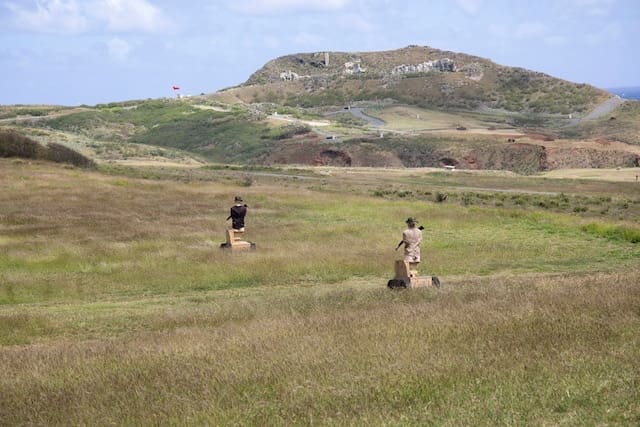
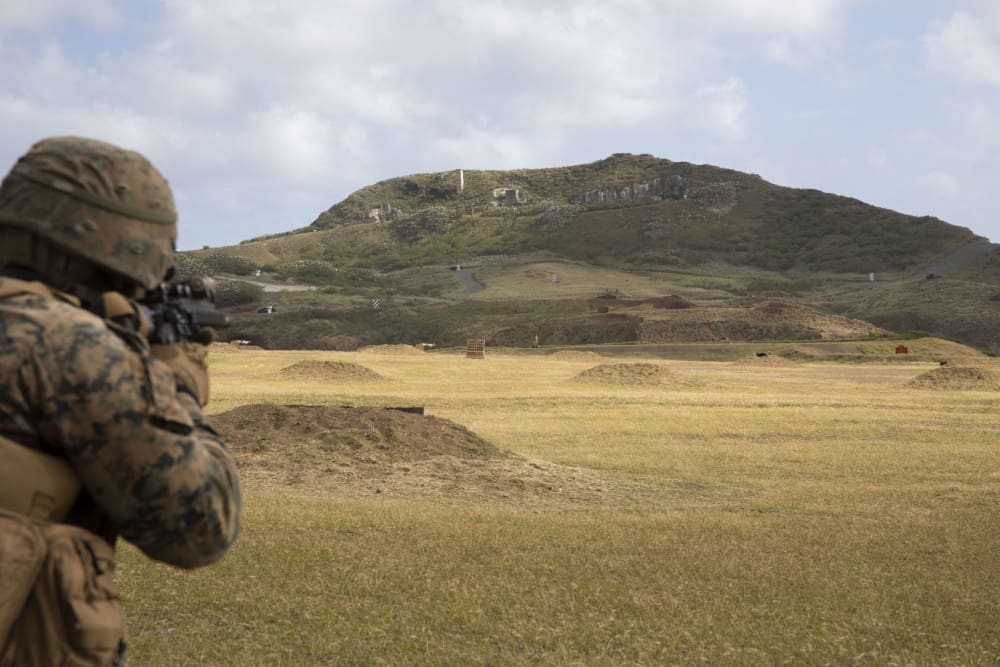
Marines with 1st Battalion, 3d Marines were the first to try the new Trackless Moving Infantry Targets on Marine Corps Base Hawaii, Feb. 24, 2021.

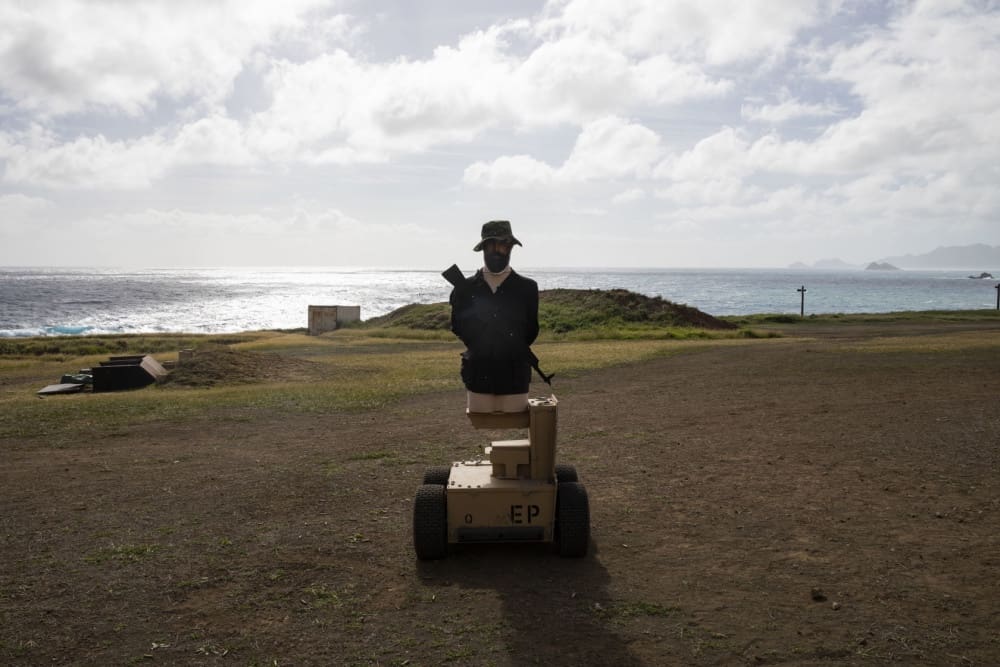
The motorized targets simulate live, independently thinking enemies and encourage Marines to anticipate movement and adapt accordingly.

“They egress, they assault to you, and they move around so it’s a better challenge to hone our skills,” said Lance Cpl. Logan Raebuck, a rifleman with 1st Battalion, 3d Marines. “I think it’s great having the targets here because we can always have that ‘thinking’ enemy to train with.”

“They’re here to solve the problem that all military facilities are facing,” said Dominic Jurado, the site manager for K-Bay range, MCBH. “These targets give the Marines something to shoot at that mimics an actual human.”

“It’s more immersive because it actually has clothes on and a face, so it gets us skilled with actual conflict,” said Raebuck. “On a regular target you don’t have that, so it’s great to get this moving enemy in front of us.”

There are currently 16 TIMITS on K-Bay and are able to be controlled by a person who is overseeing the training.

“The Marines with 1/3 have definitely progressed in the short time the targets have been on island,” Jurado said. “Everyone seemed more comfortable behind the trigger and hitting more of their shots, it’s awesome to see.”

Small unit leaders with 1/3 have also noticed the differences in their squads while working with these new targets.

“Seeing these moving targets here with us is definitely helping us get better,” said Cpl. Ryan Hankins, assistant patrol leader, 1/3. “It gives us a better sense of communication and helps us lead in our small unit leadership.”

The targets have helped Marines immensely improve their ability to train in an immersive environment, Hankins said.

“Overall it’s been a great experience,” said Hankins. “It makes me comfortable knowing that I can leave them with what I know and they can pass that on to their junior marines so the mission of the rifle squad can continue to be accomplished.”

Story by Sgt Luke Kuennen, Marine Corps Base Hawaii

Photos by Cpl Jose Angeles, Marine Corps Base Hawaii

SCUBAPRO SUNDAY – The Battle of Hampton Roads

Sunday, March 14th, 2021

The Battle of Hampton Roads took place in March 1862 in Virginia during the American Civil War. The battle is considered historically significant, although it did not yield a definitive outcome, as it was the first time that ironclad warships met head-to-head. This battle effectively made all wooden naval ships obsolete, especially those of Great Britain and France, and forced them to shift towards an all-ironclad fleet.
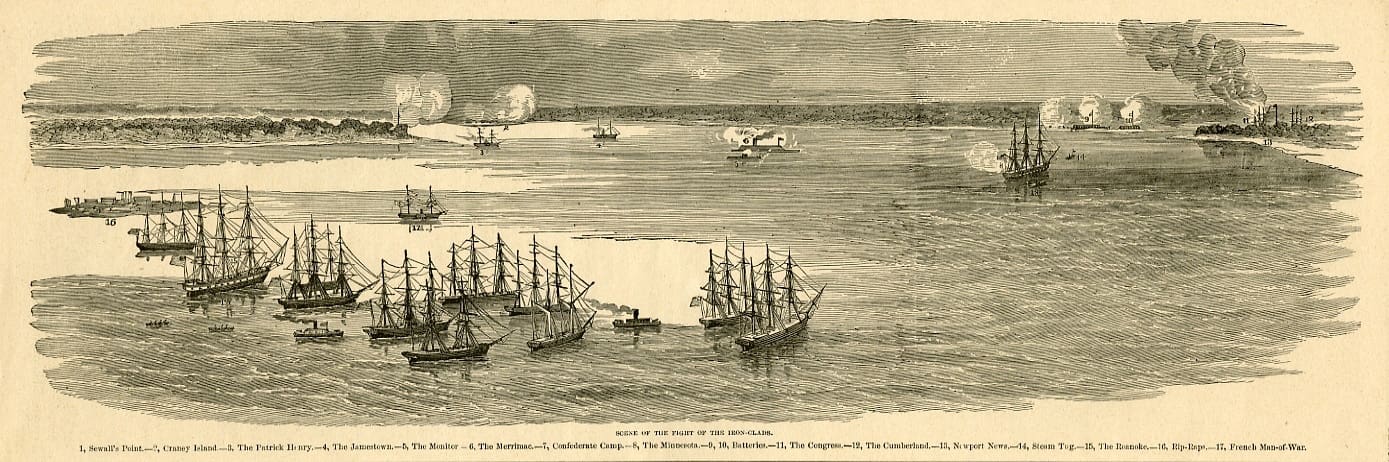
President Lincoln ordered a blockade in the spring of 1861, shortly after the war outbreak, of the ports of those states that had declared their secession from the Union. By the end of April, the blockade had been extended to the anchorage near the Chesapeake Bay at Hampton Roads in Virginia. This was of great strategic significance because it marked the Nansemond and Elizabeth Rivers’ confluence with the James River. Due to their base at Norfolk and the Portsmouth navy yard, Confederate forces occupied the south side of the river.

To protect the navy yard, the Confederacy installed two batteries at Craney Island and Sewell’s Point. However, Fort Monroe, and thus the closest part of the Virginia Peninsula, remained in the Union’s hands. The Confederate forces were almost entirely stopped from traveling between Richmond and Norfolk and the ocean until the blockade began to be enforced. The siege was strengthened by the strong ships of the Union, strategically put beyond the range of the Confederate batteries but under the protection of those of the Union. This standstill when on for almost a year
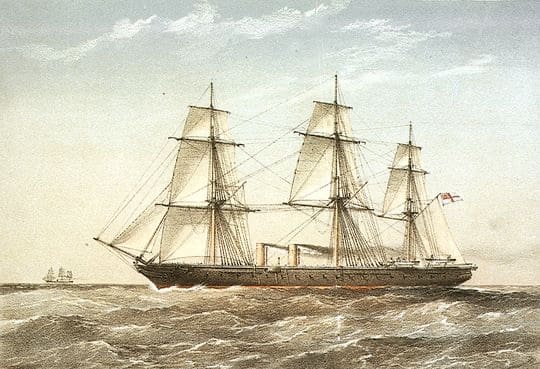
The US was far behind other countries when it came to updating their Navy. Several ironclads were built during the Crimean War, primarily designed to fight forts. In 1859 the French made an “ironclad frigate” called La Gloire. It was 250 feet long, carried 38 cannons, was covered in over 4 inches of iron, and could travel 12 knots. To keep up with France, Britain built the HMS Warrior (picture above) in 1860, the largest Ironclad. By 1862 Britain and France had 16 ironclads completed or under construction, and Austria, Italy, Russia, and Spain were building them. It was generally recognized that ironclad warships would be the future of naval warfare.

While France and Britain already had ironclad warships, the United States Navy was unconvinced of the armored ships’ value. Therefore, the Confederacy was the first to begin construction on their Ironclad (CSS Virginia). It was not designed from scratch, which would have taken almost a year because of the need to operate quickly, but instead made up from the ruined hull of the sunken USS Merrimack. The ship’s bow was mounted with an iron ram, while it was armed with ten guns. Two-inch thick armor plates, an improvement from the initial one-inch specification, were introduced. Called CSS Virginia, in February 1862, the vessel was eventually commissioned.
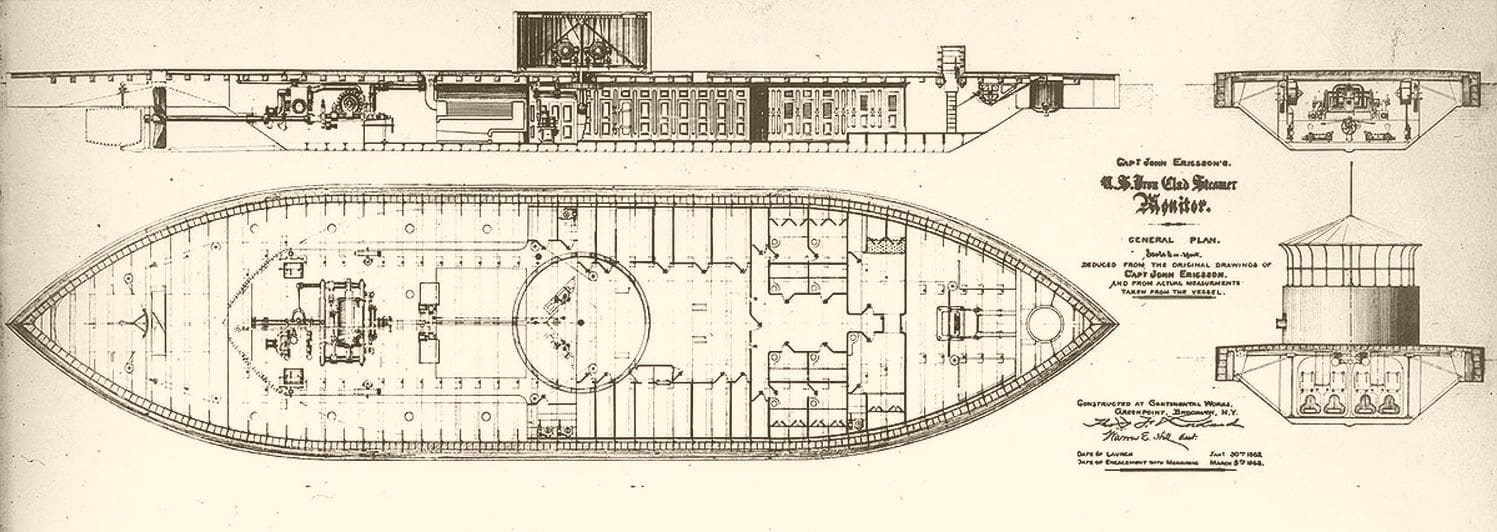
Meanwhile, the Union command had received news that the Confederacy wanted to build an ironclad ship. This caused serious concern, and the Union’s Ironclad’s construction, the USS Monitor, was approved by Congress. The most noteworthy feature of this vessel was that it had only two large-caliber guns, mounted in a large cylindrical turret that could rotate thanks to a steam engine’s control. This greatly reduced the manpower required for the armaments of the ship.   Eight-inch-thick iron plates coated the entire turret. The USS Monitor was commissioned just a few days after the CSS Virginia. 

The battle of Hampton roads lasted two days, with Virginia commanded by Franklin Buchanan and Monitor captain John L. Worden, although neither man was officially in overall command. Intending to mount a direct assault, Buchanan sent Virginia into Hampton Roads early on March 8. Five more ships followed the ship’s route. In the meantime, the Union also had five ships, accompanied by some support vessels, into the bay. Near Fort Monroe, several other ships were moored; one of these was the Roanoke, which ran aground as the USS Virginia approached and two additional vessels. Two of the three were taken out of the battle; the third, Minnesota’s frigate, later returned to action.

Virginia struck the USS Cumberland after a very small skirmish early in the day, ramming the ship and creating a hole below the waterline. With the loss of more than 120 lives, the ship sank rapidly. However, despite this success, Virginia herself was lucky not to go down because the ram of the ship had been stuck in the Cumberland hull. Virginia then advanced on the USS Congress, whose captain had told her to run aground to prevent the Cumberland’s fate from being repeated. The condition of the USS Congress, however, was hopeless after an hour, and Smith surrendered. Buchanan, who wanted to fire on the USS Congress with red-hot cannonballs, was enraged by Union shore guns. The ship caught fire, burning fiercely until it blew up that night as the flames entered its gunpowder store.
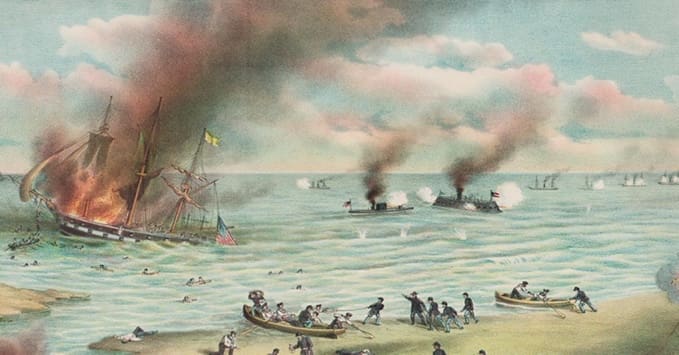
By now, Virginia herself had suffered some damage, making the already slow ship even more sluggish, while Buchanan was injured when a rifle shot hit his thigh. Meanwhile, the James River Squadron invaded Minnesota, and now Virginia joined the assault, but its deep draft made it difficult to get near, and as night fell, the attack was called off. Virginia instead returned to the Confederacy-controlled waters, hoping to return the next morning. The Union forces had lost 400 men and two ships at this point, with three more on the ground; the Confederacy had suffered two casualties and had maintained all its ships.

This was the worst loss the United States ever experienced. Before the Second World War, the Navy Secretary of War Edwin Stanton warned that Virginia could even manage to fire shells at the White House, but he was told that this would not happen because the ship was too huge for the river Potomac. Nevertheless, to secure Union ships and avoid Monitor from attacking its towns, Monitor was transferred to Hampton Roads as soon as possible. Captain Worden was ordered to defend Minnesota, and he took over the nearby station. On March 9, Virginia arrived at daybreak and assaulted the Monitor.

The Confederate commanders, who initially thought the ship was simply a boiler being towed down the river for repairs, were startled by the peculiar nature of the Monitor. However, once the ship’s true nature became apparent, a long war began, lasting several hours. Virginia opened with a shot toward Monitor; Minnesota was missing and struck, causing the ship to fire in response to a broadside. Since both ironclad ships were more robust in their defense than they were offensively and were capable of completely piercing the armor plating of the opposing ship without ammunition, neither side could make a decisive breakthrough.
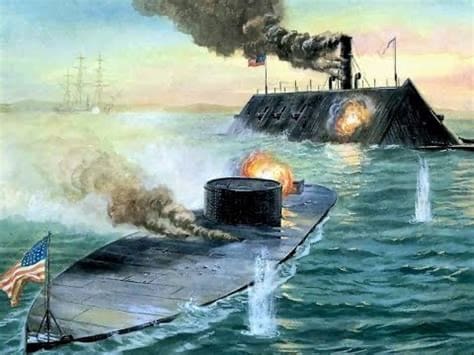
After a few hours, a freak occurrence ended the battle: a wayward shell from Virginia hit the pilothouse of the Monitor, exploding. Worden was temporarily blinded by the debris, which forced Monitor to draw back before the executive officer, Lieutenant Samuel Dana Greene, could take over command. While Monitor returned to the fray then, Virginia’s crew was under the impression that she had withdrawn entirely. Jones chose to take her back to Norfolk because of this, along with the fact that Virginia herself had suffered considerable damage. To find her opponent going away, Monitor returned to the scene, and Greene misinterpreted the move as a retreat.
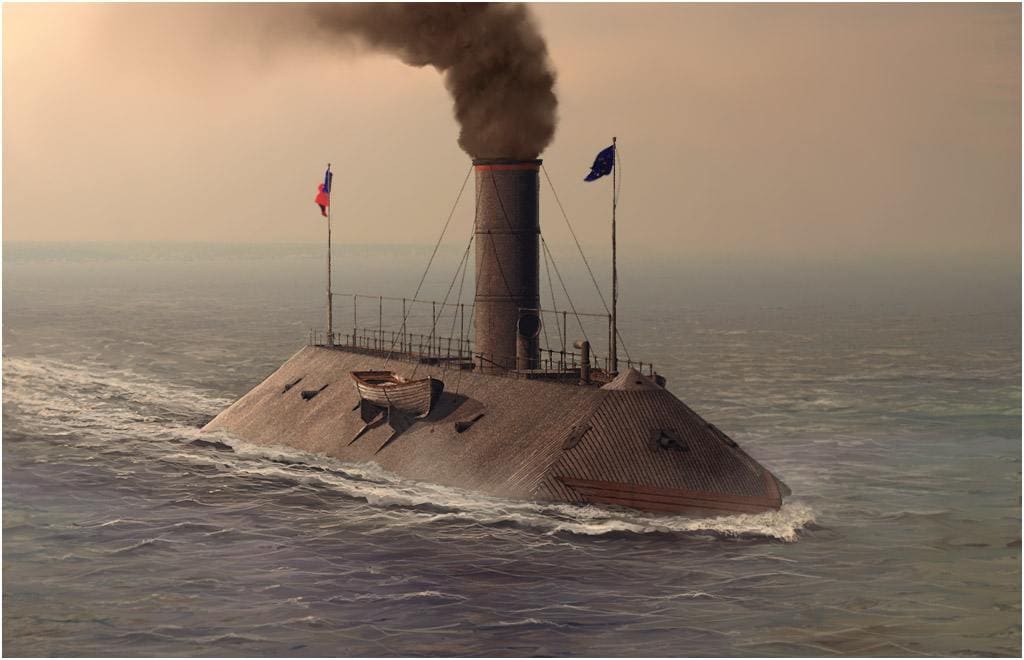
Virginia spent several weeks doing repairs to a dry dock. The blockade of the Union, meanwhile, was strengthened, with some new ironclads taking part. There was a standoff in which both the CSS Virginia captains and the USS Monitor refused to engage the other ship in action. The decision to leave Norfolk was made by Major General Benjamin Huger of the Confederacy on May 9, as it is now of limited strategic significance. Since Virginia was too big to travel upriver, she was intentionally sunk on her side to avoid causing her to be captured. The fate of the Monitor was different: she sank in a storm in December after being sent to North Carolina.
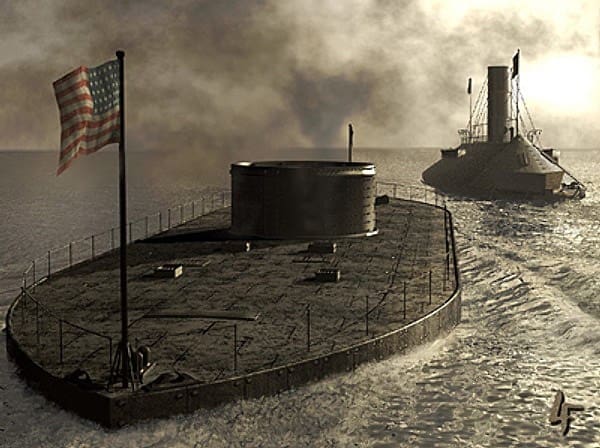
The fight, overall, was a draw. There were considerably more men and ships lost by the Union, but the vital blockade remained intact. The war of the Ironclads captured the attention of many other navies on a global scale. In particular, Russia, Britain, and France hurried to build ironclads, many of which were highly inspired by the USS Monitor in their designs. Rams were also used in several such ships. However, this innovation was something of a dead-end, as naval guns were sufficiently powerful by 1900 to make it almost impossible for close encounters between ships.


Air Force Security Forces Center to improve US government-wide working dog programs

Sunday, March 14th, 2021

JOINT BASE SAN ANTONIO-LACKLAND, Texas (AFNS) —

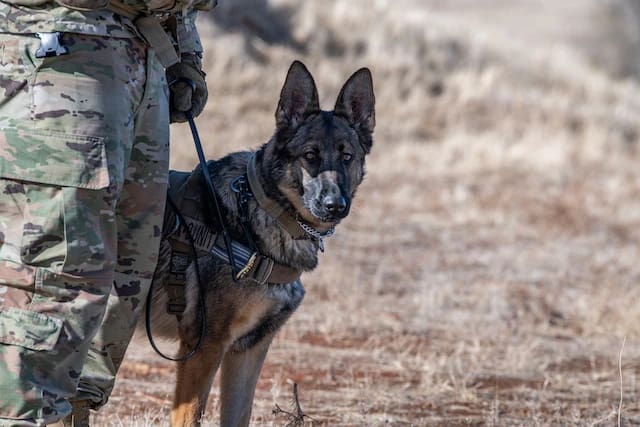
The Air Force Security Forces Center-led Government Working Dog Category Intelligence Team aims to improve the cost, process and procurement of government working dogs across 14 federal agencies.

The team recently submitted the Working Dog Category Intelligence Report, which looked into the requirements of maintaining working dogs within the Department of Defense, Department of State, Department of Homeland Security and the Department of Justice, in an effort to identify gaps and opportunities, recommend more effective and efficient sourcing strategies, close gaps between current practices and share government and industry best practices.

Scott R. Heise, team lead and director of Air Force Security & Protection Category Management’s Program Management Office for AFSFC, said “The report identified some crucial gaps, such as the procurement process.”

“All of us have the same need for working dogs, but the way we source them is very different,” Heise said. “Even our requirements are different and this inconsistency makes it difficult for the vendors to try to keep up and maintain a supply of high-quality working dogs. Simple things, like the age of the dog or the type of socialization it gets prior to delivery, present challenges for the vendors.”

“If all the agencies give vendors one integrated demand forecast, then the vendors can develop a better plan to meet our needs and satisfy the demand,” Heise added.

“The improved procurement process will allow Air Force Defenders the ability to better manage their MWD programs, making them healthier and stronger at the tactical, operational and strategic levels,” said Master Sgt. Steven Kaun, AFSFC Military Working Dog program manager.

“This streamlined process will pair up more canines with more handlers across the Air Force and allow garrison, and even up to combatant commanders, to have more assets on hand to accomplish their missions,” Kaun said. “And it also helps give some of our older, hard-working dogs a much deserved, timely retirement.”

In addition to the procurement process, the report provided six recommendations to improve the GWD program:

1. Establish an annual purchase forecast to both the contiguous United States and outside-CONUS vendors, which will help with the breeding and preparation process

2. Implement acquisition best practices to guide agencies during the procurement process

3. Provide the Customs and Border Protection Agency opportunities to work with OCONUS vendors, which will give the agency more options to source working dogs

4. Establish a small business breeder communication plan to help develop a larger U.S. vendor base

5. Build standardized U.S. government-wide working dog travel requirements for airlines

6. Develop a national emergency response plan for explosive detection working dogs

“What we expect from these recommendations is continued growth and maturation of the working dog program not only for the Air Force, but all 14 agencies,” Heise said. “We also see great potential to build the U.S. industrial base for government working dogs and ensure the participation of small businesses, and advance the goals of category management.”

Category management is an approach the federal government is implementing to help standardize procurement functions and share best practices across its agencies in the hopes of providing savings, better value, and efficiency. It is divided into 10 categories.

The AFSFC originally started a Category Intelligence Report on the Air Force-led DoD Military Working Dog program, but Heise saw opportunities to look beyond the services and include other federal agencies.

“Once we started, we saw how closely TSA worked with DoD on Lackland AFB, so I recommended to the Federal Category Manager that we make the CIR a government-wide effort,” Heise said. “She agreed and assigned me as the Government-wide Working Dog Team lead for the Security and Protection category.”

The newly-formed multi-agency team then researched and presented the six recommendations in the final Category Intelligence Report to Jaclyn Rubino, the government-wide Security & Protection Category manager. Rubino approved all recommendations and teams will now be assembled to create a category execution plan for each.

“This is the Air Force’s first interagency category management and Category Intelligence Report effort, and it’s an honor to be part of the team that will not only bring change to the Air Force, but other federal agencies as well,” Heise said. “I feel it speaks to the Security Forces Center’s mission, but on a larger, cross agency scale – to train, equip and manage program execution and provide expertise, and drive integration, innovation and advancement of Security Forces mission sets.”

Story by By Malcolm McClendon, Air Force Installation and Mission Support Center Public Affairs

Photo by Airman 1st Class Jason W. Cochran

FirstSpear Friday Focus: Admin Pockets

Friday, March 12th, 2021

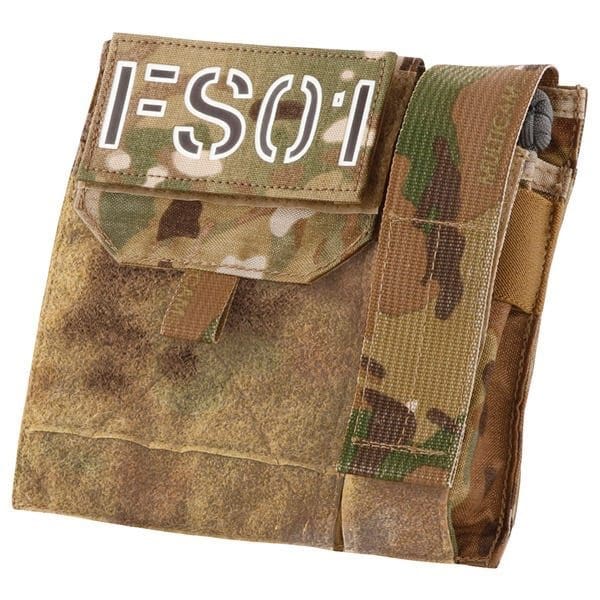
FS’s passion lies in our unapologetic commitment to elite professionals and the continuous development of disruptive innovation and technologies designed to pass the ultimate test. Enter our admin pocket series. Details matter. Gear selection matters. Get yours squared away on your load carriage systems with our admin pockets.

Grid Reference Pocket Guide Organizer

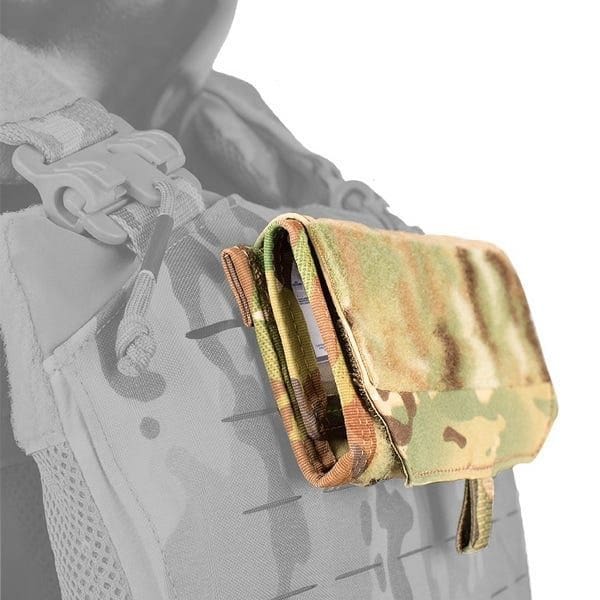
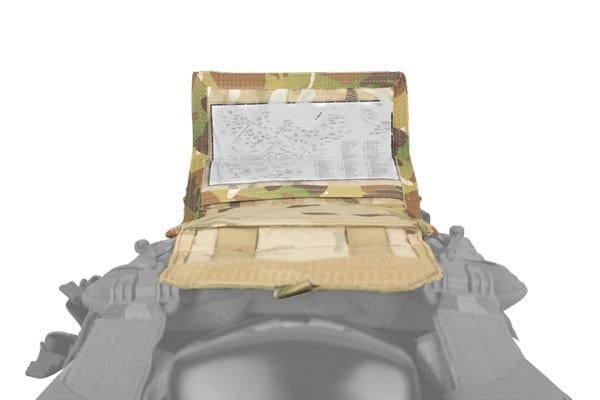
The FS Grid Reference Guide (GRG) Organizer Pocket is a handy tool for utilizing status cards, target photos, or other key data needed in hard copy. Military-Spec elastic webbing keepers can hold pens, wax pencils, and more. A small stretch pocket will hold items roughly the size of a battle dressing. Items are secured by an integrated hook & loop flap with a loop exterior field for attachment of patches. The clear area inside the GRG Organizer can be marked on with alcohol pens, wax pencil, and more. Available in black, coyote, multicam and ranger in 6/9 or 6/12 attachment.

Mini Admin Pocket

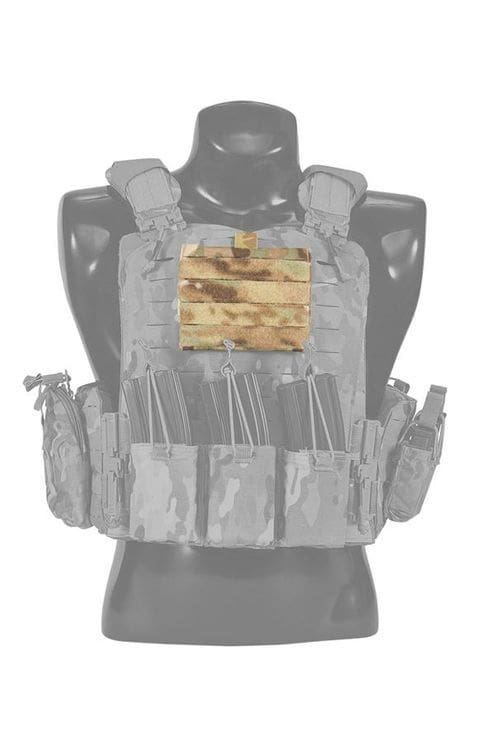
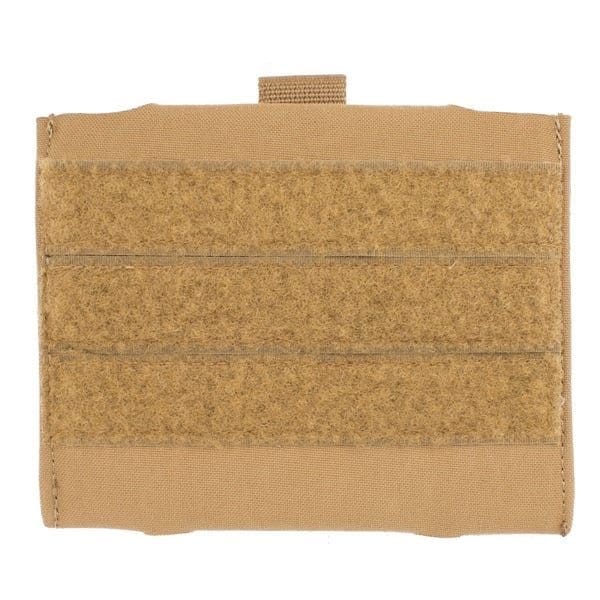
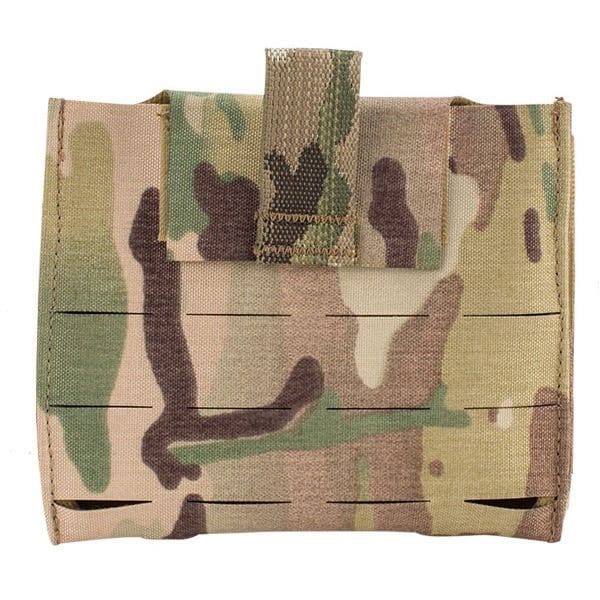
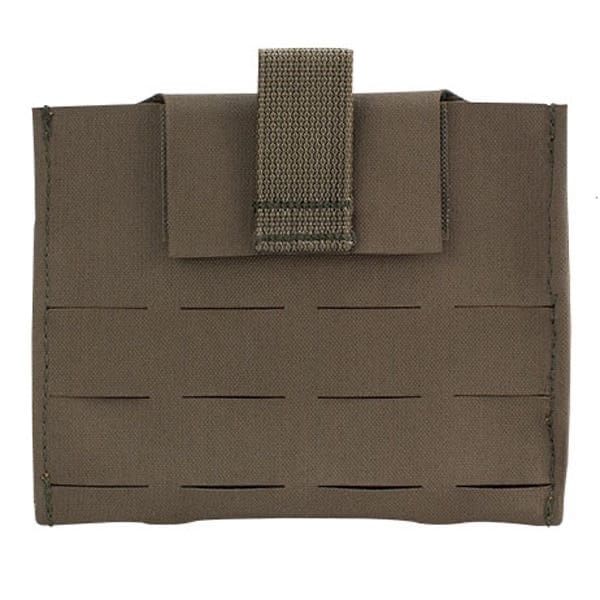
The popular FirstSpear Admin pocket has been adjusted to fit and work with the newer Amphibian and Maritime armor carriers. This pocket works great on previously designed armor carriers as well. It comes in 6/9 and 6/12 attachment options. There is also loop field on the front for cell tags, patches, or anything else you may want to attach. Available in black, coyote, multicam and ranger.


Ragnar Mini Admin

This flat pocket is hook backed for fast attachment or removal from various loop based FirstSpear platforms. Based on the original FS Admin Pocket, the Ragnar Mini Admin will fit just about anywhere and provide simple storage for a variety of smaller sized items. It has a hook and loop closure system and 6/12 material on the front. Available in black, manatee, multicam, ranger and coyote.


For more information check out, www.first-spear.com/pockets.

SureFire Field Notes Ep 61: AK 101 with Jim Fuller

Friday, March 12th, 2021

Jim Fuller is an Internationally recognized expert with the Kalashnikov rifle, he is the founder of Rifle Dynamics, Jim sold the company in 2017 and stayed on as a consultant until 2019. Jim has been one of the main contributors to the growth and popularity of the AK in America and founded Fuller Phoenix to get back to his roots of building/designing durable fighting rifles. His Phoenix has risen…

www.fullerphx.com
www.surefire.com

Spiritus Systems Presents: An Introduction to the Direct Action Resource Center’s Law Enforcement Counter Terrorism Course, Level 2

Thursday, March 11th, 2021

The Direct Action Resource Center located in North Little Rock, Arkansas provides professional training to Military, Law Enforcement and Citizens. Spiritus Systems had the opportunity to attend the Law Enforcement Counter Terrorism Course, Level 2 or “LECTC2” recently. 

The course was comprised of professional SWAT and Patrol officers from around the country and has a prerequisite of “LECTC1” to attend. This class was 6 days long and included copious amounts of explosive breaching, live fire CQB, live fire sniper support and contested force on force sim munition training.

DARC recently released a full class calendar for 2021 on their website and will be expanding their open enrollment offerings to include both the TUSC (Tactical Urban Sustainment Course) and Precision rifle TUSC. Spiritus Systems plans to release additional content over the coming year that brings those online closer to the action at DARC and give a glimpse of the advanced training that happens at the island.

For a full class description and attendance requirements please contact the Direct Action Resource Center at www.darc-usa.com.

To learn more about Spiritus Systems products you can visit www.spiritussystems.com.

The ACFT Is Designed for Combat — TRADOC shows why

Wednesday, March 10th, 2021

FORT EUSTIS, Va. – The Army’s new physical fitness test, known as the Army Combat Fitness Test, or ACFT, is here to stay. Or at least some form of it, says Sgt. Maj. of the Army Michael A. Grinston. What some may overlook when making an opinion on the program is the “combat” aspect of the ACFT, which was designed to prepare Soldiers for combat and reduce injuries caused by physical fitness routines.

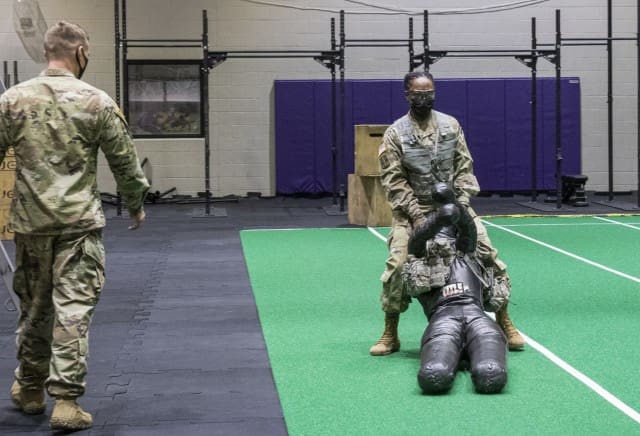
With that in mind, 2020 Drill Sergeant of the Year, Sgt. 1st Class Erik Rostamo, and a team of experts from the U.S. Army Center for Initial Military Training, brought realistic ACFT training to life here, Feb. 26.

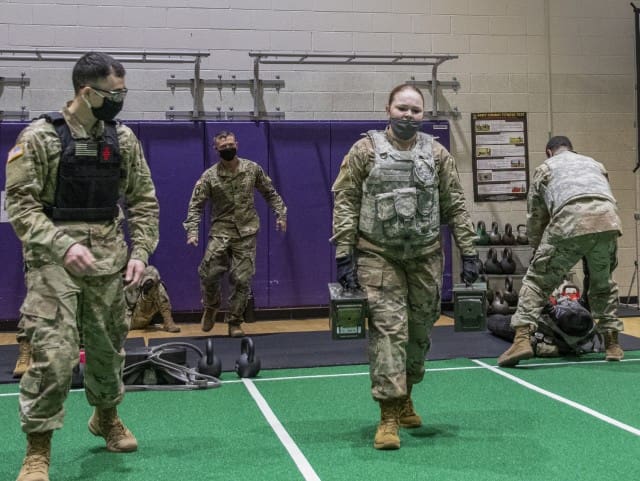
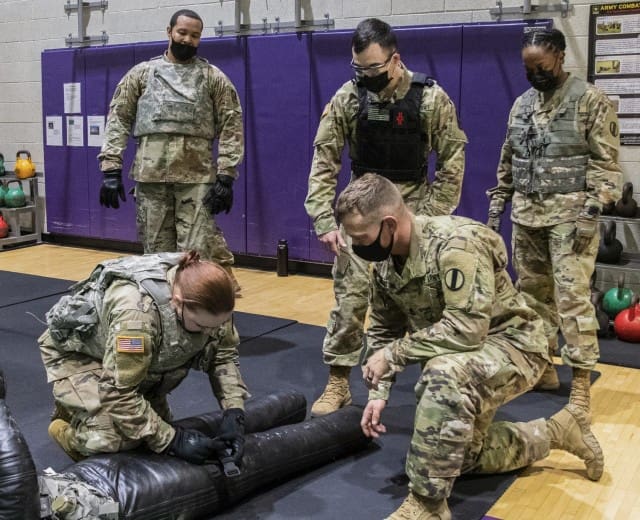
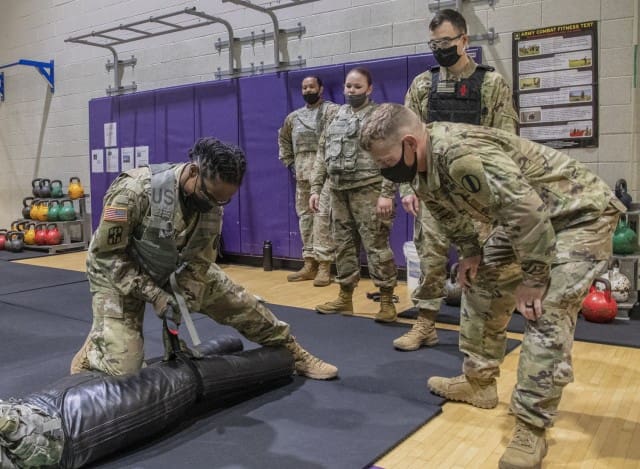
The “sprint, drag, carry” event of the ACFT is designed to simulate “sprinting” to aid an injured Soldier, then “dragging” a Soldier out of harm’s way when under fire, and “carrying” ammunition to a fighting position on the battlefield. For the ACFT, two 45-pound weights are configured as a “sled” for dragging purposes, while Soldiers are required to wear the Army Physical Fitness Uniform, or APFU. For the training Rostamo and the CIMT team designed for this day, a 140-pound dummy was used to represent an actual Soldier, and participants performed the task while wearing their Army Combat Uniform, or ACU. In addition, an extra twist was added – after completing the “sprint, drag, carry,” participants were required to apply a field tourniquet to the dummy, which simulated a wounded Soldier requiring immediate first aid.

“This exercise showed the Soldiers why the Army is moving toward holistic fitness, and developing the ‘Soldier Athlete,’” Rostamo said. “All Soldiers, regardless of their MOS [military occupational specialty], never know when they will find themselves on the battlefield.”

Soldiers participating in the training weighed in with their thoughts.

“It was amazing training,” said Staff Sgt. Jacob Walker, 2nd Battalion, 210th Aviation Regiment. “Unless you’re in a combat arms MOS, and your leaders go out of their way to train these tasks, it’s a perishable skill. I will be adding this type of training to my physical training plan when I get back to FORSCOM [Forces Command].”

All Soldiers, whether they are a transportation Soldier, a mechanic, or an infantryman, must be physically able to deploy anywhere in the world at a moment’s notice… This was Rostamo’s mantra for the day.

“I liked it. It drove home the reality of why we are training,” said Sgt. 1st Class Mario Rodriguez, 128th Aviation Brigade. “The dummy we were dragging instead of the weights provided extra motivation as a simulated battle buddy.”

The added field tourniquet element at the end of the “sprint, drag, carry” was clearly noticed by participating Soldiers who were winded and exhausted after the event. They had to compose themselves in order to successfully administer the field tourniquet and appreciated the challenge.

“I enjoyed it. I feel it was a great opportunity to connect the ACFT to actual combat training,” said Staff Sgt. Hillary Hernandez, 2nd Battalion, 210th Aviation Regiment. “I look forward to taking this training with me to use with my future Soldiers.”

TRADOC’s senior enlisted adviser, Command Sgt. Maj. Daniel T. Hendrex, participated in the training and shared his firsthand knowledge of providing first aid on a battlefield.

“This event was an excellent way to connect the importance of functional fitness requirements to a scenario that is reality on today’s modern battlefield,” Hendrex said. “Conducting the “sprint, drag, carry,” but with a 140-pound dummy, weighted ammo cans, and full kit, ending with the application of a field tourniquet, was an eye opener for everyone.”

Hendrex pointed out this also reinforces an important principle, “if the wounded are able, have them move to you.”

Conducting multiple repetitions of this skill in training is the preferred method of learning, and placing a medical task at the end is a great way for everyone to recognize its importance, Hendrex emphasized.

“The energy within the group is what motivated me,” said Pfc. Savanna Pendergrass, 10th Transportation Battalion. “This simulation gave me a true understanding of what it is like on the battlefield.”

By David Overson, TRADOC Communication Directorate