SIG SAUER - Never Settle

Archive for the ‘Guest Post’ Category

SCUBAPRO Sunday – The Boston Massacre

Sunday, March 7th, 2021

I know this has nothing to do with diving, but I grow up outside of Boston, and I have always felt that this is an excellent piece of history. I am sure many of you have heard this story, but maybe you didn’t know all of it as you should.

On 5th March 1770, British troops in Boston killed five colonists. The incident was stared over a wig that lead to the taunting of  British soldiers in Boston. The British retaliated by firing their muskets at the Americans, killing three and injuring eleven. Two of the injured succumbed to their injuries. The colonists’ deaths, which became known as the Boston Massacre, inflamed American anti-British feelings and was one of the most critical incidents leading up to the Revolutionary War.

It was only a matter of time before the British troops sent to Boston clashed with the colonists. (General Thomas Gage had ordered over 4 British Army regiments to Boston, of which the first regiment landed at Boston on 1st October 1768. Two left in 1769) On 5th March 1770, the day arrived. A British sentry was stationed at the Customs House on King Street that early evening (today “State Street” in downtown Boston.) The colonists started taunting the sentry. The crowd grew quickly. Captain Thomas Preston, the Officer of the Day, ordered seven or eight soldiers under his command to assist the sentry as the crowd rose. Preston was not far behind. The crowd had increased to between 300 and 400 hundred men by the time the additional troops arrived. The British soldiers, whose muskets were loaded, were taunted by an ever-increasing crowd. The crowd then started throwing snowballs at the sentinels. One of the soldiers was knocked out by a colonist. As he stood up, the soldier fired his musket and shouted, “Damn you, shoot!” After a brief pause, British soldiers opened fire on the colonists. Three Americans died instantly: ropemaker Samuel Gray, mariner James Caldwell, and Crispus Attucks, an African American sailor. A ricocheting musket ball hit Samuel Maverick in the back of the crowd, and he died a few hours later in the early morning the next day. Patrick Carr, a thirty-year-old Irish refugee, died two weeks later.

The incident was soon called “the Boston Massacre.” But also known as the “Incident on King Street.” This alternate name is more popular among the British people. The depiction of the above events rapidly spread across the colonies thanks to Boston engraver Paul Revere, who copied a drawing by Henry Pelham. The image inflamed Americans’ distrust of the British. Captain Preston and four of his men were charged with manslaughter and convicted. The soldiers were tried in open court, with one of the Defense Attorneys being John Adams. Preston was found “not guilty” when it became apparent that he did not give the firing order. Some accounts say that the order to fire came from the crowd. The other soldiers were found guilty of manslaughter and had their thumbs branded as a punishment.

What lead to it

All the clashes between soldiers and civilians were published in the “Journal of Occurrences,” which was nothing, but a series of newspaper articles published anonymously. The Journal was aimed at chronicling the clashes between British soldiers and Bostonians, but in doing so, the reports were often exaggerated. These exaggerated reports led to further tensions. Unfortunately, the tensions between the civilians and the soldiers increased significantly after the death of Christopher Seider. He was an 11-year-old, killed on 22nd February 1770 by a British customs employee.

His death raised the tensions between the Britain troops and the civilians of Boston. Seider received the most prominent funeral in Boston, and the Boston Gazette covered the whole event. Media coverage continued and kept the tensions alive. Colonists started harassing soldiers, and the soldiers, in turn, started looking for a confrontation. A young man named Edward Garrick (who was an apprentice of a wig maker) showed up in front of the Boston Custom House and called out to Captain-Lieutenant John Goldfinch.Edward started saying that Goldfinch did not settle a bill from Garrick’s master. (He had paid for the wig the day before). Private Hugh White shouted at Garrick (as privates do) and asked him to be more respectful towards the officers. As the two-man started to yell at each other even louder, this began to make things worse. Garrick began to poke the Private in the chest with his finger. Private White responded by relinquishing his post and striking Garrick on the side of the head with the butt of his musket. Now the crowd started to get bigger. Both sides made threats. Henry Knox, who later became a general in the American Revolutionary War and Ft Knox fame, told the Private that if he fired, he should die for it. As, the evening progressed, the number of people in attendance grew. The church bells were rung. Many people came out because the bells signaled a fire. Private Hugh White, who had taken a safer spot-on Boston Custom House’s steps, was being surrounded by nearly 50 civilians. Crispus Attucks was one of the people in the crowd. He was a former slave who was of mixed race. Private Hugh White was forced to call for help due to the tumultuous crowd. Runners told Captain Thomas Preston, the officer of the watch, about the entire incident. Preston dispatched six privates and a non-commissioned officer from the Regiment of Foot as soon as he received the news. These soldiers were armed with fixed bayonet muskets. Preston had directed them to relieve Private Hugh. Captain Preston accompanied the six privates and the non-commissioned officer on the mission. To get to Private Hugh White, these eight people forced their way through the crowd. When they were approaching Private White, Henry Knox threatened Preston that if he shot, he would die. Preston replied to the alert by saying, “I am aware of it.” When Preston and his men arrived at Private Hugh’s place, the soldiers formed a semi-circular defensive position. They drew their muskets and pointed them at the onlookers. Preston then yelled at the crowd, telling them to disperse. The crowd was estimated to be between 300 and 400 people. Preston’s pleas were ignored, and the crowd began to move forward, tossing small objects and snowballs at the troops. Private Hugh Montgomery was struck by one of the items hurled by the crowd (one of the six privates who came to rescue Private Hugh). Private Montgomery was knocked down and lost his musket as a result of things being thrown at him. Private Montgomery recovered quickly, collected his weapon, and yelled angrily, “Damn you, shoot!” before firing into the crowd. There was a brief period of silence after Private Montgomery fired the shot, ranging from a few seconds to two minutes. After that, the soldiers opened fire on the crowd. Even though Captain Preston had not given any orders to shoot, the soldiers did so anyway.

The bullets struck 11 people in the crowd. Private Montgomery was the soldier who assassinated Crispus Attucks. Samuel Gray was shot and killed by Private Kilroy, a soldier. Although all of the soldiers (including Preston) were arrested the next morning, and they all pleaded not guilty. A town meeting was held at Boston’s Faneuil Hall as Hutchison conducted his investigation. The Bostonians formed a committee to look into the incident. Samuel Adams was the chairman of the committee. The committee looked into it and recommended that troops be removed from Boston. During the initial investigation, four civilians were arrested for taking part in the massacre, but they were later found not guilty and released. The British administrators were forced to transfer the troops to Castle William, an old fort on Boston Harbor, under duress. For the events of 5th March 1770, Samuel Adams coined the word “Boston Massacre.” On 27th November 1770, Captain Thomas Preston and his eight men (including Private White) were brought to trial. Preston was tried separately from the other soldiers. Josiah Quincy Jr. and John Adams were the trial’s defenders. Samuel Adams, the chairman of the Bostonians’ committee, and John Adams’ nephew. Samuel Quincy and Robert Treat Paine were the trial’s attorneys. At the appeal, Captain Thomas Preston was found not guilty on all charges, and he returned to England on 2nd December 1770. For all of the hardships he suffered during the Boston Massacre, he got a £200 reward. Two of the eight soldiers were convicted of manslaughter. Kilroy and Montgomery were sentenced on 14th December 1770, nine days after their trial. They were expected to face the death penalty as a matter of course. Montgomery and Kilroy both filed appellees, and their lives were spared. They were released, but the letter “M” was tattooed on their thumbs, indicating manslaughter. On 8th March, the first three victims of the Boston Massacre were buried at the Granary Burying Ground. On 17th March, the fourth individual to die was buried alongside the first three. The victims’ funeral procession drew 12,000 people from Boston. The procession also paid a visit to the Liberty Tree.

Desert Storm Attack Pilot Integrates 30-years of Tactics with New Technology

Saturday, March 6th, 2021

WHITEMAN AIR FORCE BASE, Mo. (AFNS) —

A Tyrannosaurus rex replica named “Stan” proudly stands in front of the Google Corporation’s headquarters in California. With his threatening gaze and gaping mouth, he provides a stark contrast to the rest of the campus. Google highlights the extinct apex predator as a sobering reminder innovation is more than just a term – we must ‘innovate or die’.

The story, however, isn’t entirely fair to the T. rex. The enthusiasm for innovation is omnipresent in both political and military leaders. Our society reveres entrepreneurs, lauds innovative companies and understands evolution can lead to revolutionary change. There are reasons, however, not to be innovative – especially when it comes to moral decisions between life and death. As military members authorized to use deadly force, we have to balance human decision-making and technological advances. This concept is well understood by both senior leaders and technology developers, and ensuring the success of our future conflicts depends on maximizing the capabilities between these two entities.

Lt. Col. John “Karl” Marks’ story, in a lot of ways, is parallel to Stan’s. However, he is far from extinct. Marks, an attack pilot with the 303rd Fighter Squadron, is just 100 hours shy of reaching 7,000 hours in the A-10 Thunderbolt II cockpit, securely holding the record for most hours in the aircraft of all time. He is a legendary figure in his own right; choosing, experimenting, and teaching the iterations of add-ons and changes the weapons system has received over the years. Marks began his career during the Cold War when the A-10 was focused on developing tactics to defend against Soviet tanks in Europe, and he just culminated his 13th combat deployment overall, this one his 6th to Afghanistan supporting troops on the ground for Operation Freedom’s Sentinel.

One of his most memorable deployments was during Operation Desert Storm. On February 25, 1991 – at just 26 years old – then-1st. Lt. Marks and flight lead, Capt. Eric “Fish” Solomonson flew a trio of missions over Kuwait and Iraq, destroying 23 Iraqi tanks, using infrared AGM-65 missiles and the infamous GAU-8 cannon. Mission planning 30-years ago consisted of paper maps and cardstock lineup cards. Flying was far less automated and correcting for dive angle and airspeed was a must. Direct hits were annotated with a grease pencil on the inside of the canopy and battle damage assessments were written on the walls of the debrief room upon return. One day, three missions, all ordnance expended – a wildly successful day and campaign for these two attack pilots.



Compared to today’s aircraft, the A-10 from 1991 seems primitive. Today, the engines are pretty much the same and the basic airframe hasn’t changed much; internally, though, it’s completely upgraded. The targeting pod now integrates with helmet-mounted display allowing not only for flight data to be displayed but also the target, the cannon now has a stabilization system to hold it on target while firing, GPS avionics advancements have led to GPS-guided weapons system integration, and additional systems can now automatically detect and respond to incoming threats with countermeasures.

The system upgrades definitely simplify a pilot’s decision about life and death quicker and with increased certainty. The trade-off, however, is the result of a several-step process. The question is not whether technology or humans should make life-or-death choices, but instead, who is responsible for each step in the process. The Air Force invests significant resources to enable pilots to become proficient in their roles as decision makers focused on whose life to risk, when, and for what objective.

Marks’ leadership in the air is valued for his ability to adapt to new technology and tailor the aircraft’s inputs appropriately. Studies show unless these inputs are intuitive, commanders and troops alike will revert to simpler, combat tested tools which are inherently more comfortable. Marks, for example, is one of the few A-10 pilots who prefers to fly with binoculars in the cockpit. The targeting pod, while upgraded, lacks color and the binoculars provide an extra layer of reassurance and speed when identifying friend versus foe.

Some of the younger A-10 pilots may politely mock Marks for flying with binoculars, but his aura is infectious, his war stories second-to-none. At the end of the day, they value his experience and seek to emulate his tactics.

“Karl is truly a legend,” said Col. Mike “Angry” Schultz, commander of the 442nd Fighter Wing. “He is methodical and meticulous – his experience comes with ease but never arrogance. We are grateful to have him in our wing and his continuous desire to learn, teach and mentor the next generation of fighter pilots is not only humbling, but a true testament to the love of his craft.”

As he approaches 7,000 hours, Marks has experienced every upgrade in the aircraft, and acknowledged his time in the cockpit is unfortunately coming to an end.

“Being able to get out there and fly the A-10 keeps me coming to work every day,” Marks said. “It’s still challenging, it’s still awesome, and they keep bringing new technology and new ways of fighting which keeps it relevant. We may not be the fastest aircraft, but when we talk about the aircraft’s abilities from a close air support platform – we are simply still the best.”

The technological advances the A-10 has seen over three decades are nothing short of impressive and its value to combatant commanders is unparalleled. Investing in new technology while developing a pilot’s tactics is paramount to maintaining our competitive edge. The A-10 is the number-one combat search and rescue platform in the world, and training opportunities to practice newer techniques, like forward arming and refueling points and agile combat employment, will keep the aircraft relevant in peer-to-peer conflicts. The most valuable weapon system, however, is the men and women that fly the airplanes. The steps taken now in accelerating and adapting to change remain the most important drivers in our nation’s future conflicts.

Unlike Stan, who couldn’t possibly have adapted to stop the asteroid that wiped out his fellow dinosaurs, the U.S. Air Force as a whole, and the A-10 community specifically, will continue to accelerate change so we’ll continue to be ready for the future fight.

By Maj Shelley Ecklebe, 442nd Fighter Wing

FirstSpear Friday Focus: Contractor Bag

Friday, March 5th, 2021

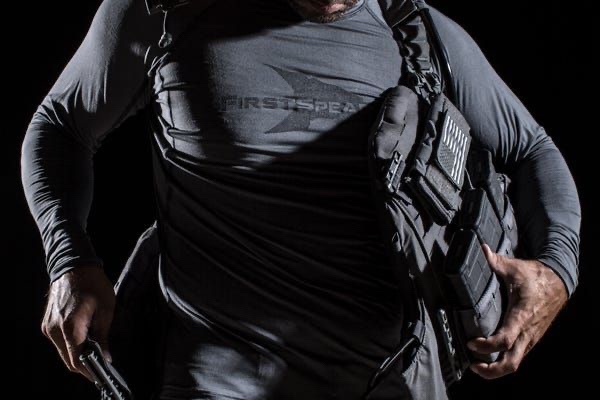
This week we are focusing on the Contractor Bag and Rolling Frame. Need help getting your gear squared away and contained? Enter the Contractor Bag. It’s a staple for law enforcement and military, and anyone interested in high-quality, American made gear bag for travel, backcountry hunting or your next expedition.

The bag features top loading through a large generous zipper closed portal and has reinforced secured handles that can be used to offset the pull of the bag behind you so as not to clip your heels or for those times when you find yourself pulling two. Since all of the FirstSpear end users we’ve talked to claim to have never used it in raids or ambushes, we decided to release it in some more travel-friendly colors.

The frame is engineered to be lightweight and durable and features two wheels to help you maneuver.

Dimensions:
Width: 16”
Depth: 11.5” at the top 12.5” at the bottom
Length: 36”

*interior open and pictured with FS Sherpas inside — sold separately*

The Contractor Bag is available in black, manatee and rust.

For more information check out, www.first-spear.com/contractor-bag-and-rolling-frame.

US Air Force Finalizes PT Uniform Design; Will Begin Production Process

Friday, March 5th, 2021

WRIGHT-PATTERSON AIR FORCE BASE, Ohio – After numerous tests and feedback from Airmen around the world, the Air Force Uniform Office has finalized the design of the new Physical Training Gear (PTG) uniform, and is preparing to begin the production process.

This is the first update to the PT uniform in more than 16 years, and over 150 Airmen participated in testing the uniform.

“Our main requirement [from Air Force leaders] was to develop a PT uniform that people really wanted to wear and is as good as if not better than commercially available athletic wear,” said Tracy Roan, chief of the Air Force Uniform Office, which is aligned under the Agile Combat Support Directorate’s Human Systems Division. “The new uniform now includes all of the great performance features that you find in athletic wear today.”

In addition to improving performance, the uniform is designed to accommodate various athletic interests.

“In the past, there was one uniform for all athletic pursuits, whether you were running, playing basketball or lifting weights,” said Col. Paul Burger, 88th Air Base Wing Mission Support Group Commander, one of the test participants and an official with the Air Force Marathon. “The approach the Air Force has now taken, is to develop a uniform that is ear marked for runners or running and one that is better designed for some of those other athletic activities.”

With the new gear, Airmen will be issued a jacket, a pair of pants, T-shirt and shorts.

The ensemble will have improved fabrics that include soft, quick drying, and have antimicrobial technology that helps with moisture and odor control.

Other significant changes include the design of the jacket.

“With the ‘notorious’ track jacket, we’ve made updates to the fabric to minimize the noise it makes during workouts,” said 2nd Lt. Maverick Wilhite, the Office’s Program Manager for PT gear. “The jacket will be sleeker looking, so instead of having a bulky jacket, you’ll have a fit and tailored design. In addition, the jacket will have a zipper chest pocket for holding things like your CAC [common access card].”

The workout ensemble will include two variations of shorts; a shorter running style, and a longer all-purpose short. The all-purpose shorts are unlined knit with zipper hip pockets you can close. The runner’s are a lightweight stretch woven fabric with mesh side panels to improve airflow and improved stretch liner for modesty. The performance shirt is designed to be untucked during workouts or tucked as required by command.

Overall, the entire PTG uniform has updated styling with stretch materials to provide comfort and increase performance.

The new uniform will be available to Airmen in 2022, and there will be a four year transition period for mandatory wear.

By Brian Brackens, Air Force Life Cycle Management Center Public Affairs

THANOS Has Arrived!

Thursday, March 4th, 2021

Military intelligence Soldiers with the 25th ID train on the One World Terrain #drone and mapping system on Feb. 4, at Schofield Barracks, Hawaii.

The OWT’s Tactical Handheld Automated Navigational Mapping and Observation System, or THANOS, provides 3D terrain #mapping with accuracy down to a two centimeter differential, allowing operators to virtually ‘move’ through the battlespace using only a mouse and keyboard.

Story by SSG Thomas Calvert

US Army, Argonne Scientists Explore Nanoparticles for Future Weapon Systems

Thursday, March 4th, 2021

ABERDEEN PROVING GROUND, Md. – Material scientists from the U.S. Army and Department of Energy conducted a study of plasma-treated aluminum nanoparticles with the goal of improving future propellants and explosives.

Researchers from the U.S. Army Combat Capabilities Development Command, known as DEVCOM, Army Research Laboratory, and the Center for Nanoscale Materials at the Argonne National Laboratory, investigated a new class of surface-engineered aluminum nanoparticles. They published their findings in the peer-reviewed Journal of Applied Physics for a special issue, Fundamentals and Applications of Atmospheric Pressure Plasmas. The journal featured the article on the cover of its Feb. 14, 2021, issue.

“The ultimate goal of the effort is to extend the range and disruptive power of Army weapon systems,” said Dr. Chi-Chin Wu, a materials scientist at the laboratory. Wu leads this effort and is the first author of the article. “The paper presents results that support of ongoing investigations of aluminum nanoparticles for use as novel energetic ingredients in propellant and explosive formulation.”

The study exploits plasma-based surface treatment and chemical synthesis techniques, she said.

“Images and data obtained from two state-of-the-art transmission electron microscopes at the Center for Nanoscale Materials at the Argonne National Laboratory revealed valuable information on oxide shell phase transformation and the dispersive nature of the deposited carbonaceous materials,” Wu said. “This provides tremendous insight for further optimization.”

The new plasma approach enhances the reactivity of commercial 40-60 nanometer particles. For comparison, a human hair is typically 60,000 nanometers in width. According to Wu, the method involves first treating with a helium plasma to etch away a significant portion of their inert oxide shell and then treating with a helium/carbon monoxide plasma to deposit a reactive surface coating.

“Plasma science is a fascinating emerging technology for many applications but has yet to be sufficiently explored in the energetics community,” she said. “All this is done in a custom dielectric barrier discharge plasma reactor. The resultant particles were then characterized by high resolution transmission electron microscopy revealing important nanoscale surface and chemical composition features. We are constantly seeking new energetic materials with higher energy densities and faster energy release rates.”

Plasma treatment and synthesis, coupled with comprehensive material characterization, is critically important for optimizing methodologies and materials for scale-up and transition, she said.

Dr. Rose Pesce-Rodriguez, also from the laboratory and a co-author of the study, said the plasma approach developed by Wu has opened new possibilities for the U.S. Army to effectively surface-engineer metallic nanoparticles for energetics applications.

“Aluminum is just the first example,” Pesce-Rodriguez said. “Since 2018, several parallel efforts involving in-house, DOD, DOE and academic collaborations have blossomed. Making headway on this problem is difficult because samples are so small and require specialized technology to image and analyze.”

According to Pesce-Rodriguez, the microscopy tools available at DEVCOM-ARL and Argonne enabled Wu and collaborators to do a “remarkable job” of characterizing the new plasma-treated particles.

“We’re looking forward to more exciting discoveries,” Pesce-Rodriguez said. “It seems we’re learning something new almost every day.”

Wu said her ultimate goal is for DEVCOM-ARL to develop and transition energetic materials through a unique combination of innovative plasma technologies and advanced materials characterization techniques.

Collaborative partners in this study are Drs. Jianguo Wen and Ilke Arslan at the Center for Nanoscale Materials, Argonne National Laboratory.

“It’s been great to collaborate with Dr. Chi-Chin Wu and her team on advanced disruptive energetics,” Wen said. “This gives Argonne the opportunity to bring our expertise and unique capabilities to challenging Army problems.”

Dr. Mark Tschopp, the regional lead of ARL Central in the Chicago area, said this is a great example of collaboration between the Army and the Department of Energy.

“It combines the expertise of scientists at both laboratories along with unique facilities at the Department of Energy User Facility Center for Nanoscale Materials,” he said. “Expanding the Army team to include other partners is vital to tackling some of the fascinating and challenging science that the Army Research Laboratory is pursuing in areas such as at the intersection of energetics and plasma science.”

According to Wu, the work is an example of how the laboratory is working to operationalize science to provide energetics for transformational advances.

“It brings material science expertise into energetics for advancing future weapon systems,” she said.

The U.S. Department of Energy, Office of Science, Office of Basic Energy Science supported use of the Center for Nanoscale Materials, an Office of Science user facility, under an existing contract.

By U.S. Army DEVCOM Army Research Laboratory

Spartan Paratroopers Harness Biometric Technology

Wednesday, March 3rd, 2021

JOINT BASE ELMENDORF-RICHARDSON, Alaska – Paratroopers of the 4th Infantry Brigade Combat Team (Airborne), 25th Infantry Division, “Spartan Brigade,” began a six month-long study on Joint Base Elmendorf-Richardson, Alaska, using wearable technology to study the resiliency of soldiers operating in an Arctic environment, Jan. 11, 2020.

The Spartan Brigade contracted with wearable technology company WHOOP and scientists from the University of Queensland to conduct a 6-month study of nearly 1,000 paratroopers. Paratroopers use the real-time data provided by the WHOOP straps and accompanying mobile phone application to measure their daily strain and recovery rates while training in extreme Arctic winter conditions.

“The rigors of Arctic airborne operations take a toll on the human body,” said Col. Chris Landers, the Spartan Brigade commander. “How do we maximize a paratrooper’s effectiveness on the battlefield while dealing with extreme cold and lack of sunlight?”

As the only airborne infantry brigade combat team in the Arctic theater, the Spartan Brigade paratroopers conduct airborne operations in sub-freezing temperatures, during high winds, and with minimal hours of sunlight.

“We’re called on by our nation to respond with little notice to contingencies around the globe,” said Landers. “We don’t choose the time or the place, but we can choose how well we perform when we get there.”

Using adjustable wrist straps, the study captures biometric data on each volunteer participant throughout the workday and while they’re sleeping, providing an analysis of their exertion, heart rate behavior, and sleep quality, all of which is used to determine overall strain and recovery.

Unlike blind studies, the paratroopers participating in this study will each have immediate access to their own data through the accompanying mobile application, and can make decisions using this feedback to improve their personal performance.

“We are empowering our paratroopers to better understand themselves,” said Command Sgt. Maj. Alex Kupratty, the Spartan Brigade command sergeant major. “This study is all about putting the power of technology and data directly into their hands, so they can truly harness their own potential.”

Paratroopers will also be provided educational blocks to teach them techniques to maximize their recovery. Partway through the study, a section of participants will be asked to concentrate on three habits: creating a cold, dark space for sleeping; not eating after 7pm, and sticking to a rigid sleep time schedule.

“The goal of the study is twofold,” said Chief Warrant Officer 4 Phillip Ranck, study project leader for the Spartan Brigade. “First, that soldiers gain a better understanding of themselves. Second, that soldiers understand that their leaders are taking an aggressive approach to understanding the impacts of training and the Arctic environment’s impact on their mental and physical health.”

Participants can also sign up for social groups, adding a competitive incentive within their peer groups as they compare their strain and recovery numbers every day.

“The goal is to give our paratroopers the data and education to shape the conversations among their peers about their daily fitness and health,” said Kupratty. “Not only do they better understand their own bodies, but they’re building lifelong, healthy habits along the way.”

All leaders from the squad level and up will have access to their paratroopers’ data, so they can adjust training and operational plans to maximize the health and potential of their teams.

“Imagine as a squad leader that you have a paratrooper that has had an abnormally low recovery for several days,” said Kupratty. “Maybe your platoon has been in the field for weeks, or the paratrooper just returned from an Army school. Now you have the data to better help them recover, or to adjust your training to match the team’s needs.”

According to some researchers, fluctuations in someone’s recovery rate may indicate a buildup of social or personal stressors that can lead to decreased motivation or resiliency, or the development of an illness like influenza or COVID-19.

“This is all about better understanding what a soldier needs to be the best version of themselves as fast as possible,” said Kupratty.

The study is organized by the brigade’s digital technology innovation cell, SPARwerx. The SPARwerx initiative crowdsources innovators from across the brigade to develop internal technologies, systems, and concepts to maximize the welfare, safety and efficiency of Spartan paratroopers.

By MAJ Jason Welch

New Annual Rifle Qualification To Make Marines More Lethal

Tuesday, March 2nd, 2021

The Marine Corps began the train-the-trainer course of the new Annual Rifle Qualification, which will fully replace the previous Table 1 and Table 2 qualification course of fire Oct. 1, 2021.

The ARQ was designed to give a more realistic and “train like you fight” environment by emphasizing lethality and positional shooting. Improvements to the Marine Corps rifle training and qualification program have been under development since 2016.

The ARQ will further develop combat scenario shooting skills resulting in a more proficient fighting force. The service-wide entry-level rifle training will remain unaffected for recruits at both Marine Corps Recruit Depots and for officers at The Basic School in order to develop strong fundamentals, confidence and weapon comfortability.

“Dating back to the early 1900’s with only minor changes from its original form, the current annual rifle training qualification has been unchanged,” said CWO4 Anthony L. Viggiani, Marine Gunner, Training and Education Command. “This has been the same qualification that every Marine shoots throughout their entire career, until now. The ARQ enhances proficiency, confidence, and lethality in a dynamic environment using multiple targets, limited exposure targets, moving targets and shooting on the move.”

Marine Corps-wide implementation will take place no later than the beginning of fiscal year 2022, with active-duty forces transitioning by October 1, and Marine Forces Reserve transition in FY22. During the second and third quarters of fiscal year 2021, Weapons Training Battalion at Marine Corps Base Quantico, Virginia, will provide training and assistance on the conduct of ARQ to formal marksmanship training units in order to facilitate the transition to service-wide ARQ implementation.

The ARQ includes a three-day course of fire. Day one includes a “holds day,” with the drill portion conducted first. Days two and three are pre-qualification and qualification, respectively, where the destroy portion is conducted first with engagements starting far to near in order to foster an offensive combat mindset.

The more operational training requires Marines to conduct the course of fire in helmet and body armor but allows the opportunity to use bipods, rest the weapon on their magazine, or rest their weapon on their assault pack as long as time constraints are met. Scoring is measured by lethal effects with destroying targets in the allotted time.

“This enables the individual Marine the opportunity to engage their weapon system from multiple firing positions and find the most efficient way to utilize alternate shooting positions throughout the course of fire,” said Viggiani. “Our operating environment has changed over the years, so we had to make changes to our qualifications on marksmanship.”

Other significant updates include the incorporation of a singular target throughout the course of fire, with exception of a moving target at the 100-yard line, with a requirement to score by hitting “lethality zones” and the introduction of support barricades at the 100 and 200 yards, allowing Marines to shoot from the standing, kneeling, or supported position with stationary and moving targets. This transition from a competition style course of fire to assessing lethal effects on a target is a significant change for the ARQ.

Similar to the Physical Fitness and Combat Fitness Tests, Marines must achieve a minimum standard in each portion of the course of fire to qualify in the overall assessment.

The implementation of the ARQ directly impacts the mission statement, “We must adapt our training in a manner consistent with the threat and anticipated operational challenges,” as stated in the Commandant’s Planning Guidance.

Story by Petty Officer 2nd Class Rachael A Treon, MCB Quantico Communication Directorate