XC3 Weaponlight

Archive for the ‘Guest Post’ Category

MATBOCK Monday – GRAVEROBBER Series

Monday, March 16th, 2020

Happy MATBOCK Monday! This week our focus is on the GRAVEROBBER Series.

The GRAVEROBBER Series includes a combination of various bags and pouches that can be configured for your expeditionary and operational needs. All bags and pouches in the GRAVEROBBER Series are made using MATBOCK’s exclusive Ghost and Ghost Light material, making them the lightest and toughest bags on the market.

GRAVEROBBER Sustainment Kit
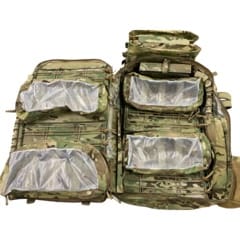
The GRAVEROBBER Sustainment Kit is a joint CRO Medical and MATBOCK project to bring a prolonged field care pack to the operational medic. It features the Sustainment bag, 4 x sustainment pouches, 4 x sustainment panels, and the GRAVEROBBER Drug Box.  All made from MATBOCK Ghost and Ghost Light materials.
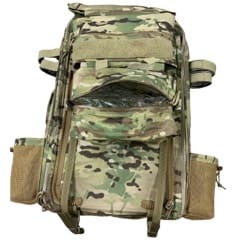
GRAVEROBBER Technical Mountain Ruck
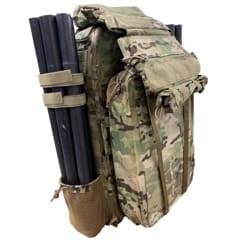
The Technical Mountain Ruck is a combination of the GRAVEROBBER Assault Medic (GRAM) Kit and the GRAVEROBBER Sustainment Kit. The GRAM easily zips to the outside of the sustainment bag to give the medic everything needed for both assault and prolonged medical operations. Made from MATBOCK’s Ghost and Ghost Light materials for superior water resistance, durability, strength and weight savings.

GRAVEROBBER Assault Medic
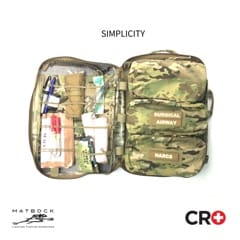
The GRAVEROBBER Assault Medic bag is the result of years of needed improvement in bags specifically designed for the team medic. CRO brings a multi-mission approach to the design with their well-thought-out adaptability, including a panel insert that converts to a skeleton med panel which can be clipped or slung using the thin padded shoulder straps. Remove to design a custom panel that is interchangeable for different packing requirements, or easily change bags with the versatility of a panel insert.
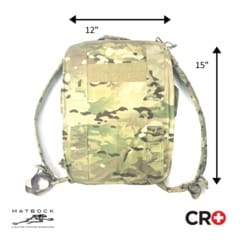
Lighter Faster Warriors, The MATBOCK™ ethos, is realized by the GRAM.
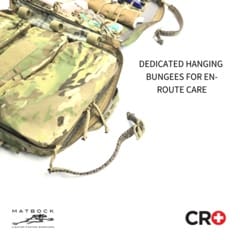
MATBOCK Ghost® material is used throughout with Tegris reinforcements, giving the inside contents protection to allow for narcotics to be set up using a soft case.

A few of the highlighted features include:
• Jumpable
• Waterproof
• Mounts on ALICE frame
• Hangs in vehicles
• Ultralight 2.9 lbs
• 1.2 lbs skeletonized setup (if you clip it on, less)
• Mitigates shrapnel hazards
• Thinnest med bag ever created

The GRAVEROBBER™ Assault Medic bag is designed to be mounted to an ALICE frame, giving the medic a slim assault bag that can be configured in many ways to enhance medical load carriage. This jumpable, water resistant bag bridges the gap between assault bags and en-route care, due to its expandable design and ability to hang.

This versatile, meticulously designed med bag was created with everyday medic load carriage in mind.

GRAVEROBBER Surgical
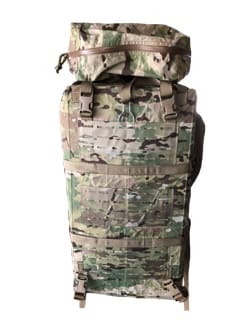
Lightweight ruck designed to carry surgical medical equipment for expeditionary and operational professionals. Available both with and without frame.

The complete kit includes:
• Ventilation Pouch
• Drug Roll
• IV Pouch
• Multifunction Pouch

Click the link below to see our full series!

www.matbock.com/collections/grave-robber
Ruck March Keeps Airmen Mission Ready

Monday, March 16th, 2020

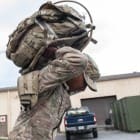
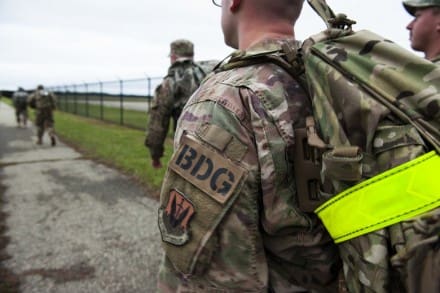
Airmen assigned to the 820th Base Defense Group perform a ruck march Feb. 21, 2020, at Moody Air Force Base, Georgia. Members of the 105th Base Defense Squadron from Stewart Air National Guard Base, New York, and 820th BDG participate in a ruck march as part of the Initial Qualification Training for Base Defense Group Airmen to ensure readiness in a deployed environment. Ruck marches allow Airmen to understand the feeling of carrying mission essential items to better pace themselves and stay fit.

(US Air Force photos by A1C Elijah M. Dority)

SCUBAPRO Sunday – Quick Release Adapter for the Frameless Mask

Sunday, March 15th, 2020

SCUBAPRO’s FRAMELESS mask is diving’s original frameless mask. The Frameless was the first mask to use the lens as its structural support, which significantly increased the field of vision for divers. Twenty-one years later, it is still the first choice of military and technical divers.

Its distinctive rectangular single-lens shape is classic, providing an excellent field of view on the periphery as well as straight ahead. By eliminating the frame, you create a mask that sits closer to your eyes. This provides a broader field of view to better take in the underwater sights, plus it reduces volume, which makes it easier to clear. Also, since there is no frame, the buckles attach directly to the skirt. This enables the mask to fold relatively flat for packing or for slipping into a BC cargo pocket. The soft silicone skirt on the FRAMELESS is comfortable yet durable, and the double-edge seal feels good against the skin. Buckles attach to flexible tabs on the skirt; this optimizes strap angle when dialing in the fit.

SCUBAPRO wanted to give it an update without taking away from its already iconic features. We also wanted it to work with our newest dive computer, the Galileo HUD. So, we develop a way to mount the HUD to the mask as the mount needs a hole drilled through the lens, which can only be done before the glass is tempered.  

SCUBAPRO is always trying to innovate for the working divers and set the standard for new gear. The latest features for the Frameless/ Frameless Gorilla mask are the addition of the comfort strap adapter. They can be added onto existing masks, and this allows the user to add several new features to one of the most iconic masks ever made. We have new accessories for the classic Frameless mask. The latest version of the Frameless that is available with an integrated HUD Arm that allows you to mount the SCUBAPRO HUD hands-free dive compute.  

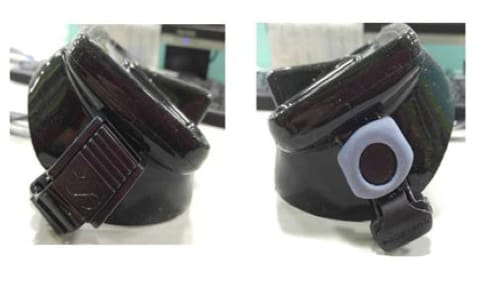
SCUBAPRO has also been working with some military units to make the Frameless mask non-magnetic. To do this, we decide to develop a conversion kit so it could use our comfort straps. With this, we removed the springs and pins in the mask straps. QR kit Part Number 24.340.039

The Frameless adapter kit includes two quick clips and the roll pins. The adapters also allow you to use the SCUBAPRO Odin Helmet Straps. Ops-Core is the primer brand when it comes to helmet innovation. The Odin system allows any mask with quick clips to be attached to any helmet that has the Ops-Core ARC rail systems. The Odin straps are perfect for any time you have to wear a helmet when diving or in the water. Like using a DPV, Wearing Jet-boots, Search and Rescue Operations, or working in Fast Moving Water. The Comfort Strap is similar to a ski goggle strap in design. It clips right into the mask buckle adapter and offers a wide adjustment range. It also is a lot less likely to break mid-dive as it is a nylon strap and not rubber or silicone. The adapter also makes the mask non-magnetic for EOD use, as it removes all metal parts.  

Army Researchers Imagine Devices Without Cords or Batteries

Sunday, March 15th, 2020

ADELPHI, Md. — Imagine if you could wrap a small, thin piece of transparent material around any surface and it would charge electronic devices such as your phone or laptop. Thanks to Army researchers, this idea could be a reality for future warfighters in combat.

A team led by Professor Tomás Palacios at the Massachusetts Institute of Technology and Dr. Madan Dubey, a research physical scientist at the U.S. Army Combat Capabilities Development Command’s Army Research Laboratory, conducted game-changing study describing an antenna that can absorb Wi-Fi, Bluetooth and cellular signals and efficiently turn it into usable electrical energy. Their work is published in the high-impact journal Nature.

“Today, Wi-Fi is becoming increasingly omnipresent in both indoor and outdoor environments and provides an abundant source of always-on radiofrequency energy,” Dubey said. “What’s missing is an efficient, flexible and always-on energy-harvesting solution to power devices, which is indispensable for self-powered systems. We have discovered a way to potentially fill this gap and to make it useful for Soldiers on the battlefield.”

Dubey said the invention has proven the potential for a conformal atomically thin layer of material for generation of power without any power cords using Wi-Fi, Bluetooth and millimeter wave that is used in some 5G wireless communication systems.

“It has the potential to revolutionize Soldier’s situational awareness and readiness as these materials and devices can be integrated into health and monitoring systems, displays, communication and sensing systems for the Soldier,” Dubey said.

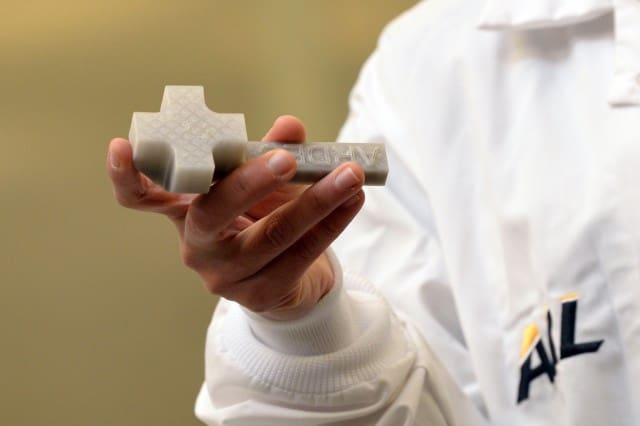
At the center of all of these components is a new revolutionary material, molybdenum-di-sulphide, or MoS2, which is only a few atoms thick. Its extreme thinness allows the electronics systems made out of it to be transparent, and only become visible when designed for displaying information.

“The technology is a game changer for the Army and Department of Defense as it will enable a transparent, flexible/conformal, self-powered, atomically thin system-on-chip embedded in smart textile that has never been realized before,” Dubey said. “These future systems will feature micron size, light-weight, optical transparency and state-of-the-art transistors and sensors to provide the Soldier with real time information, prepare for planning/action and security in all terrain. If the team’s radio wave-absorber succeeds, it will power those ever-present electronics 24/7, no battery needed.”


“The enabling technology is very critical for Army modernization formulation in Multi-Domain Operations,” Dubey said. “It will be a game-changer technology to power devices that will enable higher Soldier lethality, improve cognitive neuroscience and the novel engineered materials required for Next Generation Combat Vehicle.”

According to Dubey, this technology is a key building block to create, for example, an Alexa-like device that is 1,000 times smaller in size, but much more powerful in performance, while being flexible and conformable to meet mission requirements.

For Dubey, this research would not be as successful if it weren’t for the collaboration between the laboratory and MIT.

“MIT has been and continues to be a true and trusted partner with several successful proven achievements through the Institute for Soldier Nanotechnologies,” Dubey said. “ARL has established a very strong collaboration and partnership through the visit/exchange of researchers and scientists participating at the bench level.”

The Institute for Soldier Nanotechnologies is a team of MIT, Army and industry partners working together to discover and field technologies that dramatically advance Soldier protection and survivability capabilities.

The demonstrated energy harvester discussed here will have a huge impact in future systems, and is one of the several components that the MIT-Army team is jointly developing to transform the electronic microsystems that provide situational awareness and intelligence to the Soldier.

By CCDC Army Research Laboratory

Going Green: Eco-friendly Plastic to Replace Soldier’s Supplies in Battle

Saturday, March 14th, 2020

ABERDEEN PROVING GROUND, Md. — Advanced 3D printing from recycled plastic is an eco-friendly way to strengthen operational readiness, curb supply chain reliance, and improve troop safety, says a top Army scientist — with testing and evaluations on a mobile lab set for next year.

In a collaborative effort with the U.S. Marines, the U.S. Army Research Laboratory has explored new, resourceful ways to salvage plastic waste to integrate with 3D printers, said Dr. Nikki Zander, ARL research chemist.

“We have the [20 ft.] container at Marine Corps Base Quantico,” Zander said. “We’ve got all the extrusion equipment installed. We’re hoping by the end of this calendar year we’ll be able to do a demonstration of the capabilities there.”

The containers include the tools and equipment needed to fabricate 3D items from recycled materials, Zander said. Although the printing capabilities exist, ARL researchers plan to make them more automated, user-friendly, and eventually require less than a day of training for Soldiers in the field.

Right now, researchers are actively scanning parts to build an imagery database for Soldiers to pull from to quickly print parts.

“Three companies are working on making the next generation mobile lab,” Zander said. “We hope within three years we’ll have a prototype from one of those companies, and it will be more robust have more automation capabilities.”

“We’re trying to reduce supply chain dependence by using available materials,” Zander said. “We’re interested in looking at plastic packaging materials we could repurpose to use as a feedstock for additive manufacturing.”

In austere environments, a cache of plastic debris — such as empty water bottles, milk jugs, and yogurt containers — often pile up and cause a logistical burden on Soldiers to dispose of.

With nowhere to go, the garbage is often burned. The smoke releases toxic fumes into the air, and potentially causing respiratory hazards for Soldiers, Zander said.

Although actions to help the environment were “a huge motivation,” for Zander, an avowed environmentalist, the technology does more than provide conservational alternatives for troops. It is also a cost-effective way to help Soldiers be more self-sufficient on the frontlines.

One example of how recycled plastic is used on vehicle radio brackets, Zander said. It takes roughly ten emptied water bottles, and two hours, to fabricate a plastic radio bracket.

The vehicle brackets “commonly break, and usually a new, $200 radio is ordered. The new radio can take many months to get into the field, but, now you can print the part for [the cost of an empty, plastic water bottle] with no wait, and there’s very little statistical difference in the strength of the material.”

“This supports sustainment and the next-generation combat vehicle,” Zander said. “That is because there is a lot of plastic parts that need to be replaced and when you’re in a remote area, and it’s very difficult to get those shipments in.”

Even though some units have conventional 3D printers, their conventional filament must be refilled. Supplying troops with mission-critical items, like printing refills, can take weeks and the shortage can also leave Soldiers vulnerable during transportation.

“If Soldiers run out of conventional filament, then they’re dead in the water,” she said. “I think this technology provides a large level of comfort to know that they don’t need anything outside of what they already have to make the things they need.”

Not all plastic has the industrial strength of water bottles. Other plastics, such as polypropylene, often used as yogurt containers, and polystyrene, used in plastic utensils, are generally too weak to fabricate.

However, those plastics forge a stronger composite material when reinforced with other materials, “When PP is mixed with cardboard, wood fibers, and other waste materials found on military bases — they create a new composite filament,” Zander said. “Giving them the strength to make more durable filaments for 3D printed parts.”

This procedure is called solid-state shear pulverization. During this process, the materials are milled into a twin-screw extruder to form a fine powder that is melted down into a 3D printing filament. Looking ahead, ARL scientists hope to incorporate tire rubber.

“If we’re able to take the waste out of the area, and the burning out of the air and turn it into something useful, that’s win-win,” Zander said.

Story by Thomas Brading, Army News Service

Photos by E.J. Hersom

FirstSpear Friday Focus – Qtr Zip Woobie

Friday, March 13th, 2020

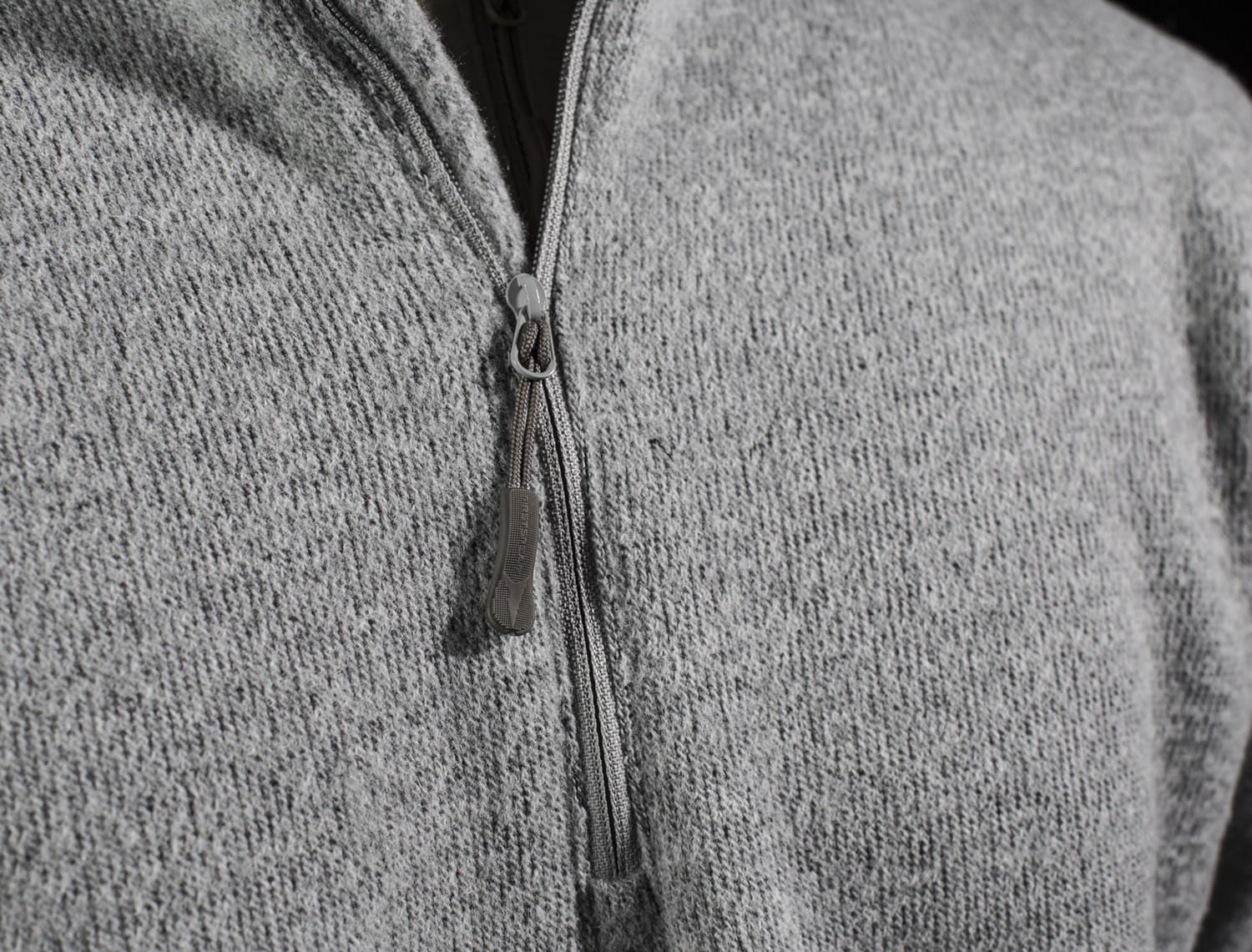
Today we have another addition to the FirstSpear American Wool Series where we have been moving through FS wool packages starting with ACM BASE, MID and now WARM. A few weeks ago we saw the all new full zip Woobie and today we are getting a look at the Qtr Zip Woobie.

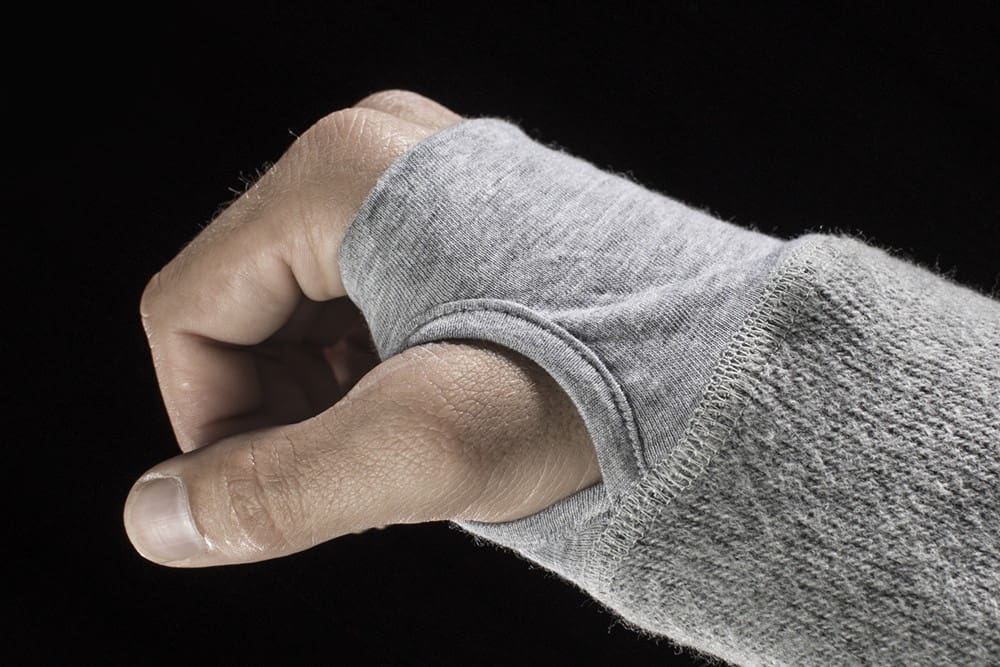
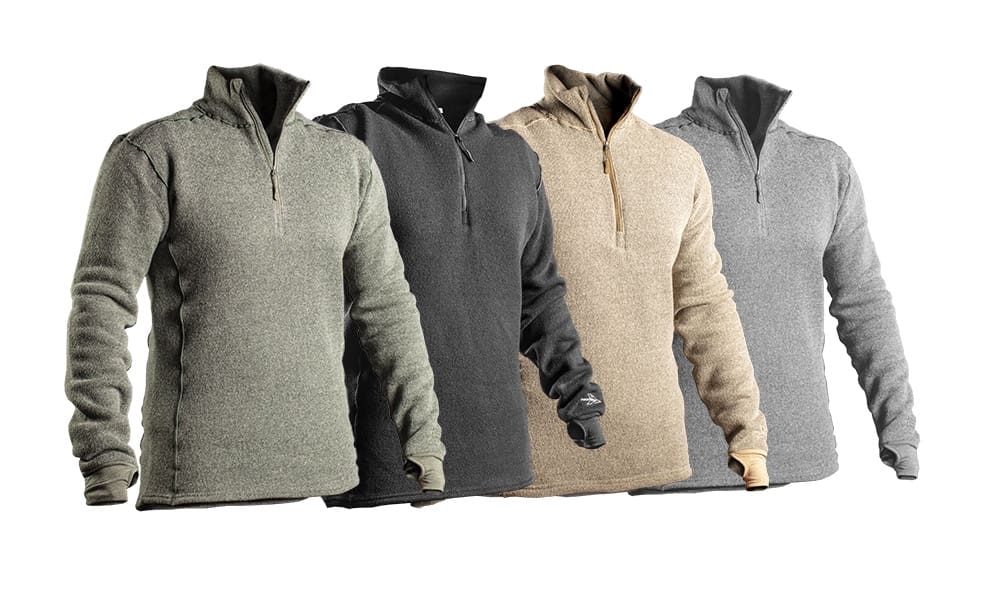
Constructed with ACM-WARM 600 this material package offers the greatest amount of warmth from the FS merino wool packages while still providing exceptional moisture wicking capabilities as well as trapping warmth even when wet. The Qtr Zip Woobie features a high collar and wrist overs with thumbs holes you can easily roll out of the way if not desired.

100% Made in the USA with 100% American materials including the merino wool. Check out the entire merino wool line up from FirstSpear.

Available in Commando, Black, Sand, and Heather Grey.

www.first-spear.com/woobie-fr-insulation-shirt

Kit Badger Discusses Q-Sert from Q

Thursday, March 12th, 2020

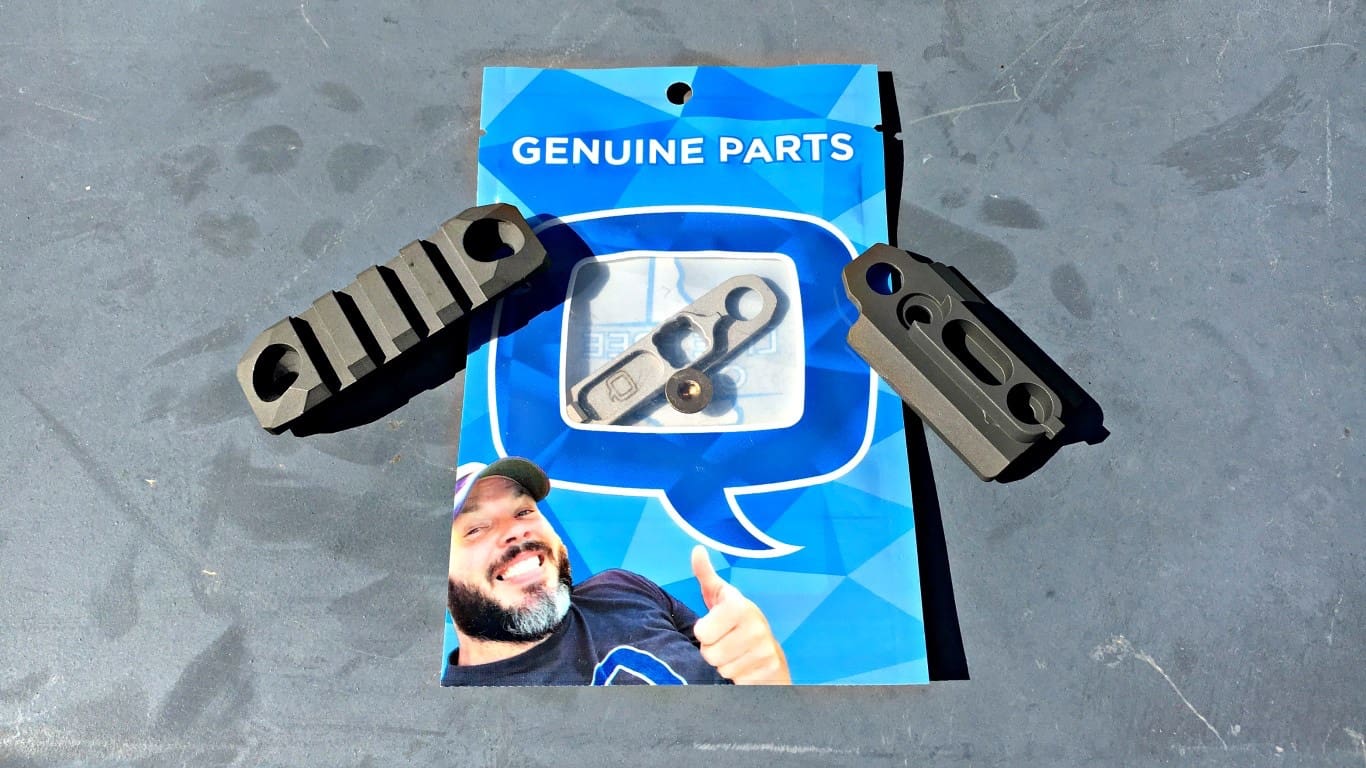
Our friend Ivan shared this article with us on the Q-Sert weapon accessory attachment system from Q, LLC.

Q-Sert : The Attachment Method

When it comes to methods of attaching equipment to hand guards, there is generally two different methods. You have KeyMod, which is great for shelving units, and there is M-LOK. Past that there is legacy Picatinny Rail. Q LLC has brought something new to the table though, largely under the radar, which is their Q-Sert.

Q-Sert is a method of attaching accessories to the handguard that offers a stronger mount up than M-Lok, a more repeatable zero and provides a lighter handguard at the same time. Magic right? It took a number of engineers to make it happen…

Right now Q-Sert hand guards are available on the Fix Rifle, MiniFix and Side Chick Chassis. They are currently working on AR-15 hand guards as well as more Q-Sert direct mount options.

Read the full details at kitbadger.com/q-sert-the-attachment-method.

Brigantes Presents – Adventurous Training Front Runners

Wednesday, March 11th, 2020

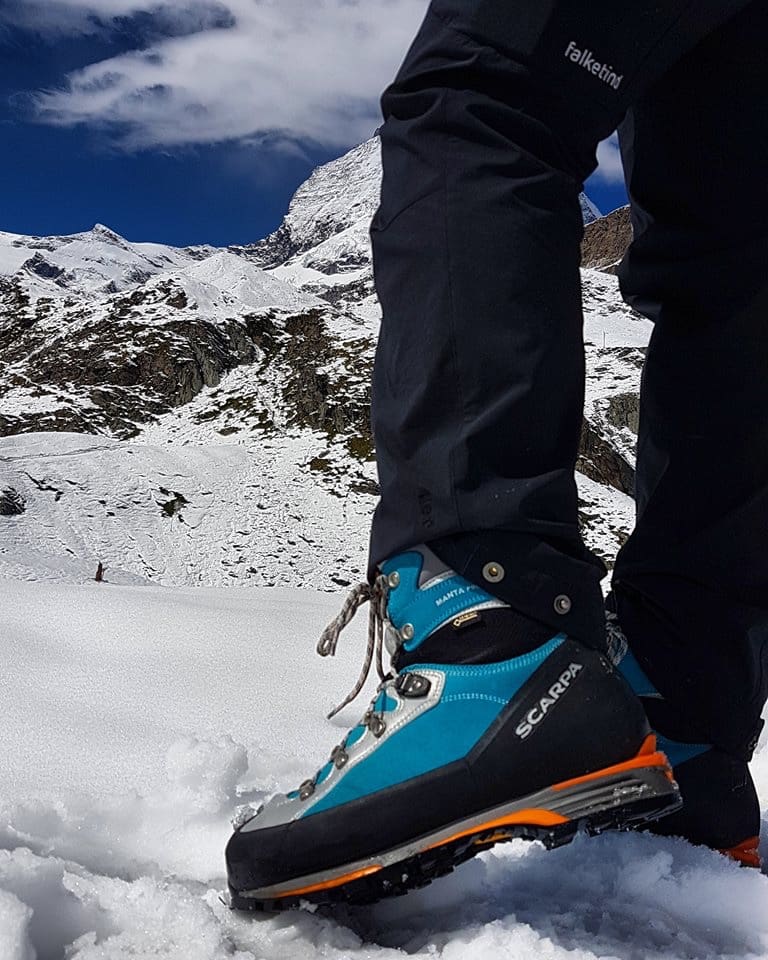
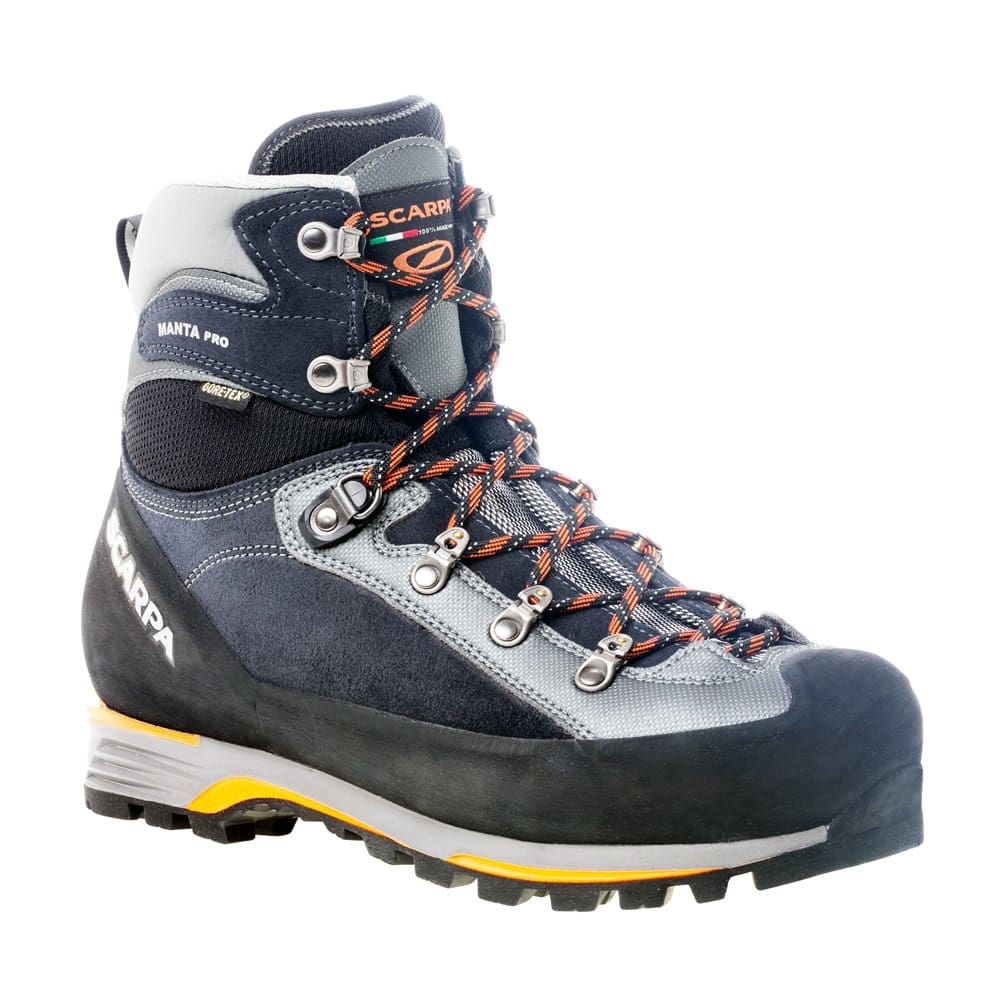
Each week we bring you products that should be considered on an AT kit list. This week it’s the Scarpa UK Manta Pro.

The Manta Pro is a tough mountain climbing boot for Scottish conditions and alpine summers.

Designed with UK mountain conditions in mind, the Manta is a perfect blend of durable boot building heritage and modern lightweight technology. The upper is a tough 2.8mm reversed suede giving great protection from the elements and long term durability, backed up with a Gore-Tex performance waterproof membrane. The microtech cuff is lightweight with great mobility giving a secure, neat fit around the ankle.

The Manta is built on the classic FT last, which has a little more volume, ideal for comfort on long Scottish walk-ins. The Vibram Pentax Precision sole unit is ideal for mountaineering, with a durable mont rubber compound and lugs spaced for mechanical grip, with a climbing zone for scrambling and via ferrata. The broad rubber rand runs from heel to toe and gives great durability against rocks, as well as reducing pressure from crampon bindings. The Manta is fully C2 crampon


compatible.

For more information contact international@brigantes.com

For UK sales contact warrior@brigantes.com