GORE-TEX Professional

Archive for the ‘Guest Post’ Category

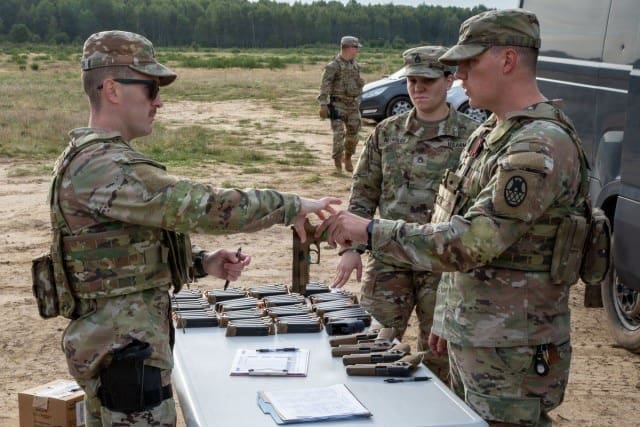
Pennsylvania Guard Soldiers Strengthen AI, Critical Thinking Skills

Sunday, February 22nd, 2026

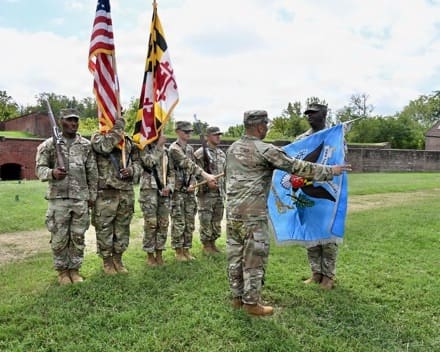
FORT INDIANTOWN GAP, Pa. — Pennsylvania National Guard Soldiers and civilian employees participated in an Artificial Intelligence 201 course Feb. 11–12.

The course, taught by U.S. Army War College faculty, aimed to prepare leaders to responsibly integrate artificial intelligence into military decision-making while reinforcing critical thinking and mission command principles.

“A lot of people find it very scary, and just like with any new technology, we should be cautious,” said Lt. Col. Kelly Ihme, an assistant professor at the U.S. Army War College and one of the course’s instructors. “Trust but verify. But this is a computer program. It’s predictive math.”

AI 101 introduces Soldiers to the basics of AI, including how to use and understand it, while AI 201 focuses on critical thinking and effective AI prompting.

“At the War College, we’re starting to develop that type of course,” Ihme said. “It’s more about, how do we think about problems? And then where does AI get inserted into those problem sets? So that we’re never taking the human out of the loop, but we’re stepping up the critical thinking and really engaging critical skills questions on AI and where it fits.”

The students found the classes useful and knowledgeable, even wanting to attend more in the future.

“If they had another AI class, I would go again,” said Maj. Maria Myers, logistics branch chief at Joint Force Headquarters. “I would even do this exact same level again, just for repetition and to make sure that I’m still using it correctly, because I do plan to try to implement it in a couple of ways already that they had mentioned.”

Ihme said the 201 course pushes students to dig deeper than the nuts and bolts of AI. The class encourages them to approach AI with a leadership mindset.

“It’s a mission command skill. And if you’re not using AI with some of those mission command ideals in mind, you’re going to get icky outputs or less efficient outputs, and then you’re going to put AI aside,” said Ihme. “You’re not going to throw a private aside and tell them they’re an ineffective private because you didn’t provide them the leadership they needed to succeed. It’s the same with AI.”

Myers said that while she believes AI should be used with caution, it remains a helpful tool for saving time. But, she emphasized that users need to understand how to properly use and prompt AI before utilizing it for work.

“I’m sure some people will think it’s a pain, and there will be people that are against it, because it’s different,” Myers said. “But I think that this class and the level it goes into is a good introductory class because you need to have the knowledge and the understanding and the information from the human aspect to get the appropriate answer.”

The Pennsylvania National Guard is hoping to expand these classes in an effort to have Fort Indiantown Gap become an AI center of excellence, Imhe said. Ihme said she is ready for the next step of AI in the Army.

“Let’s keep providing classes like this, both foundational and thinking classes, so that we can figure out, not just that we’re playing with AI, but that we’re taking the next leap of using AI to propel us forward,” Ihme said.

By SGT Kayden Bedwell

VA Undoes Decades-Old Wrong and Protects Veterans’ Second Amendment Rights

Saturday, February 21st, 2026

WASHINGTON — The Department of Veterans Affairs today announced a major new step to protect Veterans’ Second Amendment rights. Effective immediately, VA will not report Veterans to the Federal Bureau of Investigation’s National Instant Criminal Background Check System as “prohibited persons” only because they need help from a fiduciary in managing their VA benefits.

This corrects a three-decade-old wrong that deprived many thousands of Veterans in VA’s Fiduciary Program of their constitutional right to own a firearm without a legal basis.

After a thorough review, VA recognized that many Veterans had been deprived of their Second Amendment rights without hearings or adequate determinations that they posed a sufficient risk of danger to themselves or others. In consultation with the Department of Justice, VA has determined this practice violates both the Gun Control Act and Veterans’ Second Amendment rights. According to federal law, a decision by a judicial or quasi-judicial body is needed before someone can be reported to NICS.

A determination by the VA that a fiduciary is needed to help manage a Veteran’s VA benefits falls far short of this legal standard.

In addition to immediately stopping the reporting of VA Fiduciary Program participants to NICS, the department is working with the FBI to remove all past VA reporting from NICS, so no Veterans are unfairly deprived of their Second Amendment rights based solely on participation in VA’s Fiduciary Program.

“Many Americans struggle with managing their finances, and Veterans’ Second Amendment rights shouldn’t be stripped just because they need help in this area. But for too long, Veterans who needed the services of a VA fiduciary were deprived of their right to bear arms,” said VA Secretary Doug Collins. “Under the leadership of President Trump, we’re correcting this injustice and ensuring Veterans get the same due-process and constitutional rights as all Americans.”

The Department of Justice supports this action.

“It is both unlawful and unacceptable for Veterans who serve our country to have their constitutional rights threatened,” said Attorney General Pamela Bondi. “It has been my pleasure to partner with Secretary Collins on this project, and I am directing the Bureau of Alcohol, Tobacco, and Firearms to review its regulations and propose changes that will prevent current and future violations of our Veterans’ Second Amendment rights.”

– Veterans Administration

Creativity: The Art of the Possible

Saturday, February 21st, 2026

Creativity is often described as imagination, inspiration, or artistic expression. In professional fields especially those tied to real-world consequences like tactical operations, engineering, or business creativity is something far more practical.  It is the disciplined art of making the possible real.

You start with a vision > You have the initiative to try > Now comes the hard part.

The Foundations of Practical Creativity.

Real creativity is not spontaneous. It is built on layers of competence and understanding. Before a solution can exist, certain conditions must be met.


You must have:

• Knowledge of the subject.

• Experience to understand its practical or tactical application.

• A clear understanding of the problem set.

• The technical ability to create a solution.

• The mental flexibility to see that solution before it exists.

• A defined and realistic end state.

Creativity is not just about inventing something new. It is about answering the right question.

Sometimes that question hasn’t even been asked yet.

Are You Solving the Right Problem?

Before building anything, you must understand the nature of the problem itself.

• Are you answering a question no one has recognized yet?

• Are you solving a clearly identified problem?

• Is the problem singular, or is it multi-layered?

• If you solve one part, will the rest fall into place?

• Or is each layer its own independent requirement?

Many failed designs are not failures of execution—they are failures of problem definition.

From Concept to Reality

Once the problem is understood, creativity shifts from abstract thinking to applied execution.

You must consider:

• Is the solution efficient?

• Can it be produced at scale, or only as a one-off?

• Does it actually improve the system, or just look different?

In tactical equipment design, creativity is not measured by novelty. It is measured by effectiveness.

A new concept must:

• Improve function

• Reduce complexity

• Increase survivability or efficiency

• Be producible and supportable in the real world

Otherwise, it is just an experiment or as some say it’s just a hobby.

Rethinking the Paradigm: Symmetry and Function

One example of practical creativity is the concept of load carriage symmetry.

Ergonomic symmetry exists when a task or tool allows the body to operate in a balanced, neutral, and repeatable manner—without forcing one side to compensate for the other.

In equipment design, this often translates to:

• Three to four rifle magazine pouches centered on the torso

• Pistol magazines placed for rapid access

• Grenades, flashbangs, and mission items distributed evenly

• Ambidextrous access to critical equipment

This configuration promotes balance, consistency, and repeatable performance across a team. But symmetry is not always the answer. During special tasks or mission-specific operations, the real question becomes: Is visual or load symmetry more important than immediate access to the correct tool at the exact moment it is needed? In many cases, the answer is no. Creativity means knowing when to follow the paradigm and when to break it.

Understanding the business side of creativity is just as important as the technical side.

A great idea must:

• Reach the market

• Be produced reliably

• Be supported long-term

• Compete against other solutions

Creativity without execution is just theory

Case Study: The Mayflower UW Chest Rig Evolution

One example of creativity as an iterative, problem-solving process is the development of the Mayflower UW (Unconventional Warfare) chest rig series. These designs were not the result of a single flash of inspiration. They were the result of years of operational experience, observation, and incremental improvement.

Each generation solved a specific problem. I took the lessons learned from my designs for the DBT Low-Vis Chest Rigs and operationally improved them:

UW Gen I – The Baseline Concept, breaking the paradigm:

The Gen I represented a shift away from traditional load carriage systems that were either:

too minimal (CHICOM Chest Rig) or too complex (full vest systems replacing belt kit). The goal was simple: carry the essential fighting load in a compact, balanced, low-profile format.

The Gen I focused on: centerline rifle magazine carriage, integrated general-purpose storage, only what you need. A balanced, symmetrical layout, dual comms, ambidextrous and low bulk for vehicle and urban operations.

It established the core concept: self-contained, multi-missionfighting load in a simple chest-mounted platform.

UW Gen II & GEN II.V Refinement Through Use

The Gen II was not a radical redesign. It was a refinement.

Changes were driven by real-world feedback. Long-term wearand practical adjustments from field use.

Key improvements included:  H-Harness refinements, initially fixed but still range of motion/size adjustable then a quick don/doff capability was added.

The lesson from the Gen II was simple: small, thoughtful changes often produce the biggest performance gains.

UW GEN I “Custom” that led to future development (as it was worn in combat).


UW Gen III — The Standardization Phase

By the time the Gen III emerged, the concept had matured.

This generation focused on: refined magazine retention, a cleaner manufacturing processes, and a format suitable for broader adoption across units

The Gen III represented the transition from:

“a good idea” to “a scalable, supportable piece of equipment.” This is a critical step in creativity:

A solution is not complete until it can be produced, issued, and sustained.

UW Gen IV — Modularity and Integration

The Gen IV reflected changing operational realities.

Users increasingly needed, integration with armor, greater modularity, and compatibility with multiple mission sets

The Gen IV addressed this byimproving attachment options, increasing compatibility with plate carriers and allowing mission-specific add-ons

This generation acknowledged a key truth: The environment changes. The equipment must evolve with it.

UW Gen V — The next step

By the time the Gen V arrived, the original concept had been fielded in the tens of thousands.

This design focused on splitting the base in half to meet a different operational need (an open front), streamlined construction, matching H-Harnesses, similar construction techniques, optimized pouch geometry to meet operational requirements, magazine inserts for different calibers, improved materials and manufacturing methods.  Abalance between modularity and simplicity.

UW Gen VI “Pusher” — The Mature Concept

The “Pusher” chest rig represented the evolutionary development of the UW series—a single platform, multi-caliber capable, and configurable for use with or without armor. It was built as a plug-and-play system, allowing magazine pouches to be mounted on the lower back for prone use, the addition of a cold-weather jacket pouch, and the ability to carry a NODS-mounted helmet as required.

Lessons from the UW Series.

The evolution from Gen I to Gen VI demonstrates several key principles of practical creativity:

• Creativity is iterative; no design is perfect at the start. Each generation solves a problem the previous one exposed.

• Experience drives innovation; most improvements were not theoretical. They came from actual use, under real conditions.

• Simplicity is the end state, as a concept matures, unnecessary complexity is stripped away.

• Production matters; a design is only successful if it can be produced in quantity and supported over time.

The Business Reality of Creativity

Creative success brings its own set of challenges.

After achieving even moderate success, many designers and entrepreneurs experience a predictable cycle:

• Imposter syndrome: was this a one off or have I spent my creativity?

• Learning to deal with success

• Reconciling unconventional paths to achievement, no college degree versus experience

• Pressure to recreate the successful formula

• Pushing through self-doubt

• Selling your own strengths while trying to remain humble

• Regaining the drive to outperform competitors

The Next Chapter

At some point, you begin to recognize where your real strengths lie.  Not just what you can create, but:

• What problems you are best suited to solve

• What environments you perform best in

• What kind of impact you want to have

That realization marks the transition into the next chapter.  You stop trying to prove yourself = You start building with intent.  Creativity, at its core, is not about originality for its own sake. It is about:

• Understanding the problem

• Seeing a path forward

• Having the skill and discipline to make it real

That is the true Art of the possible.

About the author:  Travis Rolph is a retired Airborne Infantry and Special Forces veteran and founder of Mayflower Research & Consulting.

NSWC Crane’s New Low-Cost, ‘Drone Killer Cartridge’ Achieves 92-Percent Kill Rate in Demonstration Event

Saturday, February 21st, 2026

Naval Surface Warfare Center, Crane Division (NSWC Crane) has designed and developed the Drone Killer Cartridge (DKC), a new and cost-effective family of ammunition for the warfighter that increases probability of hit and kill against drone threats while inherently reducing collateral damage.

“We’re enabling extended range, shotgun-style effects through automatic rifles and machine guns with nothing more than an ammunition change,” said Brian Hoffman, Man-Portable Weapons Chief Engineer at NSWC Crane.

DKC is an ammunition technology that disperses a cluster of projectiles upon firing—for rifles, automatic rifles, and machine guns—with far greater range than a conventional shotgun. These effects increase the probability of hit and kill against Unmanned Aerial System (UAS) threats in a way that also reduces the risk of collateral damage for any projectiles that don’t impact the target. During a recent demonstration at Camp Atterbury in Edinburgh, Indiana, DKC achieved a 92% success rate against drone targets.

Col. Andrew Konicki, Program Manager of Ground Based Air Defense for Program Executive Officer Land Systems, said the Marine Corps plans to broadly leverage DKC for its enhanced capabilities and implement at the operator-level.

“The Drone Killer Cartridge represents a pivotal shift in countering the pervasive threat of enemy drones,” said Col. Konicki. “This type of ammunition provides an immediate and significant improvement to our kinetic kill capabilities by using standard-issued weapons that are already in the hands of Marines. The collaborative work between NSWC Crane and the Marine Corps has positive impacts across the ecosystem of Homeland Defense as well as self-protection for our forward deployed troops in harm’s way. With DKC, we are adding capability well beyond conventional options, while also bending the cost curve for neutralizing drone threats, particularly to the individual Marine. Crucially, its design reduces the risk of collateral damage, making it a dominant and urgently needed solution that will fundamentally change the fight for every Marine.”

Unmanned systems are reshaping tactics, challenging established operations, and creating life-threatening threats for warfighters globally. To counter this rapidly evolving and critical threat, the Department is aiming to improve overall defense capabilities.  

“By design, DKC provides broader terminal coverage on and around the intended target, which increases effectiveness against stationary and moving drones by helping offset imperfect aim,” said Hoffman. “There’s a good reason why bird hunters use shotguns. We’ve applied a similar philosophy to killing drones while amplifying overall performance. DKC sub-projectiles exit the barrel at velocities typical of centerfire rifle ammunition. Those velocities, and associated energies, far exceed shotgun capabilities and serve to extend effective range while offering more devastating effects on target.”

DKC technology provides an improved defense capability at an affordable price, ensuring versatility for end-users with rapid integration for a variety of mission sets. Engineers and technicians developed DKC from internal NSWC Crane Naval Innovative Science and Engineering (NISE) funding and Department of Homeland Security and Marine Corps investment. Because use of DKC involves only an ammunition change, timeline to initial fielding can be accelerated as it does not require qualification of a new weapon system. As a beneficial side effect of that approach, DKC eliminates the need for warfighters to carry excess weight of an additional weapon dedicated to countering drones.

“When you compare the cost it takes to kill a drone using DKC versus some other solutions that are being employed, it’s a night-and-day difference,” said Hoffman. “The projectiles used in segmented DKC and pelletized DKC are both inert, meaning there is no energetic material in the projectile itself. The separation mechanisms are purely mechanical, and the cartridge case, primer, and propellant are common to other ammunition types already in production. These attributes combine to help keep it elegantly simple yet effective while ensuring low-cost producibility.”

All DKC products are NSWC Crane-designed and U.S. Government-owned intellectual property (IP) with U.S. nonprovisional utility patent applications and Patent Cooperative Treaty applications on file. The DKC family includes both Pelletized and Segmented product options.  There is functional overlap between the two, though each type maintains unique priority rankings for effective range, target area coverage, suppressor compatibility, and cost. Segmented DKC includes a one-piece projectile that mechanically self-separates into discrete, spin-stabilized sub-projectiles prior to muzzle exit whereas Pelletized DKC includes a projectile assembly containing a stack of high-density, spherical buckshot-sized pellets that are mechanically disbursed at muzzle exit.

Hoffman said the technology enables the end-user to quickly dispatch UAS threats.

“The intent with our ammunition was to simply give operators a better chance of killing drones with cost-effective products that can be used in existing weapons.  If you aren’t the world’s best shot or don’t have a lot of experience engaging aerial targets, your odds go up immediately with DKC.  As a bonus and since these products are already mature, you won’t have to wait years for product development in order to access DKC and put it to good use. 

Hoffman said the DKC team and NSWC Crane family are excited and motivated to fast-track these products to the field and fleet to help meet urgent needs – not just for the Navy, Marine Corps, and DHS – but for the other U.S. Military Services, Government Agencies, and select foreign partners.

“The demand signal for DKC is increasing dramatically given the current threat environment and the more we socialize these products and the technology,” said Hoffman. “There are obvious reasons why it resonates with military operators and Counter-UAS stakeholders who understand the urgent need. DKC is effective, it’s affordable, and it can be used immediately with weapons that are already in service.” 

To view some footage of drone kills using DKC, high-speed video of the sub-projectiles as they exit the barrel, and additional introductory content.

The Drone Killer Cartridge technology is available for licensing to commercial ammunition and defense manufacturing partners. Initially designed for military applications, there also are applications for home defense, personal protection, and hunting. To learn more about the IP and licensing opportunity, please visit TechLink.

FirstSpear Friday Focus: Enforce Tac 2026

Friday, February 20th, 2026

Come see us next week at Enforce Tac 2026 over at booth #07-0665 from Monday, February 23rd, through Wednesday, February 25th. Check out our product line-up and catch up with our team to learn more about what’s coming in 2026!

To request an estimate click image above or visit First-Spear.com/Request-For-Estimate. FirstSpear is the premier source for cutting-edge tactical gear for military, law enforcement and those who train. For more information visit First-Spear.com.

Army Transforms Acquisition Process to Enhance Ammunition Support for Warfighters

Friday, February 20th, 2026

PICATINNY ARSENAL, N.J. – The U.S. Army has established the Portfolio Acquisition Executive for Agile Sustainment and Ammunition, PAE AS&A, at Picatinny Arsenal under the command of Maj. Gen. John T. Reim. The move is a key part of broader Continuous Transformation efforts intended to increase efficiency and accelerate the delivery of critical capabilities to the warfighter.

The new organization was activated at a ceremony held on January 20 at Picatinny Arsenal where several thousand team members from all involved organizations were introduced to the new command. The Assistant Secretary of the Army for Acquisition, Logistics and Technology, the Honorable Brent Ingraham, presided over the ceremony and spoke to the significance of the new organization as a key part of the Army’s Acquisition reform initiative.

Following the ceremony, Ingraham witnessed a live demonstration featuring the Purpose Built Attritable System and a TRV-150 drone dropping smoke and a M69 training grenade onto a target simulating a small group of enemy Soldiers with a vehicle. This showed off one of DEVCOM’s latest innovations, the Picatinny Common Lethality Integration Kit or Picatinny CLIK. These are just a few of the of lethal UAS and counter-UAS technologies being developed by U.S. Army Combat Capabilities Development Command Armaments Center. The DEVCOM Armaments Center now serves as the Systems Center, a key enabler, of the PAE AS&A.

Subject matter experts from the PAE AS&A and DEVCOM Armaments Center then also briefed Ingraham on other lethal UAS, counter-UAS munitions, advanced artillery, next-gen energetics, expeditionary logistics and supply chain enabling systems that are the result of joint efforts of the two Picatinny based organizations.

“This marks a significant milestone in our journey to modernize Army Acquisition,” Ingraham said as he addressed the audience. “We are combining the capabilities of the Joint Program Executive Office for Armaments and Ammunition with critical combat logistic capabilities from PEO Combat Support and Combat Support Services to ensure fully capability alignment under our new structure.”

“Today we turn the page to an exciting new chapter in Army Acquisition,” Ingraham continued. “Every role in the organization plays an invaluable part in this journey. Cross organization engagement and agility are essential in ensuring the success of this transition. The future of Army Acquisition is bright and PAE AS&A is poised to lead the way.”

Ingraham’s visit underscored the installation’s vital role the various commands at Picatinny Arsenal play in maintaining readiness — delivering the capabilities, expertise, and innovation that ensures our Warfighters and allies are equipped to succeed in any environment.

“As we embark on this journey, we align our actions with the strategic guidance provided by our leadership including the President of the United States, the Secretary of War, the Secretary of the Army and the Chief of Staff of the Army,” said Reim who followed Ingraham. “This initiative is not merely a restructuring of our acquisition processes. It is a fundamental rethinking of how we approach the delivery of capabilities to our Soldiers, our joint warfighters, and our international partners.”

Legacies of Excellence

The Army is fundamentally restructuring its acquisition process to prioritize speed and efficiency over traditional approaches. As part of this initiative, the Army is establishing six Portfolio Acquisition Executives with increased focus on capabilities over specific programs.

The transformation includes the integration of the former Program Executive Office Combat Support and Combat Service Support, PEO CS&CSS, into the Capability Program Executive for Combat Logistics, CPE CL, led by Brig. Gen. Camilla White. PEO CS&CSS brings an unmatched history of logistics and sustainment support to the new CPE CL. It encompasses more than 200 programs spanning the Army’s transportation, ordnance, quartermaster, engineer, and training equipment portfolios.

As the CPE CL, it will continue to develop and deliver modernized tactical wheeled vehicles, engineering equipment, watercraft, power generation systems, and other force sustainment capabilities to Army, Joint, and global partners.

At the same time, the Joint Program Executive Office for Armaments and Ammunition, JPEO A&A, will realign into the Capability Program Executive for Ammunition & Energetics, CPE A&E, led by Col. Jason Bohannon. JPEO A&A has consistently delivered innovative acquisition solutions to provide Joint Warfighters and allied partners with overmatch capabilities. The JPEO was comprised of four project offices covering Combat Ammunition Systems, Close Combat Systems, Maneuver Ammunition Systems and Joint Services.

As the CPE A&E, it retains responsibility for life-cycle acquisition management of all conventional ammunition, which includes integrating budgets, acquisition strategies, research and development and life-cycle management across all ammunition families.

CPE CL will be headquartered at Detroit Arsenal, Michigan, while CPE A&E will remain at Picatinny Arsenal. Unlike the previous Program Executive Offices, each PAE will have comprehensive responsibilities and accountability for managing the full spectrum of acquisition activities, including requirements development, technology maturation, product development, testing, contracting, fielding, sustainment, and international sales. This flattened acquisition system empowers PAEs to make timely, risk-based decisions and accelerates capability delivery to Warfighters through problem-focused requirements, smarter contracts, informed risks, and faster pivots.

“This restructure achieves unity of command by establishing and empowering PAE AS&A with the full authority to direct research and development, prototyping, testing, production, and sustainment,” said Reim. “By prioritizing outcomes over processes, this new construct empowers us to award contracts faster by cutting through bureaucracy. Overall, this approach unburdens the acquisition enterprise and allows us to deliver warfighting capabilities at speed and scale.”

Accelerating Ammunition Acquisitions

Under the leadership of Maj. Gen. Reim, PAE AS&A will oversee an entire capability area including all conventional ammunition requirements including direct and indirect fire ammunition, close combat systems, explosives, and pyrotechnics, in addition to logistics, fielding, and sustainment. PAE AS&A will have oversight of the organic munition production facilities.

Maj. Gen. Sean Davis will serve as the new Deputy Portfolio Acquisition Executive adding the sustainment capabilities of the Army’s Combined Arms Support Command, CASCOM to PAE AS&A. CASCOM trains and develops adaptive Sustainment professionals for the total force while integrating innovative Army and Joint Sustainment capabilities, concepts and doctrine to sustain large scale combat operations in a multi-domain operations environment. It is also a part of Transformation and Training Command and is located at Fort Lee, Virginia. PAE AS&A is committed to supporting the warfighter through an innovative approach to ammunition acquisition and sustainment that leverages existing authorities to deliver tangible benefits, including accelerated capability delivery, smarter contracts, and informed risk management.

In addition to the two new CPEs, PAE AS&A will oversee multiple acquisition enablers including senior contracting officials, a test and evaluation integrator, the Sustainment Future Capability Directorate and the system center lead overseeing coordination among Army Combat Capabilities Development Command Centers. The PAE AS&A System Center Lead is Chris J. Grassano, the firector of the DEVCOM Armaments Center. The new structure will enable holistic management of conventional ammunition development, production and sustainment under a single command resulting in increased efficiencies and accelerated delivery of lethality aligned with the emerging Army Warfighting Concept.

Looking Ahead

In conjunction with this reform, the Army is investing $1.1 billion per year to overhaul depots, arsenals, and ammunition plants that produce and sustain Army equipment. This commitment will not only modernize facilities but also strengthen the defense supply chain and create jobs.

For industry partners, these reforms will mean faster contracts, clearer points of entry, and fewer bureaucratic hurdles. Soldiers will benefit from receiving new capabilities, such as drones, long-range fires, and next-generation command and control systems, years faster than before.

By Michael Chambers and Eric Kowal

Ops-Core Is Heading to Enforce Tac

Thursday, February 19th, 2026

Stop by to experience the complete product line including the FAST® helmet system, the global standard trusted by Global Special Operations Forces and Nation Police SWAT teams worldwide. Ops-Core’s fully integrated system seamlessly combines optics, respiratory protection, and AMP® communication headsets to deliver lightweight protection, enhanced situational awareness, and uncompromised performance.

Available through the NSPA contract, Ops-Core solutions simplify procurement and accelerate fielding for allied forces.

Visit Us in Booth 7-747 alongside our German partner IEA MIL-Optics GmbH in Nuremberg to see how we continue to define the future of integrated headborne capability!

Analog Cold-Chain Transport: CRO 2U Blood Transport Container

Thursday, February 19th, 2026

CRO has developed a two-unit (2U) whole blood transport container designed to accept multiple Commercial Off-the-Shelf evaporative cooling engines. The system is intended to sustain up to 42 hours of low-titer O whole blood (LTOWB) cooling within transport temperature parameters (10°C), depending on configuration and operating conditions.

This solution reduces EM signature, provides indefinite non-powered cooling with appropriate consumable resupply, and addresses delayed MEDEVAC during LSCO.

Background

Contemporary large-scale combat indicates that the increased use of unmanned aircraft systems has expanded persistent ISR (intelligence, surveillance, and reconnaissance) coverage and reduced freedom of maneuver across the battlespace. In LSCO (Large-Scale Combat Operations), units should expect extended disruption to communication, increased sustainment friction, and periods of constrained movement due to persistent aerial observation and strike risk.

These conditions intensify requirements for distributed small-unit operations and longer-duration self-sustainment. Contested airspace and massed fires increase the likelihood of delayed evacuation and degraded medical evacuation times. As evacuation timelines extend, casualty outcomes become increasingly dependent on Prolonged Field Care to include reliable cold-chain sustainment for blood products in austere conditions.

Commanders and medical planners should consider cold-chain solutions that reduce reliance on powered systems and provide resilient, low-complexity backup options consistent with DDIL (Denied, Degraded, Intermittent, and Limited) operating conditions.

Indefinite Cooling with Resupply

Commercially available evaporative cooling systems can provide a non-electric (“analog”) cooling method that reduces reliance on batteries and powered refrigeration in constrained environments. Chemical heat sources can drive phase-change and evaporation processes that transfer cooling to a cold plate without active electrical power, enabling extended cooling duration with appropriate consumable resupply.

Approach 

Figure 1: Concepting a 2U container with evaporative cooling engines
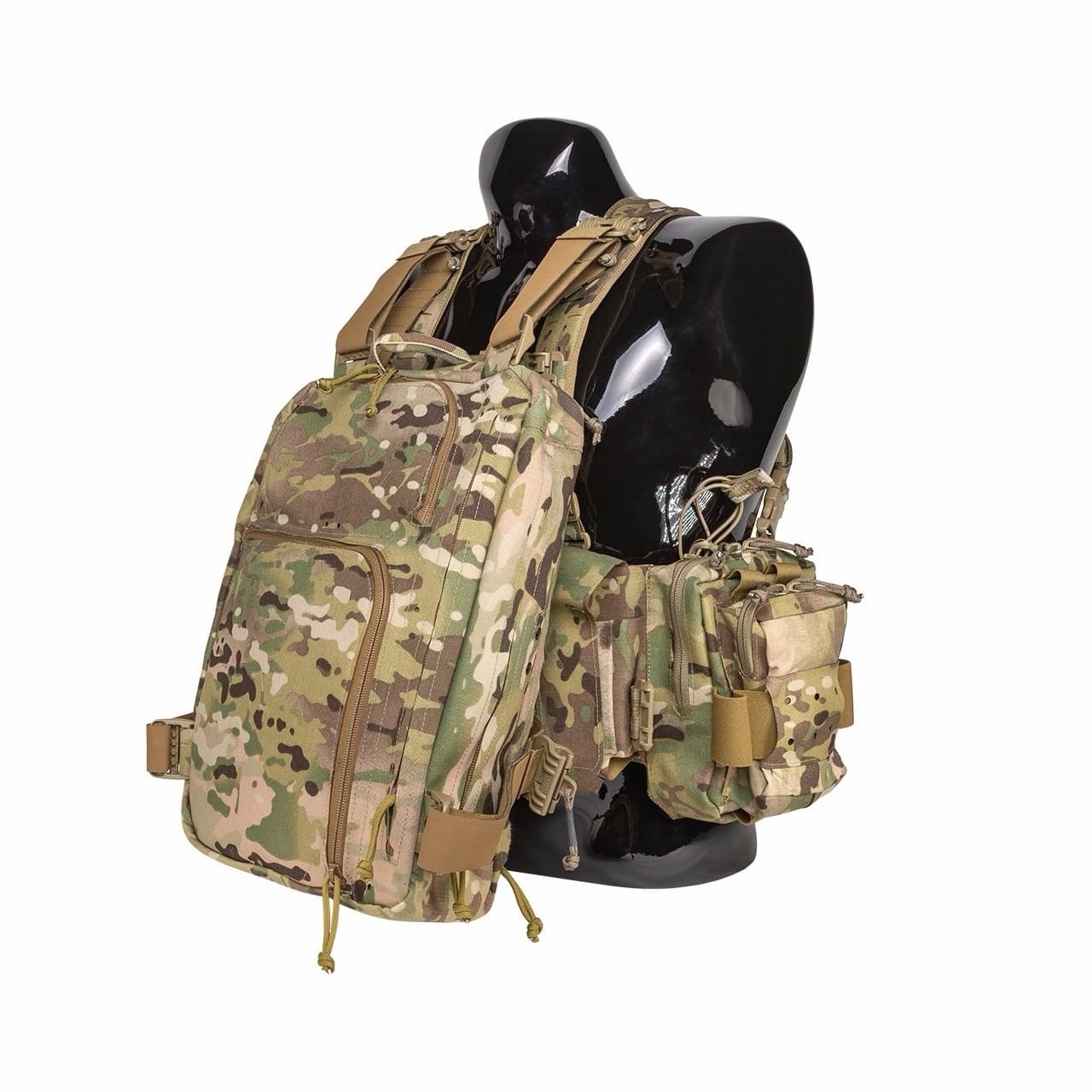
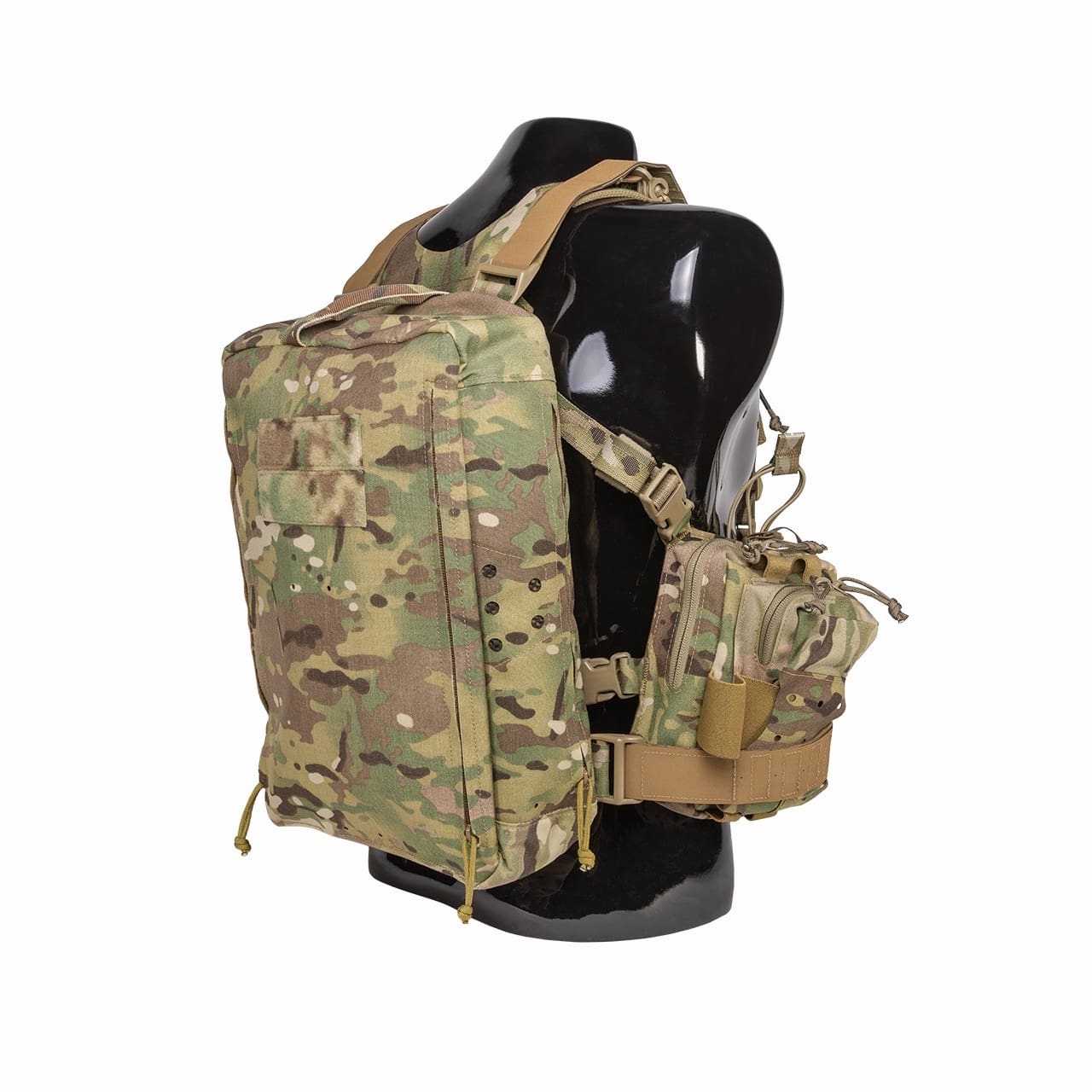
To integrate evaporative cooling into whole blood transport, we addressed two problems in parallel. First, no Commercial Off-the-Shelf (COTS) blood transport container uses evaporative cooling engines, so we had to develop the container architecture from the ground up. Second, the required form factor is not achievable by simply stripping down two single-unit containers and placing them side-by-side, and legacy GWOT-era medical bags were not designed to carry blood at all. Prior solutions largely relied on retrofitting existing equipment. Our approach was to design the 2U container first, then design a bag purpose-built to accept and retain it. This effort resulted in the CRO DCR 26L– a larger, more capable POI medical bag engineered to integrate the 2U Blood Transport Container (BTC).

Production 

Figure 2: Production Design and foam integration
Design for Manufacturing (DFM) began by establishing baseline dimensions using layered foam prototypes. After completing the initial CAD, we evaluated expanding-foam insulation options and refined the flange geometry to prevent foam spillover during assembly. Once the container profile was finalized, we integrated the evaporative cooling engine retention features into the production design.

Production V1 Design

Figure 3: Production V1

Figure 4: Production V1: 2U BTC

Figure 5. Production V1 with CRO 26L
Other Considerations

EM Signature Reduction

In a contested electromagnetic spectrum, electromagnetic signature management is an increasingly relevant survivability consideration. Common medical and support equipment can produce detectable electromagnetic (EM) emissions through electromagnetic interference and unintentional radiators, even when the equipment is not intended to transmit. Distributed small units should account for these emissions and, where practical, mitigate leakage and reduce reliance on powered systems, while recognizing that many battlefield sensor payloads remain primarily electro-optical/infrared (EO/IR).

Targeting Medical Personnel

Medical personnel have faced an elevated risk of engagement in contemporary conflicts, including documented allegations of targeting by the Armed Forces of the Russian Federation. When only medics carry distinctive medical loadouts, visible differentiation can increase exposure to observation and engagement. By selecting and distributing common carriage systems across the element, units can reduce target indicators that single out medical personnel, as multiple personnel will carry similar bags and mixed-use equipment. Preventing medic casualties preserves morale, maintains continuity of care, and sustains overall unit effectiveness.

For additional technical data, configuration options, or pricing, contact customer support: support@cromedical.com
CRO 2U Blood Transport Container (PN: CRO-2U-MC)

DCR 26L first-line aid bag w/ 2U BTC (Bundle PN: DCR-26L-2U-MC).

MSRP: $920.00