Pirata Series from OTB Boots - Coming March 2026!

Army REF Deploys Thermal Imaging Sensors

May 4th, 2020

WASHINGTON – As part of the COVID-19 response, the U.S. Army Rapid Equipping Force, Program Executive Office Soldier and the C5ISR Center of U.S. Army Combat Capabilities Development Command led the initiative to use thermal-imaging devices to screen for potentially elevated body temperatures of personnel entering military facilities.

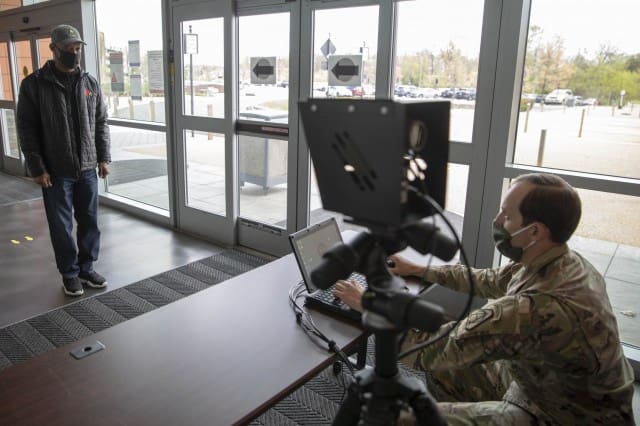
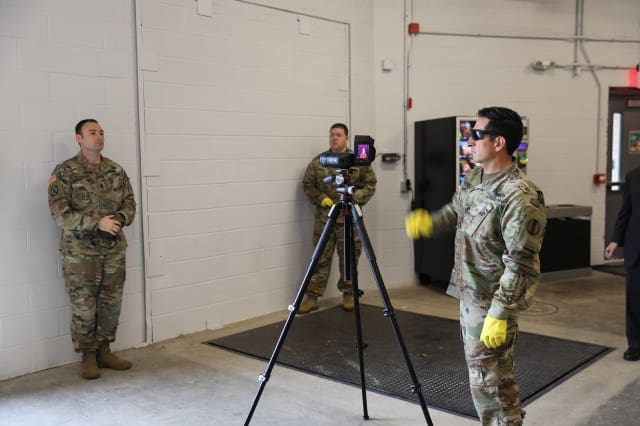
These stand-off thermal imaging capabilities provide significant advantages over hand-held thermometers as they provide a safe distance between the operators and subjects, and require less manpower. The technology, which does not require physical contact, processes information quickly, allowing a faster flow of traffic into buildings and facilities. Screening only takes a few seconds to measure temperature at a distance of 6-to-8 feet using a forward looking infrared sensor mounted on a tripod. If an elevated temperature is detected, individuals receive a secondary screening with a non-contact forehead thermometer. If a secondary screening confirms an elevated temperature, the individual will be encouraged to seek further screening with a medical provider.

Lt. Col. David Wilson, the lead for the REF’s rapid COVID-19 efforts, walked through the screening process at the Pentagon with Dr. Bruce Jette, Assistant Secretary of the Army for Acquisition, Logistics and Technology, and Dr. James A. Day, Executive Director of Security Integration and Technology for the Pentagon Force Protection Agency.

“This is a different adversary we are combating and, as always, it is our number-one priority to protect the force and community to ensure our safety, resilience and readiness,” Wilson said. “We are looking to the thermal-imaging sensors as one of many methods to prevent the spread and exposure of COVID-19.”

The REF worked closely with the Pentagon Force Protection Agency on employing thermal-screening capabilities, which began at the Pentagon Visitor’s Center April 22, 2020. Signs have been placed at various locations to inform personnel and visitors of the screening process. The Pentagon Force Protection Agency is looking to expand the thermal imagers to other areas of the facility, such as Metro entry points.

Also being deployed is the Thermal Imaging for Fever Screening Integrated Visual Augmentation System and the Future Weapon Sight-Individual. Through the close collaboration of government and industry, these systems were quickly modified for thermal-screening capability in a matter of days and put into pilot testing shortly thereafter. To date, thousands of people have been screened with these systems. The TIFS capability is currently deployed at Fort Benning, Georgia, and will expand to other military locations in the coming months.

All of the thermal-screening capabilities are set for broader distribution and use across the Army. Fort Belvoir, Virginia, was the first location to employ thermal-imaging devices for elevated body temperature screening at the installation’s hospital, exchange and commissary. The REF will deploy more thermal-imaging sensors throughout the National Capital Region, Army training centers and to U.S. Army North as one of the first measures of defense against COVID-19.

By PEO Soldier Public Affairs

BE Meyers & Co’s MAWL Variants Explained

May 4th, 2020

Sam from TNVC created this video to explain the different variants of BE Meyers & CO‘s Modular Advanced Weapon Laser.

True North Concepts Launches Modular Holster Adapter

May 4th, 2020

New Modular Adapter Eliminates Unwanted Movement Common with Factory Adapters


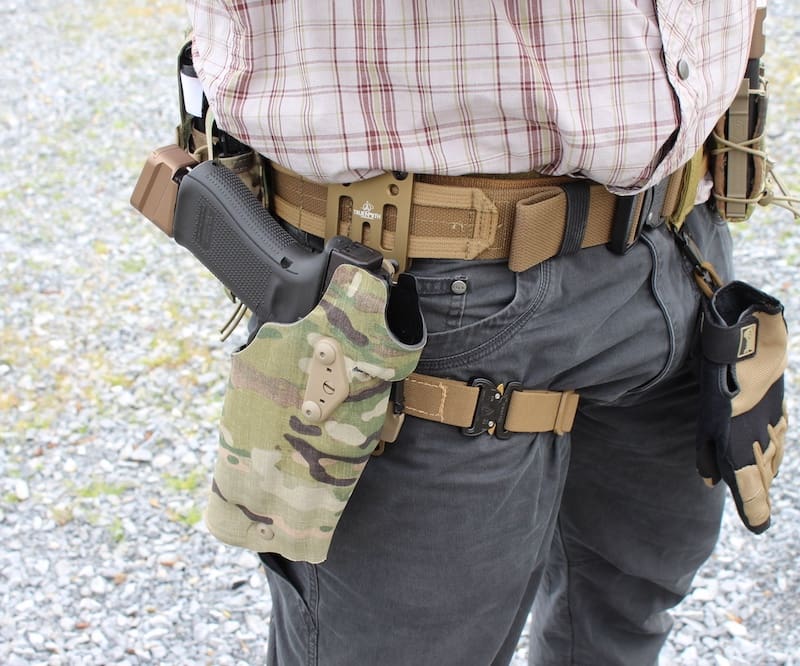
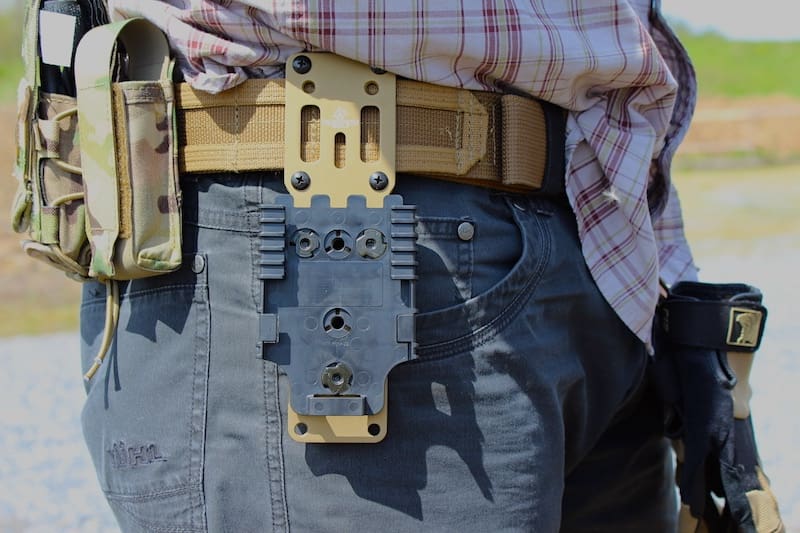
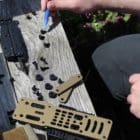
May 4, 2020 – Today, True North Concepts, LLC announced the launch of the True North Modular Holster Adapter, a rugged adapter designed to eliminate the unwanted movement, flex and sliding that are common in most factory belt adapters.

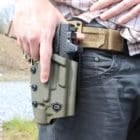
The Modular Holster Adapter is the first adapter of its kind to specifically solve the problem of unwanted movement that nearly all polymer belt adapters create for law enforcement, military and other shooters. It does this by combining modularity with rigidity. Unlike other adapters, the True North holster adapter lets the user decide how they want to carry their pistol rather than forcing them into a one-size-fits-one-belt carry system.

Its modular design gives holsters mounted to the adapter greater mounting rigidity. The adapter’s proprietary modular positioning features include:

• 20-degree-wide mount positioning range; 10-degree forward cant and 10-degree negative cant
• Three vertical mounting points set ½-inch apart giving the user three height options
• Supports “Mid-Ride” mode of carry that will drop the pistol below his or her belt line, allowing it to clear body armor and pouches.

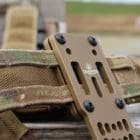
The Modular Holster Adapter fits all Safariland “three-hole pattern” type holsters and multiple brands that use this method of attachment. It also supports common quick detach holster systems, including the QLS. It’s made from non-ferrous DFARS-grade 6061-T6 aluminum, is Type 3 MIL-SPEC hard coat anodized and is made in America.

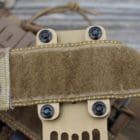
The Modular Holster Adapter mounting system gives users two primary mounting options – the ability to thread the mounting bars through PALS webbing to attach the holster to MOLLE-type battle belts, or to bolt the adapter directly onto any standard gun belt with a width of up to 2 ¼-inches. The Adapter also includes mounting points for use with a wide array of popular quick release belt mounts, including Tek-Lok and polymer MOLLE-type hardware. It is available now in black and dark earth finishes.

The Modular Holster Adapter is available now at TrueNorth-USA.com and ready to ship. More information on holster compatibility, pricing, specs and more is also available now at TrueNorth-USA.com.

Reptilia Corp – Saddle Mount

May 4th, 2020

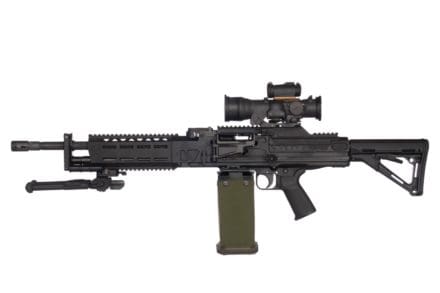
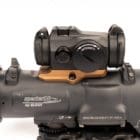
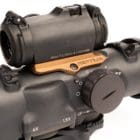
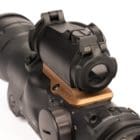
Introducing the Saddle Mount by Reptilia. Designed at the request of a U.S. military customer seeking a more durable miniature red dot solution for machine gun applications, the Saddle Mount allows attachment of Aimpoint® Micro T-1/T-2 and CompM5™ optics to the Elcan® SpecterDR 1.5-6x and 1-4x Optical Sights. The Saddle Mount has been tested and validated by a 3rd party for use on the Mk 17 SCAR, M240, and Mk 48 machine guns, and is now shipping to the DoD via the Tailored Logistics Support Program (TLS-SOE).

For more information, visit www.reptiliacorp.com.

Matbock Monday – Hive Comms Pack

May 4th, 2020

Good morning and Happy MATBOCK Monday,

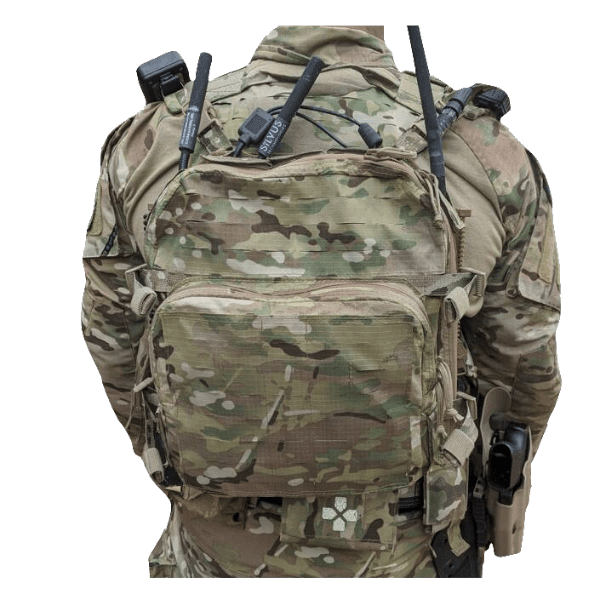
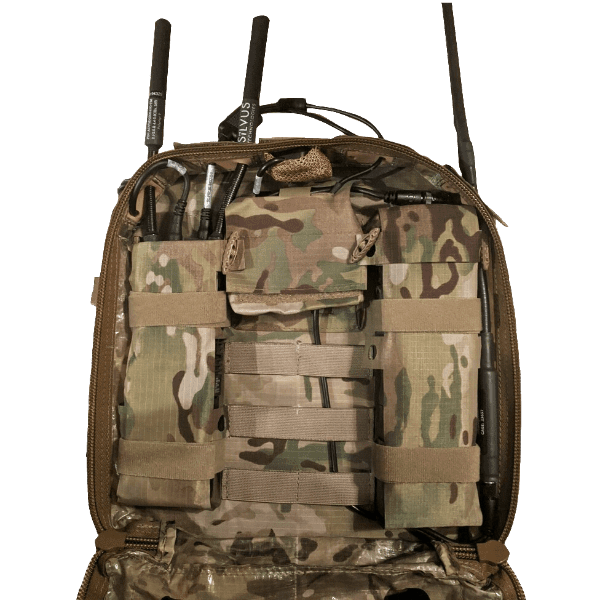
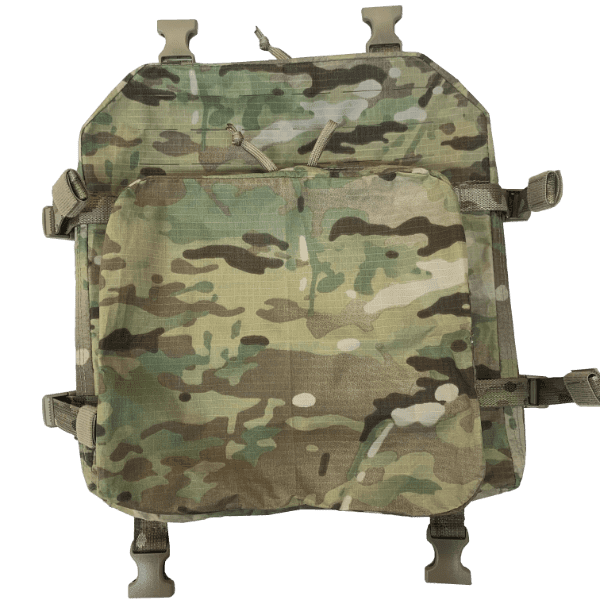
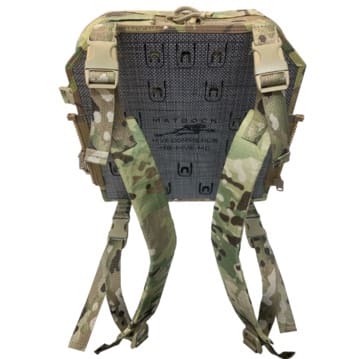
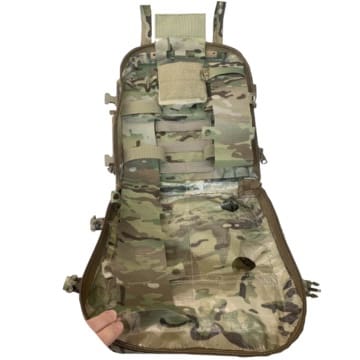
The Hive Comms Pack is made from MATBOCK’s Ghost material giving it superior strength, abrasion resistance, water and CBRN resistance and heat transfer capabilities in a lightweight package. It can house all individual soldier radio types, hubs, and battery types with internal routing channels for cables and MATBOCK’s exclusive water-seal external ports. The pack can be attached via MOLLE, worn as a backpack or zippered on to a compatible plate carrier.

www.matbock.com/products/hive-comms-pack

More Great Images

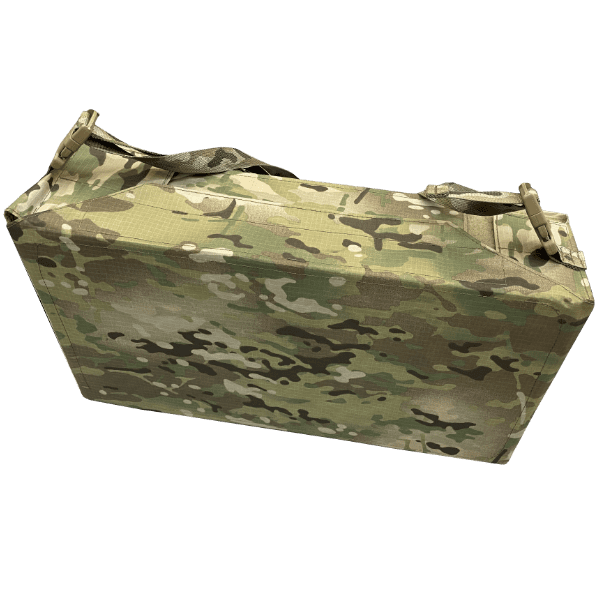
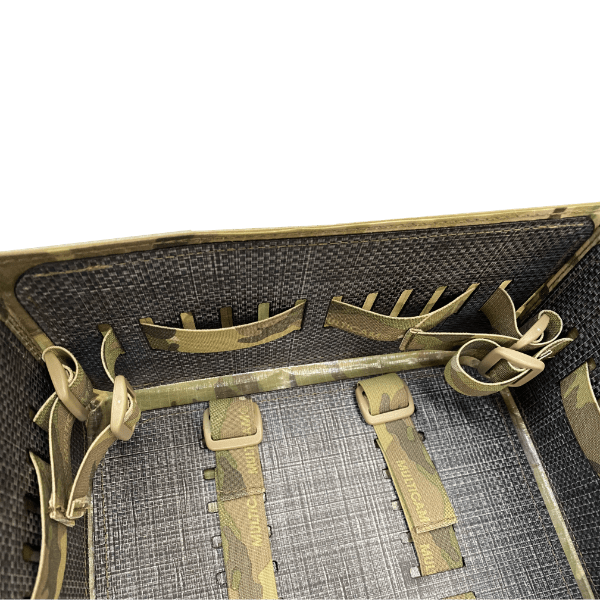
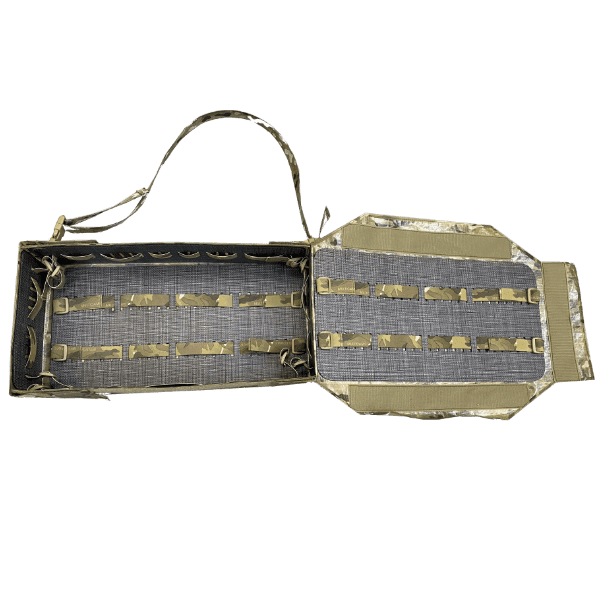
CABLE MANAGEMENT BOX

The MATBOCK CAB is designed to keep communications and other equipment accessories organized and accessible until needed. The semi-rigid bag with internal adjustable stowage loops keep gear protected and well organized. The bag can unfold completely to give access to all equipment without needing to dig through the pack. Made of MATBOCK’s Ghost Light material.

www.matbock.com/products/cable-management-box

Don’t forget to tune in on Monday at 4:30 PM EST as we go live on Instagram to demo the HIVE and Cable Management Box and answer all your questions!

Modern Day Sniper Launches Online School House

May 4th, 2020

Founded by Marine Scout/Sniper Caylen Wojcik, Modern Day Sniper has launched an online schoolhouse to provide training in the technical aspects of precision long-range shooting, particularly as it relates to military and law enforcement applications.

The structure is more of a guided correspondence course approach, where the student purchases an entire course. Within the course, the curriculum is structured in modules, broken down just like an in-person course so that the student can have the next-best experience to being there in person and being coached. Each module will have a downloadable PDF, outlining the content of the module, which will eventually make up the Modern Day Rifleman’s manual.

The initial offering is Circle of Components, but they plan to expand quickly with Fundamentals of Marksmanship, which they believe will most likely be the most popular course they offer. after that is The Technical Rifle Hunter, Long Range Shooting 101, Positional Shooting, Tripod Shooting, Intro to Competition, and Long Range 201.

The overall goal is to become central point for information regarding military sniping and long range shooting in general.

moderndaysniper.mykajabi.com

Strike Industries BIC Lighter Sleeve Concept

May 4th, 2020

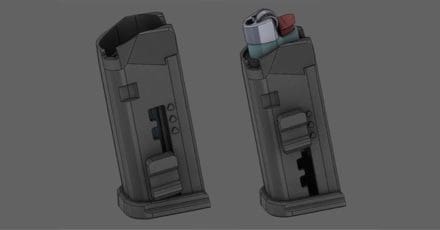
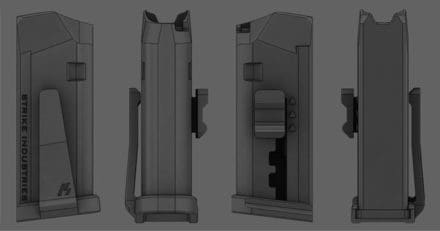
What do you think of this potential Strike Industries BIC Lighter sleeve/case from Strike Industries? They are trying to keep it under $10 MSRP each.

Natick Soldier Center Designs Prototypes for Lifesaving Face Coverings for Soldiers

May 3rd, 2020

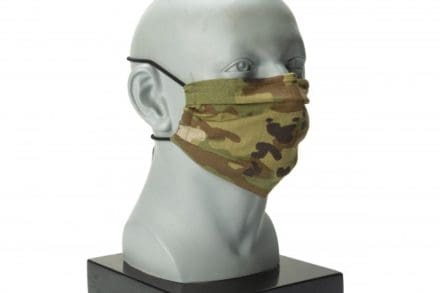
NATICK, Mass. – Dangerous times call for quick action, including rapid prototype development. With this reality in mind, the Combat Capabilities Development Command Soldier Center quickly designed face covering prototypes that comply with Department of Defense standards and meet Centers for Disease Control and Prevention requirements for protection against COVID-19, the disease caused by the Coronavirus.

The CCDC Soldier Center, or CCDC SC, quickly developed six prototypes for face coverings, tested the prototypes, and chose one prototype that was highly rated by Soldiers for immediate development. CCDC SC also selected a second prototype, also well received by Soldiers, that has been further developed, coordinated with PEO Soldier, and will be a more permanent Army solution.

CCDC SC efforts focus on the research, development, and early engineering of the solution and building a Technical Data Package. The designs developed at CCDC SC have transitioned to its partners at PEO Soldier – Project Manager Soldier Survivability for production efforts. CCDC SC is also partnering with PEO Soldier on future iterations.

“During the pandemic, we must ensure that our Soldiers remain ready for any mission and that they are protected” said Douglas Tamilio, director of the CCDC SC. “Our Soldier protection and human factors expertise, combined with our testing and prototyping capabilities, enabled us to quickly develop an Army acceptable solution to the urgent requirement for face coverings.”

CCDC SC is committed to discovering, developing, and advancing science and technology solutions that ensure America’s warfighters are optimized, protected, and lethal. CCDC SC supports all of the Army’s Modernization efforts, with the Soldier Lethality and Synthetic Training Environment Cross Functional Teams being the CCDC SC’s chief areas of focus. The center’s science and engineering expertise are combined with collaborations with industry, DOD, and academia to advance Soldier and squad performance. The center supports the Army as it transforms from being adaptive to driving innovation to support a Multi-Domain Operations Capable Force of 2028 and a MDO Ready Force of 2035. CCDC SC is constantly working to strengthen Soldiers’ performance to increase readiness and support for warfighters who are organized, trained, and equipped for prompt and sustainable ground combat.

Annette LaFleur, team leader for the Design, Pattern and Prototype Team in the Soldier Protection and Survivability Directorate at CCDC SC, explained that CCDC SC “designers quickly brainstormed, sketched, patterned, and fabricated prototypes in one weekend – while material scientists, textile technologists and engineers coordinated the test and evaluation of potential materials.”

“The materials selection was a collection of past and current clothing development efforts, as well as sourcing readily available materials from industry,” said Molly Richards, a research chemical engineer at CCDC SC.

LaFleur explained that clothing designers on the Design, Pattern, & Prototype Team worked with load carriage experts at CCDC SC to rapidly develop an array of potential prototype systems that included six potential designs. CCDC SC’s Human Factors Team assessed the prototypes on Human Research Volunteers stationed at CCDC SC. The designs were given to Soldiers for feedback, a key component of all design efforts at CCDC SC.
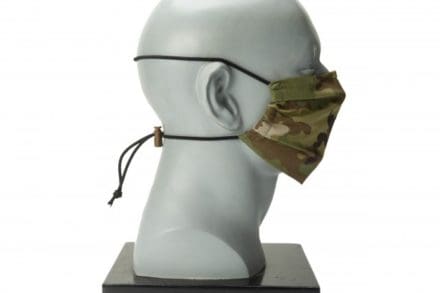
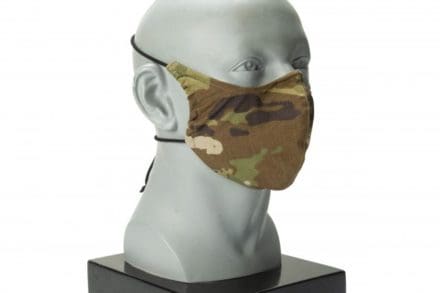
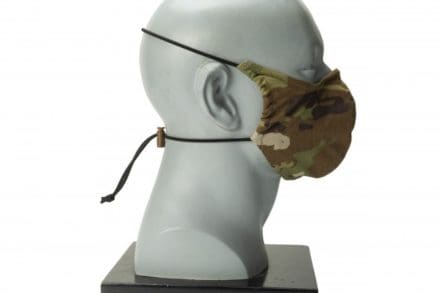
“CCDC SC items, including the face covering, are developed with the Soldier from the beginning stages, so we can say it is ‘Soldier tested and Soldier approved,’” said Richards.

“The design selected needed no improvements,” said LaFleur. “We down selected to designs with the highest Soldier acceptance while considering other factors such as integration with helmets and eyewear as well as ease of manufacturing.”

The first design developed by CCDC SC is being fabricated in-house. CCDC SC specializes in prototype creation and is not a production shop. However, due to unprecedented circumstances caused by the pandemic, CCDC SC personnel are fabricating the first design, which was chosen because of its high acceptance with Soldiers and because it is easy to produce.

Richards explained that a small team of employees across three directorates are busy fabricating the first design with an initial quantity of 10,000 face covers to outfit Soldiers in basic training at Fort Benning, Georgia.

A second design, also highly accepted, has been further developed rapidly as a more permanent Army solution.

CCDC SC knowledge and expertise played an important role in the rapid design and development of the face coverings.

“We have a team of 10 talented clothing designers who work daily to design new and/or improved combat clothing, uniforms and individual protective items,” said LaFleur. “They have the military specific knowledge, skills, ability and creative drive. We collaborated with other CCDC SC subject matter experts in materials/textiles, human factors, anthropology for sizing; engineering technicians in the machine shop; and so many others in various disciplines. We need our Soldiers to remain healthy so they can remain optimized and defend our nation. At CCDC SC our priority is for the Soldier to not to be burdened by what they are wearing, so they can focus on their mission. For the face coverings, the goal is to meet the intent of the CDC and DOD guidelines for use of cloth face coverings when in public.”


“This effort was a natural fit for the expertise in the Soldier Protection and Survivability Directorate,” said Richard Green, Ph.D., director of SPSD at CCDC SC. “We have expertise in materials that enabled smart choices on the selection of materials to ensure the safety of the users. We have expertise in design to make sure that the items fit, function, and durability are appropriate for the intended use, and we have the expertise to provide our PM partners with technical data packages for further production. Mainly, however, we have a dedicated team of true professionals who were willing to come to work under restrictive working conditions and speedily execute this project because they understand the importance of meeting this need expeditiously. I could not be prouder of their effort.”

“CCDC Soldier Center has the expertise from design and prototyping to materials and textiles to react and execute quickly for the need for face coverings for the Soldier,” said Richards. “It has taken a team of people across directorates with a variety of expertise to execute quickly. Protection for our Soldiers is our top priority and taking measures to limit the spread of COVID-19 is essential during this unprecedented time.”