Blue Force Gear® built one of the most successful tailless rifle slings in the world.
Then we built a tailed one.
On the surface, that does not make much sense.
The Vickers Combat Applications Sling™ (VCAS™) helped redefine the modern two-point rifle sling by eliminating the loose webbing shooters had long accepted as part of an adjustable design.
Approaching two decades of service, the Vickers Sling has been widely adopted across the U.S. military. It is issued with the Marine Corps’ M27 Infantry Automatic Rifle and authorized for use with the M4, M4A1, and M16 series. More than 250,000 Vickers Combat Applications Slings are in use across the branches of the U.S. military.
It did not simply become another sling. It became one of the standards by which modern combat slings are measured.
So, when Blue Force Gear introduced the GMT Sling®, short for “Give Me Tail,” the reaction was understandable:
“Wait. Why?”
The short answer is adjustment range.
Some experienced users wanted the ability to make larger changes in sling length as they moved between no kit, body armor, packs, specialized equipment, and cold-weather clothing. They preferred the flexibility of a free-running tail.
The GMT Sling was built for them.
It was not intended to replace the Vickers Sling. It gave Blue Force Gear a purpose-built option for shooters with a different requirement.
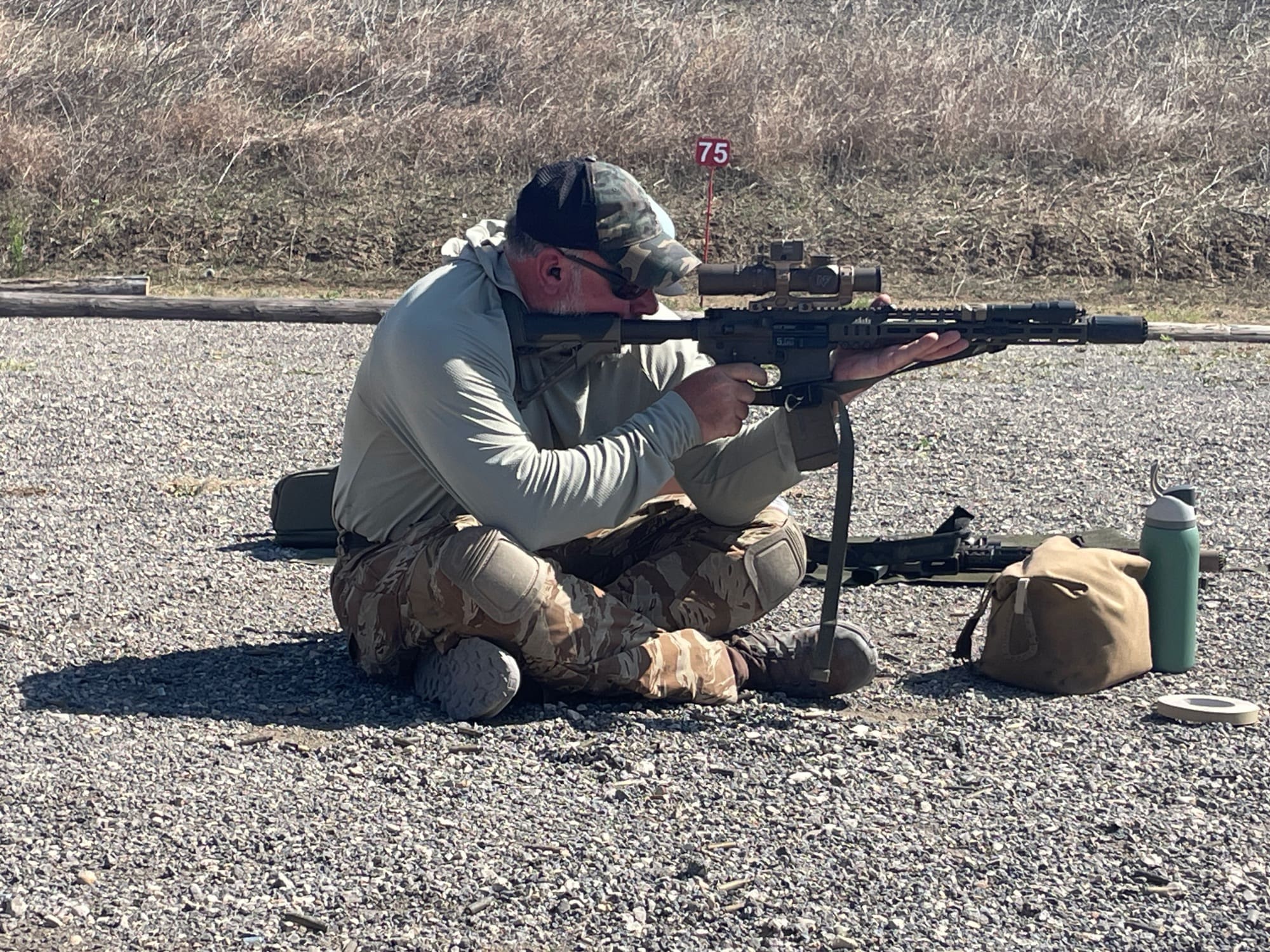
Photo courtesy of Chuck Pressburg, Presscheck Training and Consulting, LLC
A Sling Has to Work With Everything You Wear
A rifle sling seems simple until you spend an entire day living with one.
A setup that feels right on a flat range can feel completely different after hours spent working around vehicles, moving through confined spaces, carrying a pack, or adding layers of equipment.
The rifle may not change. Everything around it does.
Some shooters prioritize a streamlined rifle with no loose material to manage. Others need a broader adjustment range because their equipment and working conditions changesignificantly.
That is the fundamental difference between the Vickers Sling and the GMT Sling.
The Vickers Sling: The Proven Standard
Developed alongside retired U.S. Army Special Forces veteran Larry Vickers, the Vickers Sling uses a captured-tail, quick-adjust system that allows the shooter to tighten or loosen the sling without leaving excess webbing hanging from the rifle.
There is no free-running tail to manage.
That matters around vehicles, doorways, vegetation, and other equipment where loose webbing can become a distraction or interfere with movement. The result is a clean, simple sling trusted by military personnel, law enforcement officers, competitors, hunters, and armed citizens.
That level of acceptance was earned through years of use. The Vickers Sling solved a real problem without adding unnecessary complexity.
For shooters who prioritize simplicity, snag reduction, and a streamlined rifle, it remains the proven choice.
The GMT Sling: A Purpose-Built Alternative
The need for a broader adjustment range is best explained by retired U.S. Army Sergeant Major and firearms instructor Chuck Pressburg:
“When picking a sling, range of adjustment is important to me. A sling should have the range of slider adjustment to be tight enough to shoot sling-supported alternate firing positions while I’m slick with no kit on, and loose enough to engage targets off the hard side after digging a corner, in full kit, while wearing breaching tools, PAPR or even a mission pack on my back. The GMT’s open tail design creates that wide spectrum of adjustment rapidly without having to resize the sling in the friction adaptors.”
The GMT can be pulled tight for retention or sling-supported shooting, then opened substantially when equipment, clothing, or shooting position requires more room.
That additional range comes with a tradeoff. Thin, uncontrolled webbing can twist, snag on equipment, enter a magwell, or otherwise interfere with the rifle.
Blue Force Gear built the GMT around those known issues rather than ignoring them.
Building a Better Tailed Sling
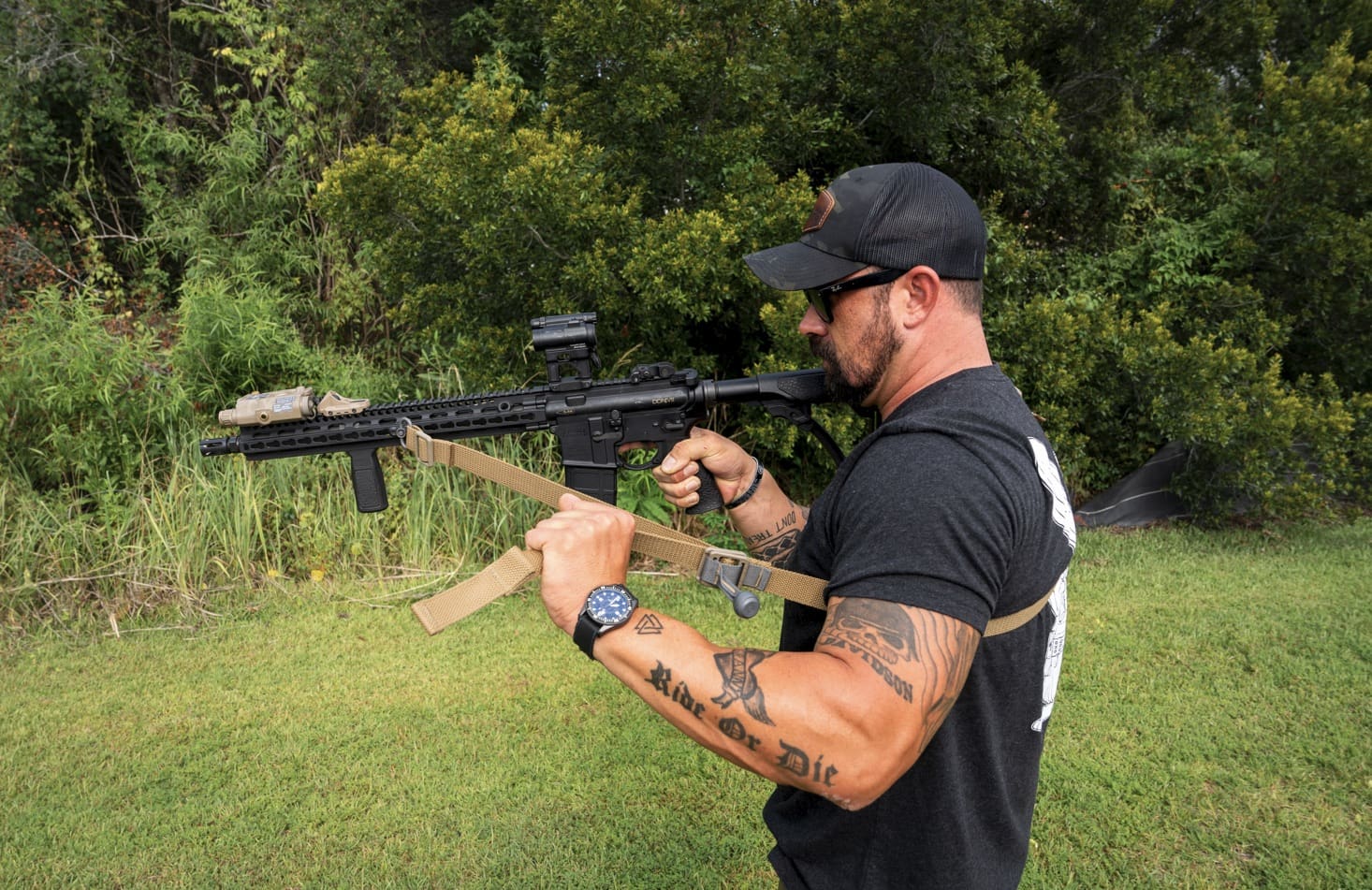
The GMT was designed from the ground up as a modern tailed sling.
Its custom double-locking buckle interface adjuster provides consistent tension when tightening and loosening the sling. Once set, it stays in place until the user intentionally adjusts it.
Instead of the thin webbing commonly found on legacy tailed designs, the GMT uses proprietary solution-dyed CORDURA® nylon webbing. The material has greater thickness and softness for comfort while retaining the durability required for hard use.
The end of the tail is reinforced and stiffened, making it easier to locate and control while reducing the chance of it finding its way into the trigger guard, magwell, or surrounding equipment.
The goal was not to eliminate the tail. It was to preserve the adjustment experienced users wanted while addressing the weaknesses associated with older free-tail designs.
Which BFG Sling Fits Your Requirement?
Choose the Vickers Sling if:
• You prioritize a streamlined, captured-tail design.
• You want to minimize loose material around the rifle.
• Your equipment configuration remains relatively consistent.
• Simplicity and snag reduction are your primary concerns.
• You want rapid adjustment without managing a free-running tail.
Consider the GMT Sling if:
• You prefer a free-tail design.
• You move between substantially different equipment configurations.
• You need a broader usable adjustment range.
• You use sling tension in alternate or supported shooting positions.
• Your need for additional adjustment outweighs your preference for a captured-tail system.
The Standard Remains. The Options Expand.
The Vickers Sling remains one of the most recognized and trusted combat slings in the world. Nearly two decades of service, widespread military use, and continued support of the Marine Corps speak for themselves.
The GMT expands the BFG sling family for experienced shooters who need the adjustment range of a free-running tail, built with modern materials and purpose-designed hardware.
The question is not which sling is universally better.
The question is what you need your sling to do.
Want the proven, streamlined, captured-tail design? Explore the Vickers Sling.
Need the extended adjustment range of a purpose-built free-tail sling? Explore the GMT Sling.
Equipment should solve problems, not create them.
About Blue Force Gear
Blue Force Gear® is a leading innovator in lightweight tactical equipment, best known for producing some of the world’s most trusted weapon slings. The company continues to redefine load carriage with its Ten-Speed® multi-use pouches, MOLLEminus® platforms, and patented Helium Whisper® attachment system.
Driven by a commitment to performance and weight reduction, Blue Force Gear® engineers its products using proprietary ULTRACOMP® high-performance laminate materials, delivering durability without unnecessary bulk. This relentless focus on innovation, combined with precision manufacturing and attention to detail, has positioned the brand at the forefront of modern tactical gear.
Blue Force Gear® is a Great Place to Work® Certified company, reflecting its dedication not only to the warfighter, but to the people behind the mission.
For more information, visit www.blueforcegear.com.