TYR Tactical

Archive for the ‘Guest Post’ Category

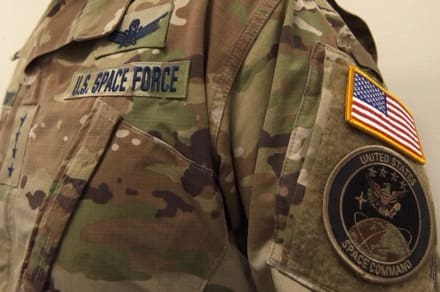
Space Force to Accept Air Force Reserve Volunteers for Full-Time Positions

Saturday, June 1st, 2024

ARLINGTON, Va. (AFNS) —  

Air Force Reservists in space-related career fields interested in volunteering for the U.S. Space Force in a fulltime capacity can expect the application window to open June 1–Nov. 30, 2024.

This transfer option is part of the Space Force Personnel Management Act (PMA), approved by Congress and signed into law as part of the Fiscal Year 2024 National Defense Authorization Act.

When fully implemented, the PMA will enable the Space Force to create a new model of service that integrates active-component Guardians and Air Force Reservists serving in space-focused career fields into a unified service that offers both full- and part-time service options.

“This is an important first step toward fully integrating critical space expertise from the Reserve into our force,” said Chief of Space Operations Gen. Chance Saltzman. “We’ve been serving side-by-side together, supporting the same mission, for longer than the Space Force has existed. I’m excited to officially call the teammates who decide to transfer Guardians.”

Air Force Reservists who hold the below Air Force Specialty Codes are eligible to apply for transfer into the Space Force in full-time capacity:

Officers: 13S – Space Operations, 17X – Cyberspace Operations, 14N – Intelligence, 62E – Developmental Engineer, 63A – Acquisition Manager, and 61X – Scientist. Officers selected from the 6X career field will re-core to a 62E or 63A since Space Force does not maintain that career specialty.

Enlisted: 1C6 – Space Systems Operations, 1N0 – Intelligence, 1N1 – Imagery Analysis, 1N2 – Sigint, 1N3 – Cryptologic Language Analyst, 1N4 – Network Intelligence Analysis, 1N8 – Targeting Analyst, 1D7X1 – Cyber Defense Operations, 1D7X2 – Spectrum Operations Technician, and 1D7X3 – Cable and Antennae Defense Operations.

“The Space Force is about to integrate some of the most talented space operators,” said Chief of the Air force Reserve and Air force Reserve Command Commander Lt. Gen. John Healy. “I have no doubt they will be key to advancing security in the space domain.”

In time, the Air Force Reserve, like the Air Force, will no longer maintain space operations as career fields, meaning Reservists with 13S and 1C6 specialties must transfer to the Space Force in either a full- or part-time position, or re-train under a different Air Force Specialty Code.

Application windows for Air Force Reservists interested in transferring to the Space Force in a part-time capacity are expected to open in 2026 once policies, processes and systems are established. The PMA does not currently apply to space units and personnel currently resident in the Air National Guard; however, Guard members could expect a similar process to their Reserve counterparts after authorized and appropriate legal and policy changes.
Interested Air Force Reservists can apply via MyVector and can access additional application details and requirements on the Space Force Transfer page.

Secretary of the Air Force Public Affairs

The CLAW, From the B.E. Meyers & Co. Engineering Archives

Friday, May 31st, 2024

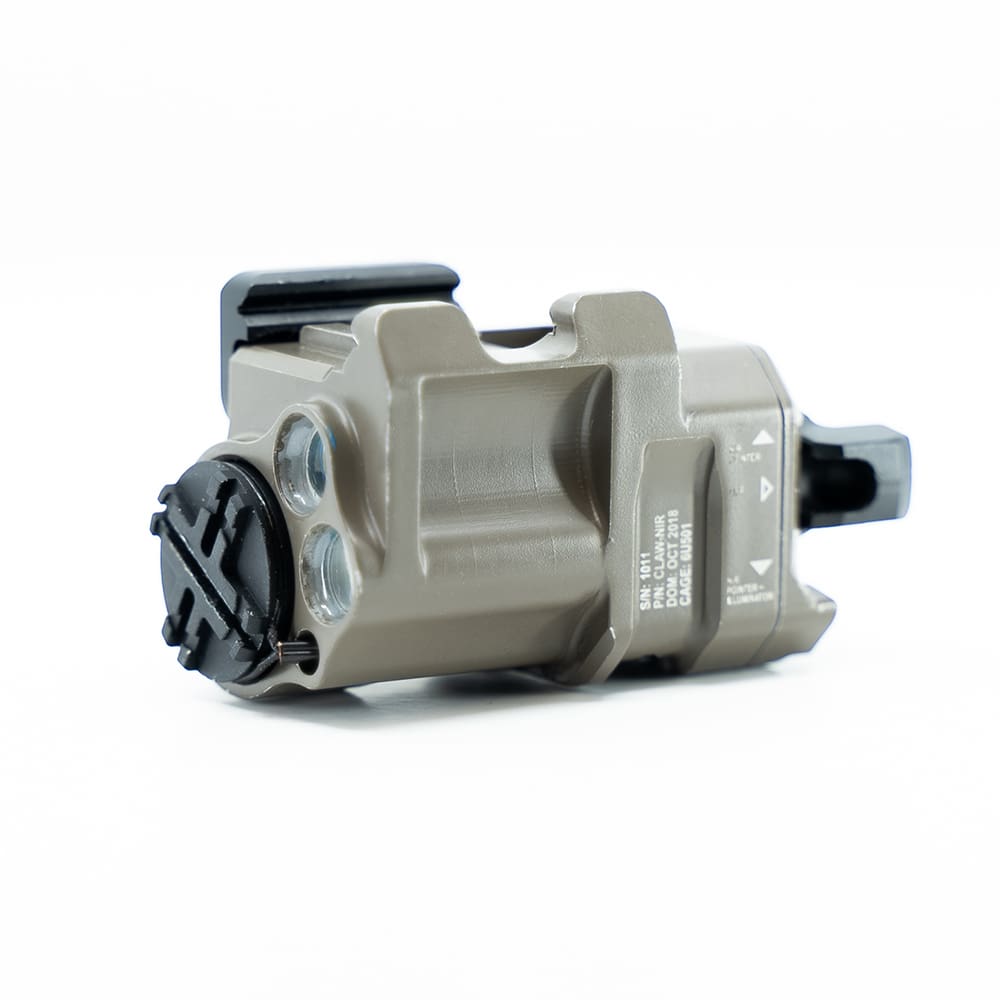
CLAW

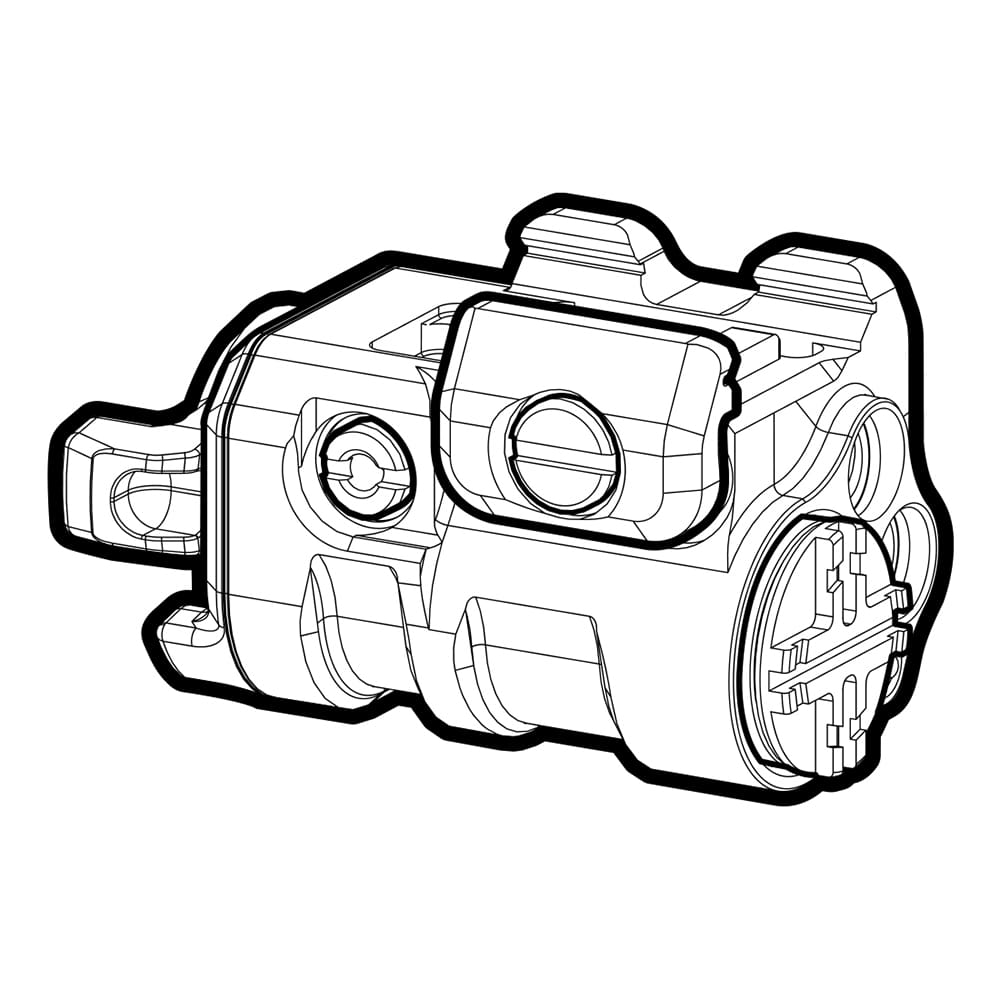
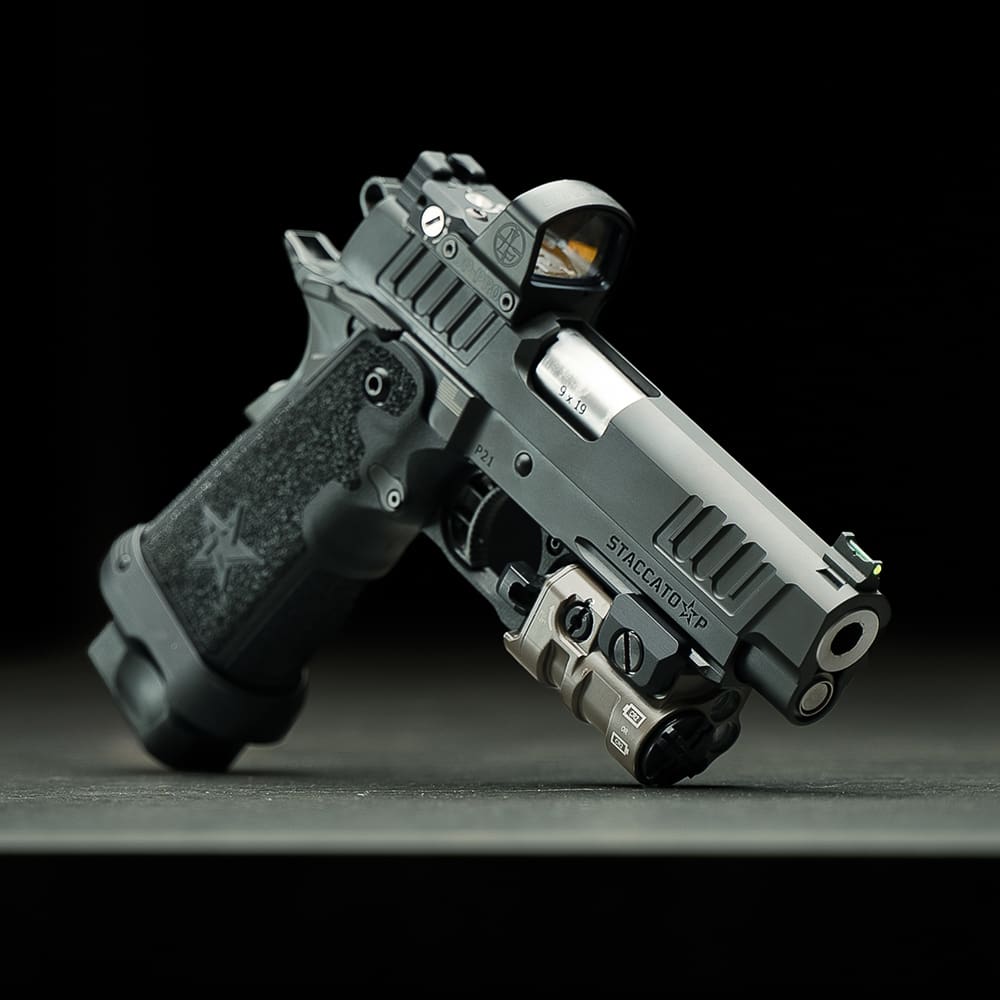
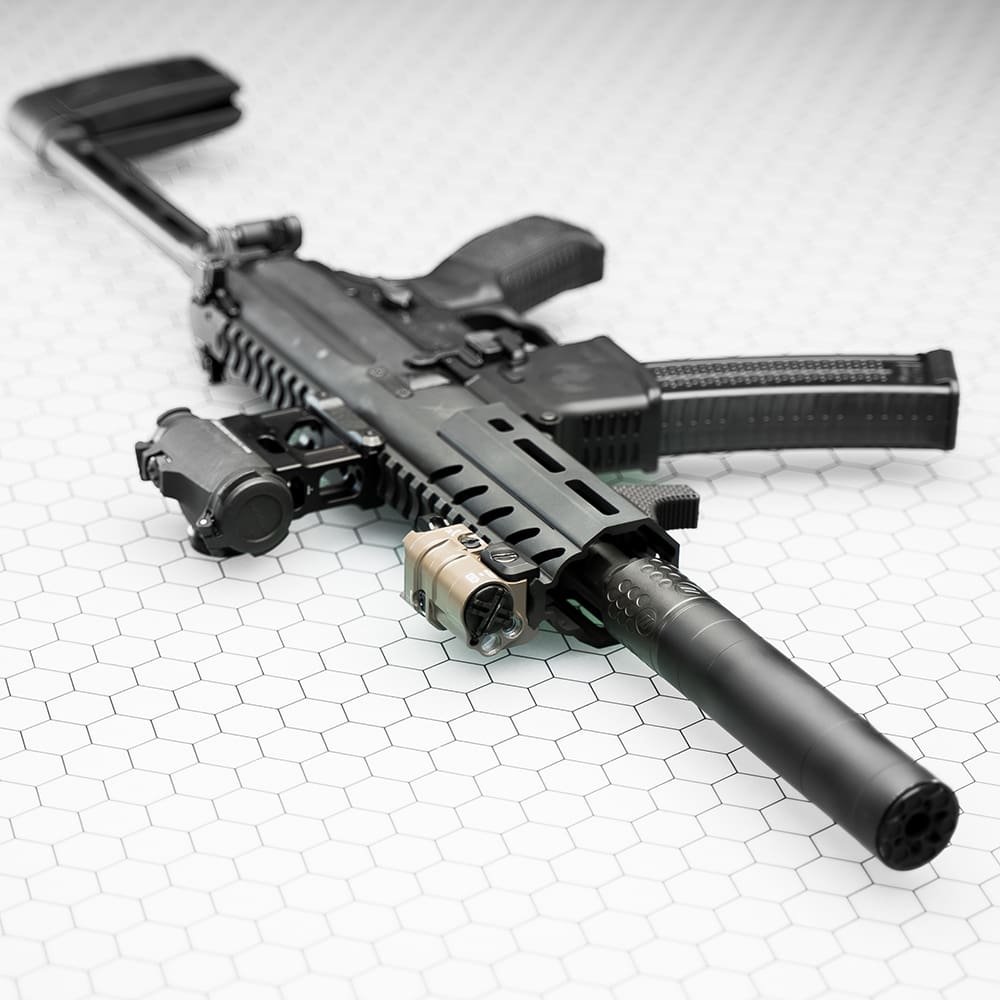
The CLAW” Is a compact laser alming device for weapons use that was developed for a select customer application several years ago, but one that unfortunately did not materialize into a completed requirement.

The CLAW” was the result of an extensive development effort, but was then carefully stored deep within the B.E. Meyers & Co. engineering archives. It was recently rediscovered in a wooden crate which housed an ark-type storage container, which was then carefully opened by “top men” as part of our standard ISO 9001:2015 engineering processes and rituals. We have made the decision to revisit these prototypes in order to further explore the CLAW’s capabilities and gather feedback from end user communities in furtherance of future product development concepts.

DEVICE DESCRIPTION

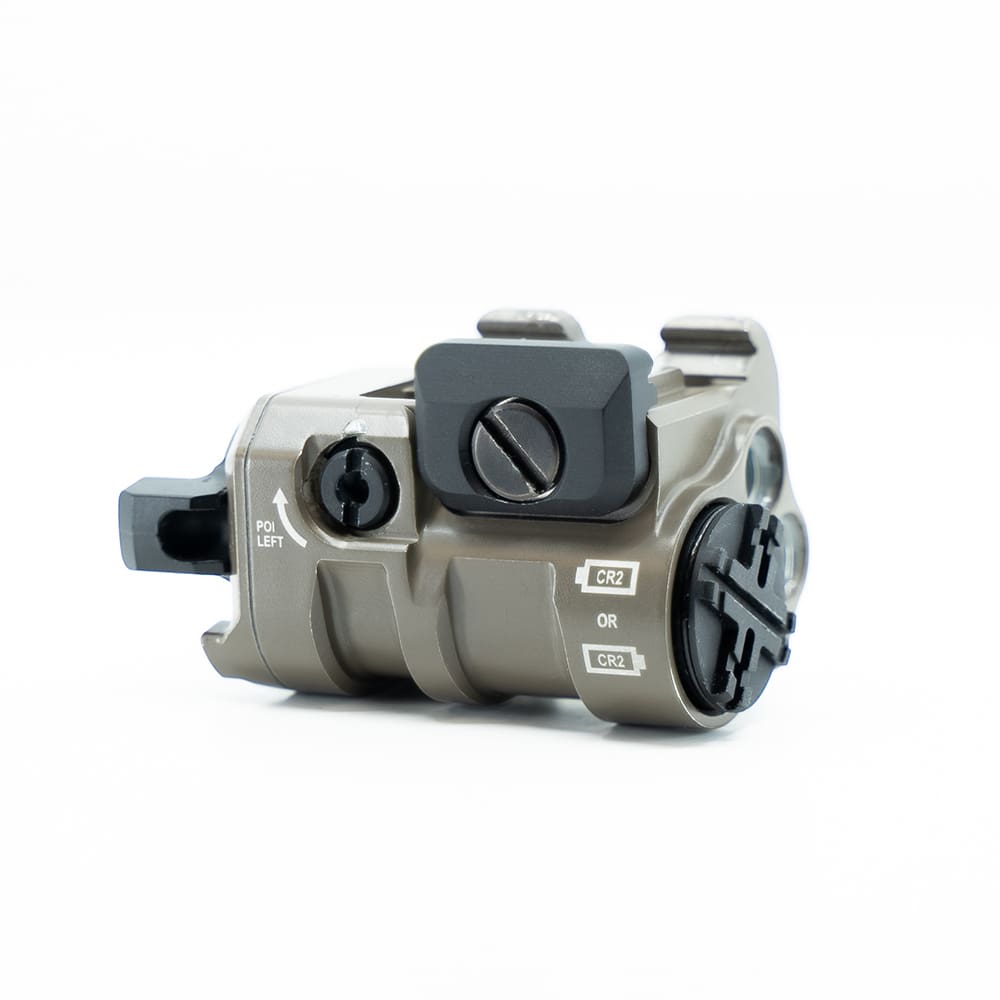
The CLAW laser illuminator and aiming device is a Class 1 laser system designed to be attached to a pistol or SMG to aid in aiming the host weapon and provide useful illumination for observation and target discrimination while utilizing night vision devices.

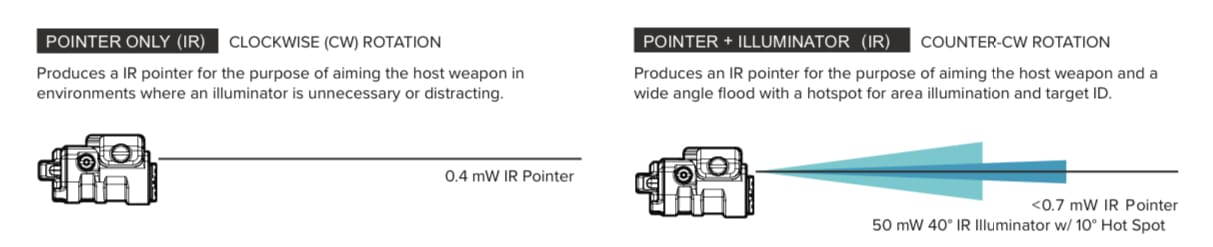
The CLAW is capable of emitting an 860 nm invisible infrared (IR) illumination beam and an 845 nm IR aiming beam. The aiming beam is adjustable for windage and elevation while the illuminator is fixed perpendicular to the housing.

The device is designed to be simple and efficient to manipulate. The rotating activation Switch has three (3) positions: OFF, IR Pointer Only, and IR Pointer + IR Illuminator. Rotating the switch between these settings turns the device on and provides the selected output. The output is always constant-on with no timeout. The device must be switched to the “OFF” position to cease emitting.

MODES & FUNCTIONS

The CLAW infrared laser device has two modes: IR Pointer Only and IR Pointer + IR Illuminator. Modes are selected and simultaneously activated by rotating the Activation Switch.

Proposed design concept MSRP $14.

bemeyers.com/claw

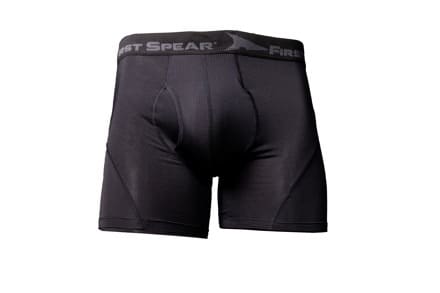
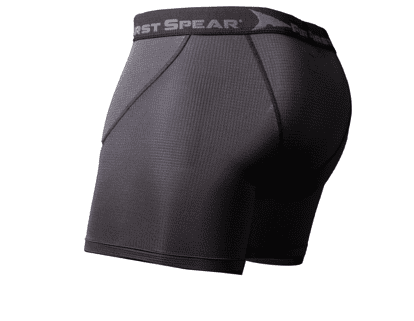
FirstSpear Friday Focus: Boxer Briefs Restock in 2 and 4 Packs

Friday, May 31st, 2024

• 100% American Made with American Materials, Berry Compliant
• Ultra-lightweight flex grid blend with fly opening
• Moisture Wicking / Anti-Microbial
• Low profile comfort waistband
• Enhanced front panel for extra support
• Pack of 2 and Pack of 4

Our feature-rich performance briefs are back in stock and now available in a 2 and 4 pack. Constructed from a flex grid polyester/spandex blend allows the Briefs to be extremely lightweight and breathable which translates to all-day comfort! Superimposed flat seam technology and a soft brushed elastic waistband that won’t roll over and stay where you want it. The flex grid is a four-way stretch design with exceptional antimicrobial and moisture-wicking properties. Extra room built into the front panel for extra support along with fly. Sold as a two-pack and four pack— that have one black and one graphite pair of briefs or two black briefs and two graphite briefs respectively.

To check out the performance briefs, go to www.first-spear.com/performance-briefs-1.

Corps Collaborations: Industry Innovations in Textiles and Medical Tech on Display in North Carolina

Friday, May 31st, 2024

Marine Corps Base Quantico, Va. —

Earlier this month, MCSC’s Program Manager Combat Support Systems, or PM CSS, was on the ground on Tobacco Road for the 2024 FEDTEX Summit– a yearly symposium that connects the DOD’s acquisition community with industry leaders in textiles and tactical equipment—and the 2024 Special Operations Medical Association Conference, a forum that showcases the latest in expeditionary medical technologies.

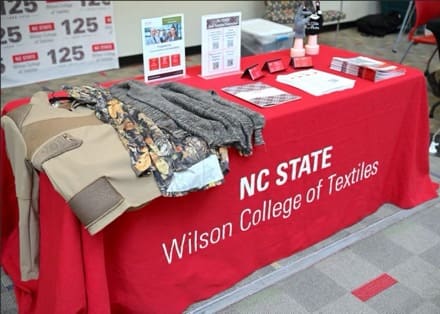
Hosted at North Carolina State University’s McKimmon Conference Center in Raleigh, FEDTEX provided the team an opportunity to engage with existing industry partners in the textile sector, tour the Wilson College of Textile facilities, and connect with graduate students interested in entering federal service.

According to Col. Paul Gillikin, CSS program manager and NC State alum, “Connecting with the textile community is essential to meet Force Design’s modernization goals and support Expeditionary Advanced Base Operations, or EABO. Strengthening supply chains and integrating advanced textiles and manufacturing techniques are crucial to mitigating the growing risks in the electromagnetic spectrum. It was important to discuss Marine Corps and Joint warfighter needs and then hear industry feedback on that direction.”

Although the Pentagon’s strategic return to the Indo-Pacific has led to a renewed focus on the fielding of expeditionary capabilities meant to dominate the global littorals, experts have warned a future war against our nation’s pacing threat could be decided—in large part—on the electromagnetic spectrum.

Exposing this emerging reality, the Pentagon recently warned that China has developed advanced electromagnetic spectrum monitoring technology, making it difficult for Marines to conceal their presence on the battlefield. From heat signatures to electromagnetic emissions from their gear, the warfighter risks revealing critical information that adversaries can detect and exploit.

With high-end weapon systems dominating the headlines, PM CSS is actively pursuing technology to protect individual Marines and small units. Along with its Joint clothing partners, the team is focused on the visible and non-visible portions of the electromagnetic spectrum to increase capability against emerging sensor threats, particularly in the thermal realm.

Although clothing has historically been seen as a source of comfort and protection from varying weather conditions and ordnance, developments in military technology from our adversaries have forced experts to reimagine the role of textiles on the modern battlefield, viewing them as personal protective equipment– much like body armor– that enhances the warfighter’s lethality and reduces detectability from peer and near-peer adversaries.

According to Ed Howell, Product Manager for Combat Service Support Equipment, “The FEDTEX conference provided an excellent opportunity to explore the state of the art in domestic textiles for Marine Corps tactical uniforms. It was particularly eye-opening to witness the mannequin, PyroMan, undergo a flame test while wearing clothing at the Thermal Protection Laboratory in the Wilson School of Textiles at NC State University. Flame resistance, along with signature management, is one of the key attributes we are seeking in the next generation of Marine Corps Combat Utility Uniforms.”

Similarly, team members from PM CSS’ Expeditionary Medical team were at SOMA to meet with American and international industry partners to explore the latest advancements in field medical technology.

Under Force Design’s strategic blueprint for modernization, collaboration with industry is pivotal for enhancing medical support and operational readiness in contested environments. These efforts aim to improve Marines’ survival while awaiting evacuation, significantly boosting their resilience and effectiveness in challenging situations.

EABO has fundamentally changed field medical operations,” said Navy Cmdr. Kellye Donovan, EMS Team Program Analyst-Pharmacist. “We have shifted from the GWOT’s ‘Golden Hour’ for patient movement to extended patient holding, providing 96-hour patient care in the field. We are looking for industry assistance to push care to a lower level, make medical capabilities more agile and maneuverable, and reduce logistical constraints in a distributed, contested environment.”

Yet, while creating a forum for collaboration with industry is crucial, connecting with students is equally essential to CSS’ mission as engaging the next generation of innovators ensures a continuous flow of fresh ideas and talent, driving the development of critical textile and medical capabilities for the Corps.

Jacqueline Sewell, a Textile Technologist at the Army Combat Capabilities Development Command and matrixed to the Clothing & Equipment Team under CSS, holds both undergraduate and graduate degrees from the Wilson College of Textiles, or WCOT.

“NC State’s programs have provided me with a foundational knowledge of textiles and an avenue to tangibly contribute to increasing our warfighter’s comfort, capabilities, and mission success through their DoD-issued gear,” she said. “Working for the DoD has allowed me to apply the knowledge gained through my education at WCOT to research, develop, test, and evaluate textiles with active-duty Marines stationed across the US (from Mountain Warfare Training Center to Kaneohe Bay) in leading to the acquisition and sustainment of items such as combat uniforms and extreme cold weather base layers.”

Ultimately, the capabilities being developed by CSS in collaboration with the Joint Force and industry partners are helping modernize and strengthening our military forces. Advanced textiles are enhancing protection and reducing detection risks, while emerging medical technologies are improving field treatment and increasing survival rates. These innovations help maintain operational readiness and effectiveness in contested environments, ensuring that our warfighters are equipped with the best possible tools to succeed on the modern battlefield.

By Johannes Schmidt, MCSC Office of Public Affairs and Communication | Marine Corps Systems Command

US, NATO Forces Showcase Tactics, Integration During Astral Knight 2024

Wednesday, May 29th, 2024

GDYNIA, Poland (AFNS) —  

NATO’s exercise Astral Knight 2024 concluded May 18 in Gdynia, demonstrating joint force interoperability and strategic readiness between U.S. forces and NATO allies. The exercise allowed the incorporation of the Special Warfare Teaming Concept, involving the 2nd Air Support Operations Squadron from Vilseck, Germany; the 57th Rescue Squadron from Aviano, Italy; and members of Polish special forces.

The exercise emphasized United States Air Forces in Europe – Air Forces Africa’s commitment to agile combat employment strategies, integrating advanced sensor technology and refining multinational tactical operations designed to enhance movement, maneuverability and security across NATO territories.

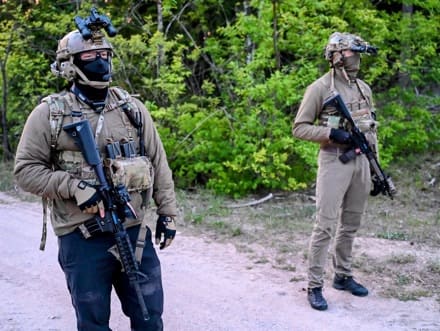
Throughout the training in Gdynia, the special warfare teams, comprising of tactical air control party members and pararescuemen, demonstrated the effectiveness of their combined operations. These operations are aimed at ensuring aircrews and Airmen are well prepared to deliver lethal combat power and conduct precise recovery operations in contested environments.

“Our presence here at Astral Knight 24 aimed to refine and test the Special Warfare Teaming strategy,” said U.S. Air Force Tech. Sgt. Phonchai Hansen, 2 ASOS flight chief of Alpha Flight. “By combining our TACP capabilities with the expert medical and recovery skills of the PJs, we’ve created a dynamic force capable of addressing multifaceted threat scenarios effectively.”

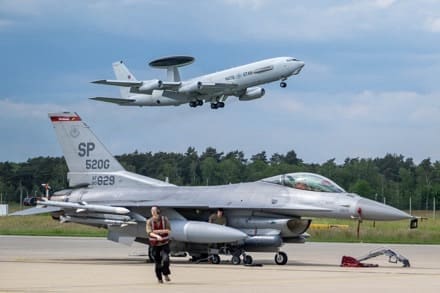
The exercise featured simulated, dynamic targeting missions and personnel recovery drills, during which TACPs and PJs executed coordinated responses to simulated threats. One of the scenarios included a pilot emergency ejection from an F-16 Fighting Falcon and required immediate extraction from a hostile environment, testing the cohesion and interoperability of the newly formed teams.

“The integration of TACPs and PJs into a cohesive unit allows us to leverage our respective strengths,” said U.S. Air Force Capt. John Miller, 2 ASOS flight commander of Alpha Flight. “This exercise effectively assessed the current state of Air Force Special Warfare Teaming, allowing us to inform the development of the special warfare enterprise.”

This year’s Astral Knight also focused on testing and improving joint operational tactics, involving not only U.S. forces but also enhancing cooperation with Polish military units and other NATO partners. The seamless collaboration forged stronger alliances and demonstrated NATO’s capability to defend its members against any threat.

The Special Warfare Teaming Concept not only showcased tactical abilities but also strategic foresight in preparing NATO forces for future challenges.

“The gives us the ability to operate with our NATO allies in some pretty complex scenarios,” said a PJ participant. “This greatly improves our collective security and ensures we are always ready to respond to threats swiftly and efficiently.”

The lessons learned and relationships built in Gdynia will help future NATO exercises and operations. Furthering the success of the Special Warfare Teaming Concept — marking a pivotal advancement in military operations, enhanced cooperative capabilities and strategic deployment readiness across NATO.

By Capt Jacob Murray, 86th Airlift Wing

72nd ISRS In Line With SPAFORGEN model

Tuesday, May 28th, 2024

PETERSON SPACE FORCE BASE, Colo. (AFNS) —  

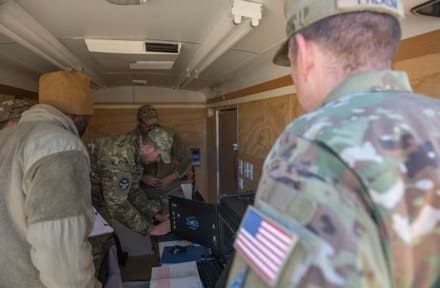
The 72nd Intelligence, Surveillance and Reconnaissance Squadron held a readiness exercise at Peterson Space Force Base, May 8. The exercise focused on practicing mission-essential tasks, training Guardians in a low-threat environment and validating unit readiness for deployments.

“Our Guardians will be able to go through the entire deployment process, from required training to using equipment, as they exercise our mission essential tasks,” said 1st Lt. Wyatt Packard, 72nd ISRS operations flight commander. “This will validate the previous training they undertook in their ‘Prepare Phase’ of [Space Force Generation].”

A framework that the USSF is using to present forces to combatant commands, SPAFORGEN provides force element packaging tailored to meet combatant commander’s requirements.

“SPAFORGEN is the model we use to build readiness. It is based on the straightforward observation that day-to-day space operations do not prepare Guardians for the challenges they will face in a high-intensity combat environment… Under SPAFORGEN, the force elements that comprise combat squadrons and detachments rotate through three phases. During the Prepare Phase, Guardians build expertise in assigned roles. Next comes the Ready Phase where Guardians participate in advanced training to equip them for high-intensity conflict. Guardians then rotate into the Commit Phase as part of a combat squadron or combat detachment. Once complete, they rotate back into the Prepare Phase and begin the process again,” according to Chief of Space Operations Gen. Chance Saltzman in his 26th CSO Notice to Guardians published April 19.

Tech. Sgt. Matthew Hahnrauch, exercise lead and 72nd ISRS operations flight chief, discussed the organizational structure of how the units are designed to operate.

“The goal is to collect radio frequencies, provide electromagnetic support and then conduct reporting,” Hahnrauch said. “The six-person crew is designed with mobility and survivability as a priority. This team structure is designed for 24/7 operations and minimal support from other military forces to accomplish the designed tasks.”

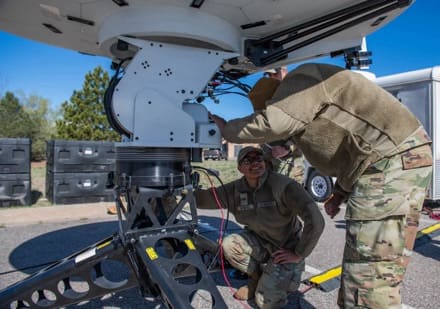
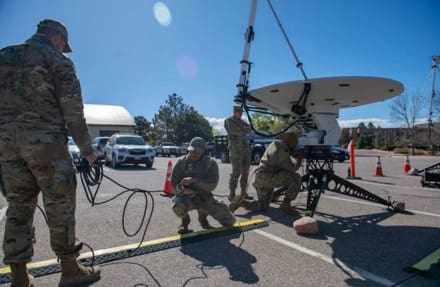
The 72nd ISRS uses Deployed ISR Support Crews, which are modular, agile teams designed for worldwide deployment and operations, Hahnrauch said. They are composed of five components.

“These components are collection apertures, processors, communication suites, data relay and temporary Secure Compartmentalized Information Facilities,” Hahnrauch said. “Each variation of DISC is trained on slightly different equipment and DISCs are scaled up or down depending on the systems they are operating.”

Communication technologies have rapidly advanced in the last 20 years and the need to advance U.S. collection systems has increased.

In cyberspace, the barriers to entry are continually reduced and more actors can enter the domain with relative ease, Hahnrauch said. Military systems are increasingly disconnected and do not rely on communications and when over-the-horizon communications are required, dedicated military satellite communications are leveraged. This presents opportunities for cyberspace, electromagnetic warfare and space operations.

“Failure to field and employ expeditionary, mobile collection systems will place the joint force at a disadvantage in cyberspace operations, electromagnetic warfare and space operations and degrade our ability to produce the intelligence necessary to drive operations across the spectrum of competition and conflict,” Packard said. “We will continue to execute iterations of this training event with the intent of mission rehearsal for contested environment operations. In the future, we’ll be incorporating more austere components into the exercise to provide a dynamic and mobile collection with the ability to rapidly deploy, maneuver and communicate in a high-end fight. Our capabilities continue to grow and expand.”

The 72nd ISRS is a unit within Space Delta 7, with the mission to provide expeditionary ISR in addition to electromagnetic support to joint and allied partners worldwide.

By Keefer Patterson

Space Base Delta 1 Public Affairs

MQ-9A Accident Investigation Report Released

Monday, May 27th, 2024

HURLBURT FIELD, Fla. —  

Today*, Air Force Special Operations Command released an Accident Investigation Board report on an MQ-9A Reaper mishap that occurred Sept. 5, 2023, at Cannon Air Force Base, New Mexico. The mishap resulted in no injuries, fatalities, or damage to civilian property. The damage to government property was valued at $2.9 million.

The aircraft and crew were assigned to the 27th Special Operations Wing’s 12th Special Operations Squadron at Cannon AFB.

The AIB president found the causes of the mishap were pilot error, poor Crew Resource Management, and environmental conditions. When the aircraft touched down for landing, the
pilot was unable to control the aircraft’s trajectory due to inoperable nosewheel steering and no ability to utilize differential braking due to impact with three runway-shoulder illumination lights during a previous touch-and-go landing. The aircraft ultimately traveled off the prepared runway surface. The nose landing gear collapsed, causing the nose of the aircraft to strike the ground and the sensor unit to detach from the aircraft and be destroyed.

The AIB report can be viewed at www.afjag.af.mil/AIB-Reports

*Originally published May 22, 2024 by HQ, AFSOC

Joint Readiness Training Center Prepares Soldiers to Fight and Win

Sunday, May 26th, 2024

FORT JOHNSON, La. — Sweat drips down the faces of Soldiers assigned to the 1st Brigade Combat Team, 10th Mountain Division (LI), “Warriors,” as they experience life at the Joint Readiness Training Center at Fort Johnson, Louisiana.

Soldiers with 1st BCT enter a two-week character-building crucible inside the area commonly referred to as “the box.” The rotation equals a month-long experience to prepare Warrior Brigade Soldiers for their upcoming deployment.

JRTC allows brigade-sized combat teams to experience simulated large-scale combat operations — known as LSCO — to build readiness to support globally deployable missions.

Soldiers with 1st BCT are the first to experience the shift from limited contingencies that were used for over a decade to LSCO. This shift raised certain questions that Col. Daniel P. Kearney, commander of the 1st BCT, 10th Mountain Division, hoped to answer with this JRTC rotation.

“What does a light infantry brigade look like and what is it capable of,” Kearney said.

This question brings about a fundamental change in how operations will be conducted at JRTC and going forward for the Army.

This rotation represented the first implementation of the new Army force structure. The new force structure meant that 1st BCT would have to become a lighter infantry brigade and conduct the rotation with limited rolling stock. Rolling stock refers to military powered and unpowered vehicles that are used to transport personnel and equipment.
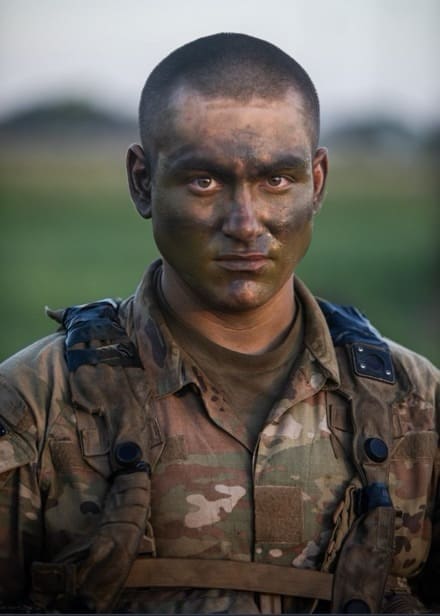
“We’re going from roughly 2,000-plus pieces — years of buildup of rolling stock — and the brigade is going to come in there (JRTC) with 498 pieces of rolling stock in total for the brigade,” Kearney said.

The limited rolling stock affects how quickly the brigade would be able to transport personnel and sustain the force in LSCO environments. These new challenges are why Kearney said it’s important to diversify how to sustain the brigade in LSCO settings.

“It means a heavier reliance on … our sustaining capabilities on both air and ground,” he said.

With a focus on air and ground sustainment and capabilities, this presented another challenge for the brigade at JRTC.

The 1st BCT conducted the rotation without using a U.S. Army cavalry squadron, who would normally provide the reconnaissance force. Their removal is part of the challenge the brigade faced while shifting their focus to LSCO environments. The brigade answered this question by instead coordinating with NATO allies to provide the same function.

The reconnaissance was instead done by partners with the British Army to serve as the cavalry unit and to build interoperability with one another. This JRTC rotation employed allies from the United Kingdom that included soldiers assigned with the Irish Guards; the 3 SCOTS, The Black Watch, 3rd Battalion, The Royal Regiment of Scotland; and the Royal Artillery.

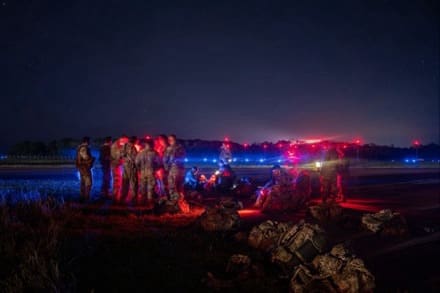
Soldiers with the Number 2 Company, Irish Guards participated in a night air assault mission, May 1, 2024, to be the reconnaissance force. Guardsman Henry Fell, a machine gunner with Number 2 Company, Irish Guards, who participated in the joint air assault, said it was about ensuring the abilities of the British and U.S. Army would translate when working together.
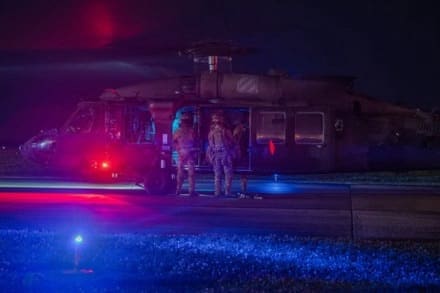
“There needs to be that cohesiveness so that we can work properly together so we can achieve the same aim that we are looking for,” Fell said.

This is the first time that the 10th Mountain Division worked with NATO allies to facilitate the exercise at JRTC. Soldiers with 1st Battalion, 32nd Infantry Regiment, and 2nd Battalion, 22nd Infantry Regiment, 1st Brigade Combat Team, 10th Mountain Division would follow soon after and execute the main night air assault over two days.

“It allows us to test our systems as a battalion and find out our weaknesses to ultimately certify the brigade to deploy,” said 1st Lt. Sky Rahill, platoon leader, C Company, 1-32 Infantry.

The air assault exercise marked the second phase of JRTC known as the joint force entry. To prepare for this phase, Soldiers received their multiple integrated laser engagement system, or MILES, gear. The MILES gear operates in a laser tag system to simulate a combat scenario and track Soldiers and their progress. This was done during the reception, staging, onward movement, and integration phase, a process to ensure equipment is ready and accounted for before field exercises.

Staff Sgt. Jacob Hurley, a squad leader assigned to C Company, 1-32 Infantry, said MILES is a way to test the efficacy and lethality of Soldiers.

“The reason we have it and why it’s so effective is that we have to calibrate it through civilians and our military counterparts,” Hurley said, “so that when we go out we can simulate real-world training.”

This rotation served as a lot of firsts for the Warrior Brigade, but also for the division who participated at JRTC as the higher command role. To help support 1st BCT at JRTC, the division tested its ability to exercise mission command over live maneuver units during a force-on-force environment.

The division simultaneously simulated a LSCO scenario to get a better understanding of how to maintain mission command when in an active combat zone. To achieve this, the division displaced the higher command and moved it to another location.
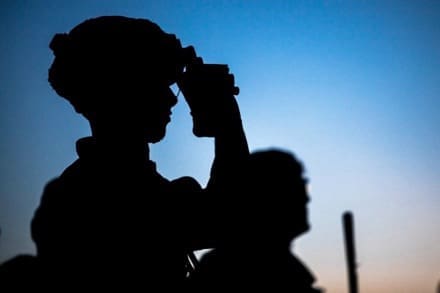
Lt. Col. Christopher Rankin, commander of Headquarters and Headquarters Battalion, 10th Mountain Division, described it as a necessary function in LSCO settings, but it is also still new for Soldiers within the division.

“I’m pleased with the progress we’ve made from the first time we did this” Rankin said. “We are not perfect yet, but we will continue to gain more repetitions.”

Additional support given to the brigade was provided by the 10th Mountain Division Artillery, which incorporated their Hunter-Electromagnetic Spectrum VII Delta exercise.

JRTC served as the culminating event for Hunter-EMS VII Delta and validated the 10th Mountain Division’s capability to conduct friendly and combat enemy long-range digital and voice communication. Maj. Mark Smerka, 10th Mountain Division Artillery effects officer in charge, described the training as an opportunity to help develop brigades and divisions.

“The hope is that all of the capabilities we have either created or validated here are just further exercised,” Smerka said, “in ways that can lead to improvements of the organic equipment and capabilities that maneuver brigades and divisions (in LSCO environments).”

To the 10th Mountain Division, JRTC is an opportunity for small teams to contribute to large-scale movement in meaningful ways. Kearney said the challenge ahead does not serve as a deterrent to his 1st BCT Soldiers from striving to improve and master their crafts, but rather a motivation.

“My defined end state for the Warrior family is a tight-knight family of unbeatable companies and batteries, with staffs that plan in detail and develop and refine processes for the employment of the BCT in large-scale combat operations,” said Kearney. “We’re humble, we’re aggressive in our desire to learn, and we aim to be one percent better every day.”

By SPC Salvador Castro