X-PAC

Archive for the ‘Guest Post’ Category

Baen Releases “The Family Business: New Novel From Mike Kupari

Sunday, July 25th, 2021

Baen Books has released Mike Kupari’s latest novel, The Family BusinessIt’s a dystopian (perhaps post-apocalyptic*) tale of a Federal “Recovery Agent” on the job in a much-changed United States of America. As of this writing, it is rated 4.4 out of 5 stars on Amazon.

Here’s an excerpt:

THE WEATHER IN PRESCOTT WAS NICE IN THE FALL.

Being both farther south and at a lower elevation, it wasn’t nearly so cold and windy as Flagstaff was in the winter, and in the summer, it didn’t get as hot as it did in the desert around the Phoenix Crater. It was a pleasant morning and Whiskey Row had its share of locals and travelers, even if the bars and brothels weren’t open yet.

Traffic was light. Gasoline and diesel weren’t rationed anymore but were still expensive. Many people walked or rode bicycles to get around, especially on such a nice day. There were even a few folks going about their business on horseback, just like they would have done a hundred years earlier.

*This depends on your definition of catastrophe and apocalypse.
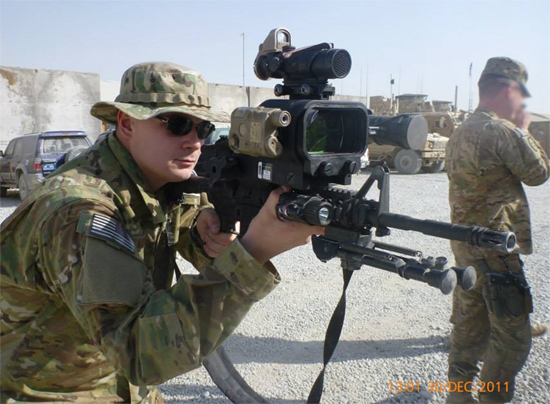
Author Mike Kupari in a deployed location, toiling ceaselessly to improve his skills and weapon manipulation (the better to write much more realistically…).

Kupari, a self-described revolverphile who preaches the Gospel of the FN, is an experienced (though wrong-handed) shooter who uses his experience as a former EOD Technician, PMC contractor, and general retr0-gun-nerd-savant to provide verisimilitude to his writing.

Here’s another excerpt.

REMEMBER PHOENIX

Jesse’s shop looked cluttered and chaotic, but he seemed to know right where everything was. The centerpiece of it was a CNC mill and a lathe. Electronics projects cluttered one workbench, while firearms projects took up another.

A faded Arizona flag hung on one wall, as did a prewar, fifty-star US flag. Next to them was a pair of posters. REMEMBER PHOENIX, one declared, while the other proclaimed KEEP WATCHING THE SKIES!

Below those, framed, was his certificate of his completing the Arizona Ranger training course and a photo of his swearing-in ceremony. Leading Nathan to his gun-bench, Jesse picked up a large pistol and proudly handed it to his friend.

“What’s this?” Nathan asked, examining the gun in his hand. It wasn’t anything he’d seen before, and he knew his way around a gun.

“Did you make this?”

“I did,” Jesse said, beaming. “That’s my third prototype. It’s ready for field testing.”

The gun was a hefty semiautomatic, but the magazine well was located in front of the trigger guard. Nathan locked back the slide, verifying that the weapon was unloaded, and looked at the markings.

“.45 Win Mag?”

Jesse grinned. “Yup! The problem with most magnum semi-autos is that they’re huge, right? It’s because they’re trying to cram a revolver-length, rimmed cartridge into a pistol grip. You end up with a grip like a two-by-four. I solved that by moving the magazine well out of the grip.”

“Like a Broomhandle Mauser,” Nathan said.

“Only in overall layout. This gun is striker-fired. It’s roller-delayed, recoil-operated, like the Kraut STG-88 assault rifle. Try the trigger!”

Nathan released the slide and squeezed the trigger. With only a little bit of take-up, it felt like a thin glass rod breaking.

“Damn.”

“Three and a half pounds’ pull weight on that, and it doesn’t feel mushy. I added a thumb safety because the trigger pull is so light, and to make it extra drop safe. I tossed my second prototype off the roof, onto the driveway, over and over again, trying to get it to discharge, and the safety held.”

“Anyway, the barrel is fixed, so it’s real accurate. For the next prototype, I’m working on a user-serviceable quick-change barrel system. You’ll be able to swap from the five-inch service barrel, like on this one, to a longer, heavier target barrel, and even a short snub barrel. I figure I can machine a scope mount into the heavy barrel, so it’ll be good for handgun hunters. I may be able to figure out a caliber conversion system, eventually, too.”

“This is really nice, Jesse,” Nathan said, aiming the pistol at an antelope head mounted on the wall.

“The magazine holds ten rounds. I’m working on a twenty-rounder, but I haven’t put it together yet. Even still, that’s four extra shots over a typical police revolver, it’s more powerful, and it reloads quicker.”

“I’m impressed, Jesse. Very nicely done. You gonna put these into production?”

“Eh, I really can’t. I’m a one-man outfit. I don’t have the capability to mass-produce a gun and making these as one-offs would make them too expensive. Once I get the design finalized, I’m going to try and sell the manufacturing rights.”

“Yeah, I guess that makes sense.” Nathan flipped the gun around in his hand and offered it to Jesse butt-first. “You gonna pack this beast on your next Ranger call-up?
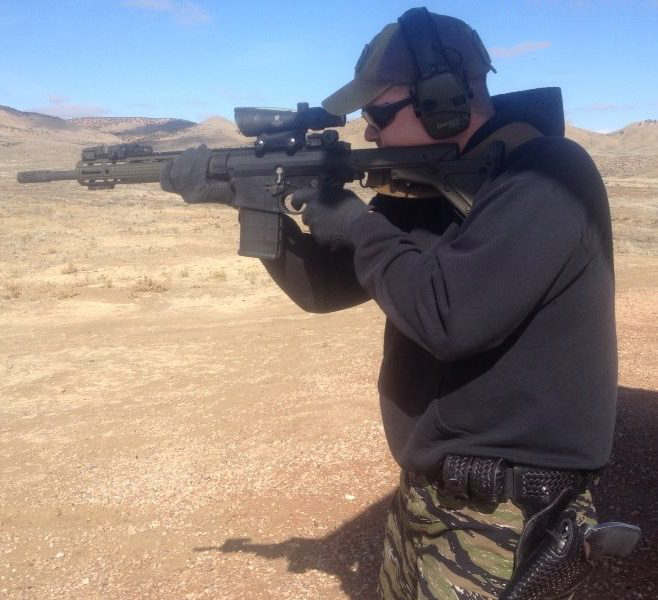
Kupari The Family Business

Kupari looking OAF in tiger stripe cammies and a Sam Brown wheelgun belt.

The book is officially described thusly:

Decades ago, the Visitors descended on Earth. They claimed to bring peace and prosperity. Their real goal was the total subjugation of humankind. But humanity did not give up its only home without a fight. After a devastating war, the Visitors were driven back to Mars. Their millions of willing human collaborators were left behind. The task of hunting down these former alien collaborators and bringing them to justice falls to Federal Recovery Agents like Nathan Foster.

Now, Nathan Foster is tasked with bringing to justice Emmogene Anderson. As a teenager, Emmogene was experimented on by the Visitors and implanted with a device that allows her to control other people. With her is her obsessive ex-lover, who was also a former commando of the Visitors’ forces. It’s an easy enough job—but Emmogene has been implanted with something else, something much more important.

Nathan and Ben must decide what is right in a largely lawless world— and the fate of the planet hangs in the balance.

Says Kupari,

“I started writing in high school. I didn’t really get into it until college when I began writing fiction online. I never seriously considered trying to be a novelist, though, not until 2006. That was the year I met Larry Correia. He liked a story I was writing online and asked if he could jump in on it. That story ultimately became DEAD SIX.

I lived in Doha, Qatar for a year, while working security at a US installation there. Qatar ultimately became the inspiration for the fictional country of Zubara.

Later in life, I served as an explosive ordnance disposal technician in the US Air Force. I deployed to Afghanistan and applied that experience to my second book, Swords of Exodus.

My first solo novel, Her Brothers Keeper, wasn’t exactly inspired by real life. I am sad to admit that I’ve never captained a privateer rocket ship. I do, however, have a lifelong love of science fiction and space opera and am excited to continue sharing my take on different genres.”

About Author Mike Kupari

Mike Kupari is the author of the debut science fiction novel Her Brother’s Keeper, as well as the co-author, with Larry Correia, of the best-selling Dead Six military adventure series including Dead Six, Swords of Exodus, and Alliance of Shadows. He is a relatively active prolific freelance writer, having contributed to Breach-Bang-Clear, The Mag Life, and other publications over the last several years. Mike grew up in Michigan’s Upper Peninsula and enlisted in the Air Force at the age of seventeen, deploying twice as an Explosive Ordnance Disposal tech. He went on to serve six years in the Army National Guard and spent several years both at home and abroad as a security contractor with a PMC. He now lives in the northern tier, bemoaning the price of ammo, arguing with a truculent parrot, and filling in DFPs (complete with grenade sump) dug into his yard by a recently adopted canine.

You can find the book on the Baen website or in Amazon.com’s book section.

Training the Next Generation of ‘CyberCops’

Friday, July 23rd, 2021

New University of Houston Program Recruits ROTC Students
as Future Gatekeepers of Cyber Security

HOUSTON, July 22, 2021 — Not so long ago, a strong password felt mighty enough to keep you safe and your computer data private. But we now live amid heightened risks in malware, phishing, spearphishing and denial-of-service attacks. Even scarier, it is possible for computer terrorists to wreak global havoc by commandeering your personal computer – yes, your own computer – without you suspecting danger until it’s way too late.

Sound frightening? It can be. But in this game, the good guys have critical skills, too.

The fall 2021 CyberCops program – funded by $250,000 grant from the U.S. Navy’s Office of Naval Research and sponsored by the University of Houston with cooperation of the University of Houston-Downtown and Texas Southern University – will introduce the critical field of cybersecurity to students recruited from the three participating universities’ ROTC (Reserve Officer Training Corps) programs.

In recent headlines, accusations of cyber aggression by unfriendly foreign powers reveal how high the stakes are.


Rakesh Verma, computer science professor at the UH College of Natural Sciences and Mathematics, leads the new CyberCops training program.

“The Department of Defense is interested in artificial intelligence and machine learning, and how those fields intersect with the needs of defense. They want students who plan on taking up careers in defense to have that kind of training and background,” said Rakesh Verma, computer science professor at the UH College of Natural Sciences and Mathematics. “Because these are ROTC students, the expectation is they will enter into a D.O.D. agency. But there are a lot of opportunities in the private sector, too, for people coming out with cybersecurity backgrounds.”

In the CyberCops program, students will study how to protect data, networks and computers as they also learn another critical lesson: Always stay a step ahead.

“The students will gain expertise in the intersection of a number of fields, including data science, machine learning and cybersecurity. They will have a semester of classroom training then spend about 10 weeks in my lab on the University of Houston main campus. There, they will study models on statistics, machine learning, natural language processing and data mining,” Verma said.

The term natural language processing refers to programming that “teaches” computers to understand not only the digital language of computers but also written and spoken words in various languages – English, Chinese, Russian and others.

Just how bad are the hackers, terrorists and just plain thieves who troll the internet? Don’t underestimate them, Verma warns.

As an individual, you may be at risk of:

Ransom demands – Your data is locked. “Your computer’s been hacked, and all the data encrypted. Then you might receive a demand to pay a certain number of bitcoins to get it back,” Verma said.

Thieves – Your identity is stolen. “These are criminals whose goal is to make a lot of money quickly,” Verma said. With special software, they enter the dark web where each set set of stolen credit card information sells for about $5, a Social Security number for around $10.

Zombies – And we’re totally serious here. In cybersecurity circles, a zombie is a computer that’s under the control of an attacker. If a cyber terrorist commandeers your computer, all you can do is watch your screen helplessly while someone – on the other side of the world or maybe next door – swiftly moves through the internet with your identity, perhaps with the aim of infiltrating a commercial or government network, or conducting a denial-of-service attack

Risks are greater for government agencies and businesses. In early July, Microsoft announced discovery of the PrintNightmare hack and urged all Windows users to immediately install an update. The U.S. government and its allies later said the hackers were hired by China’s government or its representatives.

Two months earlier, the Colonial Pipeline ransomware attack resulted in a five-day shutdown, fuel shortages in the Eastern U.S. and a ransom of $4.4 million. Eventually all but $2.1 million of the ransom was recovered.

Several companies have faced spearphishing, which targets one individual inside an organization. For example, by weaving in facts easily found on a company’s website, attackers can craft an “urgent” email convincing enough for a trusted employee to move money.

Knowing how to fight the threat is not always easy, especially with deceptions, fake news and social engineering specifically designed to avoid detection. “You have to put yourself in the shoes of the attacker. Think like an attacker and find the weaknesses.” Verma said.

For the six gifted students recruited for the new program, an exciting future may start with CyberCops training on the UH campus. And for your own data, security may someday depend on the critical lessons they learn there.

FirstSpear Friday Focus: FirstSpear Attends ADS Warrior East

Friday, July 23rd, 2021

FirstSpear will be at the ADS Warrior Expo in Virginia Beach demonstrating industry leading maritime and land-based armor systems available to today’s warfighter. Stop by our booth 1101, check out our new products and ask your ADS rep to schedule a meeting to discuss your next requirement.

For more information about FirstSpear, check out first-spear.com.


San Antonio Innovation Summit Open for Registration

Friday, July 23rd, 2021

JOINT BASE SAN ANTONIO-LACKLAND, Texas (AFNS) — Registration is now open for the inaugural San Antonio Innovation Summit.

With the theme of “Accelerate Change,” the summit takes place Aug. 3-4 at the Henry B. González Convention Center. The event – a partnership between the Air Force Installation and Mission Support Center, Air Force Civil Engineer Center, Air Force Security Forces Center, Air Force Services Center, Air Force Personnel Center, Air Education and Training Command, and AFWERX – will bring innovation collaboration opportunities to an expanded installation and mission support audience.

Registration is free and the summit is open to everyone including military, civilians, community members and industry.

“We’re excited to work with our local partners to bring leading government and industry innovation experts together in San Antonio,” said Marc Vandeveer, AFIMSC chief innovation officer. “The more we educate and train our innovative Airmen how to connect to the innovation ecosystem and bring their ideas to life, the more we empower them to succeed.”

The summit will include speakers and breakout sessions highlighting successes, failures, lessons learned and paths taken to successfully implement innovative projects across the Department of the Air Force and Department of Defense. Functional experts in civil engineering, services, security forces, personnel and contracting will share their vision about the future of innovation and help innovators pave a path toward sustainment.

Guest speakers include experts from Air Force Ventures, AFWERX, Platform One, Tech Port San Antonio, National Security Innovation Network, Defense Innovation Unit, Air Force Gaming, and Business and Enterprise Systems Product Innovation office.

Innovation panels will include presentations, and question and answer sessions, on the topics ranging from artificial intelligence, machine learning, small unmanned aerial systems, augmented and extended reality, to autonomous mowers, robotic process automation and next-generation gaming.

“In order to maintain our competitive advantage across the air and space domain, we need every Airman and Guardian to make change a priority. The San Antonio Innovation Summit will give them the tools they need to innovate and, more importantly, implement that innovation at the speed of relevance,” Vandeveer said.

The summit will also feature a vendor exposition highlighting successful projects currently in progress with many Air Force and DoD partners including Microsoft, UiPath, Booz-Allen-Hamilton, Mobilize, Aerial Applications, Athenium, 3rd Insight, Clarity, Oddball and Renu Robotics.

Registrants will receive the full agenda. Event organizers are also planning a virtual stream for those unable to attend in person. More details will be provided as they become available.

To register, visit here.

By Shannon Carabajal, Air Force Installation and Mission Support Center Public Affairs

US Army Soldiers Experience The Great Escape Tour

Thursday, July 22nd, 2021

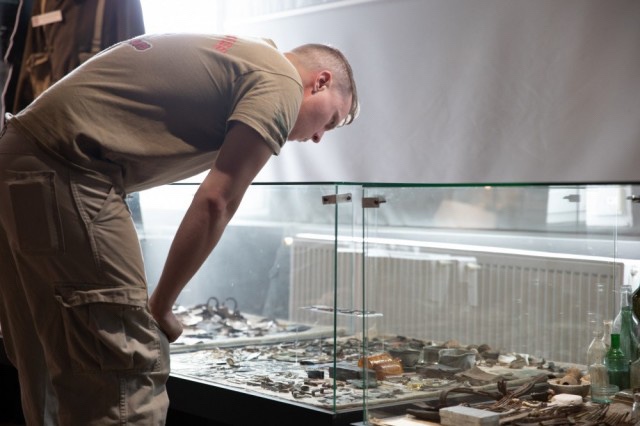
?AGAN, POLAND — U.S. Army Soldiers with the 1st Armored Brigade Combat Team, 1st Cavalry Division participated in a guided tour at the Great Escape museum in ?agan, Poland, July 5, 2021.

The Great Escape was a massive escape attempt from Stalag Luft III, a prisoner of war (POW) camp in ?agan, Poland, controlled by Nazi Germany during WWII.

The Troopers walked approximately three miles through the woods to get the chance to learn about an essential piece of military history. Upon arrival, the Troopers were provided with a guided tour from the curator around the remains of Stalag Luft III.

The curator began the tour by leading the troopers to the memorial near the entrance of the museum. He explained the history behind the monument and the dedication to the Soviet prisoners that perished at Stalag Luft III. Outside, Troopers were able to see a replica of an old wooden watchtower and an exit to one of the three underground tunnels.

Once inside, the Troopers saw a miniature model of the camp and where the three tunnels — known as Tom, Dick, and Harry — were dug. This miniature model gave the Troopers a visual of the camp’s diversity. The museum displayed multiple flight suits from different countries.

The curator explained all the planning that went into the escape attempt and mentioned a few facts that aren’t commonly known. The camp was nearly impossible to escape from because of the elevated prisoner housing, loose, collapsible soil, and seismograph microphones in the ground around the perimeter of the camp. The prisoners had to be extremely cautious while preparing to escape under the guards’ watch.

The Troopers were able to explore a barracks replica outside the museum that would have housed prisoners of war. To their surprise, the living conditions in the barracks were much better than expected. There’s a common misconception that Stalag Luft III had living conditions similar to those of a concentration camp.

Although it was a prison camp, the Germans had to follow the rules set by the Geneva Convention according to the curator of the museum, so there was a standard of living that the prison had to uphold.

Staff Sgt. Noah Hill, a brigade religious affairs noncommissioned officer with 1st Armored Brigade Combat Team, 1st Cavalry Division, set up the guided tour. He said he enjoys seeing the Troopers get off base and learn more about the Polish culture near their area of operation.

“We went through our training rotation,” Hill said. “However, I also wanted them to be able to talk about the good that’s in Poland and build that trust with the Polish people who we’re working with.”

Troopers of 1st Cavalry have had the opportunity to partake in a few military history tours like this one. They have also toured Auschwitz concentration camp and been given a Polish military history presentation to understand Poland’s culture better. The 1st ABCT is currently undergoing redeployment operations before heading back to its home station in Ft. Hood, Texas.

By PFC Michael Baumberger

New Material Could Mean Lightweight Armor, Protective Coatings

Wednesday, July 21st, 2021

RESEARCH TRIANGLE PARK, N.C. — Army-funded research identified a new material that may lead to lightweight armor, protective coatings, blast shields and other impact-resistant structures.

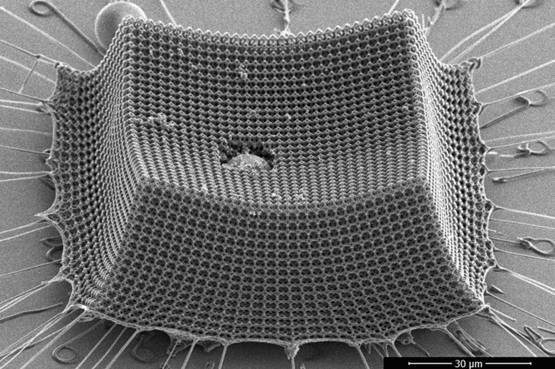
Researchers at the U.S. Army’s Institute for Soldier Nanotechnologies at the Massachusetts Institute of TechnologyCaltech and ETH Zürich found that materials formed from precisely patterned nanoscale trusses are tougher than Kevlar and steel.

In experiments, the ultralight structures, called nanoarchitectured materials, absorbed the impact of microscopic projectiles accelerated to supersonic speeds.

“Increasing protection while simultaneously decreasing the weight that soldiers carry is an overreaching theme in our research,” said Dr. James Burgess, ISN program manager for the U.S. Army Combat Capabilities Development Command, known as DEVCOM, Army Research Laboratory. “This project is a really good example of such efforts where projectile energy absorption is nanostructured mechanism based.”

The research, published in Nature Materials, found that the material prevented the projectiles from tearing through it.

“The same amount of mass of our material would be much more efficient at stopping a projectile than the same amount of mass of Kevlar,” said Dr. Carlos Portela, assistant professor of mechanical engineering at MIT, the study’s lead author.

The researchers calculate that the new material absorbs impacts more efficiently than steel, Kevlar, aluminum and other impact-resistant materials of comparable weight.

“The knowledge from this work…could provide design principles for ultra-lightweight impact resistant materials [for use in] efficient armor materials, protective coatings, and blast-resistant shields desirable in defense and space applications,” said co-author Dr. Julia R. Greer, a professor of materials science, mechanics, and medical engineering at Caltech, whose lab fabricated the material.

Nanoarchitected materials are known to feature impressive properties like exceptional lightness and resilience; however, until now, the potential for additional applications has largely been untested.

“We only know about its response in a slow-deformation regime, whereas a lot of their practical use is hypothesized to be in real-world applications where nothing deforms slowly,” Portela said.

To help fill this vital knowledge gap, the research team set out to study nanoarchitected materials undergoing fast deformation, such as that caused by high-velocity impacts. At Caltech, researchers first fabricated a repeating pattern known as a tetrakaidecahedron—a lattice configuration composed of microscopic struts—using two-photo lithography, a technique that uses a high-powered laser to solidify microscopic structures in photosensitive resin.

To test the tetrakaidecahedron’s resilience to extreme, rapid deformation, the team performed experiments at MIT using the ISN-developed laser-induced particle impact array. This device aims an ultrafast laser through a glass slide.. As the laser passes through the slide, it generates a plasma, an immediate expansion of gas that launches the particles toward the target.

By adjusting the laser’s power to control the speed of the microparticle projectiles, the researchers tested microparticle velocities within the supersonic range.

“Some experiments achieved twice the speed of sound, easily,” Portela said.

Using a high-speed camera, the researchers captured videos of the microparticles impacting the nanoarchitected material. They had fabricated material of two different densities. A comparison of the two materials’ impact response, found the denser one to be more resilient, and microparticles tended to embed in the material rather than tear through it.

To get a closer look, the researchers carefully sliced through the embedded microparticles and nanarchitectured target. They found that the struts below the embedded particle had crumpled and compacted in response to the impact, but the surrounding struts remained intact.

“We show the material can absorb a lot of energy because of this shock compaction mechanism of struts at the nanoscale, versus something that’s fully dense and monolithic, not nanoarchitected,” Portela said.

Going forward, Portela plans to explore various nanostructured configurations other than carbon, and ways to scale up the production of these nanostructures, all with the goal of designing tougher, lighter materials.

“Nanoarchitected materials truly are promising as impact-mitigating materials,” Portela said. “There’s a lot we don’t know about them yet, and we’re starting this path to answering these questions and opening the door to their widespread applications.”

The U.S. Army established the MIT Institute for Nanotechnologies in 2002 as an interdisciplinary research center to dramatically improve the protection, survivability and mission capabilities of the Soldier and of Soldier-supporting platforms and systems.

In addition to Army funding through the institute, the U.S. Office of Naval Research and the Vannevar Bush Faculty Fellowship supported the research.

By U.S. Army DEVCOM Army Research Laboratory Public Affairs

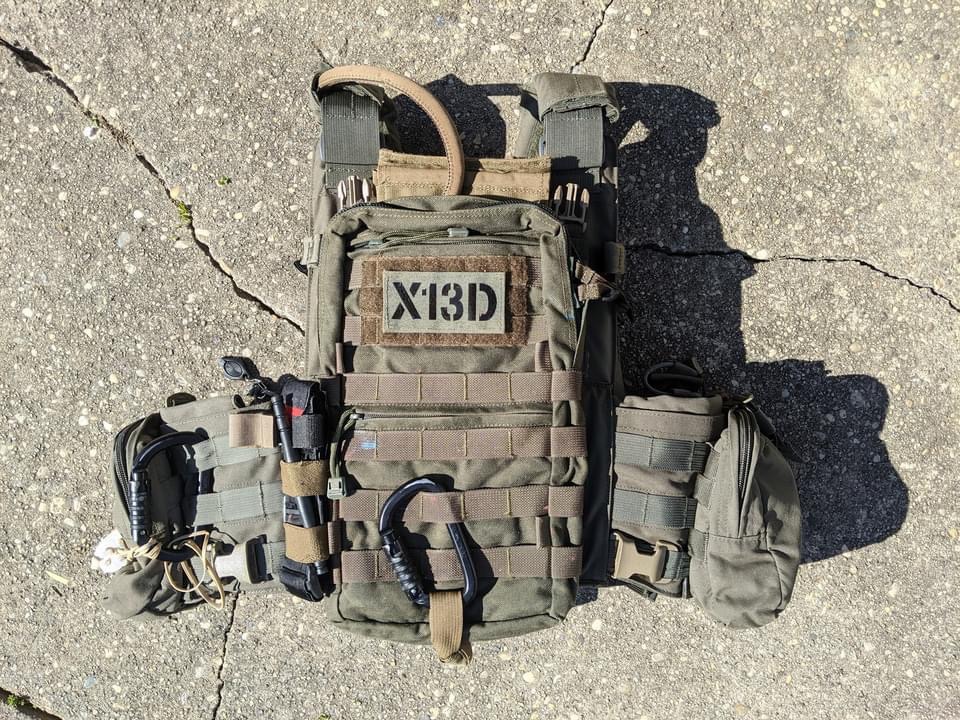
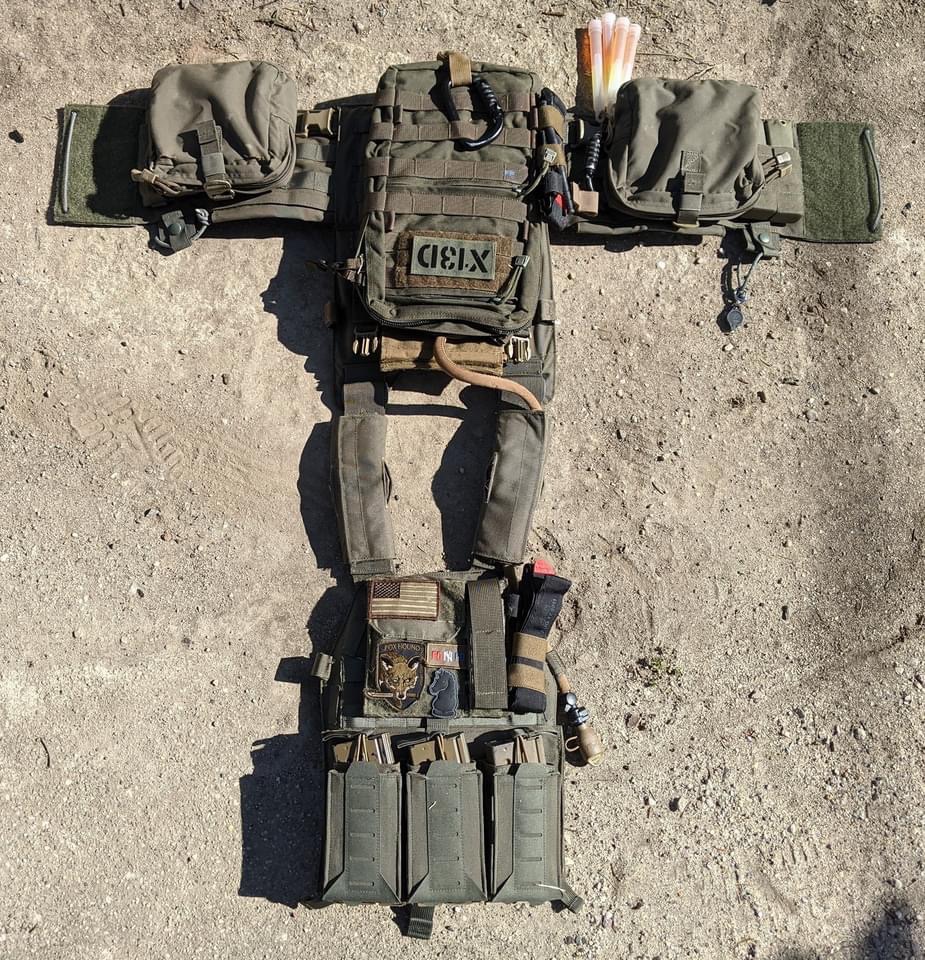
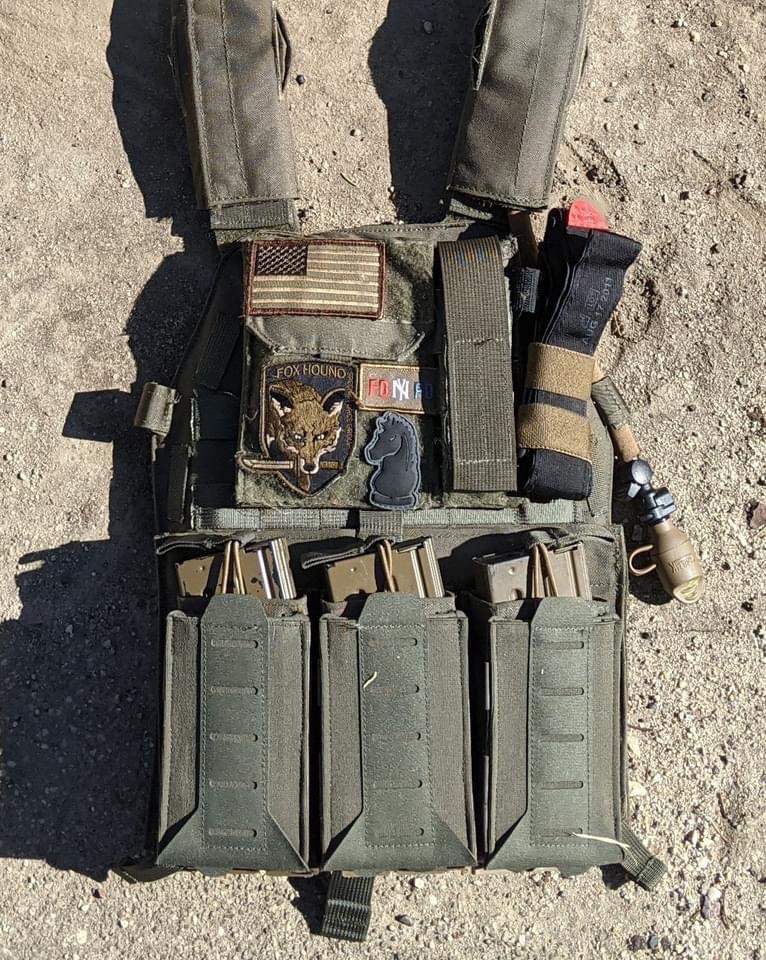
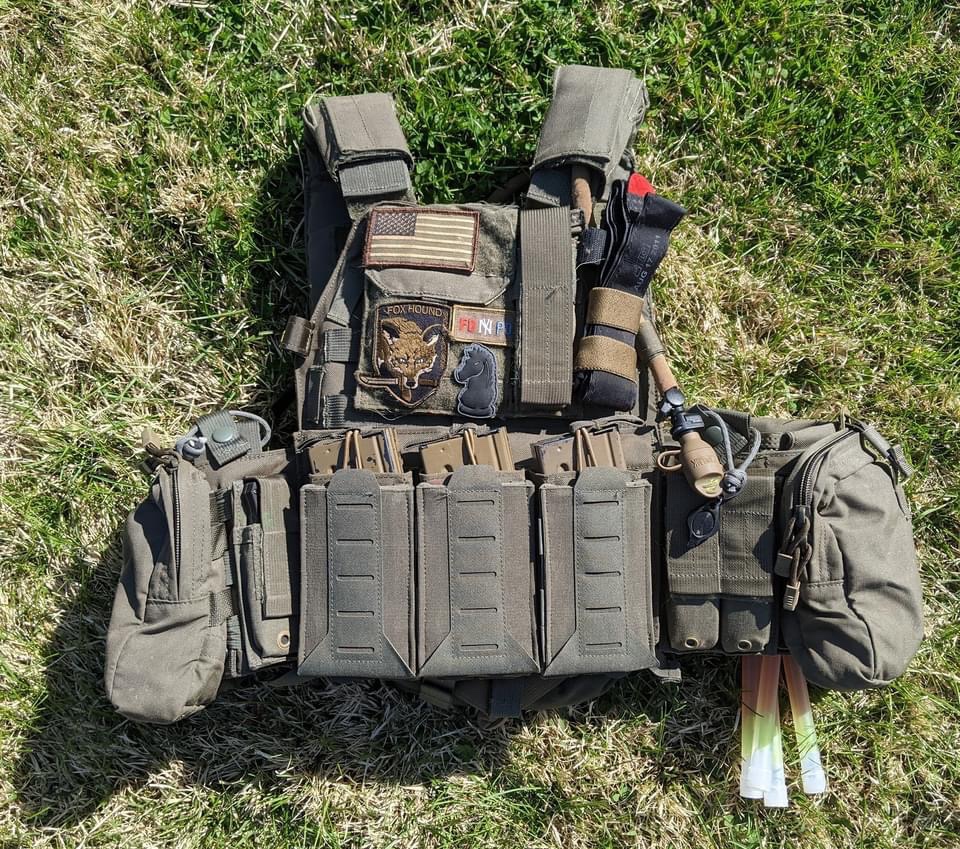
Frank Woods – Plate Carrier Set Up

Tuesday, July 20th, 2021

This should stimulate some lively debate. Gear is a passion for most SSD readers, so let’s keep it on topic and civil.

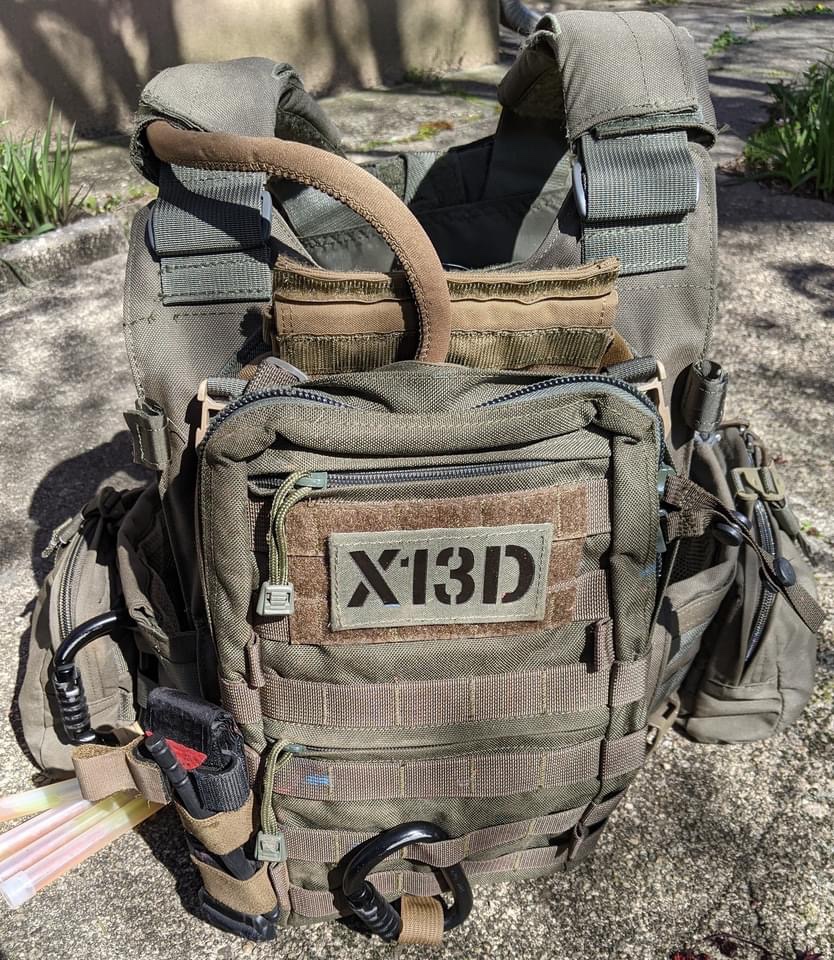
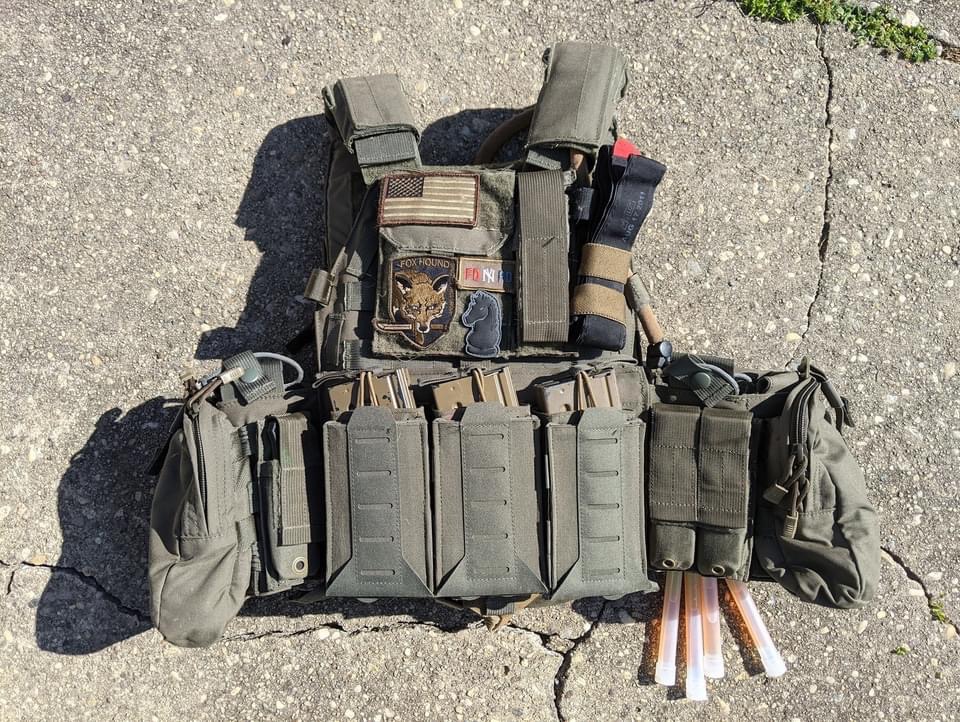
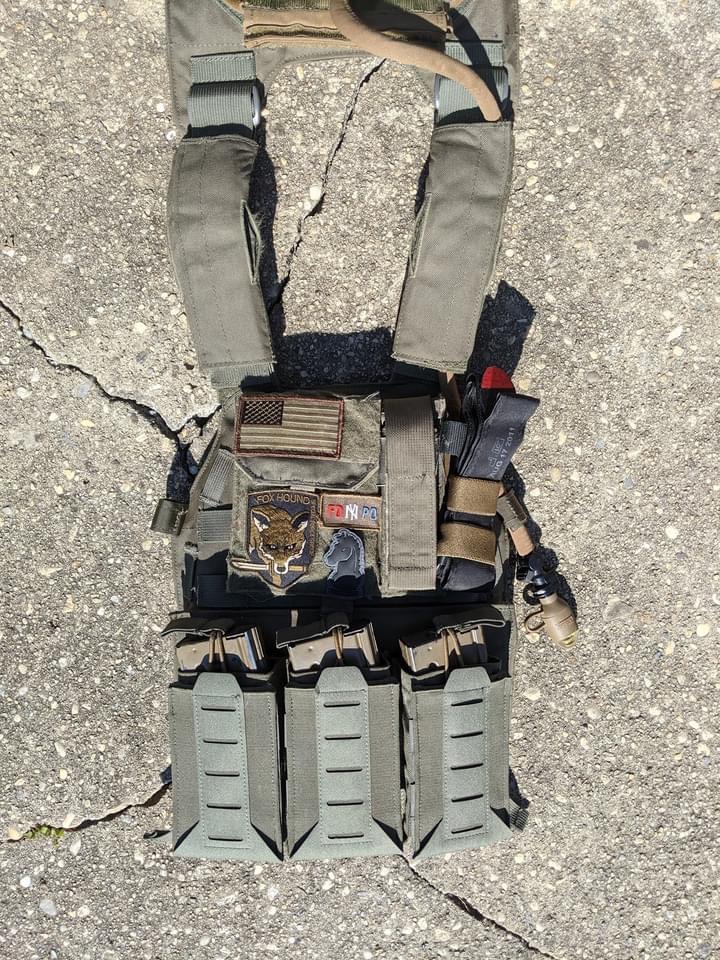
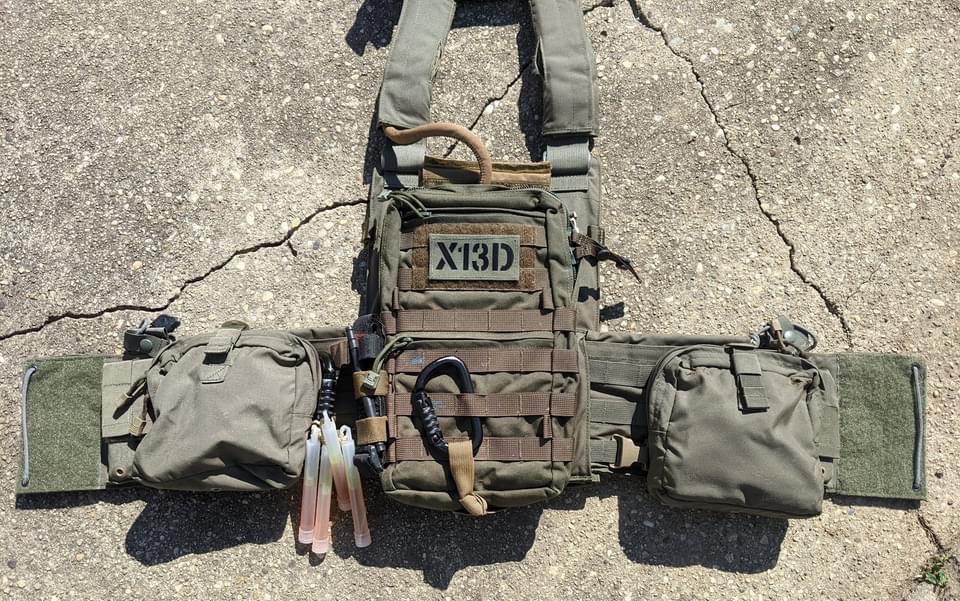
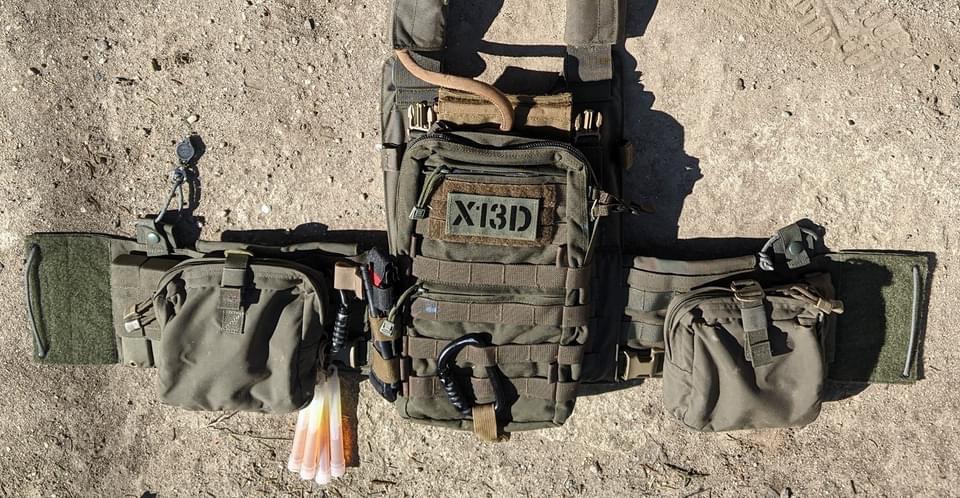
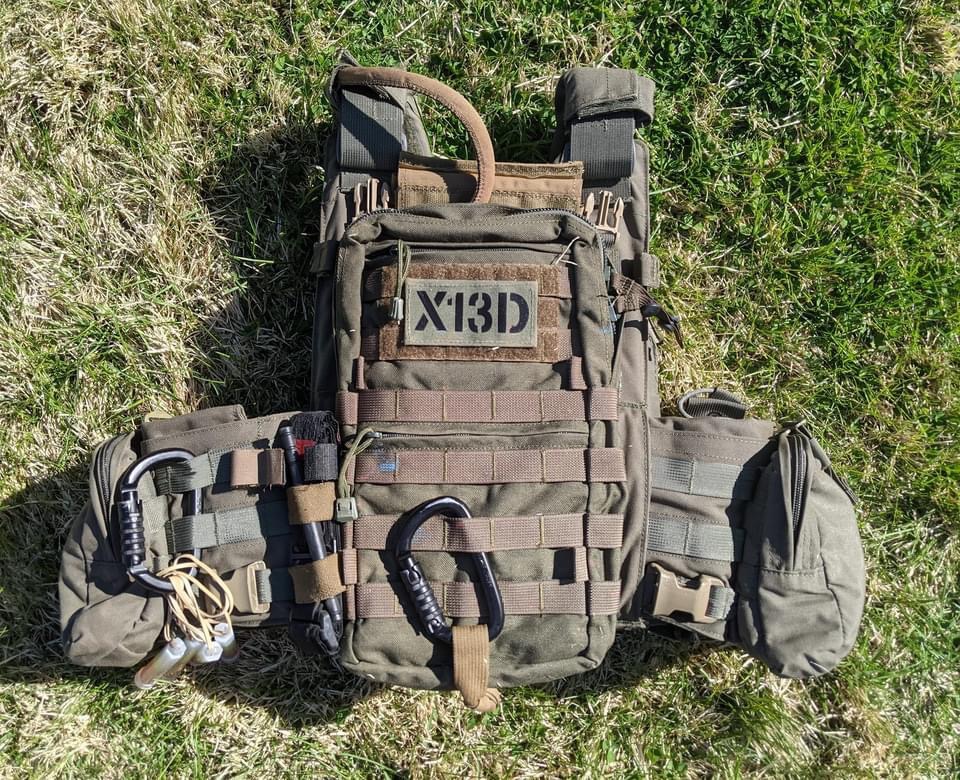
Following the write-up I did laying out how my personal belt is set up and why, I figured it’d be a good idea to do the same for my plate carrier since I realized I’ve never done that, or haven’t in a long while and it’d be easier to account for any changes I’ve made to it over the years.

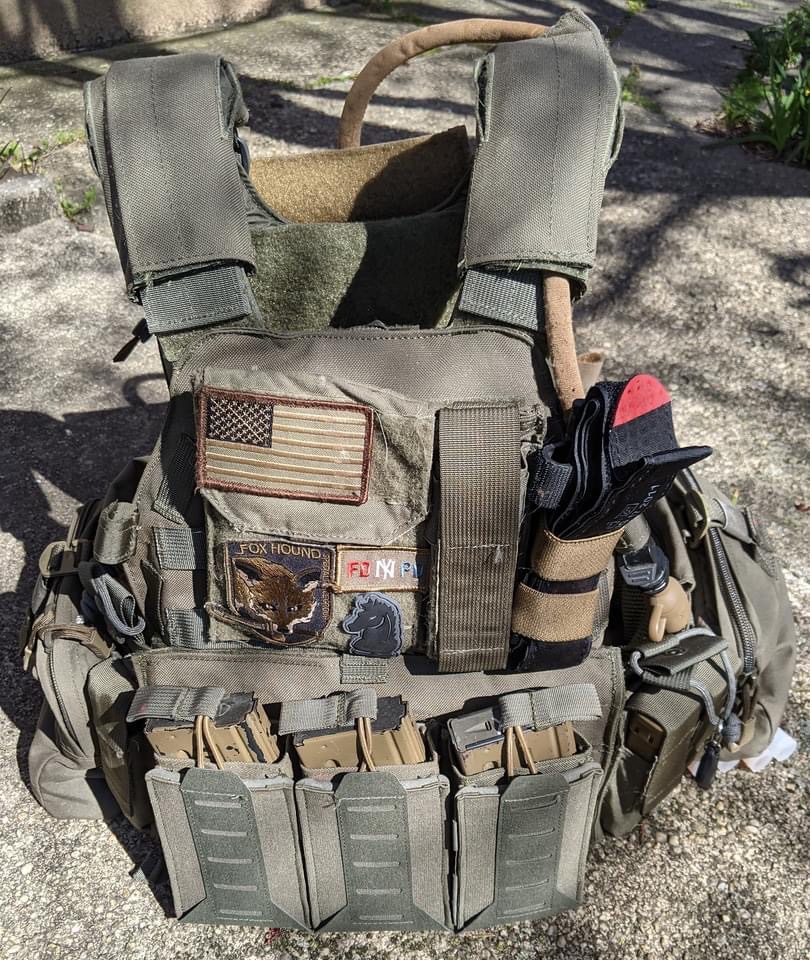
So here’s what I’ve got:

– LBT 6094A (Medium)

— Velocity Systems API-BZ plates

– First Spear Admin Pouch (6/9)

– 3x Tactical Tailor single M4/AR mag pouches

– 3x Blue Force Gear single AR mag Ten Speed pouches

– First Spear double pistol mag pouch

– First Spear single pistol mag pouch

– 2x First Spear General Purpose/Utility pouches, Size Medium

– 2x Blue Force Gear Tourniquet NOW TQ holders (CAT 7s)

– 2x Petzl carabineers

– Spiritus Systems DARC drag strap

– Emdom Vehicle Hydration Carrier

—- CamelBak Milspec Antidote 3L

– Blue Photon Light

I’ll break it down bit by bit:

1.) Plate Carrier & Plates: The LBT-6094 (A for Medium plate size) was recommended to me by a retired SEAL friend back when he was still active, and I’ve been using it since 2013. I like it because it’s comprehensive in its simplicity: the PALS webbing is where it needs to be to mount whatever variety of MOLLE pouches wherever I want, so the modularity is tops. I can scale up or down as needed, rather than be pigeonholed into a minimalist design and without going full on gigantor turtle shell with something like an Eagle CIRAS.

It’s an older plate carrier design compared to more recent models that are made of laser cut material or rely on swift clip placards that double as chest rigs when a strap system is introduced, but it holds up damn good in capability despite being a dated option.

Fabric/materials wise, it isn’t terribly heavy (let’s be honest, the plates are where armor carriers get their true weight worth considering from), and I’m still on the fence about the laser cut materials since I’ve heard they tend to sag under weight after a while, so I’ve been waiting to see how the new Gen 3 6094 holds up after a while before rushing into an upgrade I don’t immediately need.

I’ve never been a fan of the clip in placard system typical of most plate carriers these days because I find them limiting in their prefabricated pouch configurations that often rely on double stacking pouches to carry the same amount of gear I’d spread out across the plate carrier and its cummerbund, along with a belt to compliment the limited capacity the placards offer (in terms of rifle mags at least). I know some of the placards come in blank MOLLE webbing for customized pouch configurations, but I’m not the market for an entirely new plate carrier that I’d need for placard compatibility to begin with. If I want to switch from 5.56 to .308 pouches, it’s a simple matter of popping the MALICE clips and switching out the mag pouch array on the front. I’ll go into more detail on that later.

Speaking of the cummerbund, I feel like these are becoming a lost art in the world of plate carriers. Lately I’ve seen a lot of skeletonized cummerbunds that only allow for MOLLE pouch mounting, or a clip and buckle just to keep the armor secure against your body, or straight up slick side elastic bands, the latter two of which you can’t mount shit to. The LBT 6094’s cummerbund has PALS webbing on the outside, but there’s also padding and integrated pouches on the inside that facilitate carrying additional rifle mags or a radio (one of each on each side). This saves me a need for additional pouches for either of those things, but in my use it’s where I like to put my +1 rifle mag.

The Velocity API-BZ plates replaced the Level IV stand alone multi curve plates I had in this carrier previously, which have since been moved to a slick/low profile carrier and feel much lighter than they did here. The API-BZs are a much lighter and therefore comfortable plate to wear, while accounting for a wide variety of most likely encountered ballistic threats. These things are clutch. They come with a high price tag per plate but they’re worth every penny, as is all armor from Velocity Systems.

2.) Admin & General Purpose pouches: Good for odds and ends and delineating where I’m keeping admin stuff like IDs, cell phone, pens, note pads, multi tools, a hand held flashlight, etc, from other stuff that might be essential or good to have for a particular task. They don’t take up a lot of space and I’m glad they’re there when I’m having one of those “Where or how am I gonna carry this easily portable thing I’d rather not go without?” moments. Just don’t forget anything in there (one of the good spots, as my old man likes to say) or be tempted to pack it up with bullshit just to have stuff in there.

3.) AR mag pouches: This may seem sophisticated but I learned it over time and I can’t think of a better way to do this. Typically I like to keep everything on my front “single shingle,” meaning nothing like a double mag pouch that protrudes out too far forward. This is mainly a concern for mobility and going prone, where there’s already an armor plate and the width of an AR mag between me and the ground, so I’m avoiding additional lift off the ground preventing me from getting flat as possible, and if I’m rocking double mag pouches and only have one mag in the pouch I don’t have to worry about the extra unused pouch material getting shitted up from being loose and getting snagged or dragged under me, or failing to retain the remaining magazine cause the retention thereof is hinged on the presence of two mags.

But I do like the option of being able to plus up on mags in anticipation of a scenario where one would want more mags readily available in situations where you wouldn’t anticipate going prone cause mobility on your feet is of higher value anyway. When you’re swapping paint in a force on force shoot house class, you might find yourself running low on mags fast after burning through less than a standard combat load or lending one to a buddy if they’re already dry.

So on top of the single mag pouches I have the three Blue Force Gear TenSpeed mag pouches. They’re very tight and snug when it comes to retention, but when I don’t need them they collapse flat on themselves and it’s like they’re not even there. They’re not hanging open to get caught on anything and get torn up, or adding extra unused material just hanging out there.

Between the dedicated mag pouches and the two spots available on my cummerbund, I have the capability carry 5 to 8 AR mags on the plate carrier alone. Typically it’s 3 + 1 in the cummerbund, plus the 2 on my belt leg rig, and one in the rifle. I can ditch the one mag in the cummerbund if I wish, but the point is I can freely scale up or down as needed. Regardless of where or how many mags I have on me, they never go from my plate carrier straight to my rifle. Since I reload from my leg rig on my belt, that leg rig gets replenished from the mag pouches on my plate carrier. This gives me one consistent location to pull reloads from rather than four or five and having to remember which pouches are still full.

Empties go in the dump pouch, partials go into the mag pouch the last full mag was previously pulled from, going from right to left across my body. This guarantees that if I need a full mag to replenish my leg rig from, the last mag I’m going to grab after my first reload is going to be across my body farthest away from my support side. If I haven’t reloaded the weapon from an empty magazine and I’m doing a tac reload, that’s usually the only time I’ll pull directly from the pouch across from my support side, bring the fresh mag up to the gun, swap mags, and drop the partial back into the pouch I pulled the fresh one from, since the partial was gonna end up there anyway.

4.) First Spear Pistol Mag Pouches. These are pretty straightforward: Double holds two pistol mags. Single holds my Benchmade Infidel auto knife. Double pouch replenishes pistol mag pouches on the leg rig, knife is just there if it’s needed.

5.) TQ holders are self explanatory. One on the front and one on the back for accessibility. There’s a third on my IFAK that’s belt mounted, I need to figure out where to put a fourth (accounting for each limb.)

6.) Carabineers & Drag Strap: Chemlights and bundles thereof get looped onto and pulled from one, situated on my support side. The other links the Spiritus/DARC drag strap to my belt. Said drag strap is a factory mass production version of the enhanced drag strap Rich would have us make out of tubular nylon webbing, which in turn is better than any drag strap that’s ever been sewn into the rear of a plate carrier because it provides much better leverage and therefore ease with which to drag wounded and injured personnel.

7.) Hydration: Carrier fits within the confines of the rear plate bag without hanging below it, bladder fits within that also. I can always underfill it or not fill it at all if I don’t want 3L/100oz of water on my back. Bladder will fit into my Tactical Tailor assault pack if I wish to remove the hydration carrier and clip the pack into the buckles you see woven into the PALS webbing on the plate carrier, in case I determine I have to carry extra stuff on my person without going full ruck (at which point the assault pack could clip onto THAT).

8.) Blue photon light: Carryover from the older DARC packing list that I never got rid of. Good for reading maps or performing medical or other things requiring limited visibility + light discipline to avoid blowing your spot up with white light.

The modular capacity capability is a running theme you see throughout my gear, and I’m a loud proponent of it because it allows me to scale up or down as needed. I see a lot of people lean towards “minimalist” setups for the wrong reasons that doesn’t give them as much flexibility in their setup and I think it’s dumb to shortchange yourself and what your gear can do for you just because “I’m just a civilian, I don’t normally have a need for X cause I don’t carry a gun for a living.”

This contradicts the most often listed reason why civilians buy this kind of equipment: SHTF. Under those circumstances, where you have to bust out the tactical nylon, two factors are now in play: Something (or a series of things) really bad happened and nothing is going to plan + NOW you carry a gun for a living, in order to remain living. That’s the worst time to be doing PCCs/PCIs and thinking “Damn, I wish I could carry more mags.”

Just something to be mindful of. I bring up this context of civilian use since this is my personal gear no different than anyone else could purchase and put together for training use (where plates are required equipment for safety purposes in shoot house classes and the like, or you just feel like running your gear and shaking it out.)

Frank Woods is one of the principals behind the revival of Lightfighter.net

TNVC Publishes White Paper on WFOV NVGs

Tuesday, July 20th, 2021

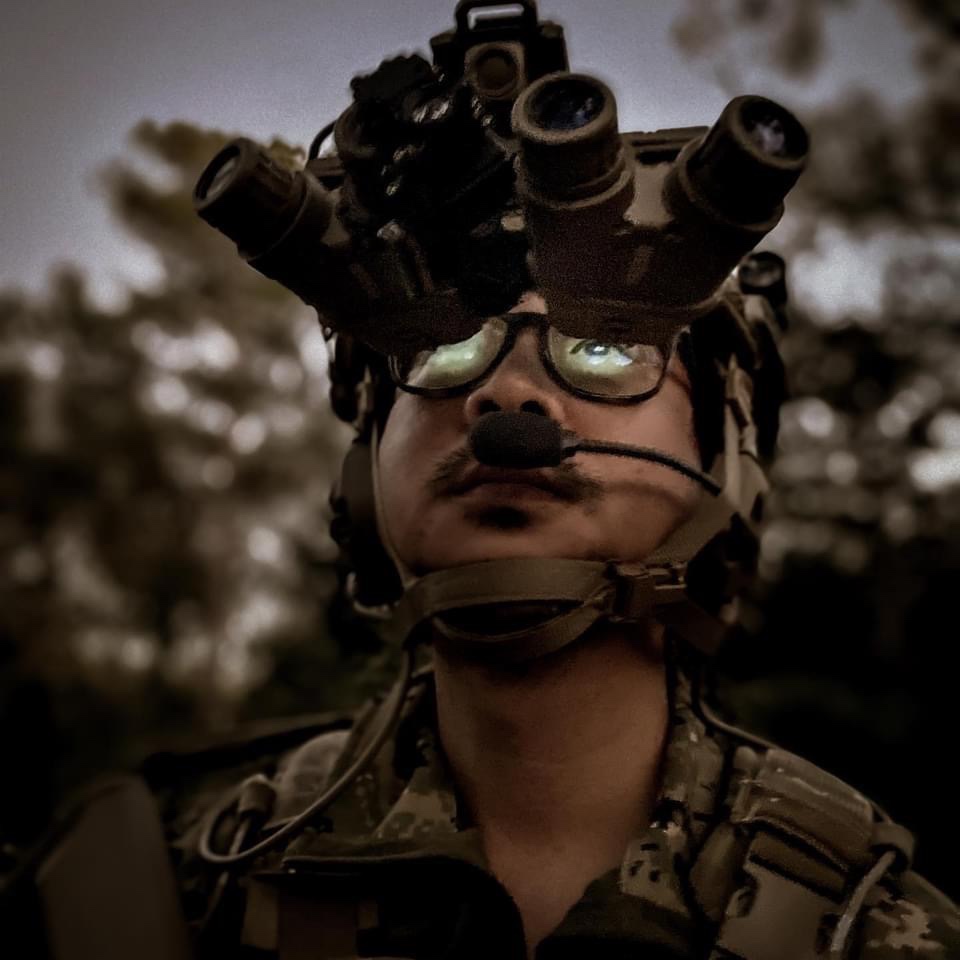
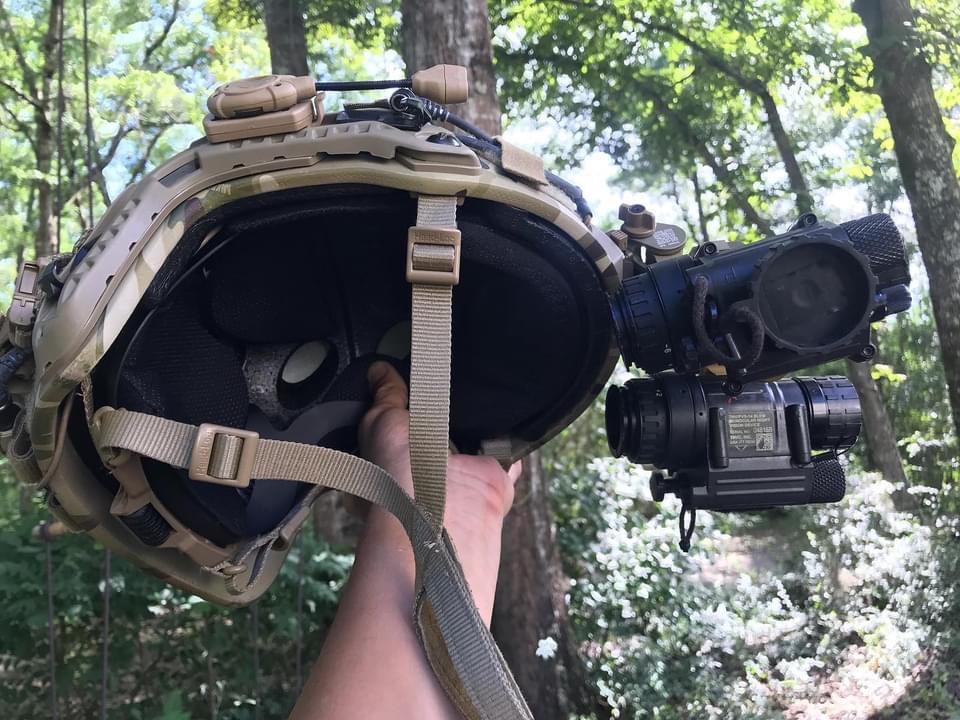
WFOV (Wide Field of View) NVGs have been a hot topic lately since the release of the Noise Fighters Panobridge, and more than a few folks have asked for our opinion, enough that it seemed worth it to put together a WFOV NVG White Paper.

BLUF: WFOV is awesome, but it comes with some significant penalties—with true PNVGs, it’s weight, complexity, and ultimately cost. With the Panobridge, the WFOV feature results in about 20-30% loss of performance, with resolution taking the most significant hit.

This means unless you’ve got ridiculously high performing tubes, you’re talking about a *significant* reduction in detection and PID capabilities, whether you’re talking about potential threats or important terrain features (especially when driving).

That being said, the Panobridge can be useful in static observation, especially when scanning wide areas, and it has one advantage most other dedicated WFOV systems do not—you can quickly return it to a conventional 40 degree configuration once you find something that you want to give some more attention, or if you want to transition into dynamic activities and want/need the full performance your tubes can provide. That being said, they’re still, at the end of the day, bridged PVS-14s, and still have all of the issues inherent to that kind of setup.

Author Augee Kim is a VP at TNVC.