FirstSpear

Archive for the ‘Guest Post’ Category

Kit Badger on the ATF and the Honey Badger Pistol by Q

Sunday, October 11th, 2020

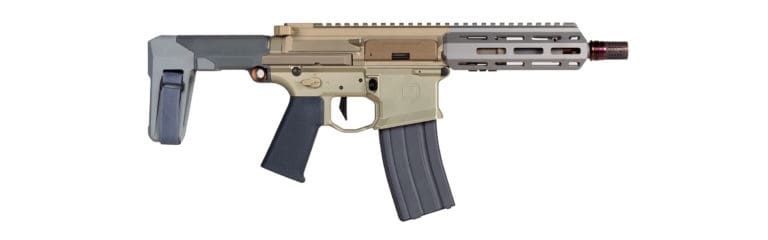
Kit Badger has produced a video to address the issue of the ATF seemingly arbitrarily declaring the Q Honey Badger Pistol is an SBR, regulated under the National Firearms Act.

This move forces all Honey Badger Pistol owners time either Form 1 their pistol to create a Short Barreled Rifle or surrender it to the ATF.

Read Ivan’s full post at kitbadger.com/the-atf-and-the-honey-badger-pistol-by-q.

SCUBAPRO Sunday – X-Black BCD Tactical

Sunday, October 11th, 2020

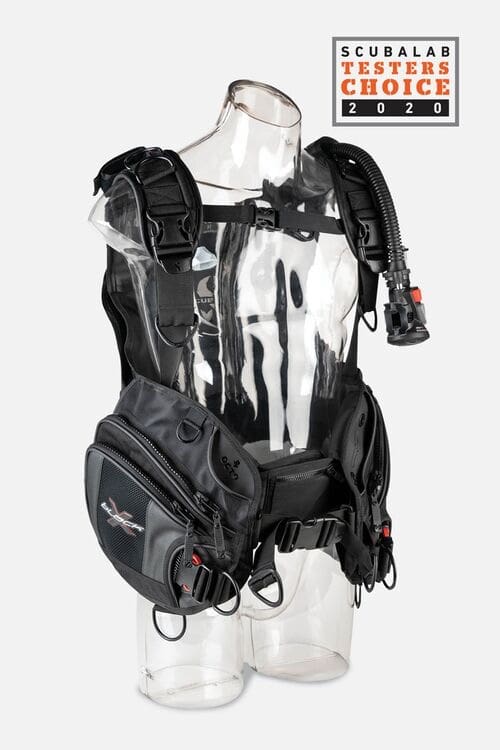
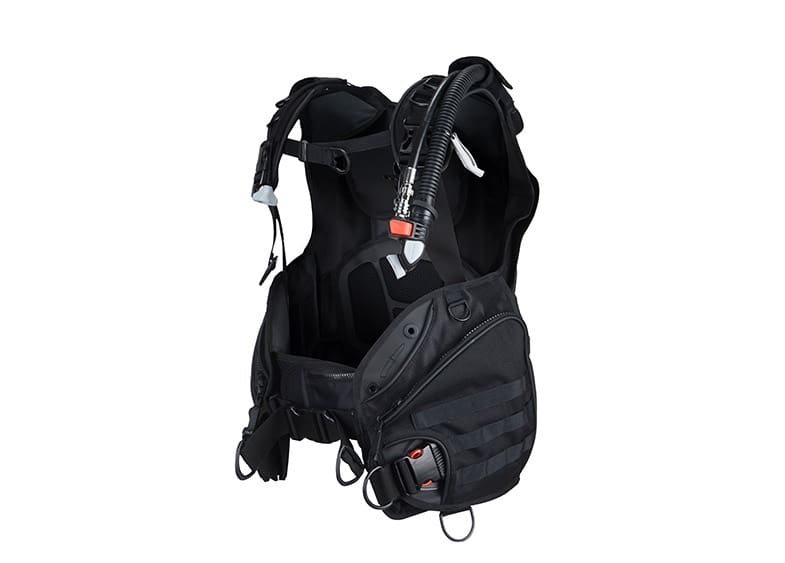
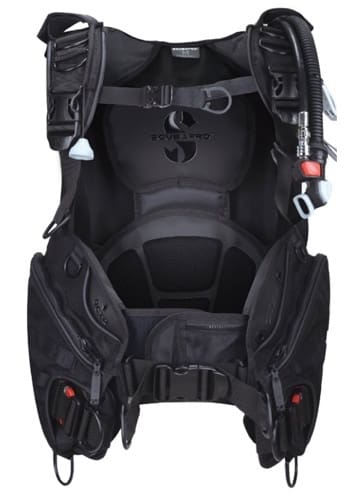
The SCUBAPRO X Black BCD is new to the BCD line this year. It is SCUBALabs Tester choice best new BCD for 2020. So, as SCUBAPRO continues to move forward in the Military and Public Safety market it was an obvious chose to start this year by adding Molly to the newest member of the SCUABPRO Family.

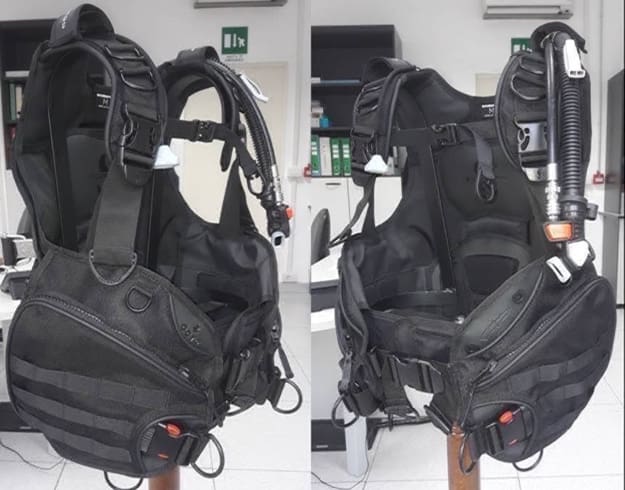
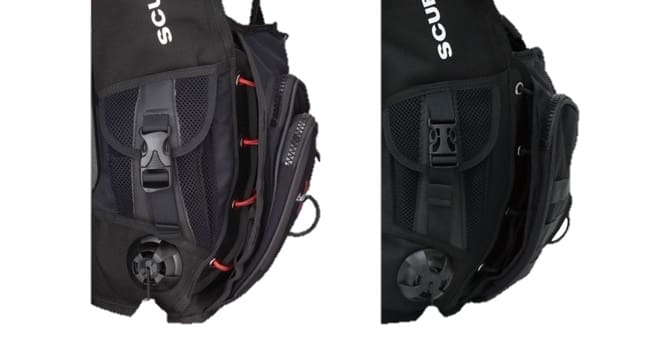
The SCUBAPRO X Black Tactical is a front-adjustable BCD that comes equipped with SCUBAPRO AIR2 V Gen Breathable Inflator. It also has SCUABPRO’s exclusive AirFlex system, basically it helps simplifies buoyancy control and helps guarantee an extremely stable dive. It has a Super Cinch tank buckle system that locks the tank in for maximum stability at depth. It can also be converted to use twin tanks. Quick-release integrated weight pouches ditch quickly and easily and secure with buckles.

Each weight pocket holds up to 12 lbs. (5.44 kg) of hard block or soft pouch lead weights. Two optional rear trim pouches allow you to achieve a well-balanced level position. Each rear weight pocket holds up to 4 lbs. (1.8 kg) of hard block or soft pouch lead weights.

Built-in grommets provide attachment points for a knife or they can be used to secure gear to. Three large zippered pockets and a zippered cummerbund pouch provide lots of cargo-carrying capability. Eight aluminum D-rings, four large and pre-bent, provide convenient clip-on points for extra gear. The BCD has multiple adjustments for a perfect fit, including torso adjustable shoulder straps, adjustable sternum and waist straps all equipped with squeeze-style” side release buckles for ease of donning and doffing.

The waist strap is also equipped with a comfortable cummerbund. There is a right shoulder and right lower rear over-pressure relief/pull-dump valves, both equipped with pull cords for ease of trimming buoyancy. Built to be durable, and extremally stable, the X-Black Tactical can handle even the most aggressive diving. It is constructed from a combination of durable 1000 denier and 420 denier nylon for long-term wear. Adjustable cummerbund compensates for suit compression, ensuring a snug fit at varying depths. Non-rotating quick-release shoulder buckles optimize strap routing to maximize fit. AirNet backpack is water-draining and comfortable during long dives. 

The SCUBAPRO AIR2’s are an air balanced power inflator that provides smooth and reliable inflation at all tank pressures. Single hose configuration eliminates the need for a separate alternate air source. Innovative dive/pre-dive switch enables you to detune the unit when not in use, eliminating free flows. Self-flushing mechanism requires just one push on the purge to clear away all dirt. The regulator mechanism is a simple, yet reliable classic downstream demand valve. The AIR2 is equipped with an ergonomic mouthpiece with large bit tabs, soft second-stage cover and one button purge function. The regulator’s pre-tuned system is housed in a precision molded carbon fiber and techno-polymer impact resistant design that weighs 6.7 oz. (190 g). Nitrox compatible up to 40% out of the box. The demand valve is chrome plated brass with a stainless-steel spring and a silicone rubber diaphragm and exhaust valve. The Air 2 comes with a 3/8″ threaded 27.56″ (70 cm) high-flow low-pressure hose and owner’s manual. CE certified (EN250A — greater than 10°C/50°F warm water test controls) as a second stage regulator.

For more information please contact Ed Rasmussen  ecrazz@clannfive.com  

Air Mobility Liaison Officers Sharpen Their Tactical Edge with IZLID

Saturday, October 10th, 2020

JOINT BASE MCGUIRE-DIX-LAKEHURST, N.J. —

The 621st Mobility Support Operations Squadron is adding another weapon to an already stocked arsenal to enhance situational awareness and tactical edge for its air mobility liaison officers.

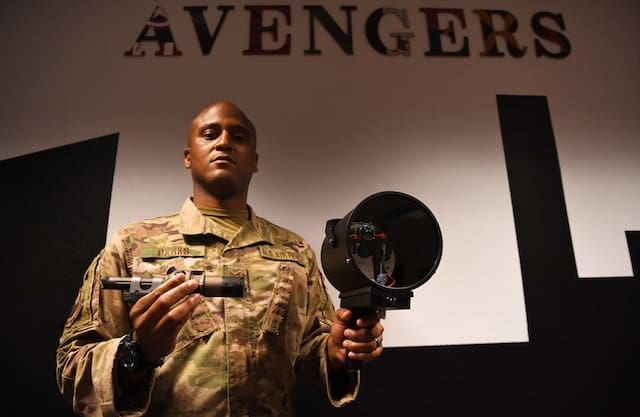
The Infrared Zoom Laser Illuminator Designator will replace the dated signal light gun currently used by AMLOs to signal and direct aircraft.

“AMLOs use this equipment in a tactical environment, designating the landing zone for inbound aircraft,” said Maj. Stephen Quinn, 621st MSOS AMLO. “The IR beam is covert, but highly visible for the night vision goggle-wearing aircrew, and allows the AMLO to easily guide the aircraft to the threshold.”

The IZLID is a compact, lightweight infrared laser used for pointing and marking by military forces. The laser is a powerful long-range illuminator, small enough to fit in the user’s pocket and sufficient enough to direct airstrikes.

The new laser is “covert and portable compared to the old light guns,” said Quinn, and more effective in a tactical environment.

“The most important aspect is enhanced situational awareness for aircrew at the push of a button,” Quinn said. “Landing zone approach lights vary in effectiveness, but a quick lase with the IZLID can prevent a crew from selecting the wrong aimpoint.”

The expectation is to utilize the IZLID for all future landing zone operations in-theater. The squadron is planning on purchasing five IZLIDs for deployment use and in garrison training.

“It’s awesome and worth the price,” Quinn said. “AMLOs are basically Jedis already, and this gives us a lightsaber to help with the job.”

A win for AMLOs is a win for the whole squadron. 

“Every day, week, month, and year we get closer and closer to what is needed for MSOS and AMLO Nation equipment-wise,” said Staff Sgt. Sededrick Parks, 621st MSOS supply and equipment manager. “I believe this equipment has catapulted us further in that direction.”

By TSgt Luther Mitchell Jr., 621st Contingency Response Wing Public Affairs

FirstSpear Friday Focus— Retro-Fit Cummerbund

Friday, October 9th, 2020

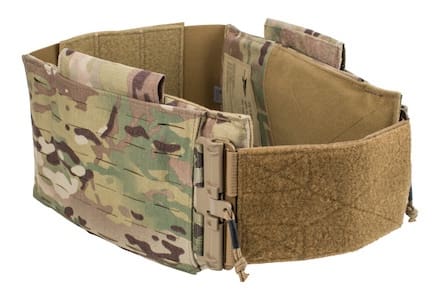
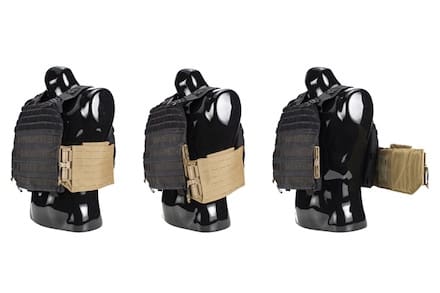
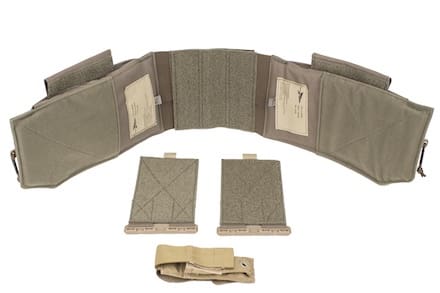
This week’s focus is all about the Retro-Fit Cummerbund. Combining all the features of the Overlap Cummerbund, including a strong elastic back that provides security and comfort, the Retro-Fit Cummerbund is a great solution for those utilizing a different plate carrier that want to use FirstSpear’s 6/12 modular platform and Tubes technology. The low-profile loop interior for mounting our hook-backed Ragnar pockets for radios, extra mags inside the cummerbund, making users lighter and faster with a slimmer profile.

SPECS:

Model: Retro-Fit Cummerbund

Size: Small (26”–32”); Medium (32”–38”); Large (35”–41”); XL (38”-44”); 2XL (41­”–47”); 3XL (48”–52”)

Colors: Black, Coyote, Multi-Cam, Ranger Green

FirstSpear’s Tubes Rapid-Release Technology solves many of the problems with common closure methods on plate carriers. The common closure in the front with the hook & loop fasteners can present many performance failures. It not only adds bulk, it is noisy, and retains water and mud; from a safety standpoint, the hook and loop closures can cause cummerbund protection items (like side plates, inflatable flotation) to shift position and misalign from where they should be to offer maximum protection.

Tubes technology has solved all these challenges. Quick to close, and even quicker to remove, the Retro-Fit Cummerbund utilizes Tubes to allow end users to utilize this capability and the 6/12 Modular Platform without completely changing your entire load carriage platform. This kit is compatible with carriers that utilize traditional hook and loop flap systems and cummerbund pass-through channel. It accepts both soft armor and 6 in. x 6 in. hard plates.

Constantly pushing the envelope in technological advances to better serve the warfighter and first responders, check out First-Spear.com. To read more about our technology advancements, go to First-Spear.tech.

Sensor with 100,000 Times Higher Sensitivity Could Bolster Thermal Imaging

Friday, October 9th, 2020

Better detecting microwave radiation could improve thermal imaging, electronic warfare, radar

RESEARCH TRIANGLE PARK, N.C. — Army-funded research developed a new microwave radiation sensor with 100,000 times higher sensitivity than currently available commercial sensors. Researchers said better detection of microwave radiation will enable improved thermal imaging, electronic warfare, radio communications and radar.

Researchers published their study in the peer-reviewed journal Nature. The team includes scientists from Harvard University, The Institute of Photonic Sciences, Massachusetts Institute of Technology, Pohang University of Science and Technology, and Raytheon BBN Technologies. The Army, in part, funded the work to fabricate this bolometer by exploiting the giant thermal response of graphene to microwave radiation.

“The microwave bolometer developed under this project is so sensitive that it is capable of detecting a single microwave photon, which is the smallest amount of energy in nature,” said Dr. Joe Qiu, program manager for solid-state electronics and electromagnetics, Army Research Office, an element of the U.S. Army Combat Capabilities Development Command’s Army Research Laboratory. “This technology will potentially enable new capabilities for applications such as quantum sensing and radar, and ensure the U.S. Army maintains spectral dominance in the foreseeable future.”

The graphene bolometer sensor detects electromagnetic radiation by measuring the temperature rise as the photons are absorbed into the sensor. Graphene is a two dimensional, one-atom layer thick material. The researchers achieved a high bolometer sensitivity by incorporating graphene in the microwave antenna.

A key innovation in this advancement is to measure the temperature rise by superconducting Josephson junction while maintaining a high microwave radiation coupling into the graphene through an antenna, researchers said. The coupling efficiency is essential in a high sensitivity detection because “every precious photon counts.”

A Josephson junction is a quantum mechanical device which is made of two superconducting electrodes separated by a barrier (thin insulating tunnel barrier, normal metal, semiconductor, ferromagnet, etc.)

In addition to being thin, the electrons in graphene are also in a very special band structure in which the valence and conduction bands meet at only one point, known as Dirac point.

“The density of states vanishes there so that when the electrons receive the photon energy, the temperature rise is high while the heat leakage is small,” said Dr. Kin Chung Fong, Raytheon BBN Technologies.

With increased sensitivity of bolometer detectors, this research has found a new pathway to improve the performance of systems detecting electromagnetic signal such as radar, night vision, LIDAR (Light Detection and Ranging), and communication. It could also enable new applications such as quantum information science, thermal imaging as well as the search of dark matter.

The part of the research conducted at MIT included work from the Institute for Soldier Nanotechnologies. The U.S. Army established the institute in 2002 as an interdisciplinary research center to dramatically improve protection, survivability and mission capabilities of the Soldier and of Soldier-supporting platforms and systems.

By US Army CCDC Army Research Laboratory Public Affairs

Natick Soldier Center’s New Fabric Enhances Cybersecurity, Subzero Weather Durability

Thursday, October 8th, 2020

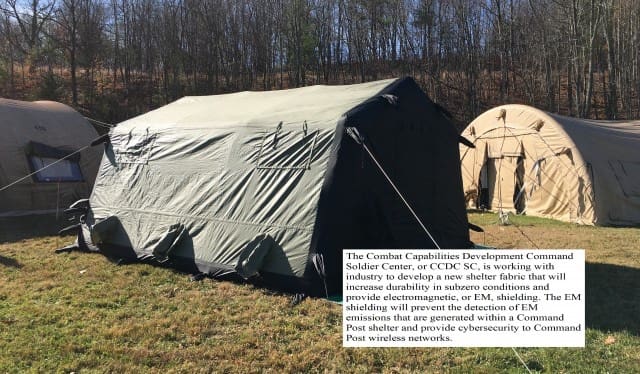
NATICK, Mass. – The Combat Capabilities Development Command Soldier Center, or CCDC SC, is working with industry to develop a new shelter fabric that will increase durability in subzero conditions and provide electromagnetic, or EM, shielding. The EM shielding will prevent the detection of EM emissions that are generated within a Command Post shelter and provide cybersecurity to Command Post wireless networks.

CCDC SC’s Expeditionary Maneuver Support Directorate is working with industry partners to develop the new laminate systems with higher performance and durability. Kristian Donahue, a chemical engineer in EMSD at CCDC SC, explained that General Purpose, or GP, shelter fabrics are currently made with a coating that becomes brittle at subzero temperatures. This impacts the durability of the fabric, the environmental protection of the shelter, and the light discipline aspect of signature management. Light discipline refers to luminous signs that can lead to the detection of the presence of troops and military facilities.

Donahue stated that the team was already able to successfully develop a new GP tent material that eliminates the low-temperature durability issues, a significant milestone which will help benefit the EM shielding work as well.

“Our goal is to also add additional functionality to this GP tent fabric by integrating an electromagnetic shielding material into the GP fabric,” said Donahue. “This EM shielding fabric will prevent the EM emissions generated within a Command Post shelter from being detected by adversaries, as well as provide cybersecurity to wireless networks operating within the CP.”

Donahue explained that EM shielding is important for both security and Soldier safety.

“Electromagnetic emissions can be detected by adversaries therefore giving away your position,” said Donahue. “Those emissions can also be intercepted and exploited by cyber warfare units.”

The new shelter fabric is also lower weight, thus reducing the logistical footprint. Moreover, there is no longer the risk of increased volume associated with the current fabric, which may become stiff at subzero temperatures and the stiffness can affect volume. In certain cases the increased volume may interfere with moving and packing.

The new fabric technology will also enhance Soldier protection and lethality.

“With increasing peer and near-peer adversaries, the ability to maintain Command and Control and Communications becomes highly imperative,” said Donahue. “The ability to maintain C3 while not being detected is important in the ability to increase unit survivability and unit lethality. The ability to deny detection during a multi-domain battle will ensure dominance on the battlefield.”

By Jane Benson, CCDC SC Public Affairs

Augmented Reality K9 Goggles Could Help Protect Soldiers

Wednesday, October 7th, 2020

RESEARCH TRIANGLE PARK, N.C. — Military working dogs often scout areas for explosives devices and hazardous materials and assist in rescue operations, but giving dogs the necessary commands to perform these missions can put Soldiers in harm’s way. Augmented reality may change that.
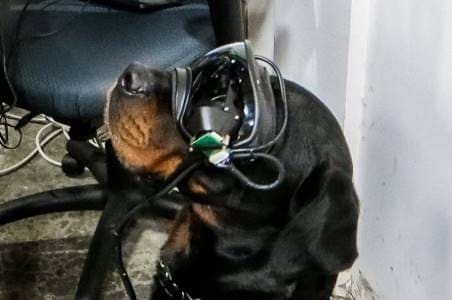
Through a project funded by the Small Business Innovation Research program and managed by the Army Research Office, an element of the U.S. Army Combat Capabilities Development Command’s Army Research Laboratory, a new technology has been developed by Command Sight, Inc., to provide military working dogs with augmented reality goggles that allow a dog’s handler to give it specific directional commands while keeping the warfighter remote and out of sight.

In 2017, Dr. A.J. Peper started Command Sight, a small business based in Seattle, to bridge human and animal communication. Through conversations with current and former military operators he identified a need to increase the efficacy of communication between canine and handler. As a result, Command Sight built the first prototype of augmented reality glasses for military working dogs.

Peper said initial feedback from his proof of concept was, “the system could fundamentally change how military canines are deployed in the future.”

The augmented reality goggles are specially designed to fit each dog with a visual indictor that allows the dog to be directed to a specific spot and react to the visual cue in the goggles. The handler can see everything the dog sees to provide it commands through the glasses.

“Augmented reality works differently for dogs than for humans,” said Dr. Stephen Lee, an ARO senior scientist. “AR will be used to provide dogs with commands and cues; it’s not for the dog to interact with it like a human does. This new technology offers us a critical tool to better communicate with military working dogs.”
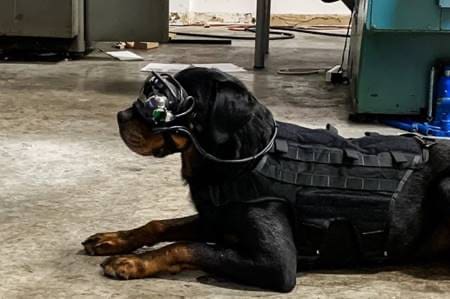
The initial prototype is wired, keeping the dog on a leash, but researchers are working to make it wireless in the next phase of development.

“We are still in the beginning research stages of applying this technology to dogs, but the results from our initial research are extremely promising,” Peper said. “Much of the research to date has been conducted with my rottweiler, Mater. His ability to generalize from other training to working through the AR goggles has been incredible. We still have a way to go from a basic science and development perspective before it will be ready for the wear and tear our military dogs will place on the units.”

The basic science research behind this technology focuses on understanding canine vision and cognition as this tool is developed.

“We will be able to probe canine perception and behavior in a new way with this tool,” Lee said.

Currently, military working dogs are commonly directed by hand signals, which require the handler to be within sight of the dog, or by laser pointers, which also required the handler to remain close to the dog and generates a light source, which could be a safety issue.

Audio communication, using a camera and a walkie talkie placed on the dog are also used to direct the canines and allows the handler to be further from the dog, but the verbal commands can lead to confusion for the dog, for example, a dog runs around a set of stairs rather than going up them.

Augmented reality goggles could offer Special Forces dogs and their handlers a new alternative.

“The military working dog community is very excited about the potential of this technology,” Lee said. “This technology really cuts new ground and opens up possibilities that we haven’t considered yet.”

The augmented reality system uses goggles military working dogs have already been wearing for protection in inclement conditions and aerial deployments from Rex Specs. By leveraging a product the dogs are already used to wearing, Peper said it makes the technology adoption easier for both the dogs and the handler.

“Even without the augmented reality, this technology provides one of the best camera systems for military working dogs,” Lee said. “Now, cameras are generally placed on a dog’s back, but by putting the camera in the goggles, the handler can see exactly what the dogs sees and it eliminates the bounce that comes from placing the camera on the dog’s back.”

The Command Sight team has completed the Phase I of the SBIR and was selected to continue to Phase II. The SBIR program funds research and technology development with small businesses using a three-phase process. In contrast to the basic research programs managed by ARO, the SBIR program focuses primarily on feasibility studies leading to prototype demonstration of technology for specific applications.

Additionally, the Department of Defense Rapid Reaction Technology Office has provided funding for the next phase of development. With that funding, Command Sight is now working with Navy Special Forces to build prototypes that will be tested on their military working dogs. Each of the dogs received a 3D scan to get dimensional data to understand where to place optics and electrical components, specific to each dog.

The researchers plan to spend the next two years developing a production level wireless product. Once they have a prototype they will get user feedback and revise the product for manufacturing.

“ARO has been a critical partner in making technical, training and direct user connections to build ground swell of interest and secure funding sources,” Peper said. “We’re excited about getting this into the hands of the Soldier, hopefully in just a few years.”

By US Army CCDC Army Research Laboratory Public Affairs

UF PRO Presents – The “Boo Boo” Bag

Monday, October 5th, 2020

A “Boo Boo” bag is part of a medical kit reserved for minor cuts and blisters (headaches, too), the non-life-threatening stuff that’s inconvenient but nonetheless needs to be treated.



We’ve presented ready made versions in the past with many preferring to make their own. This video featuring former Special Forces Medic Luka, shows what he puts in his “Boo Boo” bag.

Read more at ufpro.com/blog/article/civilian-edc-whats-my-combat-medic-bag.