FirstSpear

Archive for the ‘Guest Post’ Category

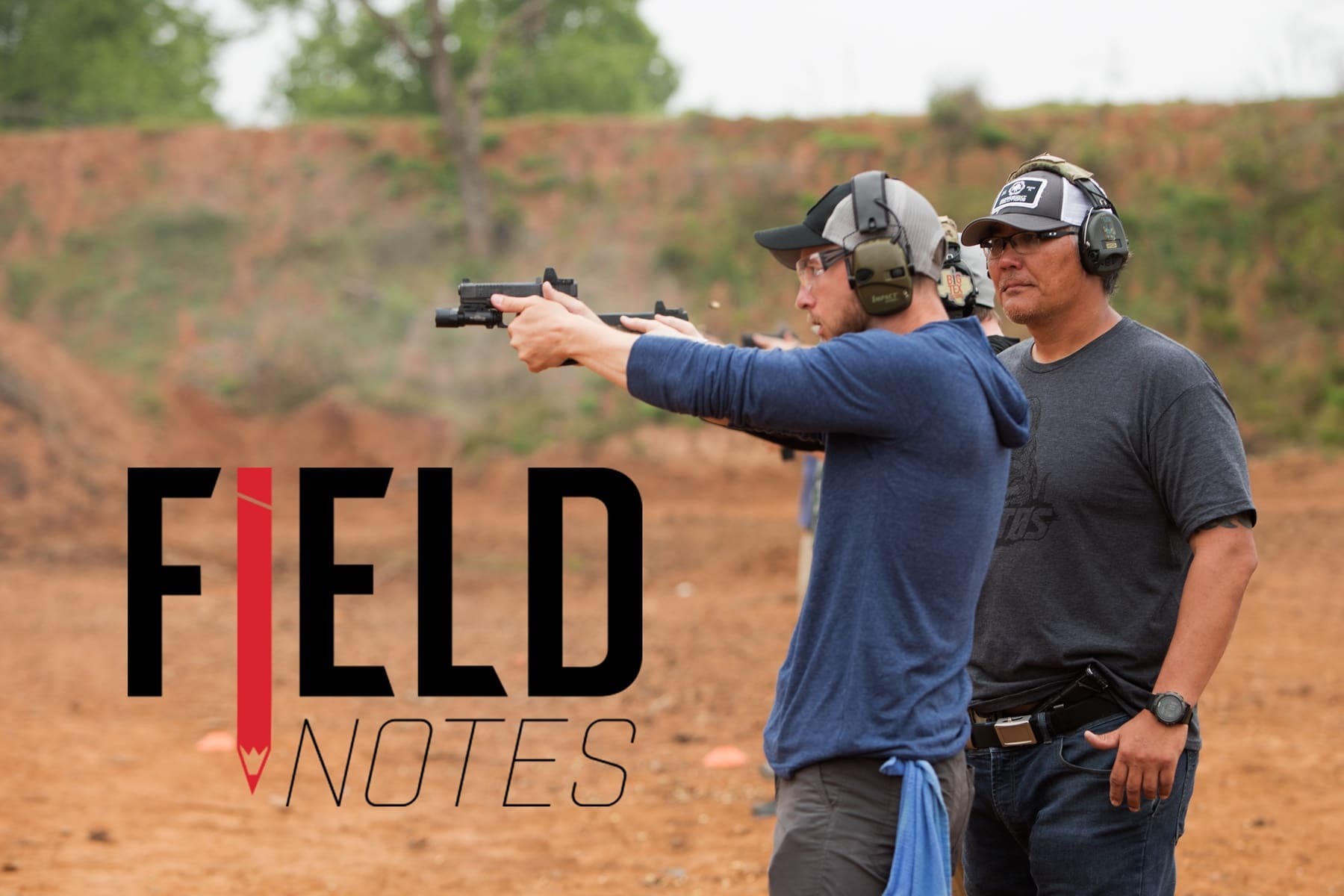
SureFire Field Notes Ep. 49: Red Dots on Handguns with Scott Jedlinski

Thursday, November 7th, 2019

Scott Jedlinski of Modern Samurai Project talks about the value of Red Dot sights on handguns.

Modern Samurai Project offers private and group instruction on basic self-defense and firearms. Their specialty is the fundamentals and performance of the use of red dot equipped pistols for responsibly armed citizens and law enforcement.

www.surefire.com

Search Ongoing for Special Tactics Airman After Training Jump

Wednesday, November 6th, 2019

As of 6 a.m. Wednesday, a search remains underway for an Airman who exited a C-130 aircraft November 5, 2019 over the Gulf of Mexico approximately 4 miles south of Hurlburt Field. The incident is ongoing and under investigation.

Search and recovery crews were immediately called to aid in locating the Airman from the 24th Special Operations Wing at Hurlburt Field at approximately 11:30 a.m. Tuesday.

Units participating in the efforts include:

– 24th Special Operations Wing, Hurlburt Field Air Force Base

– 1st Special Operations Wing, Hurlburt Field Air Force Base

– Coast Guard Air Station New Orleans MH-65 Dolphin Helicopter aircrew

– Coast Guard Aviation Training Center Mobile HC-144 Ocean Sentry aircrew

– Coast Guard Aviation Training Center Mobile MH-60 Jayhawk aircrew

– Two Coast Guard Station Destin 45-foot Response Boat-Medium boat crews

– 96th Test Wing, Eglin Air Force Base

– U.S. Army 7th Special Forces Group, Duke Field

– Santa Rosa County Sheriff’s Office

– Florida Fish and Wildlife Conservation Commission

24th Special Operations Wing Public Affairs

Army Prototypes Radio Network Management Software Tool Suite

Wednesday, November 6th, 2019

To address Soldier feedback requesting easier and faster ways to plan and manage the Army’s advanced software defined radios, such as the 2-Channel Leader Radio, the service is piloting a new software tool suite that reduces the time it takes to initialize, plan and load a brigade’s worth of radios, from four weeks to minutes.

These new user-friendly software prototypes also lay the foundation for rapid unit task reorganization and enable tasks once performed by advanced Signal Soldiers to be performed by general purpose users for increased operational flexibility.

The Army’s Program Executive Office for Command, Control and Communications-Tactical (PEO C3T) leveraged its Unified Network Operations Middle Tier Acquisition (UNO MTA) authority to develop these pioneering capabilities in just three months, compared to a traditional full custom Army development effort that would have taken 12 to 18 months, or more.

“Our new user-friendly Network Operations planning and management software prototype tools work hand-in-hand to initialize, plan and load a brigade’s worth of radios faster than ever before,” said Cpt. Nicholas Milano, assistant product manager for Tactical Cyber & Network Operations, Project Manager Tactical Network, assigned to PEO C3T. “Each integrated piece of software works in unison in an end-to-end network planning and initialization workflow.”
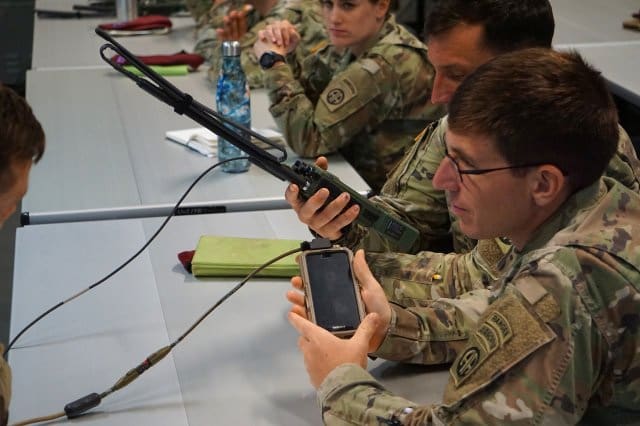
The prototype software tool suite includes:

– The Integrated Planner: an overarching system that plans and creates configuration files for numerous network elements, including the software defined radios supporting the Army’s tactical network. This planner was developed to integrate or replace existing network planners.

– Network Operations Management System (NOMS): an overarching prototype system used to manage the network and support non-classified, classified and coalition network enclaves with common look, touch, feel, and functionality.

– Initialization Tool Suite (ITS): enables Soldiers to manage and modify their network initialization data products network design on the ground in theater. Data Products provide the information required to enable end-to-end network connectivity and interoperability across the Army’s tactical internet.

— Codex: an authoritative database with a common data model and open Application Programming Interfaces (APIs), enabling standard access to the data product network design. APIs enable applications to “talk” to each other.

— Atom: a simplified radio planner that provides intuitive workflow and an open API that uses the data product network design to provide a radio waveform plan. The Atom prototype will inform enhancements and future capability and fielding decisions on the final new solution to support existing and emerging planning requirements, potentially replacing the legacy Joint Enterprise Network Management Capability.

–Black Sails: a simplified radio configuration tool that uses the waveform plan through an open API to configure software defined lower tactical internet radios. Atom and Black Sails work hand-in-hand — Atom creates the plan and Black Sails generates the configuration files and loads the radios.

The UNO MTA is helping the PEO rapidly deliver a more robust, integrated, and standardized set of network management capabilities that enable Soldiers from tactical edge up through corps to plan, configure, manage, monitor, provision and secure/defend their network assets. UNO efforts simplify and reduce the number of tools Soldiers use to manage and defend the tactical communications network.
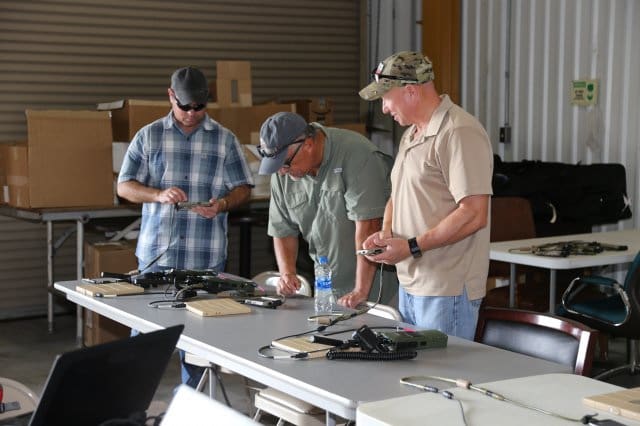
“We are leveraging the OTAs to prototype solutions to configure and integrate tactical and enterprise networks, enabling the delivery of information and communications among Soldiers at all echelons, utilizing network resources prioritized according the commander’s intent,” Milano said.

To create the unified radio planning and management software tool suite, the UNO MTA team-of-teams concentrated on prototyping commercial-off-the-shelf software applications for network planning and management, integrating them into existing government programs of record, and then quickly inserting them into military formations to gain feedback for further enhancements and to support future Army capability decisions.

The team is working with operational units to pilot these software tools and leverage Soldier feedback to inform requirements as part of the Army’s developing Integrated Tactical Network, or ITN. The ITN capabilities work together to enable commanders to leverage both military and commercially available networks for secure and reliable multi pathway communications and information sharing between Army, joint and coalition partners. The ITN commercial-off-the-shelf equipment includes new expeditionary satellite terminals, line-of-sight backhaul, mobile broadband kits, radio waveforms, a two-channel Leader Radio, single channel radios, end user devices, network gateways, unified network operations tools and data products.

As part of a developmental operations construct, PEO C3T engineers are implementing continuous exploration, integration, and deployment of the software prototypes that include quarterly Soldier touch points with various units, including the 1st Brigade Combat Team, 82nd Airborne Division; 1st Battalion, 508th Parachute Infantry Regiment, 3rd Brigade Combat Team, 82nd Airborne Division; and the 10th Mountain Division. Using this common cadence, each program office has the dedicated resources necessary to continuously define, build, test and deliver value to the Army, said Keith Whittaker, network planning product lead for PM Tactical Network.

“We gain continuous feedback on the prototype design, which is immediately fed back into the software development sprint cycles, to be refined again as part of the next quarterly release cycle,” Whittaker said. “This construct has already proven its value, enabling the program offices to observe Soldiers interacting with prototype mock-ups before a single line of code is ever written.”

Through requests for proposals and technical exchange meetings–initiated by the Network-Cross Functional Team– PEO C3T determined the best options for integrating existing capabilities with minimum development efforts.

Throughout the development process of the radio planning and management software tool suite, the team purposely laid a foundation for an open framework and open standards, including open APIs.

“This open architecture ensures future DoD software and system development can most effectively and efficiently share information between systems and more easily and rapidly integrate future systems to improve functionality and capability,” Whitaker said.

The open construct will be critical to future network modernization endeavors, as the DoD continues to develop integrated capability, such as the ITN, which includes multiple vendors, hardware, software, configurations, and systems that overarch multiple programs.

Story by Amy Walker, PM Tactical Network, PEO C3T public affairs

Photos by Kathy Bailey, PEO C3T public affairs and 1st BCT, 82nd Airborne Division public affairs


First US Navy Warrant Officer 1 Grads in Decades Hailed at LDO/CWO Academy

Tuesday, November 5th, 2019

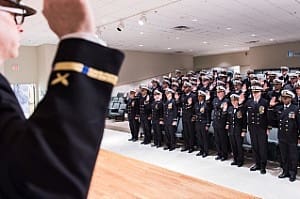
NEWPORT, R.I. (Nov. 1, 2019) (NNS) — The first eight Navy warrant officer 1 (WO1) Sailors in decades graduated from the Limited Duty Officer/Chief Warrant Officer (LDO/CWO) Academy at Officer Training Command, Newport (OTCN), Nov. 1.

The new warrant officers are Benjamin Nichols, Jonathon Wynn, Brent Gray, Ryan Snyder, Devan Sorenson, Nicholas Drenning, Kevin Koller, and Brian Ruzin.

“I’m enthusiastic for this new program because we can pave the way for the future of the Navy’s cyberwarfare efforts,” said Warrant Officer Devan T. Sorenson, from Bozeman, Montana. “The unique world of this career field is modeled like a meritocracy where it is a collaborative environment to be effective. The evolution of technology outpaces the training so it is important to stay current.”

“Our expertise comes from the enlisted ranks and we can better assist officers to make those necessary decisions through our experience,” said Warrant Officer Ryan C. Snyder, from Hollis, New Hampshire. “It is essential to be innovative and always strive to be the subject matter experts in this fast-paced field of cyberwarfare.”

The LDO/CWO Academy is a four-week course designed to prepare these prior enlisted Sailors for their new roles in the wardroom per the Navy’s Officer Professional Core Competencies. The class officers at the schoolhouse develop these newly commissioned officers morally, mentally, and physically, and imbue them with the highest ideals of honor, courage, and commitment in order to prepare them for the Fleet. Additionally, the academy will prepare these officers to become effective leaders by developing fundamental skills in leadership, written and oral communication, career management and administration.

“The new WO1 program opens up more advancement and designator opportunities,” said Cmdr. Zeverick L. Butts, the Director of the LDO/CWO Academy. “These new students bring unique skillsets and perspectives, increasing the dynamic interaction in the classroom for problem solving.”

The eight WO1s along with the 45 LDOs and CWOs of class 20010 graduated during a ceremony on Nov. 1, 2019. Graduates of this academy, nicknamed “Mustang University,” will join the LDO/CWO community to support the war-fighting capability and readiness of Naval Forces through leadership, technical proficiency and experience.

NAVADMIN 140/18 announced the implementation of the WO1 pay grade (W-1) for cyber warrant officers, and solicited applications for the FY-19 and FY-20 WO1 Cyber Warrant Selection Boards, the first since 1975. The rank was reinstated through the Cyber Warrant Officer In-Service Procurement Selection Board as the result of increasing threat of cyberwarfare on the modern battlefield. To be eligible, E5 and above applicants must be in the Cryptologic Technician Networks (CTN) rating, possess at least one of the following Interactive On-Net (ION) Operator naval enlisted classifications (NEC): H13A, H14A, H15A, or H16A, and meet time-in-service requirements.

Officers appointed as cyber WO1 incur a six-year service obligation from the date of appointment, shall serve a minimum time in grade of 3 years and must complete a minimum of 12 years of time in service prior to promotion and commissioning to Chief Warrant Officer 2.

The distinctive insignia worn on the WO1 cover of two cross-fouled anchors makes them easily recognizable in place of the traditional officer badge worn by other Naval Officers.

Headquartered in Newport, Rhode Island, OTCN oversees Officer Candidate School, Officer Development School and Limited Duty Officer/Chief Warrant Officer Academy.

Get more information about the Navy from US Navy facebook or twitter.

For more news from Naval Service Training Command, visit www.navy.mil/local/greatlakes

Story by Lt Cdr Frederick Martin, Naval Service Training Command Public Affairs

Photo by Darwin Lam

Max Talk 43: Gear Review: Crossfire DG3 Pack (Part 2)

Monday, November 4th, 2019

This is the forty-third installment of ‘Max Talk Monday’ which shares select episodes from a series of instructional videos. Max Velocity Tactical (MVT) has established a reputation on the leading edge of tactical live fire and force on force training. MVT is dedicated to developing and training tactical excellence at the individual and team level.

This is a gear review of the Crossfire DG-3 Pack. This is a gear review of the Crossfire DG3 Pack. This is part 2, with part 1 already posted on YouTube. The U.S. Crossfire website is now up: crossfirepacks.com

More of these instructional videos can be found by subscribing to the Max Velocity Tactical YouTube Channel.

Detailed explanations can be found in the MVT Tactical Manual: Small Unit Tactics.

Max is a tactical trainer and author, a lifelong professional soldier with extensive military experience. He served with British Special Operations Forces, both enlisted and as a commissioned officer; a graduate of the Royal Military Academy Sandhurst. Max served on numerous operational deployments, and also served as a recruit instructor. Max spent five years serving as a paramilitary contractor in both Iraq and Afghanistan; the latter two years working for the British Government in Helmand Province, Afghanistan.



Website: Max Velocity Tactical

YouTube: Max Velocity Tactical

Excellence in Tactical Training.

SCUBAPRO Sunday – Kokoda Track Campaign WW2

Sunday, November 3rd, 2019

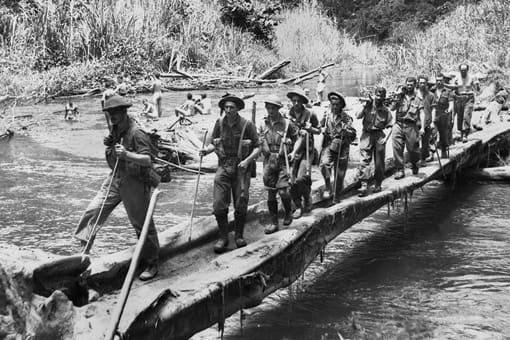
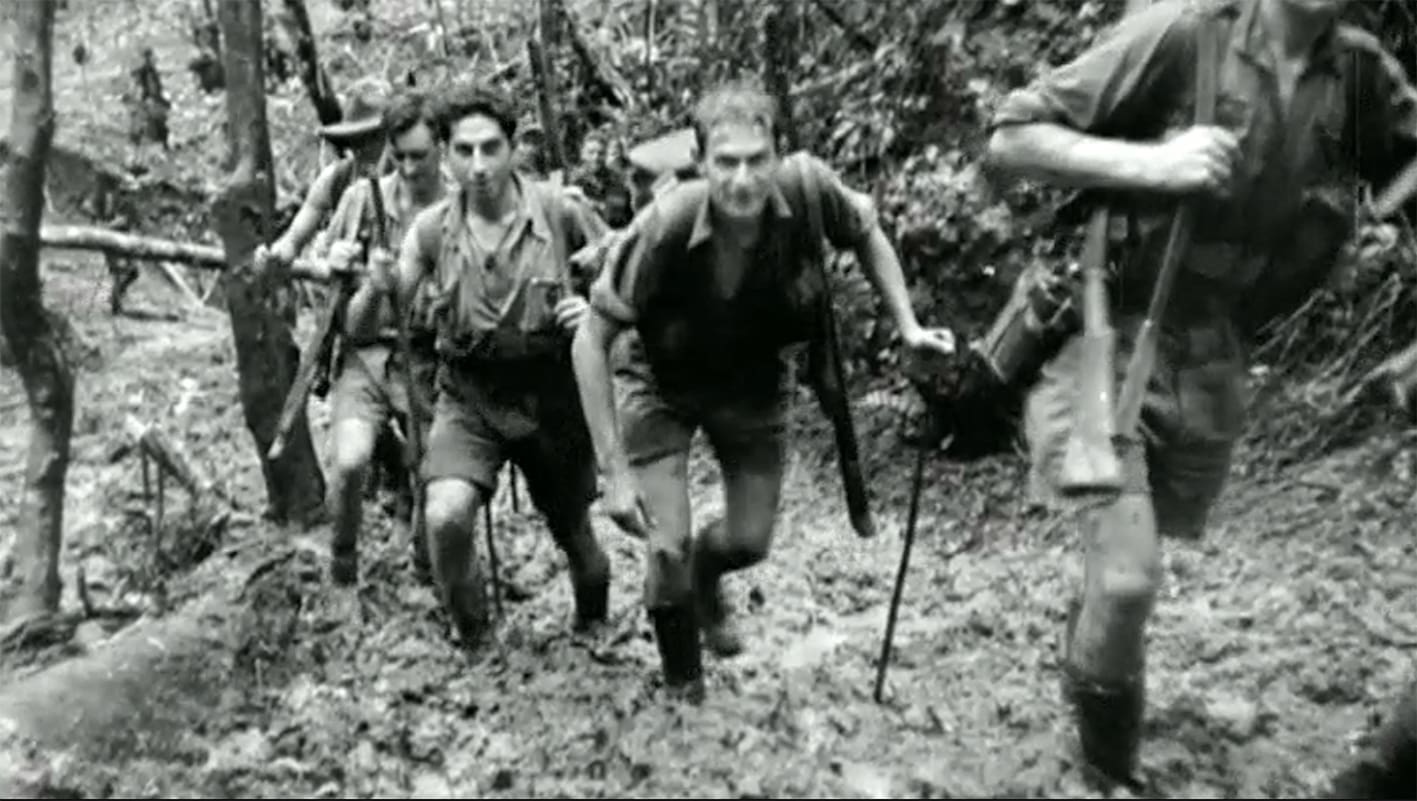
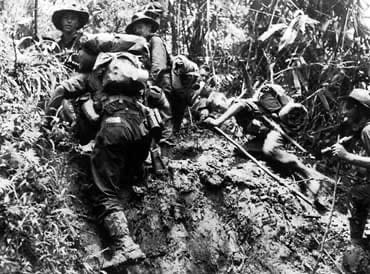
The 3rd of  November is Kokoda in Australia. The Kokoda campaign began with a full-scale attack on the Australian 39th Militia Battalion on 29 July 1942.  The battle lasted three months as the Australians were pushed back to their last line of defense on Imita Ridge. The Australians rallied at this point and forced the Japanese back across the track.  Kokoda was recaptured on 2nd November 1942, and the Australian flag was raised at a service the following day.

The Kokoda Track/Trail Campaign was fought between the Australians, the Americans, ,and the Japanese. It was primarily fought between the Aussies and the Japanese. The campaign consisted of a series of battles fought between July and November 1942 in what was then the Australian Papua New Guinea    

Kokoda was undoubtedly the most significant battle fought by Australians in the Second World War because it was fought so close to home. The Kokoda campaign saved Australia from possible invasion from the Japanese. Port Moresby held a robust tactical position and preventing the Japanese from reaching it was vital. The battle was fought over five months, and the odds were stacked heavily in favor of the Japanese, they outnumbered the Aussies 5-1, they had much better equipment, and a lot more of it, and at the time were considered the best jungle fighters in the world. The astounding feats performed by the Australian soldiers lead to the growth of Australia as a nation.
The Australian troops had to save Port Moresby from getting invaded from the Japanese because if so, the Japanese could have easily invaded Australia. The Australian forces fought exceptionally well in the harsh and unforgiving jungle of the Kokoda Track/ Trail. There were more than 600 Allies killed, and about 75% of the allied troops got sick, with diseases like malaria, dengue fever, and dysentery, to name a few. 

The Australians fought against all the odds and without the help of Great Britain. It was also fought mainly by Militia (reserve) troops or “chocolate soldiers” as the Australian Imperial Forces (AIF) called them because they were poorly trained, and it was said, “they would melt in the heat of battle.” At the start of the war, Australia sent its best troops the AIF to the middle east to help the brits. So, they stood up Militia Battalions to serve in Australia, to protect the homeland. Still, they used the loophole that Papua New Guinea was a territory, so they sent the 39th Militia there to help protect the island. This was one of the hardest fought battles in WW2 by anyone. I have attached a couple of links so you can read about this. As a lot of military units are getting back into the jungle, this is full of useful lessons learned and is an excellent piece of history. So raise a beer to the diggers and all the people that have gone before us.  


Wq6eGJV9Jsk

kokodacampaignww2.weebly.com


R2TD: A new tool for an ever-present threat

Sunday, November 3rd, 2019

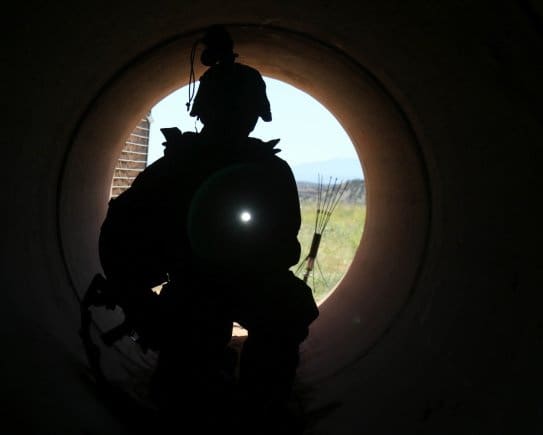
ABERDEEN PROVING GROUNDS, Md. — Seismic, acoustic and electromagnetic systems work to help Army find one of the oldest forms of field fortification: tunnels.

War is as old as human history. This means a lot of the reactive tactics and protective equipment must evolve in response to an attack becoming strong. As weapons became heavier and deadlier-swords went from bronze, to iron, to alloys of greater hardness and durability-the defense for them would evolve, protective clothing going from very thick fabrics, to leathers, to metals to the hard ceramics and Kevlar we know today.

Terrain use has evolved over time, too. As the stakes continue to rise and objectives evolve, merely taking hills, fields and transportation routes was always the start, but taking, holding and occupying towns and cities for longer periods of time will be key.

This means tunnels. Cities thousands of years old, such as Paris and its 200 miles of tunnels and catacombs, or modern American cities like New York, which has 665 miles of subway tunnels, will make tunnels a consideration of modern urban warfare. Newer cities may not have subways as an afterthought, but as a foundation of their planning. In India and China, for example, subway stations are the root of creating new cities as the population continues to grow.

Tunnels have been used to thwart invaders and penetrate fortifications since there were invaders and fortifications. For example, ancient Romans used tunnels-called qanats-to transport water to sustain their cities. Were any enemy able to find those tunnels, they could do incredible damage to the city of Rome.

Today, military thinkers like those at the Modern War Institute at West Point are considering underground warfare as a given, and they are considering the kind of equipment that would make underground warfighting most effective.

Project Manager Terrestrial Sensors, part of the Program Executive Office – Intelligence, Electronic Warfare & Sensors, has a key piece of tunnel warfare at the ready: Rapid Reaction Tunnel Detection equipment, or R2TD.

After all, to fight in tunnels, you have to find them first.

Dr. Steven Sloan, a research geophysicist with the U.S. Army Engineer Research and Development Center, has been working with his team on R2TD system for more than half a decade, which is less a piece of equipment than a suite of tools.

“What we’ve found over the years is that there’s no silver bullet that works in all geologies and all situations,” said Sloan. “So, we have multiple, different systems that each have their strengths in different things dependent on the setting that we’re working in, or what the target set is, then we can kind of mix and match to optimize detection.”

R2TD has seismic, acoustic and electromagnetic systems to detect different aspects of underground structures. Seismic to detect movement of dirt, for example. Acoustic to detect open space underneath the ground and electromagnetic to detect infrastructure like cables, wires, nails and even rails.

“The other two systems are actual in-ground permanently or semi-permanently installed, like an underground fence of sensors,” said Sloan. These other two systems are the border tunneling activity detection system-linear and the active seismic imaging system, which can counter adversaries using purpose-built tunnels or existing subsurface infrastructure, and assist in the survey of large areas for perimeter defense and the detection of existing tunnels and other subsurface anomalies, respectively.

“The thing with tunnels is they’re a low-tech counter to a high-tech adversary,” said Sloan. “So all it takes is his time and manpower to build one and there’s not a whole lot out there to stop them. It’s been around centuries and centuries for a lot of different conflicts.”

Sloan and his team know this, and thus they are often upgrading and tweaking the system.

“We’re upgrading the active seismic units that are in theater,” said Sloan. “We bring them back one at a time and we put in new hardware and new software that’s been developed over the last four or five years in there and then put them back over into their respective theaters of operations.”

“If someone was trying the tunnel under a facility to place explosives or something like that, you don’t want to be on the back end of that trying to figure out how it happened after it’s happened,” said Sloan. “It’s more of a preventative measure, or proactive rather than reactive. You won’t use this over every square inch of every facility that you would build. However, if you got some particularly vulnerable facilities in an area or something, some kind of secured facility that you really want to monitor, it’s another tool that you can use.”

By John Higgins, PEO IEW&S

FirstSpear Friday – KADRI Clothing Launches Valkyrie Field Pant

Friday, November 1st, 2019

I first met the founders of KADRI earlier this year at Warrior East and soon realized that this is the most significant innovation in the tactical industry in years. A product created out of necessity, they not only designed a new pant to fit their needs, but a completely new sizing schema as well. Like it or not, women are here to stay in squad cars, ambulances, and on the battlefield. I also see a need for their innovation in the outback as more and more women enjoy the outdoors for both leisure and work. It’s about time they had some clothing that was designed by them, for them.

Women need pockets. Women in the tactical field definitely need pockets. This simple concept is typically not even a second thought for men working in the same occupation. For them, it’s not so much a question of whether or not pockets are needed, but how many, what kind and what placement best suits their tactical needs. For women, however, this is a constant battle. Due to the wide array of women’s body shapes and sizes, women are stuck with either clothes that fit with little tactical function, or clothes that are functional that don’t fit. Most end up wearing men’s clothes and simply deal with the ill-fitted reality of their current situation: to work in a male-dominated industry, there are just some things women must deal with.

This was the problem founders of KADRI Clothing wanted to solve when they started their company. Founded by two women who served in special operations units, KADRI Clothing is a by-women-for-women adventure-tactical apparel brand created to address common issues women experience in the field and other tactical environments. This includes everything from the functional to the fit needs across multiple body types and various tactical occupations and adventure hobbies.

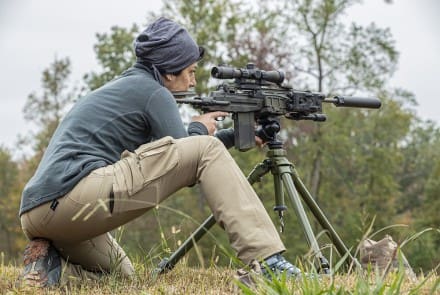
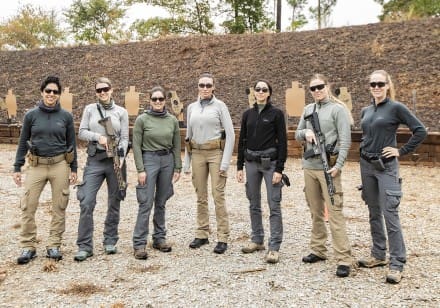
We got the opportunity to look at the first item from their product line—the Valkyrie Field Pant— and the revolutionary sizing and fit system that goes along with it in the best environment possible: on a shooting range with seven tactically-minded women.

KADRI Clothing owner and USMC veteran, Katheryn Basso, walked us through this innovative new product.

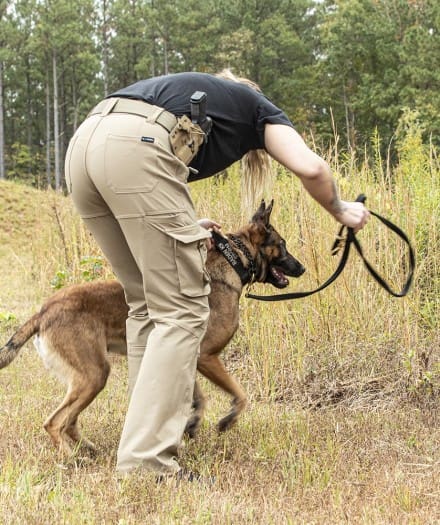
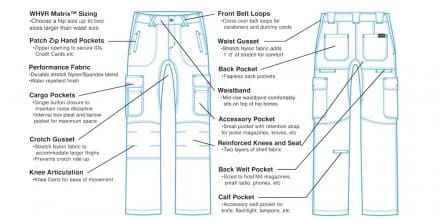
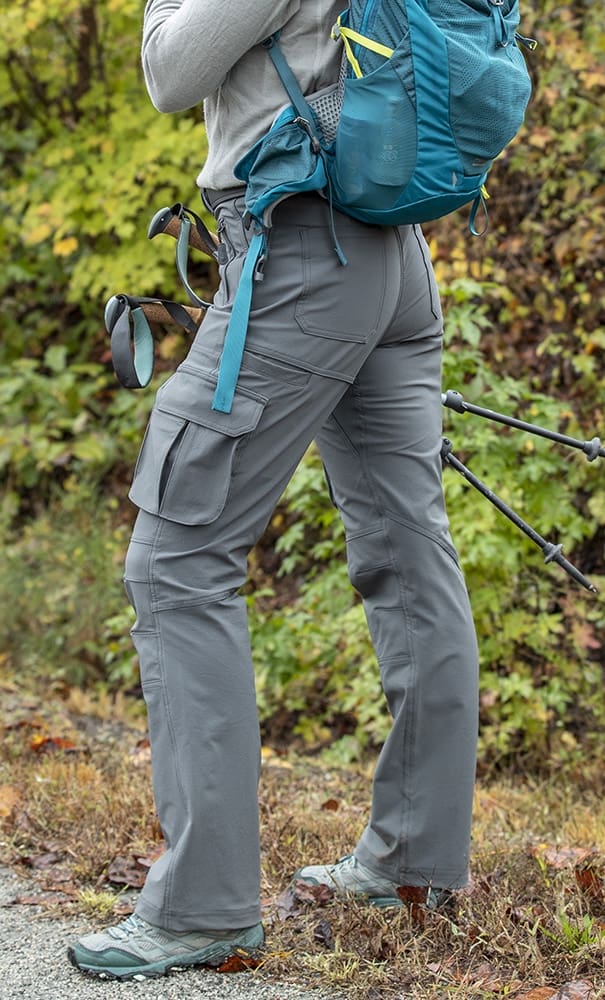
The Valkyrie Field Pant is arguably one of the most advanced female garments available today with features intelligently designed for women. The pant contains 11 functional pockets, including well-sized cargo pockets that maintain their volume no matter the thigh size, and two back welt pockets sized for an M4 mag or large cell phone.

Constructed with a DWR finished nylon/spandex blend with overbuilt construction for durability. Designed with a mid-rise waist, the Field Pant features two waist gussets as well as an extended crotch gusset to allow for the perfect amount of stretch and enhanced range of motion when on the move. Belt loops accommodate up to a 2” riggers belt and include two front cross-design loops to secure clip on accessories like a carabiner.

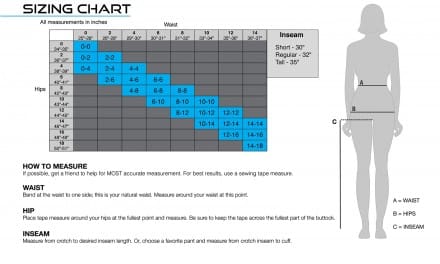
Potentially one of the most ground-breaking features of the Valkyrie Field Pant is the industry-first sizing system. The Waist-Hip Variation Representation, or WHVR, Matrix sizing system uses waist, hip and inseam measurements to find a customizable fit.

This revolutionary system allows women to choose their waist size and up to two sizes larger in their hips. For example, if you are a size 4 waist, you now have the option of purchasing pants with a size 4, 6, or 8 hip. Additionally, the Valkyrie Field Pant comes in short (30”), regular (32”) and tall (35”) inseams. These options enable women to purchase pants specifically designed for their unique body type.

For more information on the pants, visit www.kadriclothing.com

For more info on the FirstSpear and KADRI collaboration click here first-spear.tech/f/firstspear®-and-kadri-clothing-collaborate

To purchase, visit www.first-spear.com/valkyrie-field-pant