GORE-TEX Footwear at Tactical Distributors

Svenska Aerogel’s Customer Launches Fire-Resistant Coating Tailored for the Marine Industry

September 2nd, 2026

Svenska Aerogel’s (“the Company”) customer, a European manufacturer of paints and coatings, is launching a new industrial and fire-resistant coating for the marine industry. The Company’s aerogel material enhances the coating’s fire performance, thereby contributing to increased safety onboard vessels. The coating is intended for use on interior surfaces, such as walls and ceilings.


The customer’s product has been developed for commercial shipping and meets the applicable requirements set by the International Maritime Organization (IMO). The maritime sector is subject to stringent safety requirements, driving demand for fire-protective solutions. Such solutions play an important role in limiting the spread of fire and protecting structures and escape routes.


“We are pleased to see our material, Naerogel®, being used in a product that addresses a clear market need and, above all, contributes to increased safety for people onboard,” says Tor Einar Norbakk, CEO of Svenska Aerogel.

The fire-resistant coating will be sold on a project-by-project basis, and the customer has begun its sales activities.

Curtiss-Wright to Provide Sensor Processing for Northrop Grumman’s Improved Threat Detection System

September 2nd, 2026

ITDS processor, paired with Northrop Grumman’s ATHENA sensor, will enhance aircraft and aircrew survivability

ASHBURN, Va. – Sept. 1, 2026 – Curtiss-Wright announced today that it was awarded an approximately $14 million contract from Northrop Grumman to provide sensor processing equipment supporting the Phase II development of the U.S. Army’s Improved Threat Detection System (ITDS), the future threat warning system designed to protect aircraft from air defense systems. The program aims to deliver advanced missile warning and threat detection capabilities across current and future U.S. Army aviation platforms, including the AH-64 Apache and MV-75 Cheyenne Future Long-Range Assault Aircraft.

Curtiss-Wright’s ITDS integrated processor provides a modular, ruggedized solution designed to ingest high-bandwidth sensor data, perform real-time processing and data fusion, and enable rapid integration of new capabilities within an open systems architecture that is purpose built for portability from platform to platform. Paired with Northrop Grumman’s Advanced Tactical Hostile Engagement Awareness (ATHENA) sensor, Curtiss-Wright’s integrated processor will enable timely missile warning and critical information flow across the platform to protect aircraft and aircrews.  

“Combining Curtiss-Wright’s highly durable processing capability with Northrop Grumman’s ATHENA sensor will result in an unrivaled threat detection capability, providing the potential to protect aircrews from virtually any weapon system – air to air or surface to air – employed by our adversaries,” said Brian Perry, Senior Vice President and General Manager, Curtiss-Wright Defense Solutions. “Our integrated processor excels at rapidly processing and transporting large amounts of data in the most demanding environments, making it the optimal computing solution for latency-critical sense and response protection systems such as ITDS.”

Curtiss-Wright’s integrated processor utilizes MOSA- and SOSA aligned modules integrated within a conduction-cooled chassis designed for airborne deployment. High-speed optical interfaces and configurable I/O provide support for both modern digital sensors and legacy aircraft interfaces, enabling integration across a wide range of aircraft protection architectures. The integrated processor also delivers groundbreaking artificial intelligence-enabled compute architecture and real-time net-centric data sharing which ensures the platform can evolve alongside emerging sensor technologies, algorithms, and countermeasure systems.

About ATHENA

The ATHENA sensor is designed to enhance aircraft survivability by providing 360-degree situational awareness and high-resolution threat detection, capable of geolocating electro-optical/infrared (EO/IR) threats such as unmanned aerial systems, air to air missiles, anti-tank guided missiles, and rocket-propelled grenades.

About ITDS

ITDS will provide the capability to detect, classify, cue and declare on existing and emerging EO/IR threats. ITDS is designed to operate based on rapid threat classification and initiating the appropriate countermeasure system, such as directable infrared and/or expendable countermeasures. ITDS also provides appropriate hostile fire indications, differentiating between small arms and rocket threats.

ITDS will be a Future Airborne Capability Environment (FACE)-conformant and Modular Open Systems Approach (MOSA)-compliant system, able to operate on a digital backbone. It will be composed of IR sensors, a processor, and a memory module. 

For additional information about Curtiss-Wright Defense Solutions products, please visit defense-solutions.curtisswright.com and LinkedIn.

MAAK Gear – Grip Cables

September 2nd, 2026

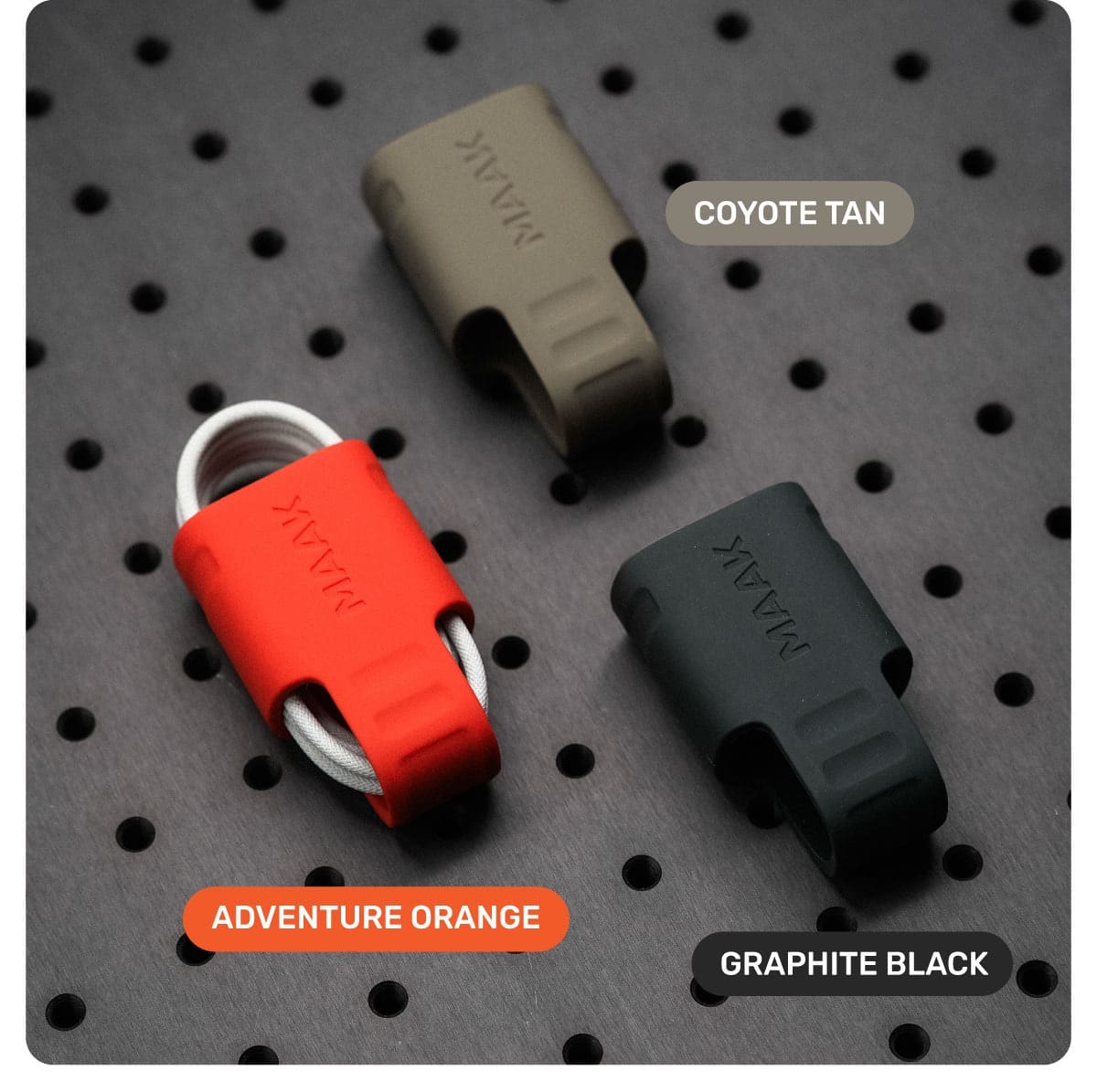
MAAK Gear’s grip cables are a handy way to keep various cables and cords you use for travel organized. Thanks to three colors you can also categorize them.

www.maakgear.com/products/cable-grip

Anduril to Deliver Hardware and Shelter Integration for Army’s TITAN Program

September 2nd, 2026

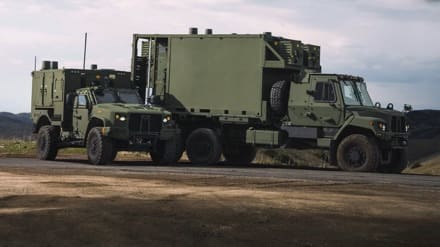
The U.S. Army has awarded Anduril a $65 million delivery order for production in support of the Tactical Intelligence Targeting Access Node (TITAN) program. The award was made through the Army Enterprise Agreement, which provides a streamlined contracting mechanism for the Army to procure Anduril products and capabilities. Under the delivery order, Anduril will produce and integrate hardware subsystems and mission shelters for TITAN, with Palantir serving as the program team lead.

Army units pull sensor data from a variety of satellites, aircraft, and ground systems. Processing and combining different forms of data traditionally relies on large, fixed infrastructure that is difficult to move and vulnerable to detection or attack. TITAN brings that capability into a mobile ground station.

TITAN fuses diverse sources of data into a common intelligence picture while in the field with combat units. This allows Soldiers to receive and act on real-time data in austere environments, rather than routing it back to a fixed command post. TITAN is designed to accelerate targeting and strike, freeing dependencies on older data processing methods.

Under the award, Anduril will deliver hardware for eight TITAN systems—four TITAN Advanced and four TITAN Basic. TITAN Advanced offers greater processing and integration capability, while the Basic variant provides greater mobility for rapid deployment.

Anduril will manufacture the ruggedized, vehicle-mounted systems and integrate the power, thermal, control, and operator subsystems that enable TITAN to function in the demanding environments in which Soldiers operate.

This award marks TITAN’s transition from prototyping to production.

Anduril has supported the program since 2021, serving as the lead hardware systems architect and incorporating Soldier feedback throughout the design and testing process. TITAN hardware is built at Anduril’s facility in Costa Mesa, California.

As the Army plans additional TITAN orders in FY27, Anduril is prepared to scale production and meet growing demand.

Ruck Ready: Three New Mission-Ready Boots From Rocky

September 2nd, 2026

Rucking. Range days. Field exercises. Long miles under load. For those who demand more from their footwear, Rocky Boots has introduced three new military styles built to keep up when the mission gets demanding.

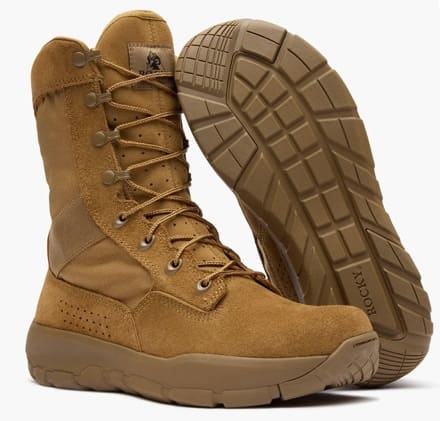
The new C4T Commercial Military Boot, USMC S2V Military Boot and USMC S2V Steel Toe Military Boot give military personnel, tactical professionals and serious outdoor athletes purpose-built options for everything from loaded rucks to extended time on the range.

For lighter, faster movement: The Rocky C4T Commercial Military Boot weighs just 1.25 pounds per boot and combines a dual-density EVA/rubber outsole with 5mm lugs, a fiberglass shank and a wide toe box. Its breathable full-grain leather construction and Rocky Air-Port Comfort footbed are designed to deliver comfort during long days on foot. The boot is also GSA, TAA and military uniform compliant.

For serious rucking and field use: The Rocky USMC S2V Military Boot is built around Rocky’s proven S2V platform and is USMC certified as of 2025. It pairs water-resistant, flash-resistant leather with 1,000-denier CORDURA® nylon, S2V Sieve technology for air circulation and water drainage, Roll-Stop Ankle Stability and a high-walled Vibram® sole. Triple-stitched construction adds another layer of durability for hard use. The Berry-compliant boot is made in the USA.

For added protection: The Rocky USMC S2V Steel Toe Military Boot takes the S2V platform and adds an ASTM-compliant steel toe and electrical hazard protection. It maintains the features that make the S2V a strong choice for demanding environments, including 1,000-denier CORDURA®, water-resistant leather, S2V Sieve technology, Roll-Stop Ankle Stability and a high-walled Vibram® sole.

For ruckers and tactical athletes, footwear can make or break a long day under load. Rocky’s latest military boots are engineered to provide the stability, traction, durability and protection needed when miles, weight and terrain start adding up.

New App Aims to Unify Military Fitness Training Across Branches

September 2nd, 2026

YOKOTA AIR BASE, Japan (AFNS) —  

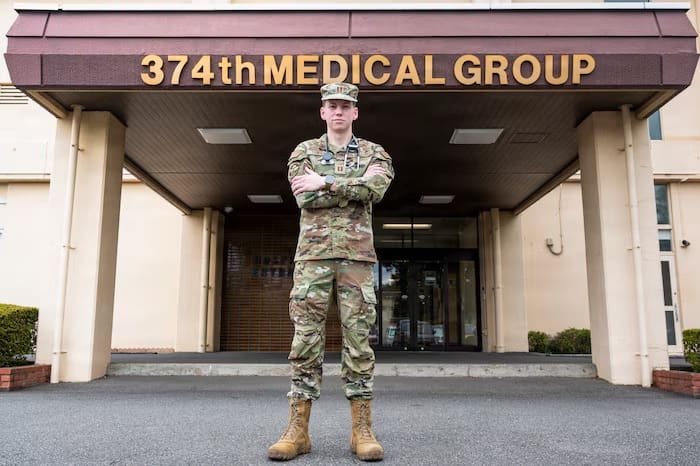
A newly developed fitness app is giving service members across the Department of War a single tool to build training programs tailored to their fitness test requirements at Yokota Air Base, Japan, Aug. 11.

U.S. Air Force Capt. Zachary Hicks, a family medicine physician and emergency medical services medical director at Yokota Air Base, developed the app to turn fitness requirements into actionable training guidance that service members can use to improve or maintain their readiness. The app goes beyond information and offers actionable guidance that members can use to improve or maintain their fitness. It also assesses a member’s current level, builds a starting program and adjusts over time, with an emphasis on improving weaker areas.

“There are apps for individual branches but none that unify them into one app, and this was something I wanted to solve,” Hicks said.

The idea traces back four years, when Hicks set out to create a more organized, actionable approach to fitness preparation. When updated fitness standards were released this year, he said it was time to build a solution.

“If you are doing well and you want to do great, then this app will help you,” Hicks said. “If you are doing great and wish to maintain that greatness, then this app will help you retain your fitness.”

The app has continued to expand since its development. Its most recent update added guidance for pregnancy and postpartum exercise, and Hicks is now developing nutrition guidance as the next addition.

To ensure the app aligned with official standards, Hicks transcribed each scoring calculator directly from service-specific scoring charts. He also built the training guidance using publicly available military resources, including the Air Force’s Warfighter Fitness Playbook.

“I did not feel the need to reinvent the wheel, but simply made it more accessible,” he said. For Hicks, the app’s purpose is simple: give every member, regardless of branch or starting point, a clear path to becoming stronger, more prepared and ready to reach their next fitness milestone.

By Senior Airman Tallon Bratton

374th Airlift Wing

Georgia State Court Dismisses P320 Case After Police Officer Admits the Trigger was Pulled

September 1st, 2026

SIG SAUER has now successfully obtained more than 20 P320 lawsuit dismissals

NEWINGTON, N.H., (September 1, 2026) – SIG SAUER, an industry-leading manufacturer of cutting-edge firearms, electro-optics, ammunition, and advanced concepts, issued a statement today after the Georgia State Court of DeKalb County dismissed with prejudice all claims in Jordan vs. SIG SAUER Inc. on August 26, 2026.

The plaintiff’s lawsuit stemmed from a May 23, 2022, police training incident and alleged a defect to the SIG SAUER P320 firearm. The officer whose firearm discharged admitted in a deposition that he inadvertently pulled the trigger, which caused the plaintiff’s injuries.

The plaintiff did not submit any expert reports to the contrary and did not oppose SIG SAUER’s motion asking the court to dismiss the case. As a result, the court dismissed with prejudice all claims against SIG SAUER, finding that the P320 “performed exactly as was expected.”

The dismissal in Georgia state court follows other recent successful P320 legal outcomes, including more than 20 dismissals via voluntary dismissals by the plaintiff who brought the cases, motions by the court, and defense verdicts from juries. It also follows an extensive U.S. military inspection affirming the pistol’s safety and reliability.

Following an inspection of 113,479 firearms and testing that included firing more than 1.5 million rounds, the U.S. Department of War concluded the pistol is “safe and reliable” and “all investigated incidents of alleged ‘uncommanded discharges’ have been traced back to the trigger being pulled, and not due to an issue with the firearm.”

An innovative strike-fired pistol trusted by the U.S. military, elite law enforcement, and federal agencies, the P320 is among the most tested, proven, and successful handguns in the world. It cannot under any circumstance discharge without a trigger pull, which has repeatedly been verified through testing by SIG SAUER, the U.S. military, law enforcement agencies, and independent labs.

For more information, visit www.P320Truth.com, a website dedicated to accurate information on the P320.

American Rheinmetall Delivers First Lynx XM30 Combat Vehicle Prototype to US Army

September 1st, 2026

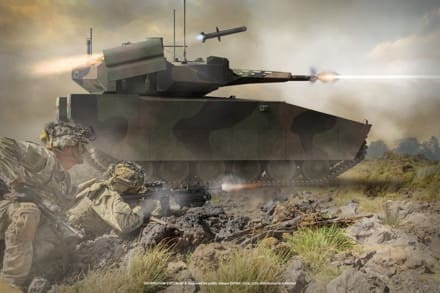
American Rheinmetall, Auburn Hills, MI, has successfully delivered the first of eight Lynx XM30 combat vehicle prototypes to the U.S. Army, marking a pivotal step in the competitive program to replace the legacy M2 Bradley Fighting Vehicle. Following its delivery, the initial prototype immediately enters government-led developmental and performance testing. This critical evaluation is a key component of the program’s broader Phase 3/4 Engineering and Manufacturing Development (EMD) contract valued at approximately $764 million, which encompasses digital design, physical prototyping, and full-system validation.

“Delivering our first prototype to the Army is an important step as the XM30 Combat Vehicle program enters a more visible phase,” said Matt Warnick, CEO of American Rheinmetall. “Team Lynx now has the opportunity to show the Army that we can deliver on the promise of a modern replacement for the Bradley.”

Later this year, American Rheinmetall will deliver the remaining seven prototypes, which will be used for operational unit training. This rollout runs parallel to the technical evaluations as part of the Army’s Transformation in Contact (TiC) 2.0 initiative, a modernization effort aimed at rapidly prototyping, testing, and fielding cutting-edge technology directly to deployed and training units. Once the vehicles clear initial military safety checks, Soldiers will immediately launch into active field maneuvers, an intensive training phase that culminates in large-scale combat simulations.

“Executing a parallel evaluation timeline requires a level of industrial agility that Team Lynx was built for,” Warnick noted. “We are proving that the U.S. Defense Industrial Base can move at the speed of operational relevance, stripping years off traditional development timelines to get the right capability to the Warfighter.”

The advanced prototype deliveries rely on a tightly orchestrated, multi-state production pipeline that underscores the agility and resilience of the U.S. Defense Industrial Base. Work begins with precision turret fabrication in Plymouth, Michigan, before sub-systems transition to Slidell, Louisiana, for final hull and chassis integration. Completed vehicles then enter comprehensive automotive shakeout trials to guarantee mechanical readiness, before returning to Louisiana for final paint and detailing. Integrating these separate facilities into a singular pipeline ensures strict quality control, with the process culminating in a joint inspection alongside the Defense Contract Management Agency (DCMA) prior to official government acceptance.

The Lynx XM30 is engineered to excel in complex operating environments that increasingly feature drones, precision weapons, and electronic warfare. In support of rapid technology integration over its service life, the platform incorporates a modular design and an adaptive open architecture. Most notably, the vehicle introduces a first-ever hybrid-electric powertrain to optimize power generation and battlefield mobility. As a digitally integrated fighting system with secure, real-time connectivity, the Lynx XM30 embeds the advanced intelligence required to ensure the crew and infantry squad maintain absolute battlefield survivability.

As the prime contractor, American Rheinmetall leads Team Lynx, an elite industrial coalition that combines the specialized capabilities of Textron Systems, Raytheon, L3Harris Technologies, Allison Transmission, and Anduril Industries, supported by a rapidly expanding network of domestic suppliers.