Phantom Lights

Archive for the ‘Guest Post’ Category

FirstSpear Friday Focus – Built For The X

Friday, March 20th, 2020

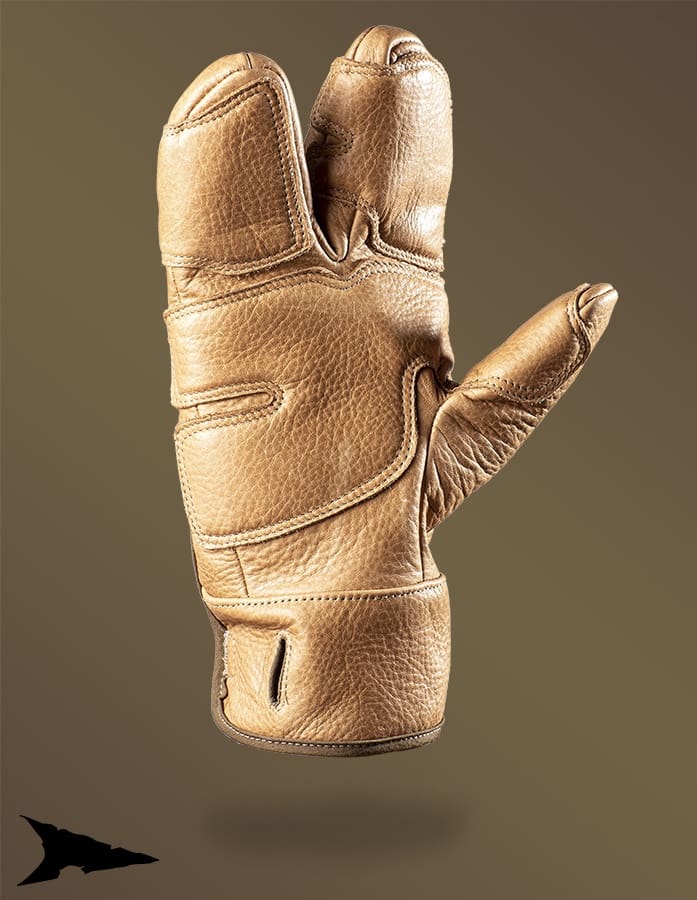
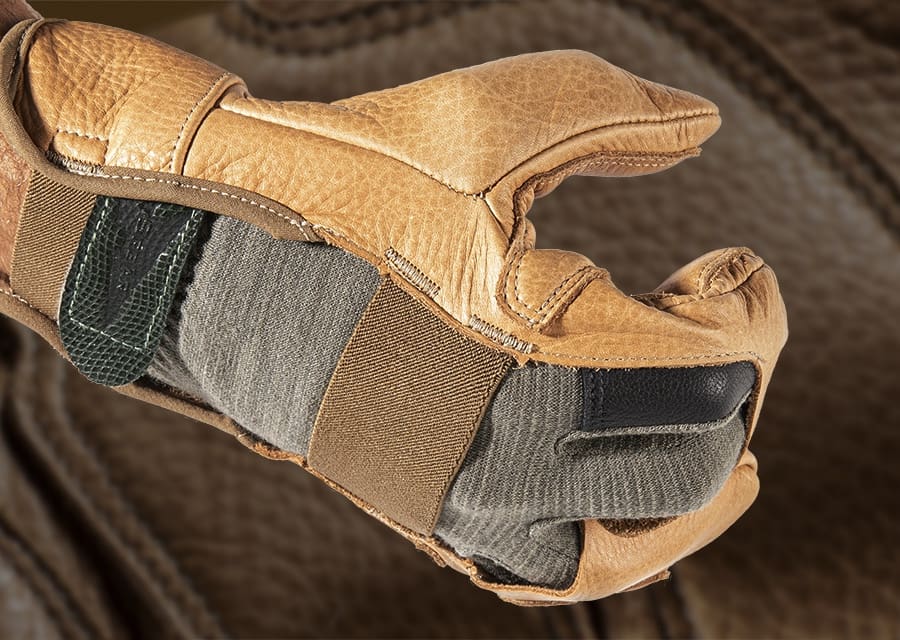
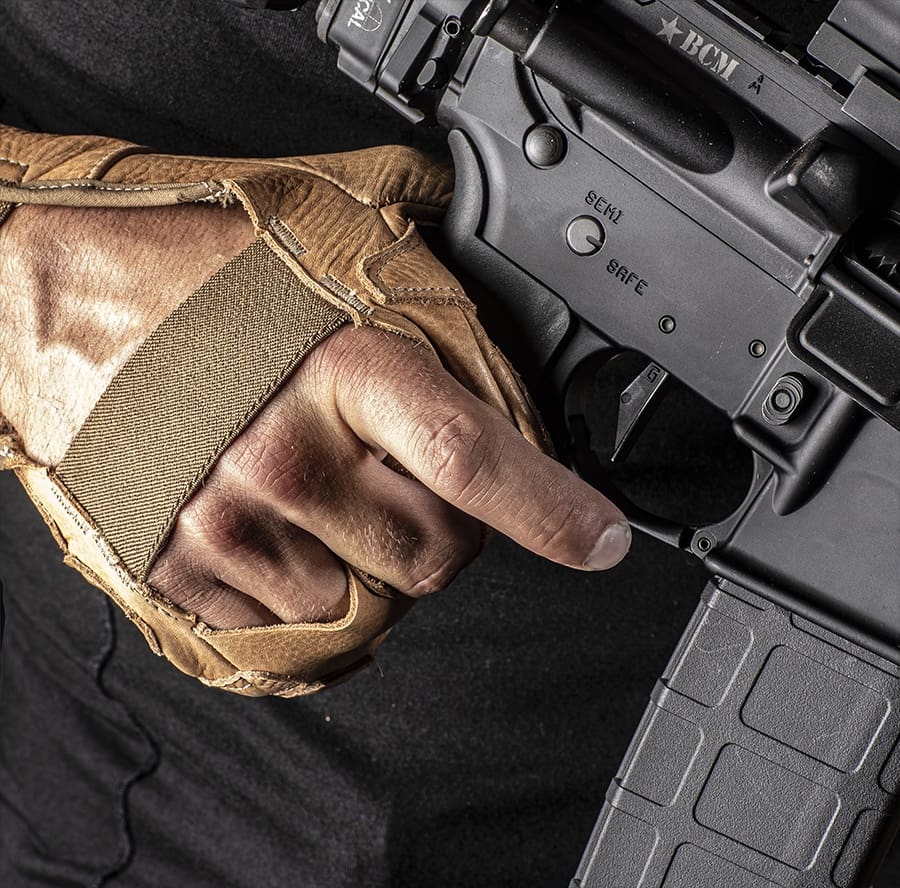
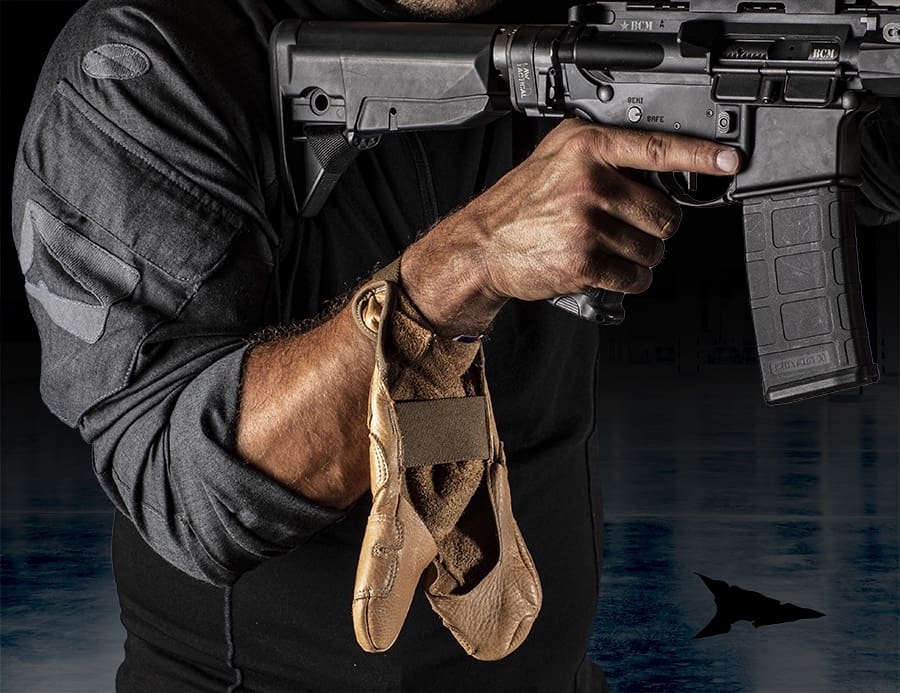
FirstSpear has just announced a promo code is now live on the website for 10% purchases until next Friday. Just enter B4TX at checkout!

First-spear.com

Tune In Each Monday For The MATBOCK Webinar

Thursday, March 19th, 2020

Starting Monday 23 March at 4:30pm Eastern Time, MATBOCK will be hosting a weekly webinar, which will also be live streamed on Facebook & YouTube. Each week they are going to cover one product,. Plus, there will be time for Q&A.

We hope you will join us:

When: Mar 23, 2020 04:30 PM Eastern Time (US and Canada)

This will repeat every Monday

Please download and import the following iCalendar (.ics) files to your calendar system.

Weekly: zoom.us

Topic: MATBOCK Monday: OsteoFX Casting

Please click the link below to join the webinar:

zoom.us/j/575186371

Or iPhone one-tap :

US: +16465588656,,575186371#  or +13126266799,,575186371#

Or Telephone:

Dial(for higher quality, dial a number based on your current location):

US: +1 646 558 8656 or +1 312 626 6799 or +1 301 715 8592 or +1 346 248 7799 or +1 669 900 9128 or +1 253 215 8782

Webinar ID: 575 186 371

    International numbers available: zoom.us/u/adxLgwySq1

This webinar will also be live on Facebook & YouTube. The webinars will also be published on various soical media channels to view later, if you miss one of the weekly webinars.


US Army G-2: Intel, Cyber Soldiers ‘Duking It Out’ Daily With Enemy

Thursday, March 19th, 2020

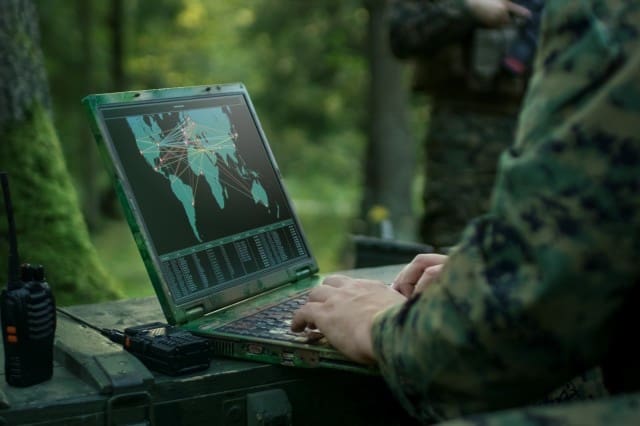
ARLINGTON, Va. — The Army’s senior intelligence officer likened intelligence and cyber Soldiers to those in the combat arms since they fight on networks everyday with adversaries.

“Our intelligence professionals and our cyber operators are duking it out,” Lt. Gen. Scott Berrier said. “I kind of think of ourselves, cyber and military intelligence, as sort of combat arms. I know it’s hard to get your head around that, but we’re the ones who are kind of doing that right now.”

Berrier spoke Wednesday as part of the Association of the U.S. Army’s breakfast series on threats the Army is facing in today’s era of great power competition.

RUSSIA

Since the end of the Cold War, the general said Russia has transformed its army to be smaller with new capabilities that it has been able to test in operations in nearby countries.

Using those lessons, he said Russia now uses those capabilities in Syria, which include air and air defense, precision targeting, special operations and contract forces, and intelligence, surveillance and reconnaissance, or ISR.

The capabilities have also created standoff for Russia as it presses back against NATO presence in Europe, he said.

“We’re watching that very, very closely,” Berrier said. “[We] don’t think [Russia] wants to get in a toe-to-toe fight with the U.S. [It] wants to be regionally dominant and to be a global player.”

CHINA

In the Pacific, he said China aims to be a global economic hegemony by 2049, and at same time gain military parity with the U.S. to push American forces out of the region.

“It really [wants] to establish a new world order,” Berrier said. “They are jealous of the economic system that we have.”

The general added that China would one day like to see its currency, the yuan, replace the U.S. dollar as the global currency.

To achieve its ends, China has started to militarize islands in the South China Sea, creating an effective defensive line.

China “would like to control everything out to the first and second island chain and just keep us out,” Berrier said.

Similar to Russia, China has reorganized its army to be smaller with new capabilities in air and air defense, space and ISR using intellectual property it illegally obtained.

“Much of the modernization that [its] been able to accomplish is with technology that [was] stolen from us and our partners,” Berrier said.

China has also carried out a reversal of the Marshall Plan, he said, by going into countries struggling financially and paying off their debt and building infrastructure. As a result, China then sort of owns that country and can place forces and capability inside of it, he said.

“We’ve seen this play out across Africa, we’ve seen it play with our Middle Eastern partners, we’ve seen it play in South America,” he said.

The general noted that by doing this China is also trying to connect markets to its own.

MODERNIZATION

The U.S. Army’s modernization priorities and multi-domain operations doctrine is currently tackling these near-peer threats, he said.

“The modernization that we’re doing for Russia and the modernization that we’re doing for China really will do the same thing for us in both theaters,” he said.

The Army is putting together multi-domain task forces that have I2CEWS — intelligence, information, cyber, electronic warfare and space capabilities — that will allow Soldiers to punch through enemy frontlines.

They “will help us in that boxer stance and be able to get inside, penetrate the ability that they have to keep us out,” he said.

Once complete, multi-domain operations will be backed up by “multi-domain intelligence.”

“So if you want to do MDO, you have to do MDI,” he said. “And in MDI in the future it’s all about the data and how we process and how we pull [artificial intelligence] into that.”

Army intelligence plans to have three layers of upgraded capabilities at the terrestrial, aerial and space levels.

At the terrestrial level, brigades will receive more capability that combines signal, intelligence, electronic warfare and cyber assets.

In the air, he noted, the Army will need a new platform that goes higher and can sense deeper.

And for space, the Army looks to work with its partners to take advantage of assets, whether they’re owned by the government or commercial satellites, to carry out long-range precision fires in coordination with aerial and terrestrial systems.

“Think of this sensor grid, from space to mud, that is connected through multi-domain intelligence using and fusing data at the speed of combat operations,” he said.

Known as TITAN, the Tactical Intelligence Targeting Access Node is a scalable and expeditionary intelligence ground station that leverages space, aerial and terrestrial sensors.

A TITAN space prototype, which is expected to be delivered by fiscal year 2022, is being developed to provide targetable data from these sensors to fire networks.

“TITAN is going to be the ground station that replaces a number of these systems that we have today [and] is central to all of it,” he said.

Story by Sean Kimmons, Army News Service
Photos by Bill Roche, US Army & Luc Dunn, AUSA


ADS Talks Pandemic Response Preparedness: COVID-19

Wednesday, March 18th, 2020

ADS Inc has posted an article detailing the products they have available. Here’s a little bit of the article:

Through thousands of long-standing supplier relationships, we quickly find and deliver the equipment you need to do your job—safely. ADS, Inc. has compiled the following list of products geared toward military and first responder pandemic responses. This is just a sampling of the tens of thousands of products we offer. If you don’t see what you’re looking for, just ask.

Because these products are in high demand, ADS will quote and source these products to the best of or ability. Due to the strain on the supply chain, orders may be canceled. We will do our best to find an alternative.

ADS provides operational equipment exclusively to the U.S. and allied Armed Forces, first responders, vetted government contractors, emergency responders and officers. We cannot sell to civilians.

Whether you have funding or need it, ADS is a prime on over 65 contracts and has the power to move your requirement forward.

Check out the full details, including the list of products at adsinc.com/pandemic-response-preparedness-covid-19.


New Error Correction Method Provides Key Step Toward Quantum Computing

Monday, March 16th, 2020

RESEARCH TRIANGLE PARK, N.C. — An Army project devised a novel approach for quantum error correction that could provide a key step toward practical quantum computers, sensors and distributed quantum information that would enable the military to potentially solve previously intractable problems or deploy sensors with higher magnetic and electric field sensitivities.

The approach, developed by researchers at Massachusetts Institute of Technology with Army funding, could mitigate certain types of the random fluctuations, or noise, that are a longstanding barrier to quantum computing. These random fluctuations can eradicate the data stored in such devices.

The Army-funded research, published in Physical Review Letters, involves identifying the kinds of noise that are the most likely, rather than casting a broad net to try to catch all possible sources of disturbance.

“The team learned that we can reduce the overhead for certain types of error correction on small scale quantum systems,” said Dr. Sara Gamble, program manager for the Army Research Office, an element of U.S. Army Combat Capabilities Development Command’s Army Research Laboratory. “This has the potential to enable increased capabilities in targeted quantum information science applications for the DOD.”

The specific quantum system the research team is working with consists of carbon nuclei near a particular kind of defect in a diamond crystal called a nitrogen vacancy center. These defects behave like single, isolated electrons, and their presence enables the control of the nearby carbon nuclei.

But the team found that the overwhelming majority of the noise affecting these nuclei came from one single source: random fluctuations in the nearby defects themselves. This noise source can be accurately modeled, and suppressing its effects could have a major impact, as other sources of noise are relatively insignificant.

The team determined that the noise comes from one central defect, or one central electron that has a tendency to hop around at random. It jitters. That jitter, in turn, is felt by all those nearby nuclei, in a predictable way that can be corrected. The ability to apply this targeted correction in a successful way is the central breakthrough of this research.

The work so far is theoretical, but the team is actively working on a lab demonstration of this principle in action.

If the demonstration works as expected, this research could make up an important component of near and far term future quantum-based technologies of various kinds, including quantum computers and sensors.

ARL is pursuing research in silicon vacancy quantum systems which share similarities with the nitrogen vacancy center quantum systems considered by the MIT team. While silicon vacancy and nitrogen vacancy centers have different optical properties and many basic research questions are open regarding which type(s) of application each may be ultimately best suited for, the error correction approach developed here has potential to impact both types of systems and as a result accelerate progress at the lab.

By U.S. Army CCDC Army Research Laboratory Public Affairs


MATBOCK Monday – GRAVEROBBER Series

Monday, March 16th, 2020

Happy MATBOCK Monday! This week our focus is on the GRAVEROBBER Series.

The GRAVEROBBER Series includes a combination of various bags and pouches that can be configured for your expeditionary and operational needs. All bags and pouches in the GRAVEROBBER Series are made using MATBOCK’s exclusive Ghost and Ghost Light material, making them the lightest and toughest bags on the market.

GRAVEROBBER Sustainment Kit

The GRAVEROBBER Sustainment Kit is a joint CRO Medical and MATBOCK project to bring a prolonged field care pack to the operational medic. It features the Sustainment bag, 4 x sustainment pouches, 4 x sustainment panels, and the GRAVEROBBER Drug Box.  All made from MATBOCK Ghost and Ghost Light materials.

GRAVEROBBER Technical Mountain Ruck

The Technical Mountain Ruck is a combination of the GRAVEROBBER Assault Medic (GRAM) Kit and the GRAVEROBBER Sustainment Kit. The GRAM easily zips to the outside of the sustainment bag to give the medic everything needed for both assault and prolonged medical operations. Made from MATBOCK’s Ghost and Ghost Light materials for superior water resistance, durability, strength and weight savings.

GRAVEROBBER Assault Medic

The GRAVEROBBER Assault Medic bag is the result of years of needed improvement in bags specifically designed for the team medic. CRO brings a multi-mission approach to the design with their well-thought-out adaptability, including a panel insert that converts to a skeleton med panel which can be clipped or slung using the thin padded shoulder straps. Remove to design a custom panel that is interchangeable for different packing requirements, or easily change bags with the versatility of a panel insert.

Lighter Faster Warriors, The MATBOCK™ ethos, is realized by the GRAM.

MATBOCK Ghost® material is used throughout with Tegris reinforcements, giving the inside contents protection to allow for narcotics to be set up using a soft case.

A few of the highlighted features include:
• Jumpable
• Waterproof
• Mounts on ALICE frame
• Hangs in vehicles
• Ultralight 2.9 lbs
• 1.2 lbs skeletonized setup (if you clip it on, less)
• Mitigates shrapnel hazards
• Thinnest med bag ever created

The GRAVEROBBER™ Assault Medic bag is designed to be mounted to an ALICE frame, giving the medic a slim assault bag that can be configured in many ways to enhance medical load carriage. This jumpable, water resistant bag bridges the gap between assault bags and en-route care, due to its expandable design and ability to hang.

This versatile, meticulously designed med bag was created with everyday medic load carriage in mind.

GRAVEROBBER Surgical

Lightweight ruck designed to carry surgical medical equipment for expeditionary and operational professionals. Available both with and without frame.

The complete kit includes:
• Ventilation Pouch
• Drug Roll
• IV Pouch
• Multifunction Pouch

Click the link below to see our full series!

www.matbock.com/collections/grave-robber


Ruck March Keeps Airmen Mission Ready

Monday, March 16th, 2020

Airmen assigned to the 820th Base Defense Group perform a ruck march Feb. 21, 2020, at Moody Air Force Base, Georgia. Members of the 105th Base Defense Squadron from Stewart Air National Guard Base, New York, and 820th BDG participate in a ruck march as part of the Initial Qualification Training for Base Defense Group Airmen to ensure readiness in a deployed environment. Ruck marches allow Airmen to understand the feeling of carrying mission essential items to better pace themselves and stay fit.

(US Air Force photos by A1C Elijah M. Dority)


SCUBAPRO Sunday – Quick Release Adapter for the Frameless Mask

Sunday, March 15th, 2020

SCUBAPRO’s FRAMELESS mask is diving’s original frameless mask. The Frameless was the first mask to use the lens as its structural support, which significantly increased the field of vision for divers. Twenty-one years later, it is still the first choice of military and technical divers.

Its distinctive rectangular single-lens shape is classic, providing an excellent field of view on the periphery as well as straight ahead. By eliminating the frame, you create a mask that sits closer to your eyes. This provides a broader field of view to better take in the underwater sights, plus it reduces volume, which makes it easier to clear. Also, since there is no frame, the buckles attach directly to the skirt. This enables the mask to fold relatively flat for packing or for slipping into a BC cargo pocket. The soft silicone skirt on the FRAMELESS is comfortable yet durable, and the double-edge seal feels good against the skin. Buckles attach to flexible tabs on the skirt; this optimizes strap angle when dialing in the fit.



SCUBAPRO wanted to give it an update without taking away from its already iconic features. We also wanted it to work with our newest dive computer, the Galileo HUD. So, we develop a way to mount the HUD to the mask as the mount needs a hole drilled through the lens, which can only be done before the glass is tempered.  

SCUBAPRO is always trying to innovate for the working divers and set the standard for new gear. The latest features for the Frameless/ Frameless Gorilla mask are the addition of the comfort strap adapter. They can be added onto existing masks, and this allows the user to add several new features to one of the most iconic masks ever made. We have new accessories for the classic Frameless mask. The latest version of the Frameless that is available with an integrated HUD Arm that allows you to mount the SCUBAPRO HUD hands-free dive compute.  

SCUBAPRO has also been working with some military units to make the Frameless mask non-magnetic. To do this, we decide to develop a conversion kit so it could use our comfort straps. With this, we removed the springs and pins in the mask straps. QR kit Part Number 24.340.039

The Frameless adapter kit includes two quick clips and the roll pins. The adapters also allow you to use the SCUBAPRO Odin Helmet Straps. Ops-Core is the primer brand when it comes to helmet innovation. The Odin system allows any mask with quick clips to be attached to any helmet that has the Ops-Core ARC rail systems. The Odin straps are perfect for any time you have to wear a helmet when diving or in the water. Like using a DPV, Wearing Jet-boots, Search and Rescue Operations, or working in Fast Moving Water. The Comfort Strap is similar to a ski goggle strap in design. It clips right into the mask buckle adapter and offers a wide adjustment range. It also is a lot less likely to break mid-dive as it is a nylon strap and not rubber or silicone. The adapter also makes the mask non-magnetic for EOD use, as it removes all metal parts.