FirstSpear

Archive for the ‘Armor’ Category

Marines Revamping FSBE

Wednesday, December 15th, 2010

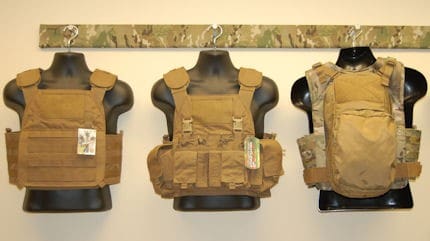
MARCORSYSCOM has issued a Sources Sought Notice for companies capable of “designing, developing, and procuring an Improved Armor Carrier Suite (IACS) that may be incorporated within the Full Spectrum Battle Equipment (FSBE).” The RFI goes on to state that, “The notional suite would consist of the following: one (1) Releasable Tactical Vest (RTV), one (1) Releasable Plate Carrier (RPC), one (1) Low-Visibility Tactical Vest (LVTV) and one (1) Low-Visibility Plate Carrier (LVPC) that support/integrate the respective armor cuts, identified hard armor inserts/ancillary armor additions and load carriage systems.” So basically, not only are they looking to update the armor carrier but also add some additional capability.

Descriptions of each component from the RFI:

The RTV will support SPEAR profile soft armor. The RTV must integrate with the SPEAR MSAP soft armor/pouches (Groin and Deltoid), SPEAR Releasable Ballistic Armored Vest (RBAV) Collar Armor System (CAS) and Improved Modular Tactical Vest (IMTV) lower back protector.

The carrier will posses PALS webbing for the mounting of modular pouches, have a single pull release located on the center of the vest below the neckline and integrate with the USMC Chest Rig without impeding the quick release of the carrier. The RTV must integrate with the USMC IMTV cummerbund and incorporate it into the release of the system without additional hardware or procedures. The RTV will incorporate an optional internal cummerbund to mitigate load. When used, the internal cummerbund will not interfere with the release of the system. The RTV will provide for an optional cummerbund that must support the carriage of the SPEAR MSAP 6×6 plate and allow for adjustment.

The RPC will support USMC PC profile soft armor. The RPC must integrate with the SPEAR MSAP soft armor/pouches (Groin and Deltoid) and IMTV lower back protector. The RPC will posses PALS webbing for the mounting of modular pouches. The RPC will have a single pull release that is identical in location, function and assembly to that of the RTV. The RPC must have the option to be worn without a cummerbund while still maintaining single pull release capability. When worn with a cummerbund, the RPC must integrate with the USMC Chest Rig without impeding the quick release of the carrier. The RPC must integrate with the USMC IMTV cummerbund and incorporate it into the release of the system without additional hardware or procedures. The RPC will provide for an optional cummerbund that must support the carriage of the SPEAR MSAP 6×6 plate and allow for adjustment.

The LVTV will support SPEAR profile soft armor. The LVTV must integrate with the SPEAR MSAP soft armor/pouches (Groin and Deltoid), SPEAR RBAV CAS and IMTV lower back protector. The carrier will integrate with the USMC Chest Rig. The LVTV must support the carriage of the SSAPI with soft armor backing and/or the SPEAR MSAP 6×6 plate and allow for adjustment.

The LVPC will support USMC PC profile soft armor. The LVPC must integrate with the SPEAR MSAP soft armor/pouches (Groin and Deltoid) and IMTV lower back protector. The LVPC must have an option to be worn without a cummerbund. When worn with a cummerbund, the LVPC must integrate with the USMC Chest Rig. The cummerbund of LVPC must support the carriage of the SSAPI with soft armor backing and/or the MSAP 6x6 plate and allow for adjustment.

First off, it’s important to note that this program is for FSBE which is not a general issue program. FSBE fielded the first cut-away armor carrier (Amphibious Assault Vest, Quick-Release) after a catastrophic helo accident in December, 1999 that resulted in the death of seven Marines who could not ditch their equipment. FSBE is designed for use by the Force Reconnaissance community, Fleet AntiTerrorism Security Teams (FAST), and MEU (SOC) Helicopter Assault Companies. Since the user community is relatively modest, the numbers aren’t really big for this program (current FSBE is around 7500 individual kits). Also, this RFI isn’t looking to replace all of FSBE’s components, but rather to revamp the armor components. In fact, the RFI states that it must be compatible with current issue pockets which we take to mean FSBE pouches and Family of Pouches as well as the Marine Corps Chest Rig.

Because the original FSBE AAV was developed before SOCOM’s SPEAR cut armor, it had a proprietary cut. Several years ago, the Marines adopted the Eagle Industries Combat Integrated Releasable Armor System (CIRAS) vest as FSBE II which uses a SPEAR cut. Moving to the SPEAR standard allowed the Marines to use soft and hard armor that is more readily available and well understood by industry as well as leverage larger purchases by other groups. The same goes for the IMTV components and PC armor already in the Marine Corps inventory.

Based on the desire to integrate with current Marine issue load carrying equipment as well as more common armor components shows that they are taking a very pragmatic approach to modernizing FSBE.

We would be remiss of we did not point out that this is still only an RFI and that the Marines are using this to find out what is in the realm of the possible so that they can develop the full requirements package. Having said that, the RFI opens the possibility of a “user evaluation”.

“A limited quantity (i.e. up to 30) of evaluation systems may be requested under a bailment agreement to support user evaluation activities based on market research results. No user evaluations are planned prior to March 2011.”

On a final note, it’s best that we leave with you with the submission cutoff. Responses should be received not later than January 13, 2011. Additionally, the USMC will have representatives attending the 2011 Shooting, Hunting and Outdoor Trade (SHOT) Show and will be available on January 20th and 21st for 15 minute visits in a respondent’s booth.

Make sure you read the entire RFI at www.fbo.gov.

LTC Mock SAPI Training Plate ADS Tactical

Sunday, December 12th, 2010

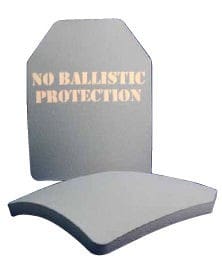
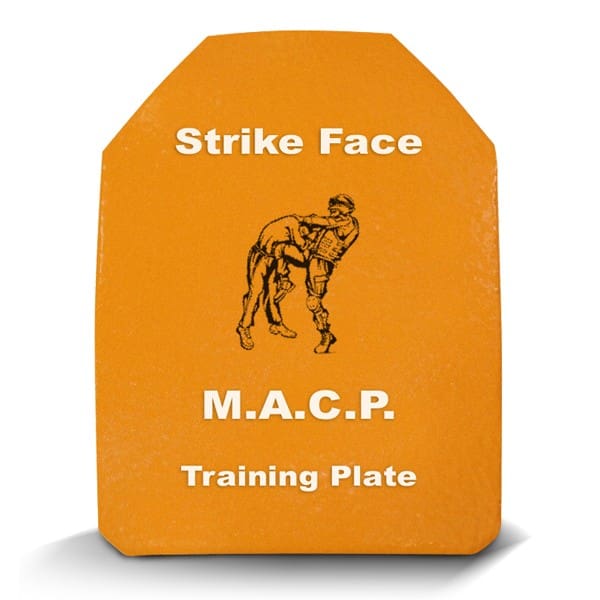
ADS has begun to offer LTC‘s new SAPI training plates. While you may be unfamiliar with Leading Technology Composites, they are one of the industry leaders in ballistic plates. Unlike other training plates these have no ballistic value but rather are intended to be used solely for situations that do not require protection but where the bulk and weight of plates adds value such as combatives and vehicular crew drills. Ballistic plates can be damaged in training and it is difficult to ascertain if they retain their protective properties without expensive imaging systems. Additionally, some organizations to not have ample supplies of actual ESAPI plates to support both training as well as operations. That’s why training plates are so critical. Training can be accomplished by everyone at no risk to damaging ballistic plates. Naturally, these training plates are Blue and clearly marked for training use. Available in Small – XLarge, side plates and additional sizes are available by special order as well. Unit orders can be supported by ADSinc.com/LTC.

Velocity Systems Opens Factory Pro Shop

Friday, December 10th, 2010

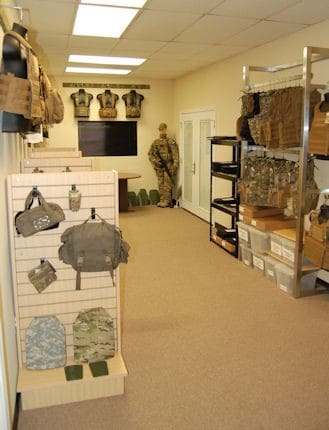
The new Velocity Systems Pro-Shop is located inside their factory and is comprised of 400 square feet their most popular items, including the Operators Assault Vest (OAV), Armor Panels in concealable, tactical, and SPEAR/BALCS cuts, the entire Phalanxâ„¢ line of ballistic rifle plates, Light Weight Plate Carriers, Plate Harnesses, and Plate Backers. Additionally, Velocity Systems has joined several well known tactical re-sellers and is now a stocking dealer of Mayflower products which interface with Velocity Armor Carriers utilizing new patent pending SwiftClipâ„¢ system.

The Pro-Shop carries small quantities of their most popular products for those who are deploying on short notice or for those who are traveling through the Washington DC area and want to get their last fill of tactical “must haves” before heading out. It is important to call first so that they can give everyone the first-class service that we have all come to expect from Velocity Systems. They also offer custom designed gear through the Pro-Shop, and anyone interested should make an appointment for a sit down design consult.

www.velsyst.com

Japan’s Advanced Combat Infantry Equipment System

Tuesday, November 30th, 2010

We are fortunate enough to have this report on Advanced Combat Infantry Equipment System, Japan’s Soldier modernization effort from one of our readers.

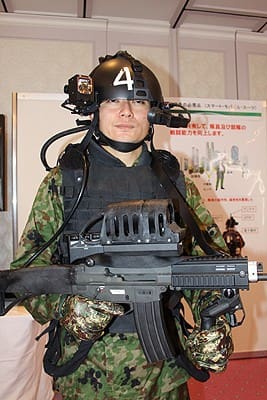
Japan’s ACIES system consists of HMD, wearable computer, protective gear, weapon, and monitoring capability integrated as a system, and it is designed to share the information among the troops and C2 element to fight effectively and efficiently. Unlike the legacy Japanese military hardware, the ACIES will utilize large volume of COTS item as well as foreign source to save development cost and prevent obsolescence issues.

Program:
Since the delivery of the first ACIES demonstrators to the trial unit in late 2008, multiple trial ran were conducted throughout Japan. Based on the data compiled from trials the final ACIES design process is currently on-going. Hitachi won the final competition as the prime contractor in the summer of 2010 to design and manufacture the final design of AICES. Delivery of the initial low rate production models are expected to start around winter of 2011 to the Infantry School.

System components:

Helmet:
Modeled after the MICH helmet, inside has cushion pads and four point suspension system. This helmet will not have any ballistic protection capability, and it is “bump” helmet (shrapnel protection may be added). Japanese MoD came to a realization that with new threats on the horizon, ballistic helmet is just added weight for the users and dropped the ballistic capability in favor of adding more electronic components. The new helmet will have mounting stations for the NOD built by NEC, HMD built by Shimadzu, headset, microphone, LAN antenna. There’s also a small uncooled IR camera developed by NEC for the helmet which weighs about 70g. Only 2Mega pic, but able to identify the human face at distance up to 200m.

Body Armor:
New body armor system is in design. It may have large flap opening design rather than US IOTV side opening design. This vest will have ample MOLLE webbing all around to accommodate various pouches, battery pack, computer, and comm items to be mounted. Current demo unit has 9mm protection level, and can accommodate hard plates on both front and back (no sides). The final version will have NIJ Level IV without hard plates.

Computer and other electronic sub systems:
One of the key elements of the ACIES is the ability to process visual data from multiple source and position data, and distribute among other ACIES wearers as well as C2 element. In order to sustain the safe and secure data transmission, the robust data link capability is required. On the back of the body armor is the wearable computer’s main system. Batteries, large data processor, LAN, gyro, atmosphere pressure gage, GPS, (gigantic) cooling fans, and others are all in this portion. To power the ACIES system, dual battery sources are considered. At the AUSA in 2010, an American business, Brentronics Inc, claimed to have won the portable battery portion of the ACIES program.

Radio:
Lightweight UHF and VHF radios have been developed and fielded for the program.

Vehicle:
Monitoring system will be mounted on the LAV or APC along with the relay station for the radio and sensors worn by the dismounted troops. Also ACIES battery recharging station will be also mounted on the same vehicles. This will allow the dismounted ACIES wearers to return to the “mother ship” and quickly recharge their secondly batteries or replace the dead one with fresh ones quickly and continue their mission.

Weapon:
Howa’s Type-89 rifle has been redesigned to accommodate the Picatiny style rail system and polymer based retractable stock. Shortened carbine barrel has been also designed and may be adopted as a part of the program. Weapon also has a laser designator and integrated IR camera built by NEC. This IR camera data, along with the helmet mounted one, can be manipulated via fore grip control unit. Fore Grip control system is similar idea as the computer’s mouse, and the wearer will see through the HMD display and move the arrow symbol around and click on the menu, etc. Wearer can also aim and fire the weapon behind obstacle, just pointing the gun without exposing the body. The development of the new Howa rifle system is on-going, though European designed rifles are under evaluation to replace Type-89s.

UGV & UAV:
A softball sized throwable UGV is a part of the ACIES to provide visual data feed for the ACIES wearer in safety. Once tossed to the ground, the operator can maneuver it using a grip type controller (may be integrated to a weapon control) and provide visual data through its IR camera. Ball shaped UAV has also been developed and can accommodate small payload such as the IR camera for tactical visual feed to the ACIES wearers.

-Tom I

Finally, Training SAPI Plates

Saturday, November 13th, 2010

Many are reluctant to conduct training while wearing their issue armor plates for fear of fracturing them. It is also impossible to determine if they are damaged without sophisticated x-ray imaging. Additionally, armor plates are expensive and not easily replaced if they are damaged, especially in a deployed environment. There have been few, if any solutions to this dilemma, until now. Tyr Tactical put up a new product on their website earlier this week. The Ballistic Training Plate features a SAPI cut and while designed specifically for training, is rated to defeat 5.56.

The Ballistic Training Plate is the same size and weight of issue SAPI plates so training will be as realistic as possible. Tyr has colored the plates in bright orange so that there is no doubt that they are intended for training. They are offered in size Small through X-Large. Due to the nature of these plates, purchase is restricted to military, law enforcement, government agencies and firms that support them.

www.tyrtatcical.com

US PALM AirSave Plate Carrier

Monday, November 8th, 2010

US PALM has just introduced their new AirSave Plate Carrier. Manufactured from 500D Cordura and featuring PALS webbing front and rear, the AirSave Plate Carrier is a simple affair. What makes this carrier so special is that it retails for UNDER $400 and includes both front and rear plates as well as soft armor backers!

The plates were developed for the US Army’s AirSave (Aircrew Integrated Recovery Survival Vest and Equipment) vest used by aviators and are designed to defeat 7.62 M2 AP projectiles. US PALM has included soft armor backers to mitigate blunt force trauma. This is a smokin’ deal and with limited plate carriers available we expect them to sell out quickly. Available from www.SGCUSA.com in MultiCam, Coyote, and Ranger Green.

Shellback Tactical Offers Free Shipping

Saturday, October 30th, 2010

We have always been big fan’s of Shellback Tactical’s products designed with LE professionals in mind and now there is another reason to buy Shellback; Free Shipping! One of our favorite products is the Lo Key Tactical Attache Bag.

They have recently updated the site and offer over 300 products. Free ground shipping is available on all orders with NO minimum to buy. Just enter code freeship at checkout to take advantage of this offer. All Shellback Tactical products are Made in the USA and feature a lifetime warranty. Additionally, they are offered in Black, Tan, Ranger Green, MultiCam, and A-TACS.

www.shellbacktactical.com

More on OCP Fielding

Friday, October 15th, 2010

SSD was fortunate enough to participate in a media roundtable earlier today. We picked up a few tidbits to keep our readers up to date. While the Army began fielding OEF Camouflage Pattern (OCP is the Army’s designation for Crye Precision’s MultiCam pattern) clothing and equipment to CONUS-based Afghanistan bound troops in September, equipping troops who are already in theater has kicked off. According the COL William Cole, Program Manager for Soldier Protection and Individual Equipment they recently began issuing OCP kit to in-theater troops. Additionally, he brought us up to speed on a few items being fielded. First, he clarified the Gen III ECWCS issue. Only layers three through six are being issued in OCP. The puffy layer and under layers are already in solid colors that are either worn under other clothing or a suitable shade.

Next he explained that troops are now receiving the Gen II IOTV which is more comfortable most notably due to the new cummerbund which makes it more easy to mount the side plates. COL Cole related that during his most recent trip into theater, he fitted the new style cummerbund to his IOTV. Additionally, the Army has let contracts for conversion kits to upgrade currently fielded armor to the Gen II standard and OCP camo coloring. This is quite cost effective for the Army as the retrofit kits cost less than one-third the cost of a new vest.

A decision still has not been made on the Mountain Combat Boot, but data collected during a wear test this summer in Afghanistan is being crunched.

Finally, while the Air Force is still staffing their OCP fielding strategy, BG Peter Fuller, PEO-Soldier explained the Army’s commitment to field full OCP kits to sister troops working with Army units. Way to go Army! Hopefully, we will see OCP versions of the USAF’s ABS-G soon.